Jeet Kune Do

Jeet Kune Do

  • Bruce Lee's revolutionary martial philosophy - not a fixed style but a concept: absorb what is useful, discard what is useless. The art that inspired modern MMA before MMA existed.

Stats

Oorsprong
China
Opgericht
1967

Jeet Kune Do (JKD) is the martial philosophy and fighting system created by Bruce Lee in 1967 - described by its founder not as a fixed style but as 'the style of no style'. The name translates as 'the way of the intercepting fist', reflecting its core principle of intercepting an opponent's attack before it is fully launched rather than blocking and countering after the fact. Rooted in Wing Chun Kung Fu, Western boxing and fencing, and informed by Bruce Lee's voracious study of every martial art available to him, JKD is widely recognised as the philosophical forerunner of modern MMA - the first systematic argument that no single martial art is complete, and that the intelligent fighter must draw from multiple disciplines.

Geschiedenis

Bruce Lee - From Wing Chun to JKD

Bruce Lee began his martial arts training under the legendary Ip Man in Hong Kong, studying Wing Chun from age 13. Wing Chun's centreline theory, simultaneous attack-defence and close-range striking profoundly shaped JKD's technical foundation. When Lee moved to the United States and began teaching martial arts, he quickly recognised that traditional martial arts - with their rigid forms, fixed techniques and stylistic boundaries - were inadequate for real fighting.

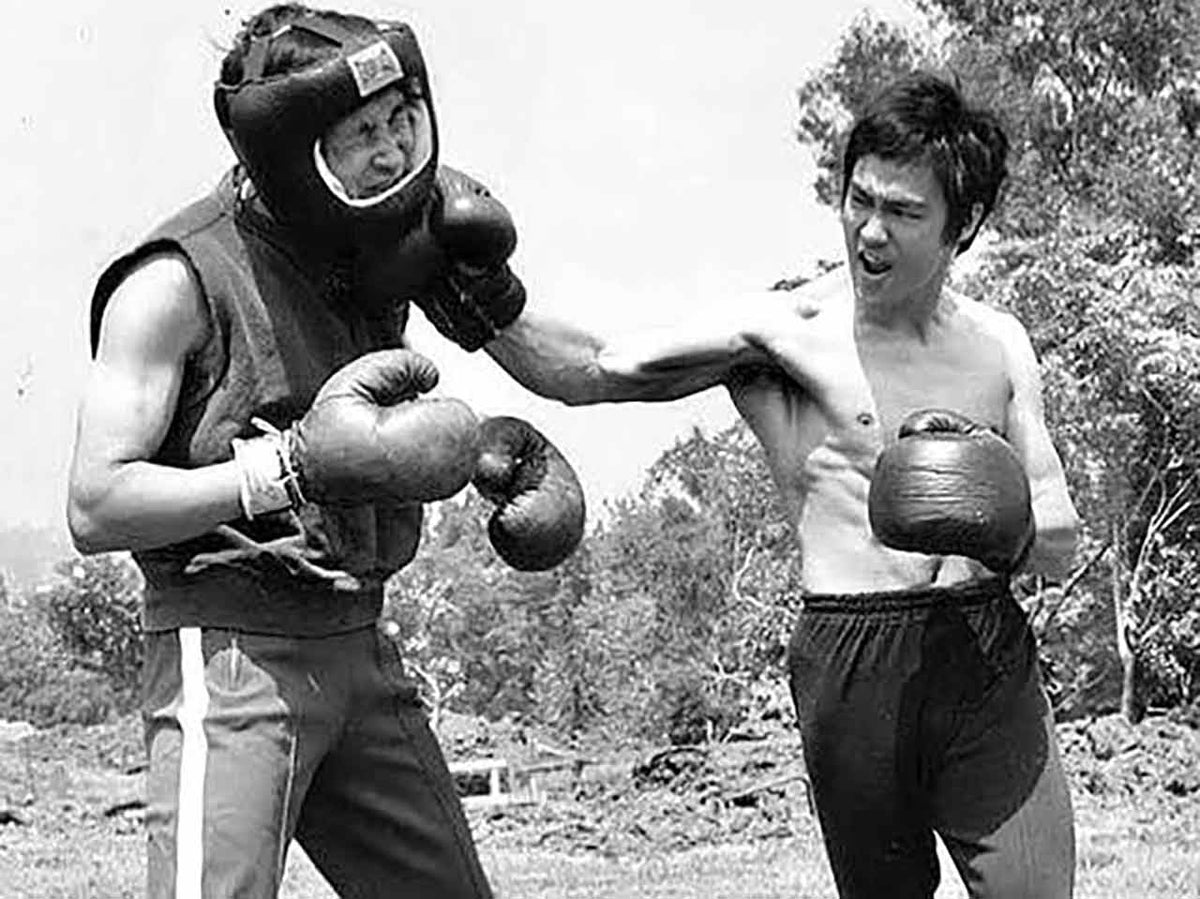
Lee immersed himself in Western boxing, studying footwork, timing and power generation from boxers. He incorporated fencing concepts - particularly the stop-hit (intercepting the opponent mid-attack) that gives JKD its name. He trained in wrestling, Judo, and studied virtually every martial art text and film he could access. His training notes, compiled posthumously as the Tao of Jeet Kune Do (1975), remain one of the most influential martial arts texts ever written.

The Jun Fan Period and the Birth of JKD

Lee opened schools in Seattle and Oakland teaching Jun Fan Gung Fu - a modified Wing Chun-based system. A famous confrontation with San Francisco's Chinese martial arts community in 1964 - when traditionalists objected to him teaching non-Chinese students - resulted in a challenge fight that Lee won but found frustratingly slow. This experience accelerated his move away from traditional forms toward pure functional fighting.

By 1967, Lee had moved beyond Jun Fan Gung Fu to what he called Jeet Kune Do - a personal expression of martial truth rather than a teachable style. He famously said: 'Absorb what is useful, discard what is useless, and add what is specifically your own.' JKD was not a curriculum but a process - a method of martial inquiry that each practitioner must personalise.

JKD Concepts vs Original JKD

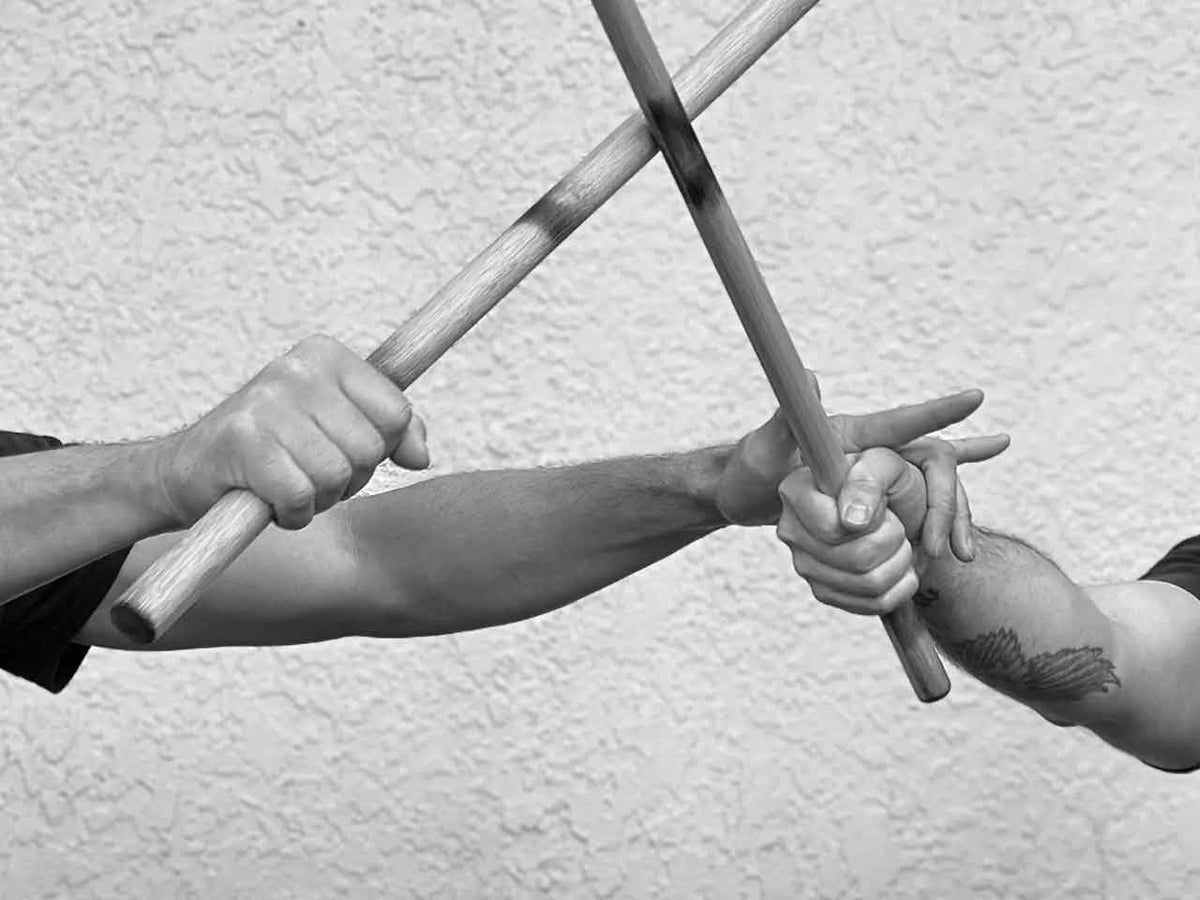
After Lee's death in 1973, his art split into two main currents. Original JKD (or JKD Nucleus) - championed by Lee's first student Dan Inosanto - focuses on preserving Lee's specific technical curriculum as he taught it in his final years, including Jun Fan striking, trapping and grappling. JKD Concepts - also associated with Inosanto - interprets Lee's philosophy of cross-training as a mandate to continue adding arts, incorporating Filipino martial arts (Eskrima), Muay Thai, Shoot wrestling and BJJ into an ever-evolving personal system. The debate between the two approaches continues in the FMA and JKD community.

JKD's Legacy - The Father of MMA

Bruce Lee's argument - that stylistic boundaries are arbitrary, that the complete fighter must train in striking, kicking, trapping and grappling, and that each practitioner must find what works for their own body and attributes - is the philosophical foundation of modern MMA. UFC commentator and BJJ black belt Joe Rogan has called Lee 'the father of mixed martial arts'. The UFC's cross-training culture, the MMA gym's integration of boxing, wrestling and BJJ, and the modern fighter's rejection of single-style thinking are all direct descendants of what Bruce Lee was arguing in 1967.

Training

Training in Jeet Kune Do

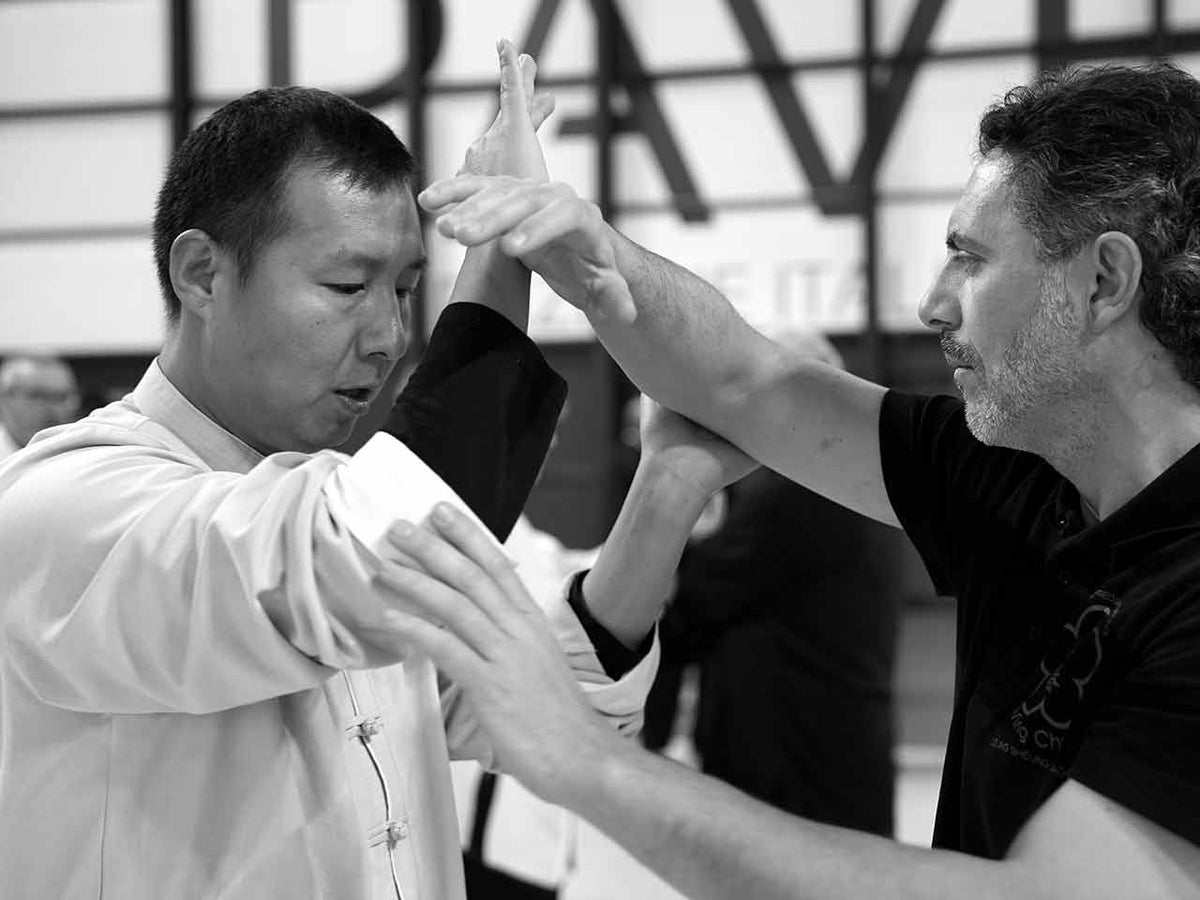
JKD training typically covers four ranges of combat: kicking range (longest), punching range, trapping range (close - a Wing Chun-derived transitional range using immobilisation and simultaneous attack-defence), and grappling range (clinch and ground). The lead-side forward fighting stance - borrowed from Western fencing - is JKD's signature posture, placing the stronger hand and foot forward for more powerful and faster attacks.

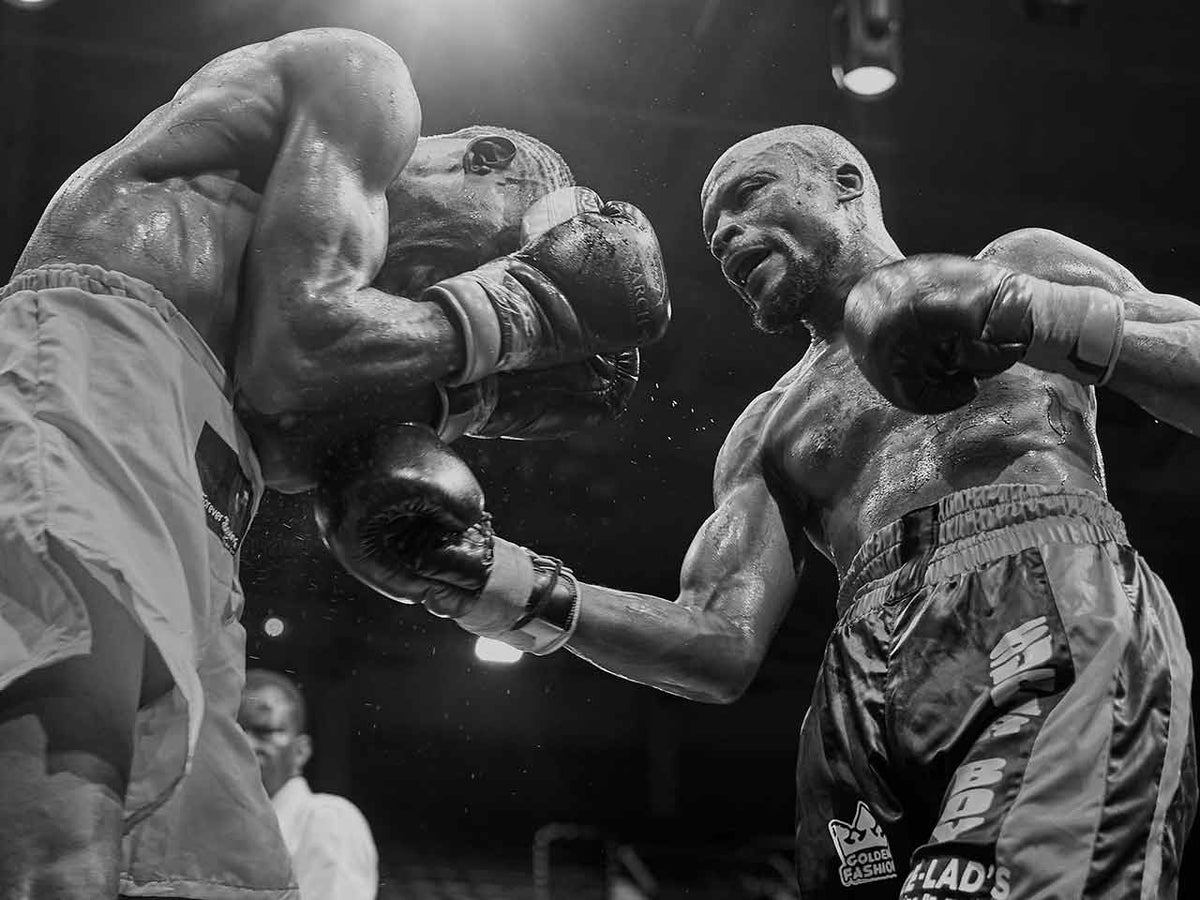
Core JKD tools include: the stop-hit and stop-kick (intercepting attacks), finger jab to the eyes (JKD's signature long-range tool), straight lead punch (borrowed from boxing), low sidekick to the knee, and pak sao (slapping block) into simultaneous strike. Economy of motion - using the minimal movement necessary - is the defining principle of all JKD technique.

Many JKD schools, particularly those following Dan Inosanto's curriculum, also incorporate extensive Filipino martial arts (Eskrima/Kali) weapons training as an integrated component.