Taekkyon, ook geschreven als Taekkyeon of Taekgyeon, is een traditionele Koreaanse krijgskunst en wedstrijdsport met ritmisch voetenwerk, trappen, sweeps, balansbreken en worpen. De sport werd in 2011 opgenomen op de UNESCO-lijst van immaterieel cultureel erfgoed.
Herkomst
Zuid-Korea
Ontdek verder
01. / Overzicht
Overzicht
Wat is Taekkyon?
Taekkyon, ook geschreven als Taekkyeon of Taekgyeon, is een traditionele Koreaanse krijgskunst en gevechtssport. De stijl herken je aan vloeiend voetenwerk, ritmische gewichtsverplaatsingen, lage en hoge trappen, sweeps, trips en worpen. De beoefenaar probeert de tegenstander uit balans te brengen en zelf stabiel te blijven.
Het driehoekige voetenwerk Pumbalki of Pum balbki vormt de basis. Door voortdurend te stappen, buigen en veren kan een beoefenaar afstand en richting veranderen zonder zijn beweging te verraden. Daardoor heeft Taekkyon een dansachtige uitstraling, terwijl de technieken in wedstrijd- en zelfverdedigingscontext direct en technisch veeleisend zijn.
Taekkyon is niet hetzelfde als Taekwondo. Beide zijn Koreaanse vechtsporten met trappen, maar Taekkyon heeft een eigen ritme, houding, voetwerk, wedstrijdcultuur en historische ontwikkeling. Verschillende Taekkyon-organisaties betwisten bovendien een directe genealogische lijn naar Taekwondo.
Pumbalki - driehoekig, ritmisch en voortdurend bewegend voetenwerk.
Balansbreken - de houding en het zwaartepunt van de tegenstander verstoren.
Trappen en sweeps - met verschillende raakvlakken en richtingen, vaak gecombineerd met een stap.
Taejil - worpen en trips die volgen nadat de tegenstander uit balans is gebracht.
De naam Taekkyon verschijnt in een schriftelijke bron uit de regeerperiode van koning Jeongjo, die van 1776 tot 1800 over Joseon regeerde. De Jaemulbo, ook Manmulbo genoemd, verbond een oudere beschrijving van ongewapende wedstrijden met het Taekkyon van die tijd. Dit is een vroege schriftelijke verwijzing, niet automatisch een bewijs dat de moderne vorm toen al precies hetzelfde was.
Taekkyon werd tijdens de Joseon-periode beoefend als volksactiviteit, wedstrijd en krijgskunst. Het kwam voor op dorpsfeesten en festivals, naast ssireum, het Koreaanse worstelen. Tijdens Dano konden wedstrijden zoals Gyeollyeon-Taekkyon meerdere rondes en tegenstanders omvatten.
Oude afbeeldingen, waaronder figuren uit Koreaanse grafcomplexen, worden soms in verband gebracht met Taekkyon. De identificatie van zulke houdingen blijft onderwerp van historische interpretatie. Taekkyon moet daarom niet zonder meer als rechtstreeks gedocumenteerd worden voorgesteld vanaf het Goguryeo-koninkrijk.
Achteruitgang en Japanse bezetting
Aan het einde van de Joseon-periode nam de populariteit af. De elite keek vaak neer op volks- en vechtactiviteiten, terwijl moderne militaire en sportieve systemen later meer aandacht kregen. Tijdens de Japanse bezetting van Korea van 1910 tot 1945 werden bijeenkomsten en inheemse culturele praktijken onderdrukt. Taekkyon raakte daardoor bijna verloren.
De antropoloog Stewart Culin beschreef Taekkyon voor een westers publiek in Korean Games uit 1895. Choe Yeong-nyeon noemde het in Haedong Jukji uit 1921 onder meer een ‘vliegende beentechniek’. Deze bronnen laten zien dat de naam en de praktijk vóór de moderne heropleving buiten Korea al waren opgemerkt.
Behoud en moderne heropleving
Song Deok-gi
Song Deok-gi (1893-1987) was de belangrijkste bekende schakel tussen de vooroorlogse traditie en de moderne heropleving. Hij leerde volgens de overlevering bij meester Im Ho en bleef tijdens de Japanse bezetting in het geheim trainen. Zijn vorm werd Widae genoemd, naar Sajik, het hoge dorp waarmee zijn traditie werd verbonden.
Na een demonstratie voor de verjaardag van president Syngman Rhee op 26 maart 1958 werd Song opnieuw bij het publiek bekend. Hij werd later vaak de laatste meester van de Joseon-traditie genoemd. Die bijnaam is cultureel betekenisvol, maar “de enige overlevende meester” moet als een brongebonden historische formulering worden gelezen.
Shin Han-seung en modernisering
Shin Han-seung (1928-1987), een leerling van Song en lichamelijk opvoeder, ontwikkelde een modern trainingssysteem. Daarin kwamen onder meer vaste vormen, een formele rangstructuur en een sportgerichte organisatie. Deze modernisering hielp Taekkyon officiële erkenning te krijgen, maar veroorzaakte ook een blijvende spanning tussen behouders van de oudere Widae-vorm en modernisten.
Op 1 juni 1983 werd Taekkyon door de Zuid-Koreaanse overheid aangewezen als Important Intangible Cultural Asset. Song Deok-gi en Shin Han-seung kregen later de status van levende nationale schat. Na hun overlijden in 1987 werd die persoonlijke status ingetrokken, terwijl de bredere culturele erkenning van Taekkyon bleef bestaan.
UNESCO en wedstrijdsport
De eerste hedendaagse Taekkyon-wedstrijd vond volgens historische overzichten plaats in Busan op 30 juni 1985. Dat evenement markeerde de terugkeer van Taekkyon als georganiseerde moderne sport. In november 2011 werd Taekkyon opgenomen op de Representatieve lijst van het immaterieel cultureel erfgoed van de mensheid van UNESCO. De erkenning benadrukt niet alleen gevechtstechniek, maar ook ritme, muziek, gemeenschap en cultureel geheugen.
Technieken van Taekkyon
Baljil: trappen
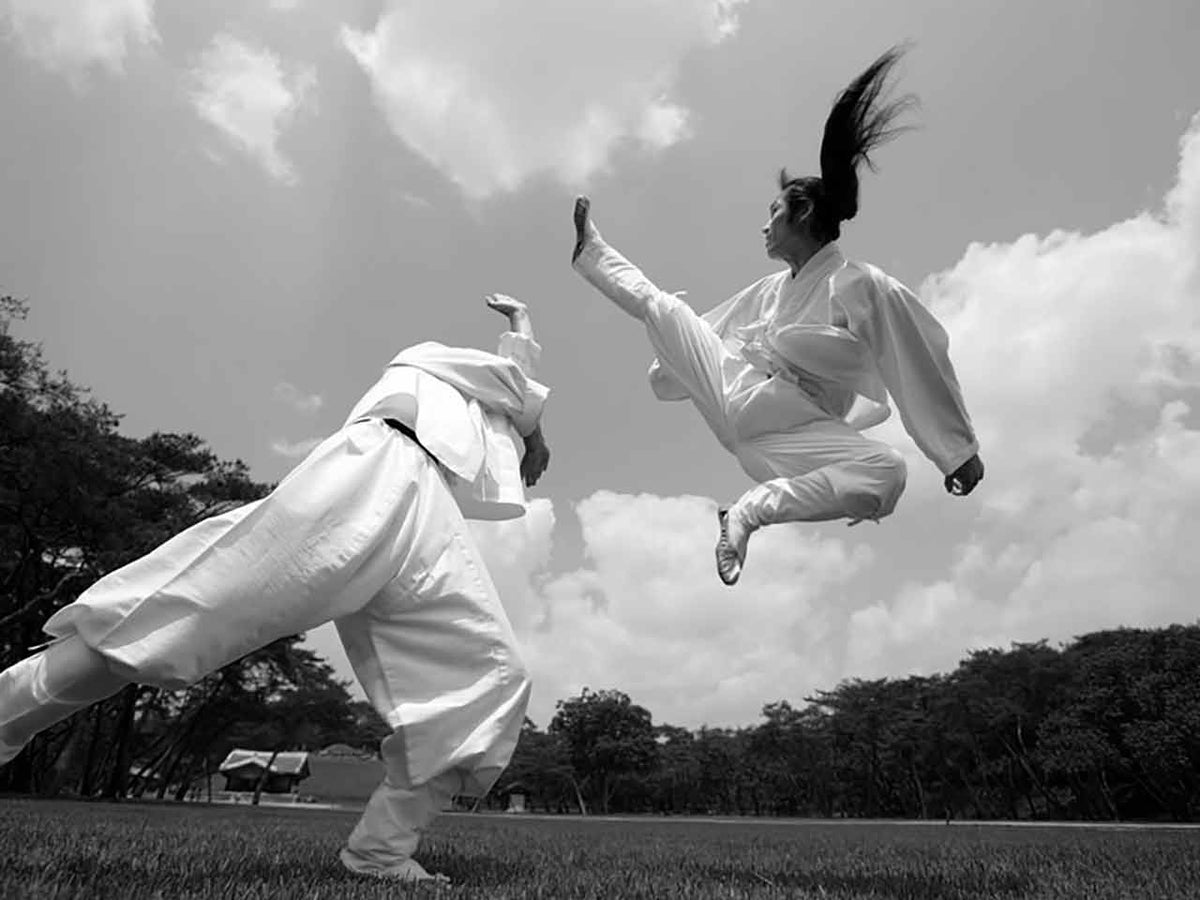
Taekkyon staat bekend om zijn uiteenlopende traptechnieken. Moderne scholen oefenen lage, middelhoge en hoge trappen, rechte sweeps met de bal van de voet of hiel, vloeiende hoge cirkeltrappen en bewegingen die van buiten naar binnen of van binnen naar buiten gaan. Schijnbewegingen, tempoveranderingen, slide-stepping en trips maken het voetenwerk moeilijk te lezen.
Sonjil: arm- en handtechnieken
Sonjil omvat technieken met de handpalm, vuist, onderarm, elleboog, handrand, handrug en vingers. De bewegingen worden verbonden met Pumbalki zodat de verende kracht van het hele lichaam naar de armen kan worden overgebracht. In de moderne wedstrijdvorm zijn handstoten en kopstoten doorgaans niet toegestaan; bredere historische of Yetbeop-lijnen kunnen meer technieken bevatten.
Taejil en Ttanjuk
Taejil verwijst naar worpen en trips. Nadat een tegenstander uit balans is gebracht, kan de beoefenaar diens eigen beweging gebruiken voor een worp vooruit of achteruit. Ttanjuk verwijst naar gewrichtscontroles en draaitechnieken. Die technieken horen niet automatisch bij een moderne wedstrijdvorm en moeten alleen onder deskundige begeleiding worden getraind.
Wedstrijd-Taekkyon en Yetbeop
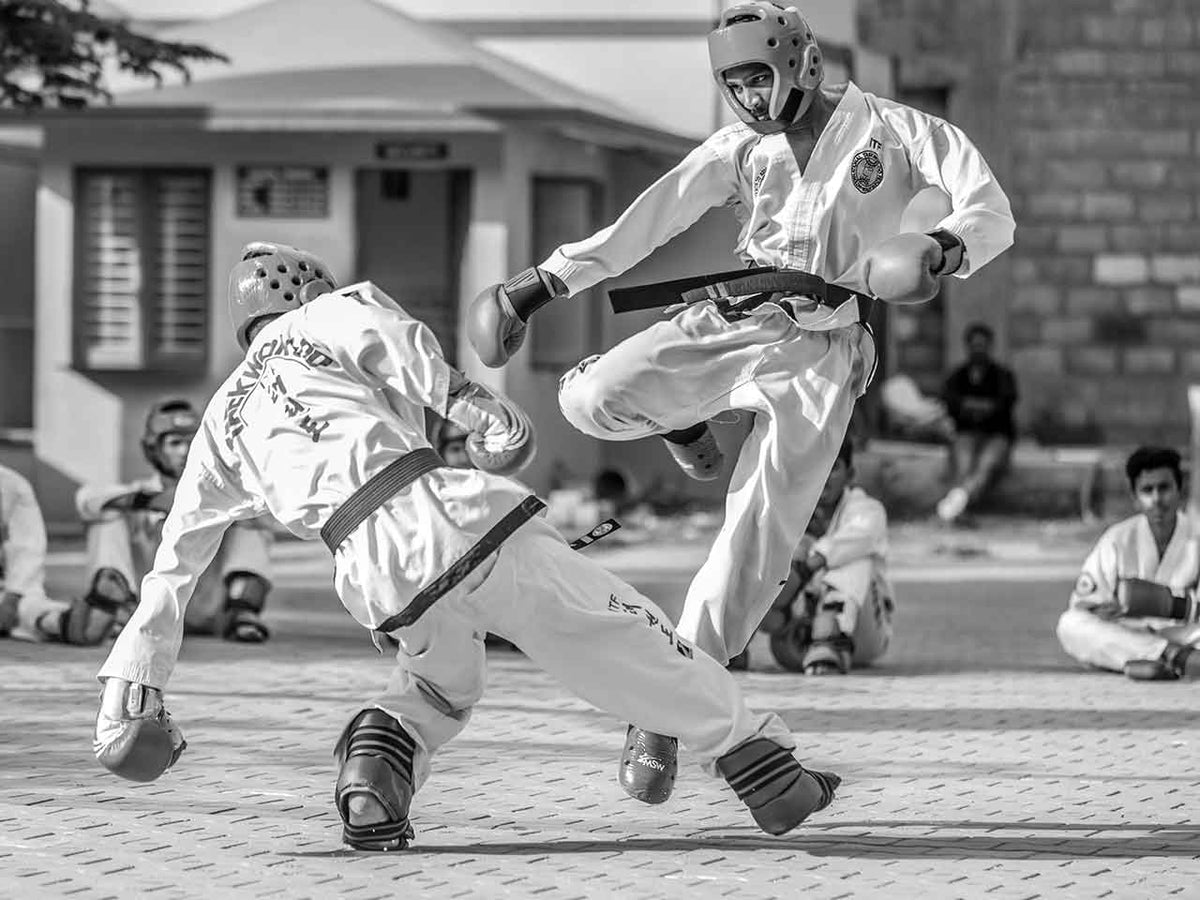
In moderne wedstrijd-Taekkyon wordt een beperkte selectie technieken gebruikt. Punten kunnen worden verdiend door een tegenstander te werpen of te trippen, uit de ring te duwen of met een toegestane trap het hoofd te raken. De wedstrijdvorm gebruikt doorgaans geen handstoten of kopstoten en verbiedt opzettelijk verwonden.
Sommige organisaties werken met een best-of-three-falls-format, waarbij de eerste deelnemer met twee beslissende punten of vallen wint. De precieze scoring, ringregels en toegestane technieken verschillen per organisatie.
Yetbeop Taekkyon
Yetbeop betekent ‘oude methoden’. Binnen deze benadering worden meer aspecten van Taekkyon in sparren en training behouden. Volgens de aangeleverde beschrijving kunnen onder meer stoten, openhandtechnieken, ellebogen, knieën, trappen, worpen en clinchwerk worden geoefend. Gewrichtsklemmen worden daarbij uitgezonderd in de beschreven sparringvorm.
Yetbeop is dus niet hetzelfde als het beperkte sportreglement. Een techniek die in een historische of zelfverdedigingslijn wordt bestudeerd, is niet automatisch toegestaan in een moderne wedstrijd.
Taekkyon en Taekwondo
Taekkyon wordt in populaire uitleg soms een oude versie of directe voorouder van Taekwondo genoemd. Dat beeld is te eenvoudig. Taekwondo werd na de Koreaanse Oorlog de nationale Koreaanse vechtsport en werd gevormd door meerdere invloeden, waaronder Japanse karate, Chinese krijgskunsten en Koreaanse tradities.
Taekkyon kan de naamgeving, beeldvorming en sommige kickgerichte ideeën van Taekwondo hebben beïnvloed, maar de twee disciplines hebben een duidelijk verschillend bewegingskarakter. Taekkyon is ritmisch, verend en sterk gericht op balansbreken, sweeps en worpen. Taekwondo gebruikt een meer rechtlijnige en sportief gestandaardiseerde techniektaal.
Verschillende Taekkyon-organisaties ontkennen een directe afstammingslijn. De nauwkeurigste formulering is daarom: Taekkyon en Taekwondo zijn verwante Koreaanse disciplines met enkele raakvlakken, maar niet dezelfde sport en niet simpelweg een ouder en jonger stadium van één lijn.
Rangen en kleding per organisatie
Taekkyon had lange tijd geen formeel, universeel rankingsysteem. Vanaf de jaren 1970 namen sommige organisaties graduaties over om training en moderne sportstructuur te organiseren.
Korea Taekkyon Association - gebruikt Pum voor beginnersniveaus en Dan voor hogere graden, volgens een systeem van 8e Pum naar 1e Pum en daarna 1e tot en met 9e Dan.
Korea Traditional Taekkyon Association - gebruikt Jjerae of Dong als aanduiding voor niveaus vóór en binnen het Dan-systeem.
Widae Taekkyon - gebruikt volgens de aangeleverde bronnen geen formele ranking, maar laat de instructeur het niveau beoordelen.
Deze systemen zijn organisatiegebonden en niet onderling uitwisselbaar. De gouijeoksam en cheollik zijn traditionele inspiratiebronnen voor moderne kleding, terwijl kleur, embleem en rangdetails per school kunnen verschillen.
Taekkyon buiten de eigen sport
Sommige beoefenaars gebruiken Taekkyon als basis of aanvulling voor andere vechtsporten. Ju Pyo Hong kwam uit in professioneel MMA en Yoo Hyun-woo gebruikte Taekkyon als basis voordat hij verderging in kickboksen. Zulke crossovervoorbeelden tonen de overdraagbaarheid van voetenwerk en balans, maar bewijzen niet dat de sporten technisch hetzelfde zijn.
03. / Ontwikkeling
Ontwikkeling
Taekkyon wereldwijd
Taekkyon wordt vooral in Zuid-Korea beoefend, maar heeft door UNESCO, internationale demonstraties, verenigingen en buitenlandse leerlingen ook buiten Korea bekendheid gekregen. De internationale verspreiding is kleiner dan die van Taekwondo en verloopt via afzonderlijke organisaties en scholen.
Drie moderne organisatielijnen
Korea Taekkyon Federation (KTF) - een grote, sportgerichte organisatie die wedstrijden, regels, scheidsrechtersopleidingen en promotie ondersteunt.
Widae Taekkyon Association - verbonden met leerlingen van Song Deok-gi en gericht op het behoud van de traditionele Widae-vorm; deze lijn organiseert volgens de aangeleverde bronnen geen moderne wedstrijden.
Korea Traditional Taekkyon Association (KTTA) - de Chungju-lijn, verbonden met leerlingen van Shin Han-seung en met de internationale culturele erkenning van Taekkyon.
Kyulyun Taekkyon Association (KTA) - een in Seoul gevestigde organisatie die onder meer de Taekkyon Battle organiseert.
De afkortingen KTF, KTTA en KTA worden in bronnen niet altijd op precies dezelfde manier gebruikt. Controleer daarom voor een evenement, rang of vereniging altijd de officiële naam van de betreffende organisatie.
Taekkyon in Nederland
Taekkyon heeft in Nederland een kleine en weinig zichtbare gemeenschap. Er wordt verwezen naar een Nederlandse Taekkyon Stichting die de sport wil promoten, maar het actuele aanbod van groepslessen en reguliere sportscholen kan veranderen. Wie de sport wil leren, doet er goed aan rechtstreeks bij de organisatie of bij regionale contacten in België en Duitsland te informeren.
Taekkyon in Nederland
In Nederland is Taekkyon vrijwel onbekend vergeleken met Taekwondo, kickboksen en andere Aziatische vechtsporten. Er is wel een Nederlandse stichting die de sport promoot. Omdat het aanbod klein en veranderlijk is, is het verstandiger actuele lessen en seminars rechtstreeks bij de stichting of betrokken organisaties te controleren dan te stellen dat er helemaal geen groepslessen bestaan.
Voor wie Taekkyon van dichtbij wil ervaren, kunnen Belgische of Duitse contacten een praktisch regionaal aanknopingspunt zijn. Taekwondo is geen vervanging voor Taekkyon, maar kan door de gedeelde Koreaanse context een interessante vergelijkingssport zijn.
Waarom Taekkyon uniek is
Vloeiend en ritmisch - Pumbalki en Ogumsil geven de sport een voortdurend bewegend karakter.
Balans boven brute kracht - worpen, trips en sweeps ontstaan uit timing en gewichtsverplaatsing.
Een eigen Koreaanse traditie - met historische, folkloristische en culturele lagen die niet samenvallen met Taekwondo.
04. / Training
Training
Training en basisbeweging
Taekkyon-training draait om ritme, balans, ontspanning en het voortdurend verplaatsen van het zwaartepunt. De knieën buigen en strekken in een vloeiende beweging die Ogumsil of Neung-cheong wordt genoemd. Die verende actie geeft Taekkyon zijn herkenbare dansachtige karakter en ondersteunt snelle richtingsveranderingen.
Pumbalki: driehoekig voetenwerk
Pumbalki, ook Pum balbki of Pumpalki geschreven, betekent ongeveer ‘op de pum stappen’. Pum verwijst naar het driehoekige karakter van het Hanja-teken 品. De beoefenaar oefent de stappen eerst op de plaats en gebruikt ze in wedstrijdvorm om vooruit, achteruit en zijwaarts te bewegen.
Het voetenwerk helpt het zwaartepunt snel te verplaatsen, versterkt het onderlichaam en verbindt aanval en verdediging. Het is geen decoratieve dans: de richting, timing en afstand bepalen of een sweep, trap of worp werkelijk werkt.
Hwalgaejit: misleidende armbeweging
Hwalgaejit verwijst naar vloeiende arm- en schouderbewegingen die aan vleugels kunnen doen denken. De beweging kan de aandacht afleiden, een slag helpen blokkeren of vangen en de kracht van de romp naar de armen overbrengen. Hwalgaejit hoort samen te werken met Pumbalki en niet als los trucje te worden uitgevoerd.
Vroeger trainden en wedijverden beoefenaars in alledaagse kleding. Moderne scholen gebruiken kleding die is geïnspireerd op traditionele Koreaanse vormen, zoals de gouijeoksam. Sommige wedstrijdorganisaties gebruiken de cheollik, een kledingstuk met inspiratie uit de Goryeo-periode.
De kleuren en details van de kleding kunnen per school, rang en organisatie verschillen. De cheollik van een wedstrijdorganisatie is daarom niet automatisch de universele Taekkyon-uniform.
Taekkyon wordt traditioneel op blote voeten beoefend, omdat direct contact met de ondergrond belangrijk is voor ritme, balans en sweeps. Bij wedstrijden kunnen lichte been- of voetbeschermers worden gebruikt. De exacte bescherming volgt het actuele reglement.

 Zuid-Korea