Judo is een Japanse krijgskunst en olympische sport waarin techniek, timing en maximale efficiëntie centraal staan. Ontdek de worpen, grondtechnieken, trainingsvormen en uitrusting van een van de belangrijkste grapplingdisciplines ter wereld.
Herkomst
Japan
Ontdek verder
01. / Overzicht
Overzicht
Wat is judo?
Judo is een van oorsprong Japanse krijgskunst en zelfverdedigingskunst die rond 1882 werd ontwikkeld door Jigoro Kano. Het woord judo betekent 'de zachte weg' en verwijst naar een manier van trainen en leven waarin techniek, timing en controle belangrijker zijn dan brute kracht. Een beoefenaar heet een judoka.
In judo leer je de snelheid en kracht van een tegenstander te gebruiken in plaats van die rechtstreeks te beantwoorden. Het doel is een tegenstander gecontroleerd uit balans te brengen en te werpen, of op de grond te controleren met een houdgreep, verwurging of gewrichtsklem. De wedstrijdsport is wereldwijd populair en maakt sinds 1964 deel uit van het olympische programma.
Judo draait niet alleen om winnen. Zelfbeheersing, respect, samenwerken en veilig leren trainen vormen de basis. Een training en wedstrijd beginnen en eindigen met respect voor de partner, de tegenstander en de tatami.
De kern van de sport
De twee klassieke principes van judo zijn seiryoku zenyō, maximaal effect met minimale inspanning, en jita kyōei, wederzijds profijt en algemeen welzijn. Op de mat betekent dat: efficiënt bewegen, de juiste actie op het juiste moment kiezen en samen trainen om beter te worden. Je werpt je trainingspartner, maar wordt daarna ook zelf geworpen. Dat maakt judo tegelijk een individuele uitdaging en een gezamenlijke leerschool.
Jigoro Kano werd in 1860 geboren in Mikage, Japan. Als kleine, tengere jongen die vaak werd gepest, begon hij traditionele jiujitsu te beoefenen. Hij bestudeerde onder meer Tenjin Shinyo-ryu en Kito-ryu en bracht hun bruikbare technieken samen in een veiliger en systematischer systeem: judo.
In 1882 richtte Kano de Kodokan op in Tokio. Hij verwijderde de gevaarlijkste technieken uit het traditionele jiujitsu en ontwikkelde randori, vrije oefening met weerstand, als basis voor een veilige maar realistische training. Die combinatie van techniek, fysieke ontwikkeling en mentale vorming maakte judo anders dan een gewone verzameling vechttechnieken.
De filosofie van Jigoro Kano
Seiryoku zenyō - maximaal effect bereiken met minimale inspanning. Gebruik je energie efficiënt en leer de kracht van een tegenstander in je voordeel te benutten.
Jita kyōei - wederzijds profijt en algemeen welzijn. Judo leer je samen, met respect voor je partner en verantwoordelijkheid voor elkaars ontwikkeling.
Techniek boven brute kracht
In het oorspronkelijke ideaal moest een kleinere en fysiek zwakkere persoon zich met techniek kunnen verdedigen tegen een grotere aanvaller. In wedstrijdjudo speelt kracht uiteraard wel een rol, maar timing, balans, grip, houding en technische keuze bepalen nog steeds wie een uitwisseling wint.
Judo wordt wereldwijd en olympisch
Kano verspreidde judo internationaal via demonstraties en opleidingen. In 1964 werd judo olympisch tijdens de Spelen van Tokio. De eerste wereldkampioenschappen voor mannen vonden plaats in 1956, het eerste wereldkampioenschap voor vrouwen in 1980. Vanaf 1987 werden de toernooien samengevoegd. De International Judo Federation (IJF) is de internationale koepel van de sport.
De Nederlandse judotraditie kreeg wereldwijd aanzien door Anton Geesink, die in 1964 olympisch goud won in Tokio, Wim Ruska, die in 1972 twee gouden medailles won, en Mark Huizinga, die in 2000 olympisch kampioen werd.
Belangrijke ontwikkelingen in judo
Judo begon als een systeem voor persoonlijke ontwikkeling en zelfverdediging, groeide uit tot een internationale wedstrijdsport en bleef tegelijk verbonden met de traditionele dojo-waarden. De Kodokan bewaakt de technische en historische basis, terwijl bonden en wedstrijdorganisaties de sport verder ontwikkelen voor verschillende leeftijden en niveaus.
De Nederlandse bijdrage
Anton Geesink zorgde niet alleen voor een historische olympische overwinning. Het gebruik van een wit en blauw judopak in grote wedstrijden werd mede door zijn invloed belangrijker, omdat scheidsrechters, publiek en kijkers zo beter kunnen zien welke judoka welke actie uitvoert. In kleinere wedstrijden en in Japan worden ook rode en witte banden gebruikt om de judoka's uit elkaar te houden.
De zeldzame 10e dan
De 10e dan is een uitzonderlijke graad die historisch slechts aan een zeer kleine groep judoka's is toegekend. Tot de bekende houders behoren onder anderen Kyuzo Mifune, Yoshitsugu Yamashita, Anton Geesink, Charles Palmer, Toshiro Daigo, Ichiro Abe, Yoshimi Osawa, Jaap Nauwelaerts de Agé en George Kerr. De rode band staat voor de hoogste dan-graden; de precieze toekenning en erkenning kan per bond verschillen.
Judo voor iedereen
Judo wordt beoefend door kinderen, volwassenen en senioren. Recreatief judo legt de nadruk op veilig bewegen, leren vallen, samenwerken en plezier. A-judo voor sporters met een beperking is geïntegreerd in de sport, met waar nodig aangepaste trainingen en wedstrijden.
Kata: de formele kant van judo
Kata zijn vaste vormen waarin judotechnieken formeel, precies en volgens een afgesproken volgorde worden uitgevoerd. Je kunt kata zien als de grammatica van judo: ze maken de technische principes zichtbaar en helpen judoka's om houding, timing, afstand, controle en beweging scherp te ontwikkelen.
Het uitvoeren van kata is een verplicht onderdeel van het danexamen, maar kata worden ook los daarvan beoefend. Veel judoka's beginnen ermee rond hun dertiende jaar en vanaf de 2e kyu. De partner die de techniek uitvoert heet tori; de partner die de techniek ontvangt heet uke.
Belangrijke Kodokan-kata
Nage no Kata - vaste vormen voor werptechnieken.
Katame no Kata - controletechnieken op de grond.
Ju no Kata - vormen waarin meegaandheid en soepel bewegen centraal staan.
Kime no Kata - technieken voor verdediging en beslissende controle.
Koshiki no Kata - oude technieken met een directe link naar de traditionele krijgskunst.
Kodokan Goshin Jutsu - vormen voor zelfverdediging.
Itsutsu no Kata - een kata rond de vijf natuurwetten.
Andere kata
Seiryoku Zenyo Kokumin Taiiku no Kata - oefeningen voor maximale efficiëntie.
Go no Kata - krachttechnieken.
Joshi Goshin Ho - zelfverdediging voor vrouwen.
Gonosen no Kata - overnametechnieken.
Hikomi no Kata - staande kanteltechnieken.
Kata vraagt geen wedstrijdtempo, maar aandacht voor detail. Elke houding, verplaatsing en techniek draagt de bedoeling van judo over. Daarom blijft kata belangrijk voor judoka's die hun techniek willen verfijnen, ook wanneer ze niet aan officiële wedstrijden deelnemen.
Wedstrijd: shiai
Een officiële judowedstrijd heet shiai. Judoka's worden ingedeeld naar leeftijd en gewicht, zodat de wedstrijd zo eerlijk en veilig mogelijk verloopt. Voor senioren duurt een wedstrijd doorgaans vier minuten. Bij junioren ligt de wedstrijdduur, afhankelijk van de leeftijd, meestal tussen twee en vier minuten.
De commando's van de scheidsrechter
Hajime - begin. De wedstrijd en de wedstrijdtijd starten.
Mate - wacht. De wedstrijd en de tijd worden onderbroken.
Sono-mama - niet bewegen. De judoka's blijven in hun positie, bijvoorbeeld tijdens een houdgreep.
Yoshi - doorgaan. De wedstrijd hervat vanuit dezelfde posities als vóór sono-mama.
Scores en beoordeling
Een worp wordt beoordeeld op controle, kracht, snelheid en de manier waarop de tegenstander landt. De belangrijkste wedstrijdscores zijn ippon, waza-ari en yuko. Een ippon beëindigt de wedstrijd direct. Een waza-ari is een sterke maar niet volledige score; meerdere resultaten kunnen volgens het geldende wedstrijdreglement samen de beslissing bepalen.
Ippon - een volledige score voor een overtuigende techniek met controle en een duidelijke landing of andere beslissende actie.
Waza-ari - een hoge score voor een goed uitgevoerde techniek die niet aan alle voorwaarden voor ippon voldoet.
Yuko - een lagere score binnen het geldende wedstrijdreglement.
Staande technieken en grondwerk
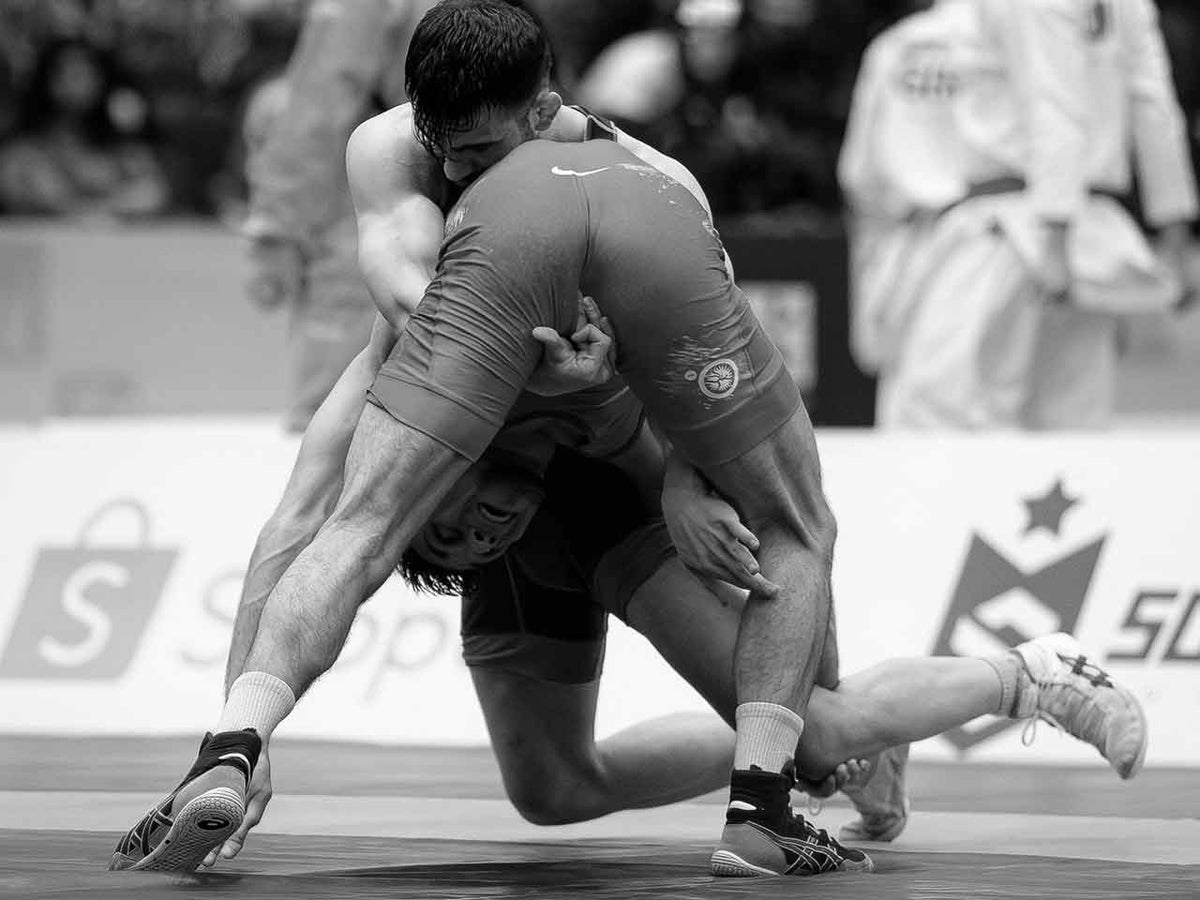
Bij tachi-waza, staande technieken, wordt onder meer gekeken naar de balansverstoring, de controle tijdens de worp en de landing. Bij ne-waza, grondtechnieken, kan een houdgreep scoren wanneer de tegenstander gecontroleerd op de rug of schouder ligt en de uitvoerder van bovenaf druk houdt. De exacte score en tijdsduur volgen het actuele reglement van de bond of wedstrijdorganisatie.
Jonai en jogai
Een actie is jonai, ofwel in, wanneer het resultaat van de techniek binnen de gevechtsruimte duidelijk is. Bij een staande techniek kan de landing buiten de ruimte plaatsvinden als de techniek binnen de ruimte is aangezet. Bij grondwerk blijft de actie in zolang een judoka lichamelijk contact houdt met de gevechtsruimte. Is de actie jogai, ofwel uit, dan onderbreekt de scheidsrechter de wedstrijd met mate.
Gewichtscategorieën
Mannen: onder 60 kg, 60-66 kg, 66-73 kg, 73-81 kg, 81-90 kg, 90-100 kg en boven 100 kg.
Vrouwen: onder 48 kg, 48-52 kg, 52-57 kg, 57-63 kg, 63-70 kg, 70-78 kg en boven 78 kg.
De exacte categorieën kunnen per leeftijd, wedstrijd en actuele internationale regelgeving verschillen. Daarom zijn de voorschriften van de organiserende bond altijd leidend.
Straffen in judo
Straffen zijn bedoeld om onveilig, passief of onsportief gedrag te corrigeren. De twee belangrijkste strafnamen zijn shido voor een lichte overtreding en hansoku-make voor een zware overtreding of diskwalificatie. De precieze toepassing kan per leeftijdscategorie en actuele wedstrijdreglement verschillen.
Shido
Een shido kan worden gegeven voor gedrag dat het wedstrijdverloop onrechtmatig verstoort. Voorbeelden zijn bovenmatig defensief of passief judo, een schijnaanval, onnodig buiten de wedstrijdruimte lopen, een eenzijdige pakking zonder directe aanval, spreken tijdens de wedstrijd en het voortdurend vermijden van een echte judogreep.
Ook het herschikken van de eigen judogi of die van de tegenstander, het naar het gezicht brengen van handen of voeten, het onnodig onderbreken van het gripgevecht en het uitvoeren van technieken die in een bepaalde leeftijdscategorie niet zijn toegestaan kunnen tot een shido leiden. Drie shido's staan volgens het aangeleverde wedstrijdkader gelijk aan hansoku-make.
Hansoku-make
Een directe hansoku-make volgt op een ernstige overtreding en betekent verlies van de wedstrijd. Afhankelijk van de overtreding kan ook uitsluiting van de rest van het toernooi volgen. Een indirecte hansoku-make ontstaat door drie shido's en leidt in de basis tot verlies van de wedstrijd.
een armklem uitvoeren op een andere plek dan het ellebooggewricht;
een tegenstander opzettelijk proberen te verwonden of handelen tegen de geest van judo;
de judogi onder de band vastpakken of metalen voorwerpen dragen;
de scheidsrechter negeren of minachtend gedrag vertonen;
een tegenstander optillen die al op de mat ligt en hem direct opnieuw werpen;
vanuit staande positie een of beide benen vastpakken, oftewel grabbing, wanneer geen uitzondering geldt;
met het hoofd voorover in een staande techniek duiken, oftewel diving.
Grabbing en diving
Het verbod op grabbing werd ingevoerd om het onderscheid tussen judo en andere worstelsporten duidelijker te houden. Een eerste overtreding kan volgens het wedstrijdkader als shido worden bestraft en een herhaling als hansoku-make. Diving, waarbij een judoka met het hoofd voorover in een worp duikt, wordt eveneens zwaar bestraft. De exacte uitzonderingen en gevolgen volgen altijd de actuele regels van de organiserende bond.
Hoe een wedstrijd eindigt
een ippon door een worp, houdgreep, armklem of verwurging;
drie shido's of een directe hansoku-make voor de tegenstander;
opgave, bijvoorbeeld door afkloppen of het roepen van maita;
een hogere score aan het einde van de reguliere wedstrijdtijd;
golden score wanneer de stand gelijk is en een beslissing nodig blijft.
In golden score gaat de wedstrijd door totdat een score of straf de beslissing brengt. Voor jeugdwedstrijden kunnen afwijkende regels gelden, waaronder een andere behandeling van een gelijke stand.
Jeugdreglement en veiligheid
Judo hecht veel waarde aan veiligheid. Voor jeugdwedstrijden, waaronder de categorie 12-, gelden daarom extra regels. Het doel is dat jonge judoka's wedstrijdervaring opdoen in een omgeving die past bij hun leeftijd, ontwikkeling en belastbaarheid.
Belangrijkste verschillen bij jeugd
Armklemmen zijn niet toegestaan.
Verwurgingen zijn niet toegestaan.
Een wedstrijd duurt doorgaans twee minuten wanneer geen verlenging nodig is.
EHBO-medewerkers mogen, ook op verzoek van de judoka, zo vaak als nodig de mat betreden.
Technieken die op één of beide knieën worden uitgevoerd zijn niet toegestaan.
Offerworpen waarbij de tegenstander over het lichaam van de uitvoerder wordt heengetrokken zijn niet toegestaan.
Omdat jeugdwedstrijden ook een pedagogisch doel hebben, wordt vaak eerder uitleg gegeven en minder snel een shido opgelegd. De normale veiligheidsregels blijven wel gelden. Ook grabbing, diving en andere verboden acties blijven verboden. Het vermijden van een geldige pakking kan binnen het jeugdreglement direct zwaar worden bestraft.
EHBO tijdens wedstrijden
Bij jeugdwedstrijden mogen EHBO-medewerkers de mat betreden wanneer dat nodig is. Bij oudere judoka's gelden strengere procedures en kan het zonder uitnodiging van de scheidsrechter gevolgen hebben voor de wedstrijd. De scheidsrechter kan EHBO inschakelen bij onder meer letsel aan hoofd, rug of nek, een verwonding aan het scrotum, een gescheurde nagel of een bloedende wond.
Een bloedende wond mag volgens het aangeleverde kader tot tweemaal toe worden verbonden. Bij een derde bloeding kan de judoka de wedstrijd verliezen. De precieze toepassing van EHBO-regels en wedstrijdgevolgen volgt altijd het actuele reglement van de organiserende bond.
Veiligheid begint op de mat
Een goede jeugdtraining begint met valbreken, duidelijke afspraken en gecontroleerd contact. Coaches, scheidsrechters, ouders en judoka's dragen samen verantwoordelijkheid voor een veilige sfeer. Techniek, respect en plezier horen bij judo net zo sterk als winnen.
03. / Ontwikkeling
Ontwikkeling
Judo over de hele wereld
Judo is uitgegroeid tot een wereldwijde sport met nationale bonden, lokale clubs, internationale kampioenschappen en een vaste plaats op de Olympische Spelen. De IJF organiseert wereldkampioenschappen in niet-olympische jaren en bewaakt samen met de nationale federaties de internationale wedstrijdstructuur.
De sport kent verschillende lagen. Beginners trainen vooral vallen, bewegen, grip en basisworpen. Gevorderde judoka's werken aan combinaties, overnames, grondwerk en wedstrijdtactiek. Op topniveau komen kracht, conditie, videoanalyse, wedstrijdervaring en een zeer verfijnd gevoel voor timing samen.
Clubs, bonden en judoscholen
Een judoschool kan een zelfstandige sportschool of een vereniging zijn. Kinderen en volwassenen trainen er onder leiding van een judoleraar, vaak in groepen die zijn ingedeeld naar leeftijd, ervaring en niveau. Veel clubs organiseren interne wedstrijden en nodigen ook judoka's van andere scholen uit.
In Nederland is de Judo Bond Nederland de nationale bond. In België is dat de Koninklijke Belgische Judobond, met Judo Vlaanderen en de Ligue Francophone Belge de Judo als onderdelen. Nationale bonden verbinden clubs met internationale organisaties en begeleiden examens, wedstrijden en uitzendingen naar internationale toernooien.
Judo als levenslange sport
De combinatie van veilig vallen, gecontroleerd contact, discipline en samenwerken maakt judo geschikt voor veel verschillende leeftijden. Niet iedere judoka kiest voor officiële wedstrijden. Voor veel beoefenaars ligt de waarde juist in fit blijven, zelfvertrouwen opbouwen, leren omgaan met weerstand en samen groeien in de dojo.
Judo in Nederland
Nederland heeft een sterke judotraditie en bracht meerdere wereld- en olympische kampioenen voort. Anton Geesink werd in 1964 olympisch kampioen, Wim Ruska won in 1972 twee gouden medailles en Mark Huizinga won olympisch goud in 2000. Hun prestaties maakten judo zichtbaar bij een breed publiek en versterkten de Nederlandse judocultuur.
De Judo Bond Nederland (JBN) is de nationale bond voor judo in Nederland. Judoscholen en verenigingen vormen de basis van de sport. Daar leren kinderen en volwassenen veilig bewegen, trainen ze samen en kunnen judoka's zich voorbereiden op examens en wedstrijden.
Het Nederlandse graduatiesysteem
In Nederland loopt het graduatiesysteem van de lagere kyu-graden naar de hogere dan-graden. De kleur van de band maakt het niveau zichtbaar. De kyu-graden lopen van de 6e kyu tot en met de 1e kyu. Daarna volgen de dan-graden van 1e dan tot en met 10e dan.
6e kyu - wit
5e kyu - geel
4e kyu - oranje
3e kyu - groen
2e kyu - blauw
1e kyu - bruin
1e tot en met 5e dan - zwart
6e tot en met 8e dan - rood-wit
9e en 10e dan - rood
Bij kinderen werken scholen soms met slippen of halve banden. Daarmee wordt zichtbaar hoe ver een judoka naar de volgende graad is en blijft de ontwikkeling overzichtelijk en motiverend. De wachttijd tussen kyu-graden bedraagt minimaal zes maanden, maar de praktijk kan per school en examenmoment verschillen.
Examens en de JBN
Kyu-examens worden vaak binnen de eigen judoschool afgenomen. Voor een dan-graad is een examen via de Judo Bond Nederland nodig. Examens voor de 1e tot en met 3e dan worden afgenomen door regionale examencommissies; de 4e en 5e dan worden beoordeeld door landelijke examencommissies. Hogere graden worden in toenemende mate toegekend op basis van verdiensten voor de judosport, afhankelijk van de geldende regels.
Vanaf de zwarte band wordt niet meer met slippen gewerkt. Een danexamen bestaat onder meer uit kata en een vrij deel met staande en grondtechnieken. Voor deelname aan hogere wedstrijden of het behalen van een dan-graad zijn een nationale judovereniging en judopaspoort belangrijk.
04. / Training
Training
Trainen in judo
Judolessen vinden plaats in een dojo op een tatami. De training begint traditioneel in seiza, de geknielde houding, en gaat gepaard met een buiging richting de mat. Ook bij het verlaten van de tatami tonen judoka's respect. Het is een eenvoudige gewoonte met een duidelijke boodschap: train hard, maar behandel je omgeving en je trainingspartner zorgvuldig.
Valbreken en veilig leren bewegen
Ukemi-waza, de technieken voor het breken van een val, is een van de eerste en belangrijkste onderdelen van judo. Een judoka leert achterwaarts, zijwaarts en voorwaarts veilig te vallen voordat worpen en randori zwaarder worden. Goede ukemi beschermt het eigen lichaam en maakt het mogelijk om met vertrouwen te trainen.
De belangrijkste techniekfamilies
Nage-waza - werptechnieken, waaronder beenworpen, heupworpen, schouder- en armworpen en offerworpen.
Katame-waza - controletechnieken op de grond, waaronder houdgrepen, armklemmen en verwurgingen.
Atemi-waza - slag-, stoot- en traptechnieken. Deze zijn niet toegestaan in randori of shiai, maar komen in sommige kata voor.
De judoka die een techniek uitvoert heet tori. De judoka die de techniek ondergaat heet uke. Die rollen wisselen voortdurend. Judo leer je niet alleen door technieken uit te voeren, maar ook door ze veilig te ontvangen en te begrijpen.
Randori, shiai en kata
Tijdens randori oefenen judoka's vrij en met weerstand. Een officiële wedstrijd heet shiai en vraagt om tactiek, conditie, gripgevecht en controle onder druk. Kata zijn vaste vormen waarin technieken formeel en precies worden uitgevoerd. Samen vormen deze drie trainingsvormen de technische ruggengraat van judo.
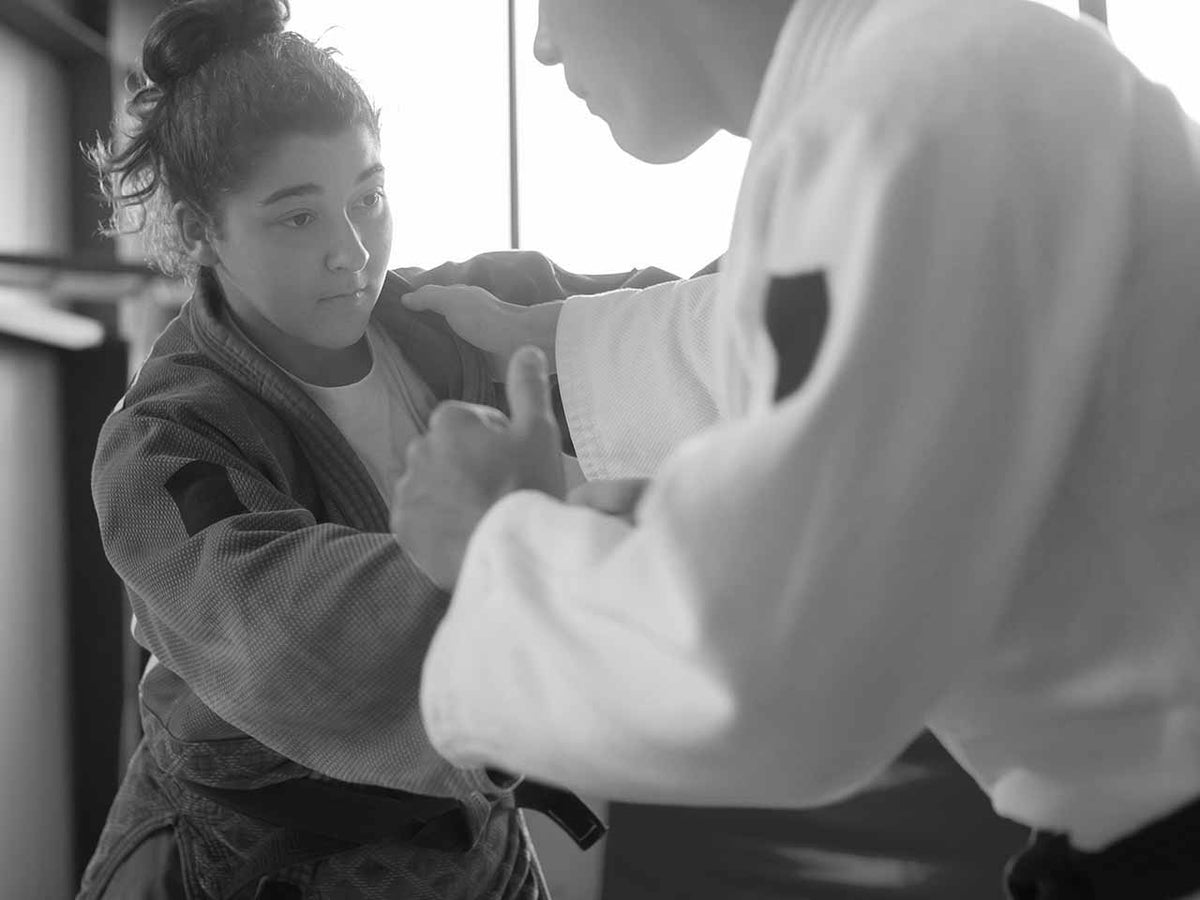
De judogi bestaat uit een judojas, een broek en een band. De jas heet uwagi, de broek zubon en de band obi. Samen vormen ze de judogi, in het dagelijks gebruik vaak simpelweg gi genoemd. Een judogi moet stevig genoeg zijn om grip, trekken en worpen tijdens training en wedstrijd te doorstaan.
In grote wedstrijden draagt de ene judoka meestal wit en de andere blauw. Dat maakt de acties duidelijker voor de scheidsrechters, het publiek en kijkers thuis. Vrouwen dragen onder de uwagi een wit T-shirt.
De tatami
Judo wordt beoefend op een tatami die voldoende meegeeft om de impact van worpen te beperken. De matdelen moeten strak tegen elkaar liggen, een effen oppervlak vormen en zo zijn geplaatst dat ze niet verschuiven. Een wedstrijdvloer bevat naast het wedstrijdvlak ook ruimte om veilig uit te wijken.
De band als teken van ontwikkeling
De kleur van de band laat zien welke graad een judoka heeft bereikt. Het graduatiesysteem verschilt per land en bond, maar de band blijft een zichtbaar teken van technische ontwikkeling, trainingsjaren en verantwoordelijkheid binnen de dojo.

 Japan
Japan