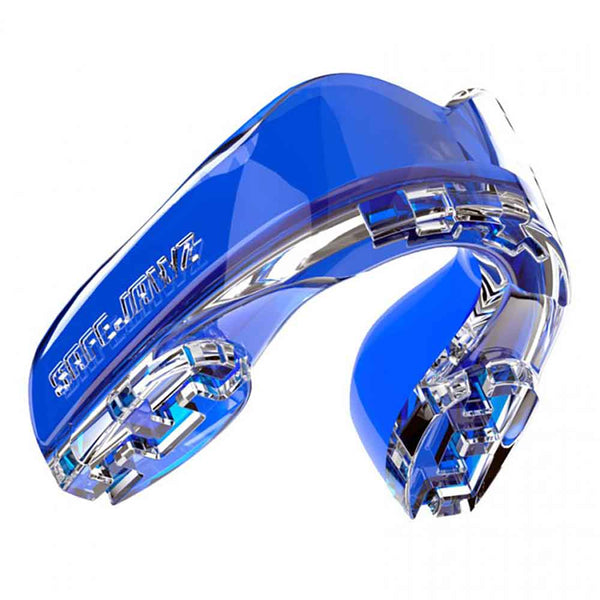
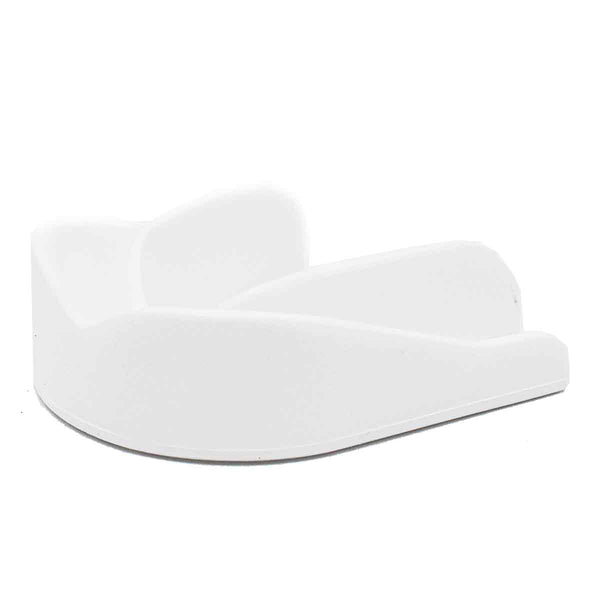
Buying a mouthguard seems simple until you have to choose. Pre-formed or moldable? Junior or adult? What if you have braces? And how should a mouthguard actually fit: firmly in place, or should you have to keep biting down on it?
A good choice starts with the type and fit of the mouthguard, not with its color or a promise on the packaging. The model must be suitable for your teeth, and you must be able to use it according to the accompanying instructions. A mouthguard that you have bought but keep taking out during training because it is uncomfortable does little to help.
In this article, you will learn which types of mouthguards are available, how to choose a suitable model, and what to consider when shaping, cleaning, and replacing one. The differences for children and people with braces are also covered. From the initial choice to the point when the mouthguard needs replacing.
What does a mouthguard do?
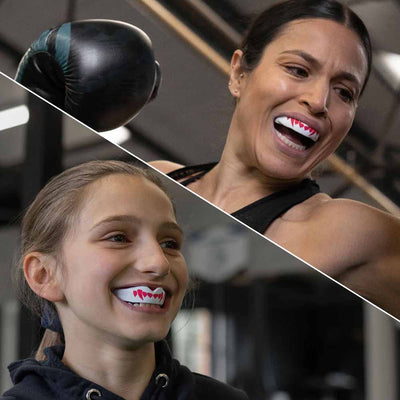
A mouthguard, usually simply called a mouthguard, helps absorb the impact of a blow to the mouth. This can reduce the risk of dental injuries and injuries to the soft tissues in and around the mouth. This includes not only the teeth, but also the lips, tongue, and inside of the cheeks.
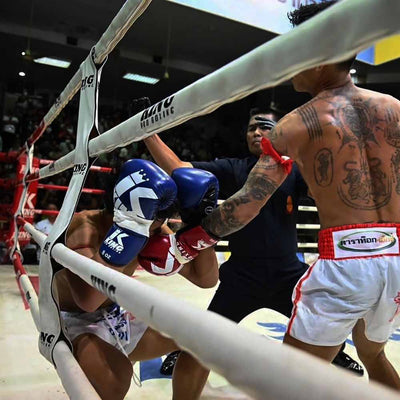
That makes a mouthguard relevant in contact sports such as boxing and other combat sports in which contact with the mouth can occur. It is not only an intentional punch that matters: unintended contact can also occur during a practice.
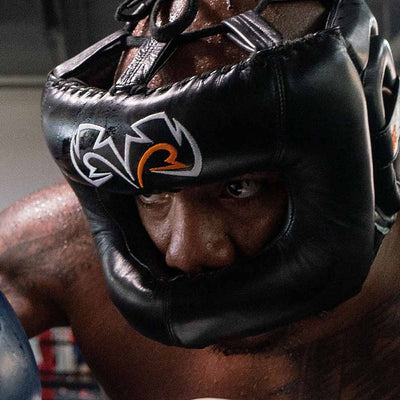
Protection is no guarantee that nothing can happen. A mouthguard does not make a hard blow harmless. So do not regard it as a guarantee against concussion, brain injury, or a fractured jaw. The reason for wearing a mouthguard is mouth protection, not the idea that head contact is therefore risk-free.
What does research say about mouth protection?
A mouthguard is not just a habit from the changing room. Topsport Topics describes a 2019 systematic review that brought together the results of 26 studies on dental protection. These included athletes from rugby, American football, basketball, and hockey.
In athletes wearing a mouthguard, the risk of oral injury in that review study was at least twice as low as in athletes without dental protection. Oral injury included not only damaged teeth, but also injuries to the mouth, lips, jaw, and more. This supports wearing mouth protection; it is not a promise that the same percentage of protection applies to every blow or every combat sport.
The athletes studied used different types of mouthguards. Based on this analysis, the researchers could not determine which of the three types provided the best protection. So you cannot use the result to declare one store model the proven winner. The overall research outcome and a comparison between specific products are different questions.
A mouthguard does not prevent everything. That does not make it pointless
A hard blow can still have consequences even with protection. It does not follow that mouth protection has no value. The difference between reducing risk and completely ruling out injury is important.
That distinction also appears in a 2013 fact-check kept by the University of Groningen in its research portal. The title is ‘Wearing a hockey mouthguard is pointless’, but that is the claim the article examines, not the conclusion. The fact-check actually assesses that claim as false and describes the importance experts attach to dental protection.
The useful conclusion is not that a mouthguard stops everything, but that the lack of complete protection is no reason to leave it out. This also concerns an older discussion about hockey. When choosing and using one for martial arts, a suitable model, the product instructions, and your own training or competition situation remain important.
What types of mouthguards are there?
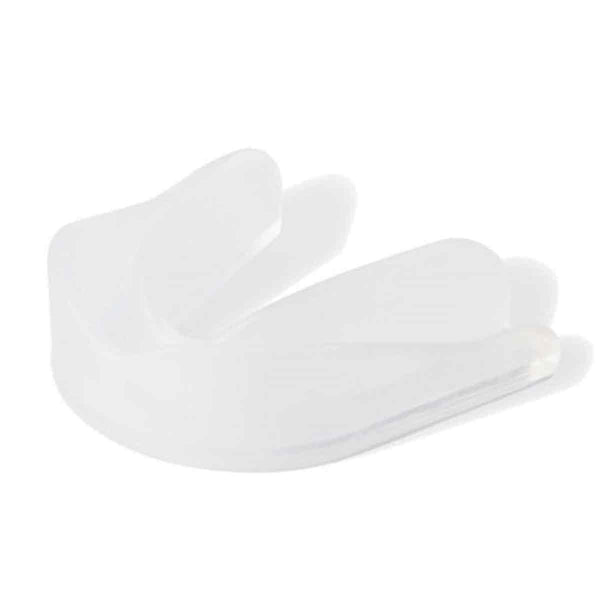
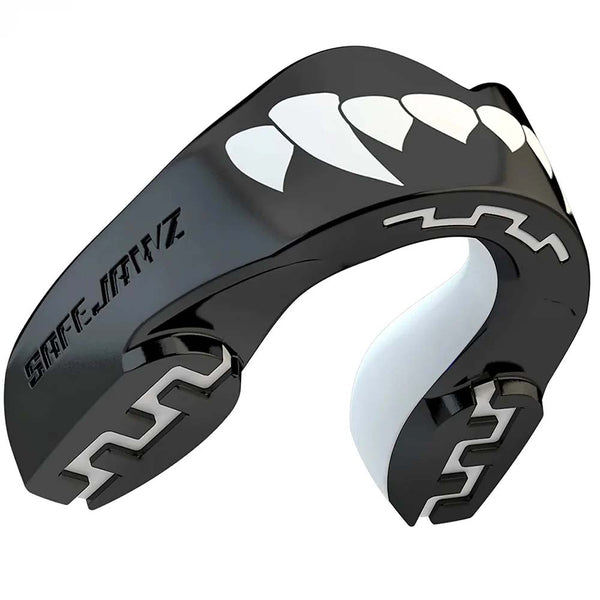
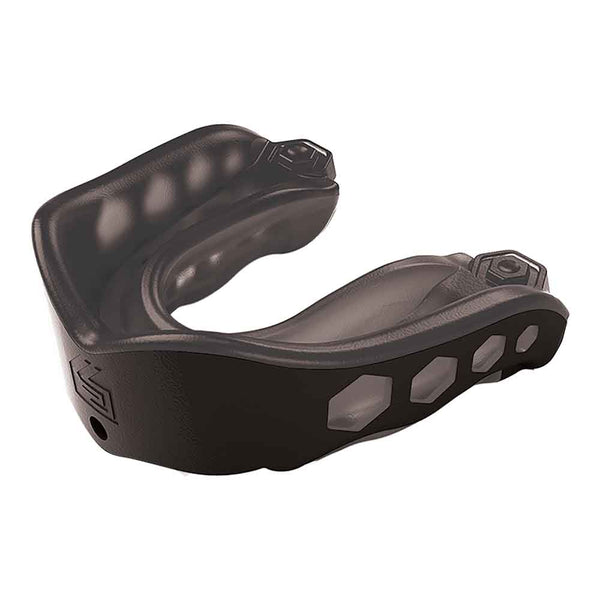
The most important distinction is how the fit is created. Broadly speaking, there are three groups: pre-formed mouthguards, self-moldable mouthguards, and mouthguards that a dentist makes personally for you.
You will also encounter labels such as junior, adult, and suitable for braces. These describe a size group or application. They do not automatically tell you how the mouthguard is adapted. So you should not treat a mouthguard for braces in exactly the same way as a regular moldable sports mouthguard.
| Type | How is the fit created? | What should you look out for? |
|---|---|---|
| Pre-formed | The mouthguard already has its shape when purchased. | Whether that shape and size fit your mouth. Do not heat it unless the manufacturer explicitly instructs you to. |
| Self-moldable, also called boil-and-bite | You adapt the material according to the manufacturer's molding procedure. | The exact instructions for your model, the chosen size, and the result after cooling. |
| Personally made to measure | The dentist has the mouthguard made for your mouth. | Individual fit, any particular features of the teeth, and monitoring when the teeth change. |
Pre-formed: ready to use immediately, but not personally adapted
A pre-formed mouthguard already has a fixed shape. You do not need to mold it to your teeth first with warm water. That is convenient, but it also means the fit is not personally tailored to your teeth.
The American Dental Association lists as points to consider that such models may fit less well, can be bulky, and may make speaking or breathing more difficult. That is no reason to look only at the label: assess how a model actually fits in your mouth.
Preformed does not mean that you should experiment to make it fit. If heating or adjusting is not intended for the model, hot water will not turn it into a boil-and-bite mouthguard.
Self-fitting: the instructions belong with the mouthguard
With a self-fitting mouthguard, the material becomes soft enough during the prescribed shaping process to adapt to your teeth. After cooling, the mouthguard takes on its shape for use.
That is the principle behind boil-and-bite. It is not a universal recipe. The preparation, water temperature, times and shaping method may differ between models. You also cannot assume that reshaping is possible with every model.
Therefore, use the instructions for the exact model you have in your hands. Not instructions for another mouthguard from the same brand, an isolated boiling tip from a blog, or a time you still remember from a previous one.
The American Dental Association explains that a self-fitting mouthguard may provide a better fit than a preformed model. However, the result still depends on the model chosen and on following the instructions correctly from start to finish. Self-fitting does not automatically mean a good fit.
A mouthguard from the dentist
A custom-made mouthguard is made by the dentist for your mouth. This distinguishes it from a store-bought model that you fit yourself at home. In everyday language, both may be called a ‘custom-fit’ mouthguard, but they are different ways of creating the fit.
The American Dental Association considers a custom-made mouthguard made by a dentist the preferred option for an individual fit and comfort. Such a model is generally more expensive than a preformed or self-fitting mouthguard.
A dentist can also assess what is suitable for the specific features of your teeth. This is relevant if, for example, you have a brace or fixed bridgework, or if you cannot achieve a suitable fit with a sports mouthguard you have chosen. It is about your mouth, not about which brand would generally be ‘the best’.
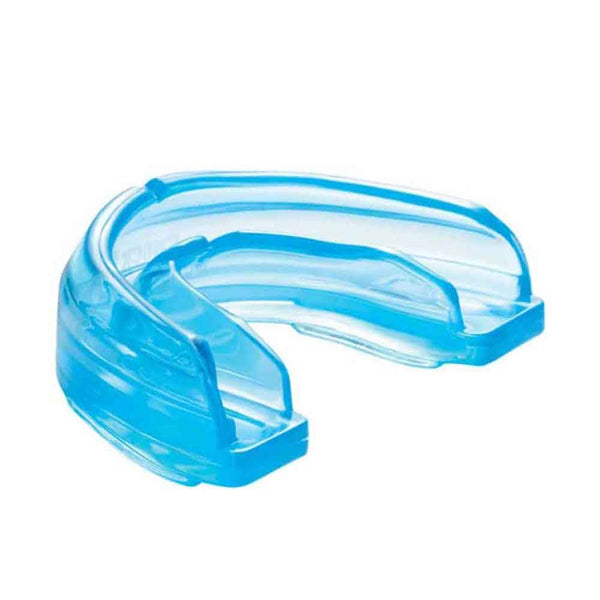
What changes when you have a brace?
A brace calls for a targeted choice. An impact can damage brackets or other fixed components. A properly fitting mouthguard also forms a barrier between the brace and the lips or cheeks.
Do not assume that an ordinary mouthguard is suitable simply because you mold it firmly enough around your teeth. Check whether the version is intended for your situation and discuss the choice with your dentist or orthodontist. They can take the braces and changes in your teeth into account.
"Braces mouthguard" is not a general molding instruction either. Follow the instructions for that specific model. Do not heat or reshape a version if this is not prescribed.
Many mouthguards are worn over the upper teeth. With braces on the lower teeth, a dentist or orthodontist may also recommend protection for those teeth. The right solution is therefore not the same for every person with braces.
Junior or adult: how do you choose the size?
An age indication or size group helps with the initial selection, but does not replace an assessment of the fit. Check the manufacturer's size and age information for the specific model. Do not treat junior and adult as universal sizes that are the same for every brand and every version.
Children and teenagers' teeth are still changing. As a result, a mouthguard that previously fit well may not remain suitable. The American Dental Association points out that children and teenagers may need a new mouthguard more often as their mouths grow and change.
Therefore, do not check only when purchasing, but also during use. A change in fit is in itself a reason to take another look at the mouthguard, even when the material still appears intact.
How should a mouthguard fit?
The mouthguard must be suitable for the version you chose and for your teeth. Simply being able to bite down on the material is not a convincing fit test. Also pay attention to comfort and what happens when you move your mouth and try to speak and breathe.
Does it remain difficult to keep in place, does an edge press uncomfortably, or does it feel so bulky that you keep wanting to take it out? Take that seriously. You cannot solve an incorrect size, an unsuitable model, or an incorrectly performed molding process simply by getting used to it during training.
Start with the checkpoints in the instructions. For a moldable model, check whether reshaping is allowed and which instructions apply. If the result is not right or you are unsure about how it fits your teeth, have your dentist assess the fit.
Do not cut, heat, or reshape the mouthguard on your own initiative. Adjustments that are part of the instructions for one version may not be suitable for another model.
Adjusting a moldable mouthguard: a careful approach
A general explanation can help you prepare, but it is not a substitute for the product instructions. This sequence helps prevent you from having to search halfway through for what you are actually supposed to do.
- Check the model first. Is it actually a self-molding mouthguard, is the size suitable, and is it appropriate for your situation? If you have braces, this check should take place before heating.
- Read the complete instructions. Pay attention to preparation, heating, cooling, placement and shaping. Have the items needed for your model ready.
- Follow the specified temperatures and times. A longer or hotter treatment is not automatically better. Do not use an arbitrary boiling time from a general explanation.
- Shape it according to the instructions. Follow the described method for placing and adjusting it. Bite force and other actions are not steps to interpret freely.
- Let the mouthguard cool as instructed. Then assess the fit using the manufacturer’s checkpoints.
- Stop if the result is not right. Check whether the manufacturer allows reshaping. Do not keep heating it or trying indefinitely to make an unsuitable model fit.
A pre-formed mouthguard or a dental-made mouthguard does not automatically belong in these instructions. That distinction is more important than the word ‘mouthguard’ on the packaging.
When should you wear a mouthguard in martial arts?
For exercises and competition formats in which contact with the mouth may occur, mouth protection should be part of your equipment choice. In boxing and kickboxing, for example, think of sparren and contact exercises with a partner. Also take into account the rules of the training session or competition in which you are participating.
An exercise in which the head is not deliberately targeted does not automatically rule out accidental contact. So consider what you and your partner will actually be doing, not just the name of the exercise.
A mouthguard is not a reason to seek harder contact. It is part of preparing for the exercise, not a promise that contact can then take place without consequences.
How do you clean a mouthguard?
Cleaning should be done after every use, not only when your mouthguard starts to smell. The American Dental Association recommends, among other things, rinsing it before and after use and cleaning it regularly in cool water with soap, followed by thorough rinsing. Also check the care instructions for your model: not every material can withstand the same products or treatment.
Why simply rinsing is not always enough
In a 2025 study in BMC Oral Health, mouthguards and storage cases belonging to ten young Australian football players aged 11 to 12 were examined. The researchers found bacteria on both. Used mouthguards also had a rougher surface than new material. In additional laboratory tests, bacteria adhered more easily to roughened EVA, a plastic used for sports mouthguards.
The researchers then compared different cleaning methods on EVA samples with the bacterium Pseudomonas putida. In that test, brushing with a soft toothbrush and toothpaste removed about 98% of the bacteria; rinsing with cold or warm water removed about 60 to 70%. These are results from a specific laboratory test, not guaranteed percentages for your mouthguard. The study did not test SafeJawz spray or a SafeJawz antimicrobial case and therefore does not prove how those products perform in comparison.
The practical lesson is clear: remove dirt carefully instead of simply running a little water over the mouthguard. If the manufacturer of your mouthguard allows brushing, use a soft brush and a suitable cleaning product according to the care instructions. Do not automatically apply the use of toothpaste in one study to every material. The researchers also identify further study into wear caused by brushing as an area requiring attention.
Good maintenance is part of your training routine
The fact that martial artists take care of their mouthguards is also reflected in a 2025 study in PLOS ONE. Of the 316 martial artists surveyed in Turkey, 98.4% said they cleaned their mouthguard and 91.5% stored it in a box or container. These were questionnaire responses, not inspections of how clean each mouthguard was. But they do show that maintenance was part of these athletes' routine when using their equipment.
Make it easy for yourself: clean your mouthguard, let it dry, and store it in a designated place. Just as you let your gloves air out after training, your mouthguard deserves its own routine. A suitable cleaning product and a convenient storage case can help you stick to that routine.
Why a cleaning spray can be a useful addition
A spray for mouthguards is easy to take to the gym and simple to use according to the product instructions. It is not just about a fresh smell: such products have also been studied for their antibacterial properties.
In 2021, Tanabe and colleagues investigated a spray containing cetylpyridinium chloride, also known as CPC, on mouthguard material specimens. After 60 seconds, the tested spray had an antibacterial effect against Streptococcus sobrinus; the shorter 30-second treatment worked less well. The positive lesson is that both a suitable product and the correct application matter. The study investigated a different product from SafeJawz. Therefore, do not use its times and results as instructions for using SafeJawz spray.
SafeJawz itself was also included in materials research. In a 2023 study in Polymers, EVA test specimens were repeatedly treated over three months with, among other products, SafeJawz spray. The researchers assessed colour and hardness. Overall, the changes in hardness were small; the authors did not describe the colour changes in the commercial mouthguard spray as adverse. This is a positive indication of the material properties examined in that application. It was not a test of bacterial killing or shock absorption, nor proof for all mouthguard materials. Therefore, choose a product suitable for your mouthguard and follow the instructions for use.
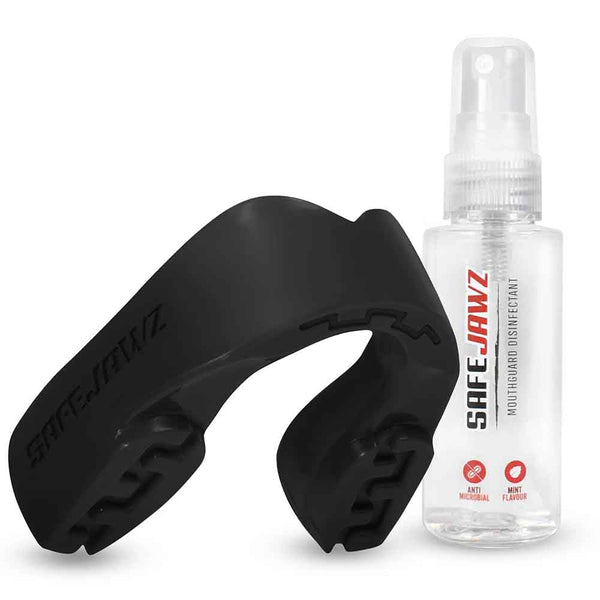
The SafeJawz spray from our range is a practical option when you want to use a product intended for mouthguards. Keep the packaging at hand for the instructions and also check the care instructions for your mouthguard. Carefully remove visible dirt and use the spray as directed. This gives the product a clear place in your care routine, rather than simply spraying it and immediately putting the mouthguard away.
An antimicrobial case: convenient storage, conscientious care
A storage case keeps your mouthguard together and prevents you from leaving it loose at the bottom of your sports bag. The SafeJawz Premium protective case combines flexible silicone with antimicrobial additives and a carabiner. This allows you to attach it to your bag and gives the mouthguard a designated place among your training gear.
The case and cleaning each have their own function. You clean the mouthguard and then use the case to store and carry it. The antimicrobial construction does not replace cleaning the mouthguard or the inside of the case. Follow the care instructions for the case as well.
The maintenance studies support paying attention to both the mouthguard and its storage. They did not test the effectiveness of the SafeJawz case. The specific reason to choose it is therefore the combination of a dedicated storage space, the silicone design, the carabiner and the antimicrobial construction, not a promise that it will automatically clean a dirty mouthguard.
Drying, storing, and checking
Let the mouthguard and the cleaned case dry before storing them. Use a ventilated storage case, and do not leave a damp mouthguard loose at the bottom of your sports bag. While cleaning, also check for damage, rough edges, and changes in the fit.
Molding and cleaning are different tasks. The fact that a mouthguard is treated according to heat instructions during the initial molding process does not mean you should put it in hot water after every training session. Avoid heat and direct sunlight when storing it, as the ADA also advises. Also keep the mouthguard out of reach of pets that may see it as a chew toy.
When should you replace a mouthguard?
Do not wait for a fixed calendar date if the mouthguard has worn out, become damaged, or no longer fits properly sooner. Regularly check the material and fit. Changes to your teeth may also be reason to have its suitability reassessed.
This applies to children and teenagers because of growth and changes in their teeth, but adults, too, cannot rely solely on how long a mouthguard has been in use. The question is whether it is still intact and still fits properly.
Take the mouthguard with you to a dental checkup. The dentist can assess its condition and fit and discuss when replacement is needed. That is more useful than assuming, based on a general blog guideline, that every model has the same lifespan.
What is ultimately the best choice?
Start with the intended use and your teeth. If you wear braces, that partly determines which versions are eligible. If you choose a self-moldable mouthguard, the correct size, the accompanying instructions, and a proper check after molding all go together. If you want a personally made fit, the dentist is the appropriate route.
Only then should you compare brands, models, and versions. A striking color does not make a mouthguard suitable for braces. A higher price does not make an unsuitable size fit. And “custom-fit” can refer either to one you mold yourself or to a professionally made product: check exactly what is meant.
The best choice is not only the mouthguard you buy, but the mouthguard that is suitable, fits well, and is used carefully. With a suitable model, the right usage instructions, and attention to maintenance, you turn a small part of your equipment into a considered choice.