A training camp takes on a different character when the group leaves the gym for the outdoors. During the SENSHI Invitational Camp in March 2026, professional kickboxers trained in Varna among the city’s concrete stairs and monumental structures. Wind, cold and a different surface made the session very different from a regular round on the mat.
Under the guidance of Semmy Schilt and Ernesto Hoost, the participants combined sparren, sprints and technical drills. The report shows how seriously the group approached their preparation, with attention to both individual effort and training together.
An outdoor session during the March 2026 SENSHI camp
In a post dated March 20, 2026, SENSHI described an outdoor training session for a select group of professional fighters. The group comprised 14 athletes from seven countries: Germany, Italy, Romania, Serbia, Greece, Cameroon and Bulgaria. The organization said the participants in this session were from weight classes above 85 kg.
The group trained outdoors in Varna, on Bulgaria’s Black Sea coast, for 90 minutes. The camp continued until March 22, 2026, with further intensive sessions led by SENSHI instructors. This look back focuses on that specific training session.
The contrast with a familiar gym gave the report its distinctive character. The participants faced low temperatures and biting wind, while the program remained focused on movement, technique and teamwork.
The stairs and monument as a training backdrop
The accompanying camp photos show the Monument of Bulgarian-Soviet Friendship in Varna. The wide stairs, large concrete wings and relief figures make the location recognizable. Official information from the municipality of Varna places this monument on Turna Tepe, in the northern part of the city.
The original SENSHI post mentions the Pantheon. That is a different monument in Varna. For the location shown in the photos, we therefore follow the official monument information and the recognizable structure in the camp images.
The stairs and open space provided a striking backdrop for the training. While a gym has a defined training area, this session placed the group in the middle of the city. The group photo by the stairs captures that distinctive aspect of the camp.
Sparren, sprints and technique in one session
The published report describes three elements: sparren outdoors, fast sprints on the stairs and technical drills. The session brought together different aspects of kickboxing training. Partner work requires responding to another person; a sprint emphasizes a short, intense effort; technical drills provide an opportunity to repeat a movement with purpose.
The sparring photo shows the partner drill up close. In the foreground, a fighter wearing blue gloves trains opposite a partner wearing red gloves, while more participants practice together behind them. The image nicely captures the contrast between individual practice and the shared training environment.
The report focuses mainly on the mix of exercises: the participants worked on their kickboxing while also being challenged by a different environment. The detail table below distinguishes between the program described and the practical value of each element.
Schilt and Hoost: passing on experience on the training floor
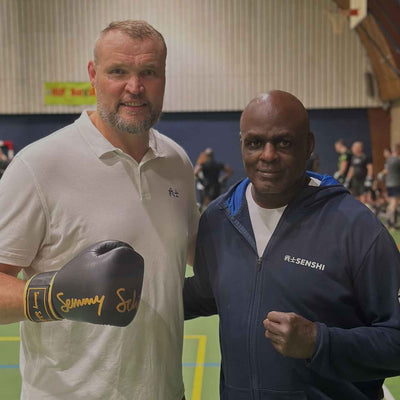
With Semmy Schilt and Ernesto Hoost, the group had two Dutch kickboxing legends guiding them. In the report, they are more than just famous names on the program. Schilt spoke directly to the participants about their own motivation; according to the organizers' report, Hoost led by example during the training.
Schilt's message placed the responsibility on the fighter. The effort was not about pleasing an instructor, but about working toward a personal goal. Loosely translated from the English-language source report, he said:
“You're not here for me, you're not here for anyone else in this cold. Each of you is here for yourself. Train hard and chase your dream.”
That gives this look back meaning beyond the professional ring, too. Good instruction helps you progress, while your own focus determines what you do with it: listen, try, adjust and perform the next repetition better. The conditions set the scene; the quality of the training remained the main thing.
Training together takes a good training partner
The SENSHI report describes a combination of team spirit and individual effort. The two reinforce each other when partners give each other a clear practice scenario. You work toward your own goal while making it possible for the other person to practice with purpose.
It starts with clear agreements. Throw a recognizable attack, keep the agreed distance and give your partner time to execute a response properly. Then you can switch roles. That makes a technical round more than just training together: you help each other improve a specific movement or response.
An additional SENSHI instructional clip featuring Schilt on helping a training partner fits this theme. It offers a separate technical deep dive alongside the report on the outdoor session in March 2026.
Three things to focus on in your own training
The mix of technique, conditioning and partner work can inspire your own training. The following points are our practical takeaways, not a reconstruction of the exact SENSHI program.
- Give each round one clear task. For example, focus on maintaining distance after a punching combination or bringing your guard back after a kick. With a clear goal, you can discuss what went well after the round and what you want to improve in the next one.
- Make partner work predictable enough to learn from. Agree on the attack, pace and roles beforehand. A well-presented drill gives your partner room to develop their technique. Then switch roles so both of you can work on the same task.
- Carry the technique over to bag and pad training. Develop a chosen combination further on a punching bag, pads or a kicking shield. Keep paying attention to your stance, distance and return to your guard, even as the pace picks up. This gives the technique exercise a clear next step.
If you train outdoors, choose a dry, level, clear surface for technique work. Build up your warm-up gradually and keep warm between exercises. Stairs can provide a separate conditioning exercise; do partner drills in a suitable place with enough room to move.
The right equipment for your own exercises
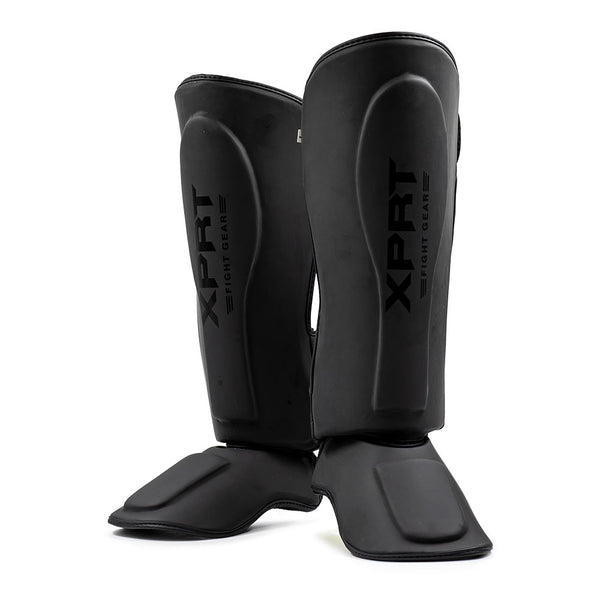
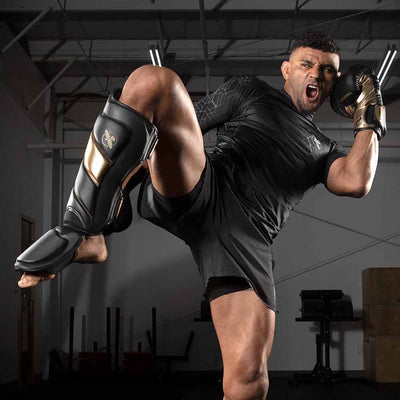
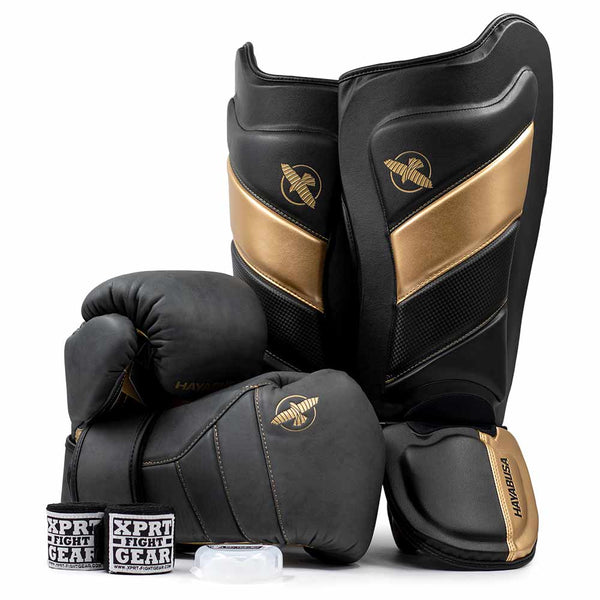
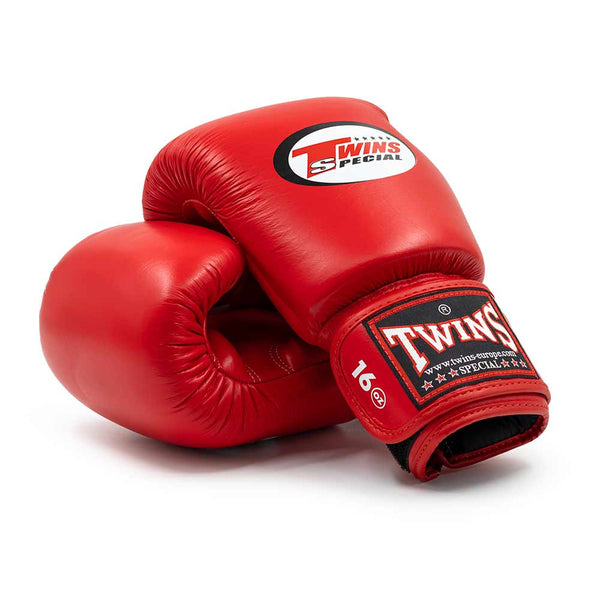
Gloves and shin guards support the controlled partner work that is part of kickboxing training. Choose the right type for the exercise and the agreements you make during training. A comfortable fastening and fit help you stay focused on moving and reacting.
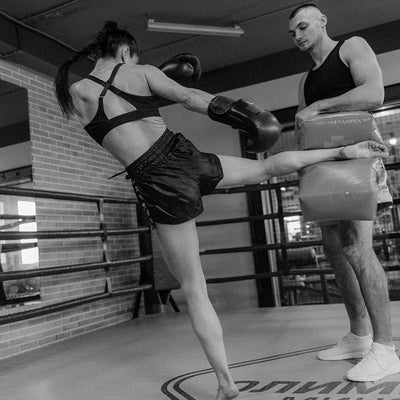
Kickboxing shorts give you room to step, turn and kick. You can then work through combinations together on a kicking shield, with the holder providing a clear target. The examples in this article suit these different types of exercise and are intended for your own training.
If you want to compare different options, use the relevant buying guides as well. You can also see the equipment in our showroom in Waddinxveen to assess the fit, fastenings and size.
Conclusion: the standard lies in how you train
The outdoor session at the SENSHI Invitational Camp in March 2026 brought 14 professional fighters together with one goal: to keep developing. Schilt and Hoost led a program of sparren, sprints and technique in a setting far removed from the usual gym.
The scenes from Varna make that training session special. At the same time, the message is familiar to every kickboxer: train with focus, help your partner and give each exercise a clear purpose. That way, inspiration from an international camp finds a practical place in your own training.