In boxing, your feet are working almost constantly. You step into range for a jab, pivot with a straight right, move out of the way and push off again. Even when your upper body draws the most attention, much of your movement begins with contact with the floor. That’s why boxing shoes are much more than a recognizable part of boxing gear.
A good boxing shoe combines a suitable sole with a snug upper and room to move where you need it. This can make your footwork feel more comfortable and responsive. The main benefit isn’t any one standout feature, but how grip, pivoting, fit and contact with the floor work together during training.
Here you’ll learn what these features mean in practice, how boxing shoes differ from other sports shoes and how to assess a pair. Specific models serve as examples of different designs. The explanation starts with boxing itself, not a brand logo.
Why boxing shoes suit boxing footwork
Boxing training demands something different from shoes than a long-distance run. When running, you mainly repeat forward strides. In boxing, you alternate small steps with sideways movement, short bursts of speed, braking and pivoting. You want to push off without slipping unintentionally, but also lift off the floor when you change direction.
Your foot also needs to stay in place inside the shoe. A sole can have plenty of grip while your foot still slides inside. You might notice this when you step away after a combination: the shoe stops, but your foot keeps moving a little. A secure fastening and a snug-fitting heel are therefore at least as important as the tread under the shoe.
Boxing shoes are designed for this combination of movements. Many models have a relatively compact construction, a flexible rubber sole and laces that secure much of the foot. The exact design varies by model. Not every boxing shoe is equally thin, high-cut, light or sturdy, and those differences make it worth comparing them carefully.
The practical benefit is how it all works together. You’re not looking for a shoe that excels at just one thing, but a pair that lets you push off, pivot and return to your boxing stance without constantly thinking about your shoes.
Grip and the ability to pivot go hand in hand
Grip often gets the most attention, and rightly so. When you step forward or move sideways, you want your planted foot to have enough traction. And when you move forward again after a defensive move, the shoe needs to support the way you press against the floor. Without reliable contact, precise movement becomes difficult.
Still, the goal isn't to stick to the floor as much as possible. When you turn, your foot moves with your body. You want the shoe to rotate in a controlled way on the part of the sole bearing your weight, rather than keep catching on the floor. That's why you judge grip not only by whether a sole is hard to slide across the floor, but also by how the shoe responds when you deliberately turn.
The rubber, the shape of the outsole, the tread and the surface all play a part. A shoe may feel different on one canvas surface than on a hard gym floor or a mat. Dust, wear and moisture also change the contact. A named tread pattern or well-known sole brand doesn't make those conditions irrelevant.
So test both pushing off gently and turning. Take small steps forward, backward and sideways, then add a controlled pivot. You're looking for traction when pushing off and freedom of movement when you deliberately change direction. You don't want to slip unexpectedly, but you also don't want your foot to feel stuck while the rest of your body tries to move on.
Train on a clean, dry surface that suits your shoes. Pause your training if there is water, sweat or dirt on the floor, and clean and dry the training area first.
Floor contact: knowing where your weight is
In boxing, you repeatedly shift your weight between your feet. You don't need to keep bouncing high on your toes to do that. Often, it's about small adjustments that help you maintain distance, react and stay balanced. The construction under your foot partly determines how direct that contact feels.
A relatively thin, less bulky sole can feel closer to the floor than a tall, soft running shoe. There is less material between your foot and the surface. That can be helpful when you want to feel exactly which part of your foot is supporting your weight and how the shoe responds to a small shift in weight.
Match the sole thickness to your feet, the hardness of the training floor and the length of your training session. More material underfoot may feel more comfortable, while a more compact design offers more direct contact. Compare how each feels when you push off, turn and get back into position.
Also pay attention to how the shoe bends. You want to be able to use your forefoot naturally when pushing off and turning. A firm heel structure and a more flexible forefoot can serve different purposes in the same shoe. Folding the sole in half with your hands therefore doesn't tell you how the whole shoe fits and moves during boxing.
The useful distinction is not soft versus hard, but contact versus instability. A comfortable shoe gives you enough cushioning without making your foot feel as though it sinks or slides inside the shoe with every sideways movement.
Fight2Win Choice: five boxing shoes to compare
These five versions make the differences in shaft height, fastening and sole construction clear. The Everlast Elite 2 comes first in Black and Navy. These are two colors of the same model series, not two different technical designs. We then compare three Hayabusa series. Use the model-specific size charts below and check the fit while wearing your own training socks.
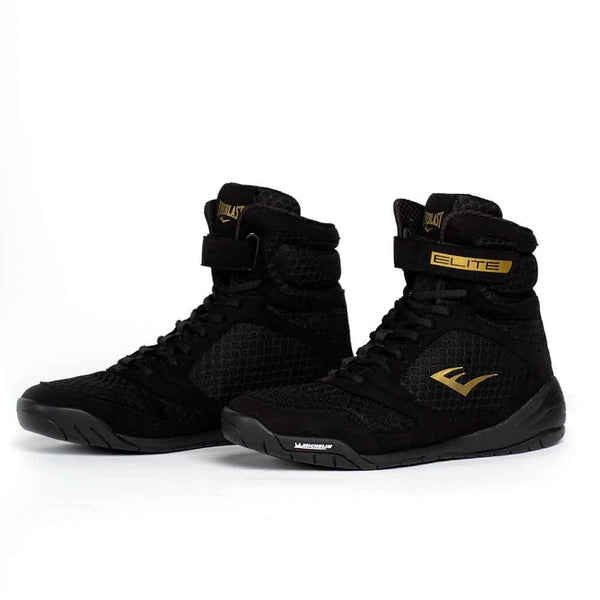
Everlast Elite 2 Black
The Everlast Elite 2 is a higher-cut model with an extra ankle strap and a Michelin outsole. Its upper combines microfiber with mesh panels. That makes it a useful comparison if you want to try a higher shaft and a different sole construction. Check how the shaft and strap fit around your ankle and how the sole moves with you on your training floor.
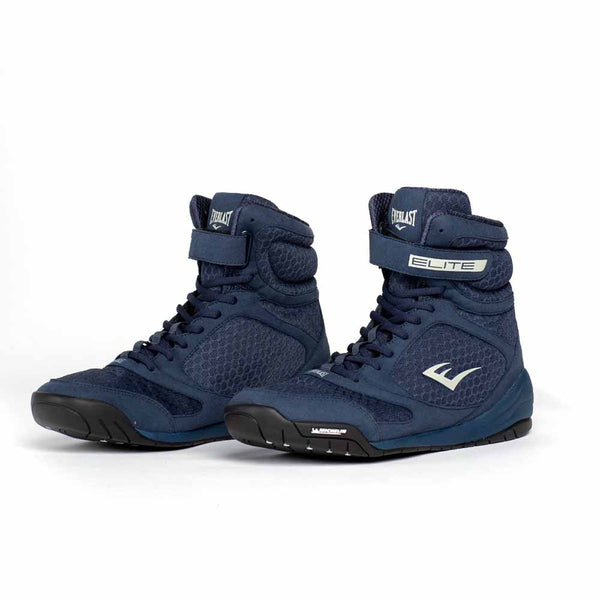
Everlast Elite 2 Navy
The Elite 2 Navy offers the same model in blue. Compare it on the same features as the black Elite 2: the higher shaft, additional ankle strap and Michelin outsole. The color does not change how you should assess its technical features or choose your size. Use the Elite 2 size chart for both colors; the product card shows which sizes are available in your chosen color.
Hayabusa Pro Midnight
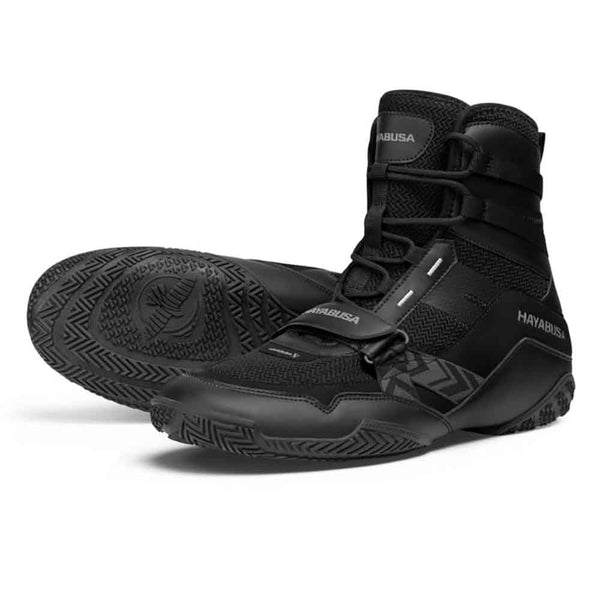
The Hayabusa Pro is an example of a mid-height boxing shoe with a flexible rubber outsole and a microfiber and mesh upper. The manufacturer describes grooves and a sole construction designed for pivoting and footwork. This model makes the trade-off between a snug fit and a relatively streamlined design easier to assess. When trying it on, pay attention to the feel under your forefoot and at your heel: how comfortable does the shoe remain when you take small steps and make gentle pivots?
Hayabusa Strike Black
The Strike adds an adjustable strap to the laces, allowing you to fine-tune the fit of the upper. Its mid-top construction and flexible rubber outsole are central to the design. This is a good model to compare if you like a snug, secure fit. The extra strap should enhance the fit, not compensate for a shoe that is too big. A more supportive feel is also not the same as proven protection against ankle injuries.
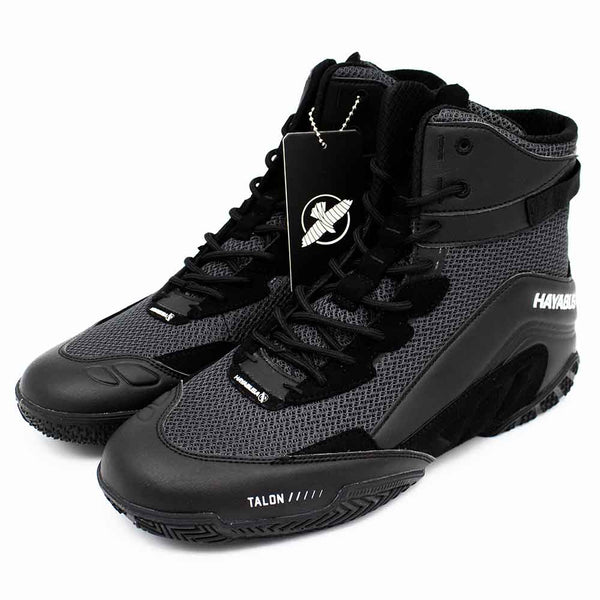
Hayabusa Talon Black
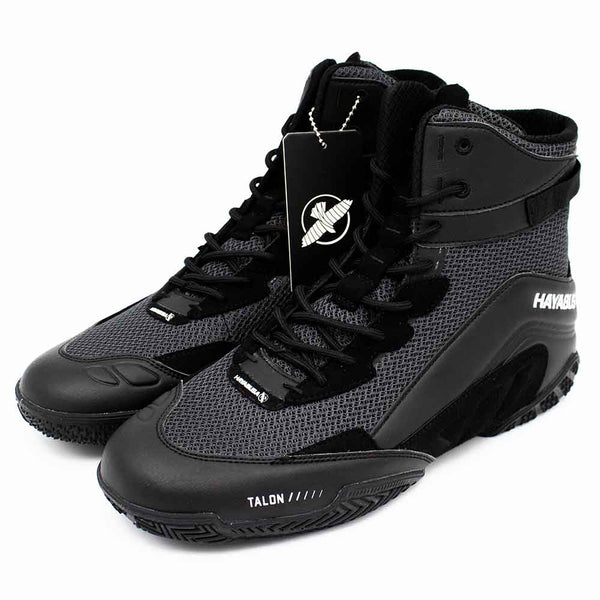
The Talon combines a mid-height construction with mesh panels, a flexible rubber outsole and cushioning inside the shoe. This model shows that a boxing shoe does not have to be designed solely around using as little material as possible. How it feels throughout a full training session matters too. Compare the room around your forefoot, the fit at the heel and how the shoe flexes as you push off gently. Also compare how the ventilation and cushioning feel during your exercises.
A light, comfortable feel during footwork
During footwork, you constantly lift and move your shoes. A lightweight shoe that is not bulky can feel comfortable and less noticeable. Especially when taking small steps and changing direction quickly, many boxers do not want to feel as though they are dragging a big shoe around.
Weight is not the whole story, however. A light shoe that is too roomy may feel less stable than a slightly heavier model that fits precisely. How the material is distributed, the flexibility and the shape of the sole also affect how the shoe feels. Two shoes with the same stated weight may therefore feel different when you move.
Compare weight figures only when the size and measuring method are clear. You cannot fairly compare the weight of one shoe in a small size with the weight of a pair in a larger size. Without that information, an exact figure is not a useful basis for judging a shoe.
A lighter shoe does not, by itself, mean you will punch harder, train longer or have fewer problems with your calves. Your fitness, technique and training load still matter. What you can judge for yourself is how the shoe feels: does it move comfortably with you without feeling unnecessarily heavy or bulky?
A snug upper and properly adjusted fastening
Many boxing shoes have an upper that extends above the ankle. Together with the laces, heel construction and any belts, it can create a snug, enclosed feel. That is one reason some boxers like to wear a mid-top or higher-cut model.
Support does not come from height alone. A high-top shoe with a loose heel or poorly adjusted laces still will not fit properly. Conversely, a lower-cut model can fit snugly and comfortably around your foot. Consider the whole shoe: heel, midfoot, fastening and room to move around the ankle.
Assess the height of the upper by how it fits and feels. Notice how the shoe sits around your ankle as you move. An ankle problem calls for separate medical advice; a boxing shoe is no substitute for a prescribed brace.
Can you bend your ankle normally when taking a slow step? Does the top edge press against you when you get into your boxing stance? Does your heel stay in place without having to pull the laces painfully tight? Questions like these tell you more than simply comparing high-top and low-top shoes. If you have recurring pain or instability, have it assessed rather than treating a higher shoe as a solution.
Ventilation and comfort throughout a training session
A shoe may feel comfortable for the first minute but still cause irritation during a long training session. Heat, damp socks, a rubbing tongue, or a pressure point on your instep can all play a part. Good ventilation and a well-finished interior are therefore practical factors in your choice, not afterthoughts compared with grip.
Mesh panels allow air to flow through the upper. How that feels during training also depends on the rest of the construction, your socks, and the environment. So compare how they feel while wearing your own training socks.
When trying them on, pay attention to the seams and tongue. The tongue should lie flat, and lace pressure should be distributed across your foot. You want a secure fit without a narrow spot pressing hard on your instep. Do not keep tightening your laces to compensate for a shoe that does not suit your foot shape.
Comfort still matters after training. Leave your shoes open to air out and dry before storing them in a closed bag for an extended period. That way, you start your next session with a drier, more comfortable interior and can keep an eye on the condition of the material.
Fit: your shoe should move with your foot, not let it slide
The right size is more than the number on the label. Shoe lines can vary in length, width, instep height, and heel shape. So use the sizing information for the specific model as your starting point, and try them on with the socks you wear for boxing.
A boxing shoe can fit snugly, but it should not force your toes to curl. At the same time, your foot should not slide far forward when you stop. Assess the space at the front together with the fit around your heel and midfoot. Choosing a shorter shoe to eliminate excess width does not automatically give you a better fit.
Lace the shoe fully, then move around gently. Stand in your normal boxing stance, take a few steps, shift your weight, and pivot in a controlled way. Notice not only whether your heel lifts, but also whether your foot slides sideways inside the upper. Both can be distracting during footwork.
For wide feet, the shape of the front of the shoe is especially important. Buying extra length just to get more width can cause another problem. Instead, compare a different shoe shape or design. A blanket rule such as always going one size down is not reliable advice for all boxing shoes and all feet.
Stop trying them on if you feel pain, tingling, or pinching. A good fit should not have to feel uncomfortable at first to work well later. Ease into your first training sessions with a new pair and check for pressure points along the way.
Canvas, gym floors and mats need attention
The boxing ring is a natural setting for boxing shoes, but canvas floors can also vary in texture, tension and wear. A new ring may feel different from the floor you train on every day. So start with gentle movements in a new training space before picking up the pace.
On a hard gym floor, reassess the grip and comfort. Just because your shoes feel good in the ring does not mean they will feel exactly the same on a hard floor. Differences in cushioning or flexibility may be more noticeable there.
On soft mats, a sole may catch more firmly or move differently with the surface. So check the rules on footwear and the surface you train on. Choose footwear for kickboxing, Muay Thai and groundwork that suits each training situation.
Keep the soles of your training shoes clean. Walking outside brings dirt and grit into the gym and can cause extra wear to the tread. Put your boxing shoes on indoors if possible, and carry them separately from clean clothes. This helps keep both the soles and your training floor clean.
Boxing training is different from a full gym workout
Shadowboxing, bag work, pad work and sparren involve a lot of the same footwork. These are natural uses for boxing shoes. You can appreciate their benefits even if you box without intending to compete. A comfortable, close-fitting shoe is especially relevant when you practice small steps and pivots.
A mixed class may combine running, jumping and strength training. Match your shoes to the cushioning, stability and surface the exercises require. So compare a thin boxing sole designed for canvas with footwear suited to the other parts of your workout.
A short period of gentle movement during the warm-up is different from a long run. So judge your shoes by the exercise you actually do, not just the warm-up label. If you do a lot of repeated jumps on a hard floor, comfort underfoot matters too.
The same applies to fitness boxing or cardio boksen. The name of the class does not tell you how much you will pivot, jump or work on equipment. Look at the program and choose shoes that suit it. A dedicated boxing shoe is a sensible choice for the boxing portion; a separate pair may be practical for other parts of your workout.
Practice footwork: feel how the shoes perform as you move
You get to know a shoe better by doing simple boxing movements than by just standing still. Work on a clean, dry floor and start slowly. The goal is not maximum speed, but to feel how the shoe fits and how the sole responds.
Start with short steps forward and backward from your boxing stance. Keep the steps small and return each time to a position where you can move again. Pay attention to the fit around the heel and to any slipping inside the shoe. You do not want to have to reposition your feet inside the uppers after every step.
Then add sideways steps and a gradual change of angle. Push off, move and pivot with control. This makes the difference between grip and catching on the floor clear. Only increase the pace once the contact feels comfortable.
England Boxing covers similar footwork themes in its shadowboxing drills: stepping sideways after a combination, moving around an object in both directions and changing the angle of attack. These are coaching examples of what your feet need to do during boxing. They are not comparative tests of shoe models.
The same source emphasizes having enough space and a non-slip floor. Keep that in mind during your own training. Stop if you feel pain, slip unexpectedly or find that a sole keeps catching. Better technique does not start with pushing through on an unsuitable training surface.
How to keep boxing shoes comfortable and usable
After training, loosen the laces, pull the tongues forward and let the shoes dry in a ventilated place. Do not put them on a hot radiator or use a dryer. Trapping moisture in a closed bag will not make the inside any fresher.
Remove loose dirt from the sole with a soft brush or cloth. Gently wipe the upper with a soft, slightly damp cloth, then let it dry. Do not rub mesh or delicate finishes hard, and do not submerge the shoes. For routine care, gentle cleaning is a better starting point than aggressive scrubbing or using lots of water.
Regularly check the tread for wear, the join between the sole and upper, and the condition of the laces. A sole edge that is coming loose, a broken closure or a contact surface that has become smooth needs attention before you move intensively again. Even a pair that still looks good on top may be worn underfoot.
Only pack your shoes away for an extended period once they are dry. A separate shoe compartment or storage space in your gym bag helps keep clean clothes separate. Care remains simple: use them indoors on clean surfaces, let them dry and keep checking their components.
Using coaching and model information together
England Boxing's drills show how maintaining distance, moving sideways and changing angles come together in boxing. Hayabusa also describes the construction, closures, outsoles and materials of its shoes. The first source is about your movements; the second helps you compare specific designs.
These are different kinds of information. A manufacturer can explain how a shoe is constructed, but a commercial description is not independent evidence that a model will help you punch harder or sustain fewer injuries. Nor does a footwork drill prove which sole tread is best for everyone.
The practical benefits in this article are therefore tied to features you can assess: fit, flexibility, contact with the floor and how the shoes feel during boxing. Absolute claims that you’ll never slip, experience a fixed percentage less fatigue or have guaranteed ankle protection do not belong here.
Together, movement and construction give you a basis for assessing the fit. Check how the shoe fits your foot, how it bends and how the sole responds on your training surface. The coaching information is not a comparative shoe test or evidence of injury prevention.
Where do you start when choosing a pair?
Start with where you train most. Do you train mainly on canvas, on a hard gym floor, or do you switch between the two? Then consider how the shoe fits around your foot and how you want to move. This gives you a focused way to compare shoes before color and brand preference determine your choice.
For a beginner boxer, a comfortable fit and predictable contact with the floor matter right away. You don’t have to compete to make a deliberate choice to wear boxing shoes. A shoe that lets you work on your footwork without distractions is valuable in recreational training too.
If you’ve been training for a while, compare shoes with what you currently find comfortable or uncomfortable. Do you want a different fastening, more room around the forefoot or a less bulky feel? Those preferences are more useful than simply looking for a model described as professional or premium.
Finish your decision by moving in the shoes. After checking the initial fit, notice how they feel when you push off, pivot and get back into position. Choose the combination of upper height, sole and fit that suits your boxing and training surface.
Conclusion: boxing shoes connect your footwork to the floor
Boxing shoes offer a combination designed for the sport: grip for pushing off, freedom of movement for pivoting and a fit that keeps your foot in place. A compact sole, lightweight feel and ventilation can add to that experience. How well it all works also depends on the surface you train on.
Compare the features as a whole. A snug upper, a heel that fits comfortably and a suitable sole help you choose a shoe you can move in with purpose. Factor in the cushioning you want and the surface you train on most.
If you train specifically for boxing, you have good reason to compare boxing shoes carefully. Look for a pair that fits comfortably and suits your footwork. That way, your shoes support exactly what they’re designed for: your movements on the training floor.