Your handwraps fit well, your gloves are solid, but you still want a little more cushioning over your knuckles. That is where knuckle guards, also called knuckle protectors or knuckle pads, come in. You add a targeted layer of padding to your hand wrap without having to buy new boxing gloves.
But more padding does not automatically make for a better fit. The protector needs to stay in place, you need to be able to close your fist comfortably, and there must be enough room left in your glove. In this article, you will learn what knuckle guards add, how to combine them with handwraps and how Rival Intelli-Shock, Winning NG2 Gel and XPRT Protect Gel differ.
What are knuckle guards?
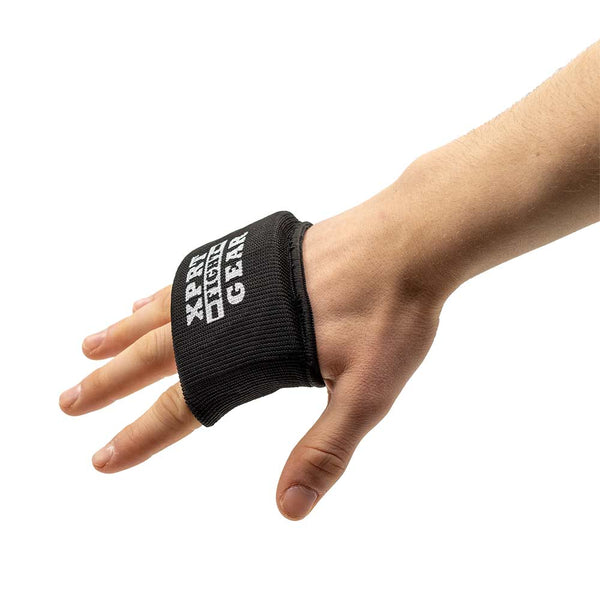
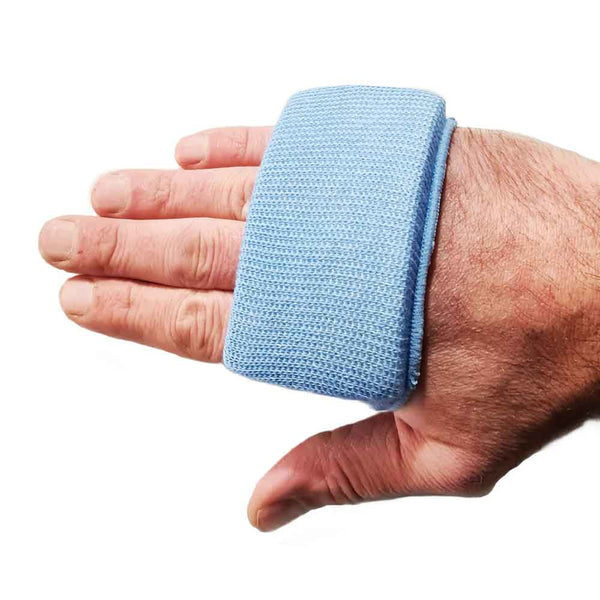
A knuckle guard is a separate knuckle protector you wear under your boxing glove, together with regular handwraps. The padding covers the knuckles you strike with. Depending on the model, it is made of foam, gel or a combination of materials. A sleeve, loop or other fastening system holds the padding against your hand; your handwraps help keep everything in place.
The difference from simply adding extra rounds of handwrap over your knuckles is that you use a separate, purpose-made layer of cushioning. You do not have to build up a thicker knuckle pad using more fabric alone. How it ultimately feels depends on the protector, your wrap and the hand compartment of your glove.
You will see different names for similar products: knuckle guard, knuckle pad, gel pad and knuckle protector. So look beyond the name and focus on the construction. A separate knuckle pad is different from a full inner glove with its own wrist closure.
Why do boxers and kickboxers use knuckle guards?
The main reason is simple: extra padding where your fist makes contact. During bag and pad training, your knuckles repeatedly press against the inside of your glove as it absorbs the impact. Some athletes find a separate knuckle pad more comfortable than handwraps alone.
A second reason is how you wrap your hand. With a separate pad, you have a fixed layer of cushioning to build your wrap around. That can be useful if you do not want to make a knuckle pad from multiple layers of handwrap every training session. It does not mean you can skip supporting the rest of your hand.
A protector also changes how the combination fits. A glove with a little extra room may fit differently with added padding. On the other hand, a glove that's already tight may become too snug. The goal isn't to fit as much material as possible into your glove, but to find a combination that feels secure and comfortable.
Want to add a separate layer of knuckle padding to your gear? Choose a knuckle guard made with materials that appeal to you and pair it with suitable handwraps. That way, you can wrap your hands with a separate knuckle pad.
Knuckle guards and handwraps serve different purposes
A knuckle protector focuses on padding over your knuckles. Your handwraps also go around other parts of your hand and wrist. The two complement each other; a separate gel or foam pad doesn't replace a full hand wrap.
Rival Intelli-Shock, Winning NG2 and XPRT Protect Gel are intended to be used with regular handwraps. So don't put on just the protector and then fasten your gloves. Follow the placement instructions for your model and wrap your hands carefully.
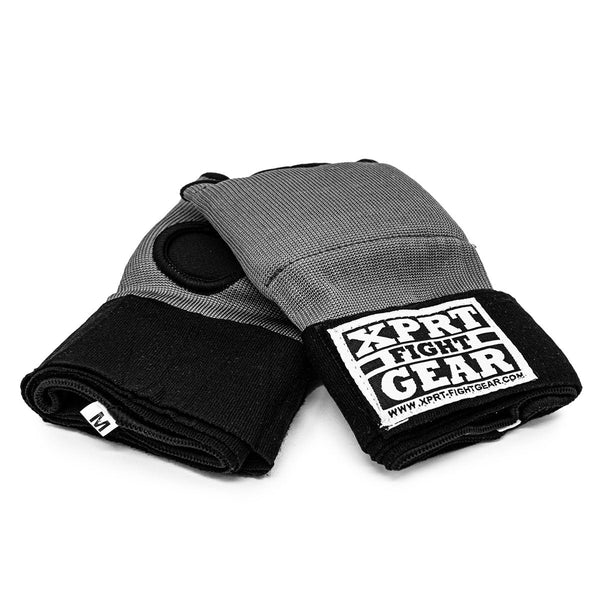
Inner gloves also deserve separate consideration. They may have an integrated knuckle pad and a short wraparound strap, for example. That doesn't automatically make them equivalent to a separate pad with a full handwrap. Compare what you're actually wearing around your hand and wrist, not just how quickly you can put it on.
A practical way to choose is to first decide what kind of hand wrapping you find comfortable, then see what extra knuckle padding works with it, and finally check how the whole combination fits in your gloves.
Gel, foam or D3O: what should you look for?
The material name tells you something about how a knuckle guard is made, but not the whole story. Thickness, shape, surface area and how the material is enclosed also matter. A thin layer of one material can't necessarily be compared with a much thicker pad made from another.
According to the product specifications, Winning NG2 Gel has 10 mm of gel padding. XPRT Protect Gel combines EVA foam with gel. Rival Intelli-Shock uses D3O foam in a neoprene construction. These are three distinct ways to add an extra layer over your knuckles.
Don't automatically rank them based on material differences. Without a head-to-head test using the same measurement method, you can't say that one model offers a certain percentage more protection than another. For your own choice, it also matters how much space the protector takes up and how your hand sits in the glove with it.
Our recommendation: don't choose based solely on the thickest padding or the most impressive-sounding material. The best combination is the one where the pad sits properly and you can close your fist normally.
Three knuckle guards from our range compared
Rival Intelli-Shock: D3O foam in a neoprene construction
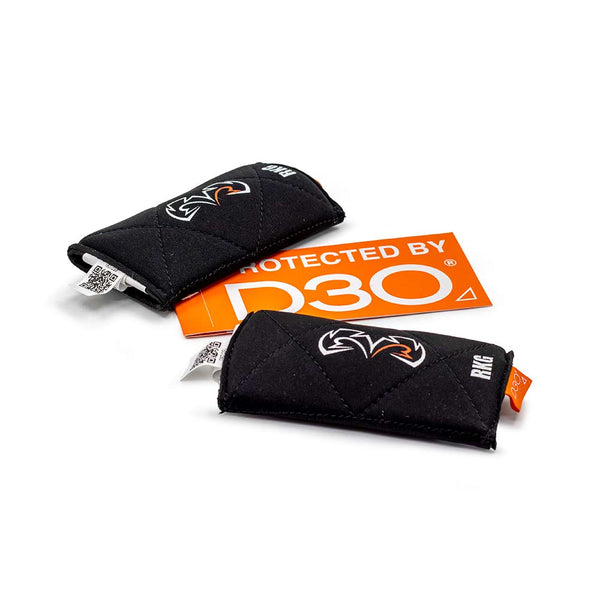
The Rival Intelli-Shock knuckle guards combine D3O foam with a flexible neoprene outer layer. This is the option to consider if you're specifically looking for a knuckle protector made with Rival's Intelli-Shock material.
When trying them on, check how the construction fits around your hand and how the knuckle pad sits when you make a fist. The presence of D3O doesn't make that fit check any less important. The guards come as a pair; handwraps are a separate part of your gear.
Winning NG2 Gel: a separate 10 mm gel pad
The Winning NG2 Gel knuckle guards have 10 mm-thick gel padding and a polyester-cotton sleeve. They come as a pair in one size and are designed to be used with regular handwraps.
The NG2 is worth considering if you want a substantial gel pad. Keep that thickness in mind when trying it on: what feels comfortable on your hand alone still needs to fit inside your glove. One size doesn't mean the combination will fit every hand and glove the same way.
XPRT Protect Gel: gel and EVA foam combined
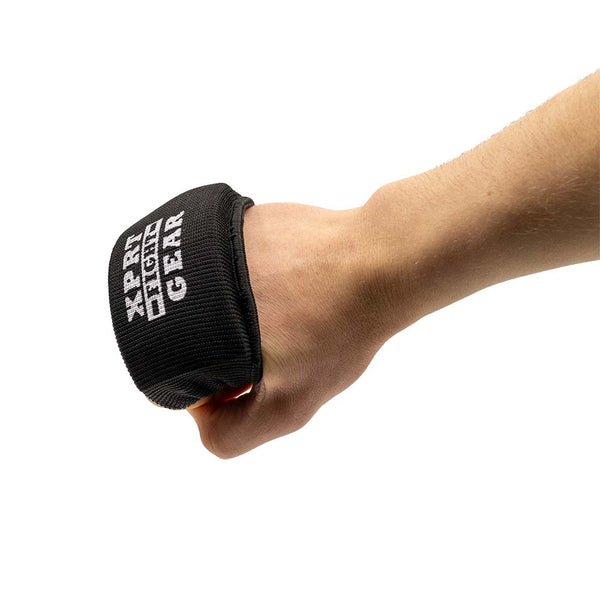
The XPRT Protect Gel knuckle guards combine EVA foam and gel. The polyester-cotton sleeve is designed to be worn with your regular handwraps. The model has a one-size-fits-most fit.
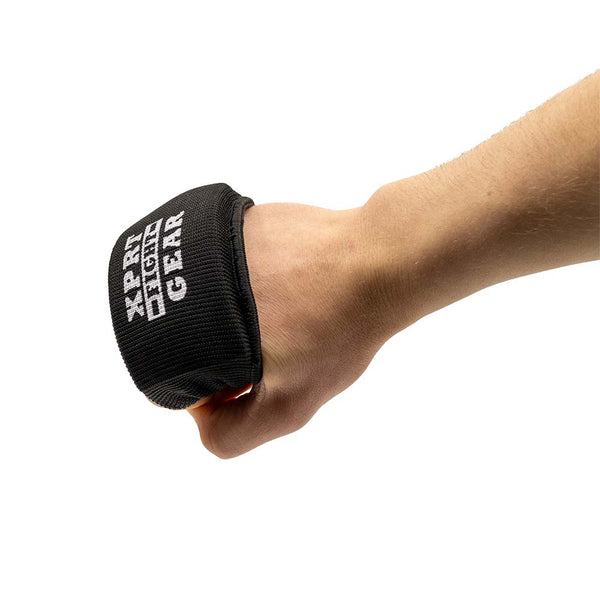
This is a good option if you're looking for a knuckle pad with this combination of cushioning. Here too, check the position of the pad with your hand both open and closed. You don't want an edge or fold that creates extra pressure inside your glove.
All three add knuckle padding, but their designs differ. Compare the materials and construction, then decide based on the overall fit with your own handwraps and gloves.
Which handwraps should you use with knuckle guards?
A handwrap that fits well on its own can add quite a lot of bulk when combined with a knuckle pad. The thickness of the fabric and the number of layers around your hand make a particular difference. So don't automatically choose the thickest handwrap to go with the thickest protector.
Rival Mexican Stretch handwraps have a thin construction with a little stretch. That makes them worth considering if you want to account for the space a separate knuckle pad takes up. They come in different lengths, so you can also factor in your hand size and wrapping technique.
The 450 cm Rival Guerrero, by contrast, has a thicker hybrid construction. If you like that feel, take extra care to check how much room remains when you pair it with a knuckle guard. A thicker wrap is a matter of preference, not a guarantee of a better combination.
The 450 cm Fight2Win V2 handwraps are also worth considering. They have a polyester-cotton blend, a thumb loop and an extended hook-and-loop panel. Whichever handwrap you use, a neat, even wrap without bunches of fabric matters more than adding as many layers as possible.
How to check the combination before training
Always follow the instructions for the specific model when positioning and wrapping it. Different fastening systems do not necessarily require the same sequence. Then use these checks to assess whether the combination fits well in practice.
- Check the knuckle area Gently make a fist, then open your hand again. Check that the pad stays over the intended contact area. A pad that twists out of place or folds over as you close your fist needs to be repositioned before you continue.
- Finish wrapping the handwraps evenly Avoid hard creases and bunches of fabric. Wrap firmly but not too tightly. Your fingers should be able to move normally; tingling, numbness or a change in color are not signs to ignore. If that happens, loosen the combination.
- Put on your gloves You should not have to force your hand into a compartment that is too small. Check that your fingers are positioned properly and that you can close your fist without unusual effort. The glove closure should fasten normally, without having to squeeze everything into place.
- Start with gentle movements First, make some punches without hitting anything. If the combination still feels comfortable, start gently on the bag or pads. Stop and adjust the wrapping if anything shifts or creates a pressure point. A new guard is no reason to start punching harder right away.
What if your gloves become too tight?
A common mistake is choosing a knuckle guard and only then discovering that there is barely any room for it. Extra padding can feel good, but an overcrowded hand compartment works against you: it becomes harder to close your fist, and fabric edges can press against your hand.
First, check that the pad lies flat and your handwraps are neatly applied. Then you can assess whether a thinner handwrap works better with the combination. The goal isn’t to leave out important parts of your hand wrapping just to squeeze in a thick pad.
Look beyond the number of ounces on your glove, too. The weight doesn’t tell you exactly how roomy the hand compartment is. Two gloves of the same weight can fit differently, and a heavier glove isn’t automatically the answer to a tight fit.
If you can’t get the combination to fit comfortably, choose a different one. A guard that only fits when it squeezes your hand is not a good choice for that glove.
Knuckle guards for bag work, pads and sparren
During bag and pad work, you can get a good sense of whether a separate layer of knuckle padding feels comfortable. Don’t judge it by just the first few punches; throughout your training, watch for shifting and pressure points, and notice how easily you can close your fist.
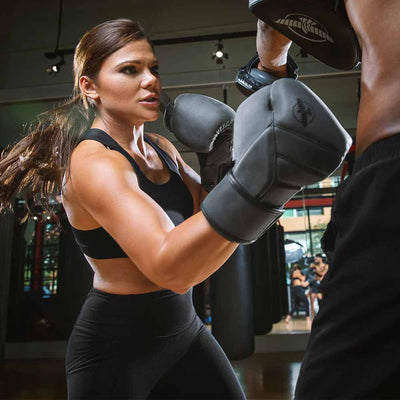
For sparren, the right sparring glove remains important. A knuckle guard sits inside your own glove and does not replace the padding and features your training partner needs on the outside. Extra padding around your hand is no excuse for making harder contact.
For kickboxing and thai boxing, the same fit considerations apply as long as you wear the guard under your boxing gloves. Don’t automatically assume the same applies to small MMA gloves: the available space and the demands on hand movement differ.
If you’re competing in boxing or kickboxing, check the applicable rules for handwraps and permitted materials beforehand. What you wear during regular training is not automatically allowed in every competition.
What does research say about padding and handwraps?
When comparing knuckle guards, both the padding materials and the overall fit matter. Below, you’ll learn how to turn research on padding into a practical choice for wrapping your hands.
Training comfortably: pay attention to your hands and equipment
Extra knuckle padding and a properly wrapped hand go together. Lay the pad flat, smooth out any folds in your handwraps and check that you can close your fist comfortably. Keep paying attention to how your hands feel during training.
- Stop punching if pain starts or gets worse.
- Have persistent or recurring symptoms assessed by a healthcare professional, especially if you have swelling, reduced mobility or a change in sensation.
- Don't keep training with extra padding to hide pain. Finishing your planned rounds is no reason to ignore symptoms.
The term boxer's knuckle also needs explaining: it refers to a soft tissue injury around a knuckle joint, not simply any sore knuckle. It is also different from a boxer's fracture, which is a break in a metacarpal bone. You cannot diagnose either condition yourself based on how your hand feels during training.
If you choose extra knuckle padding, make sure the guard, your handwraps and your gloves work well together. The right combination is the basis for a comfortable hand wrap during bag and pad training.
Care: keep pads and handwraps fresh
Keep your knuckle guards and handwraps clean and dry. Winning NG2 and XPRT Protect Gel are sold as washable, but always follow the care instructions for your model. Check the cover, seams and padding regularly, too: there is no single replacement schedule that applies to every athlete.
Which knuckle guard is right for you?
Start with what you want to add. If you're specifically looking for D3O foam in a neoprene construction, check out Rival Intelli-Shock. If you want a separate gel pad with a stated thickness of 10 mm, Winning NG2 Gel is worth considering. If you're looking for a combination of EVA foam and gel, include XPRT Protect Gel in your comparison.
Then assess the whole setup, not just the guard: your hand, the pad, the handwrap and your glove. A thicker handwrap needs more room than a thin stretch wrap. If your glove already fits snugly, pay extra attention to the available space.
Conclusion: choose the knuckle guard that suits your kit
Knuckle guards add a targeted layer of cushioning to your hand wraps. Rival Intelli-Shock, Winning NG2 Gel and XPRT Protect Gel offer a choice of designs with foam, gel or a combination of both. Pair your knuckle guard with suitable handwraps and boxing gloves to complete your kit.
If you're looking for D3O foam in a neoprene construction, check out Rival Intelli-Shock. Choose Winning NG2 Gel for a 10 mm gel pad or XPRT Protect Gel for a combination of gel and EVA foam. Explore the models and handwraps below and put together the combination that suits your training and gloves.
))

))

))