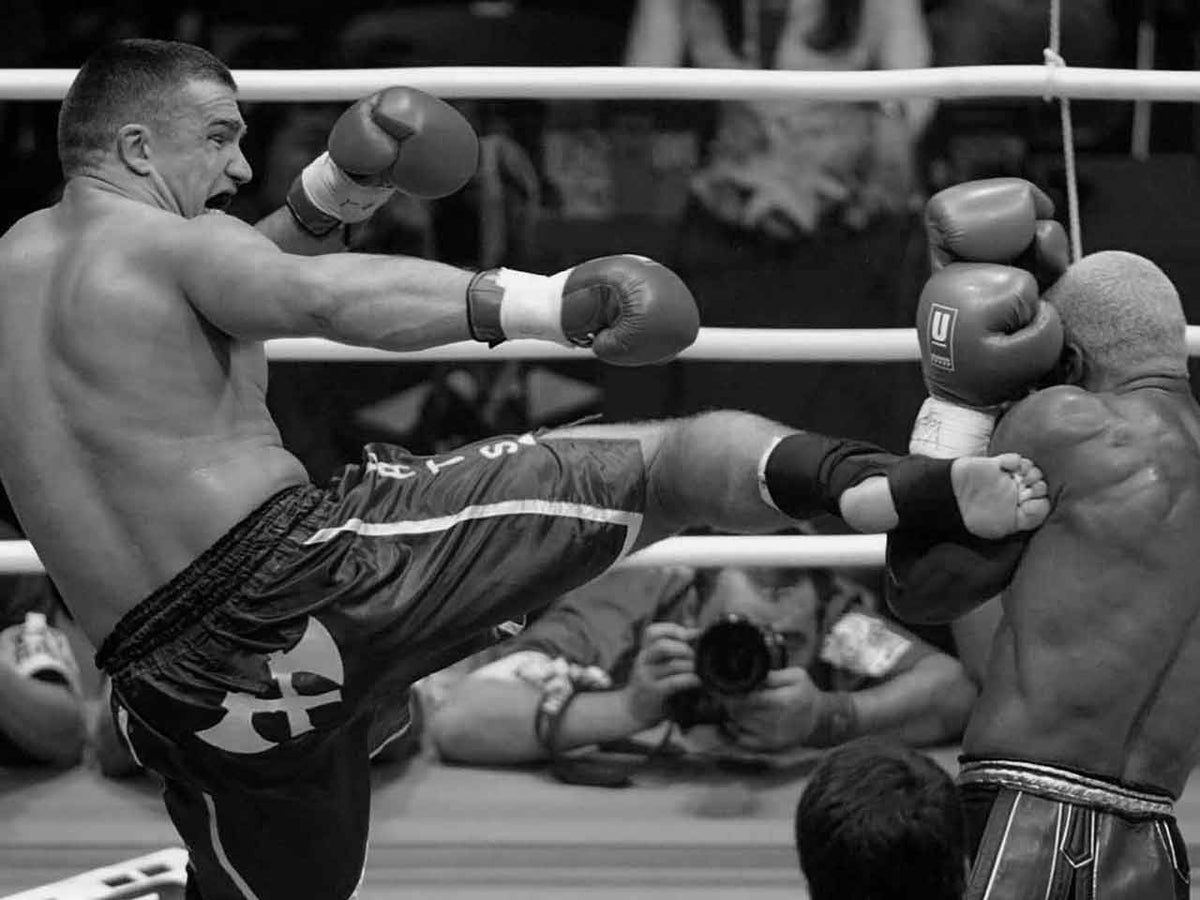
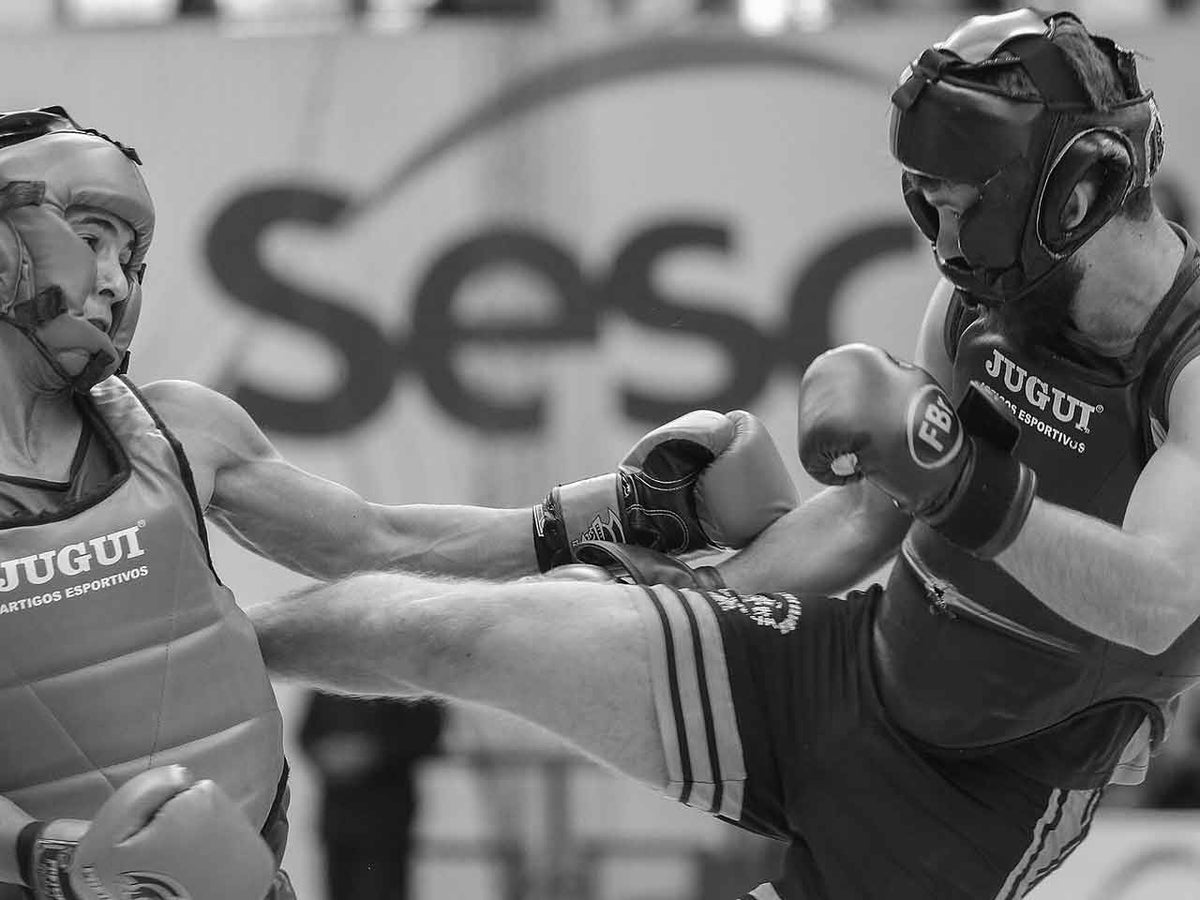
Full-contact combat sport combining boxing techniques with kicks. The foundation of the Dutch martial arts tradition and one of the most popular martial arts in the world.
01. / Overview
Overview
What is Kickboxing?
Kickboxing is a full-contact combat sport that combines boxing techniques with kicks from karate and Muay Thai. It is one of the most widely practiced combat sports in the world and the foundation of the legendary Dutch striking tradition, which has dominated combat sports for decades.
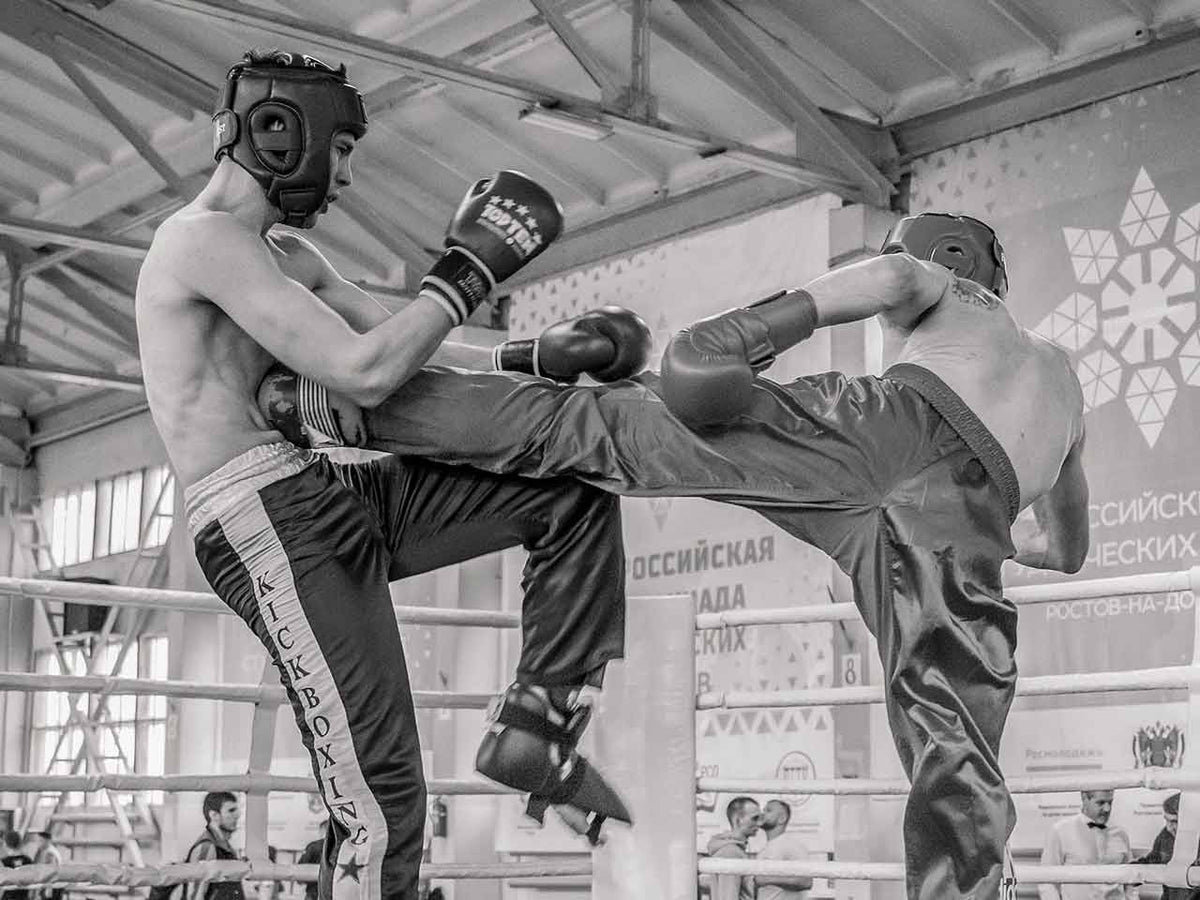
Depending on the ruleset, the following are allowed in kickboxing:
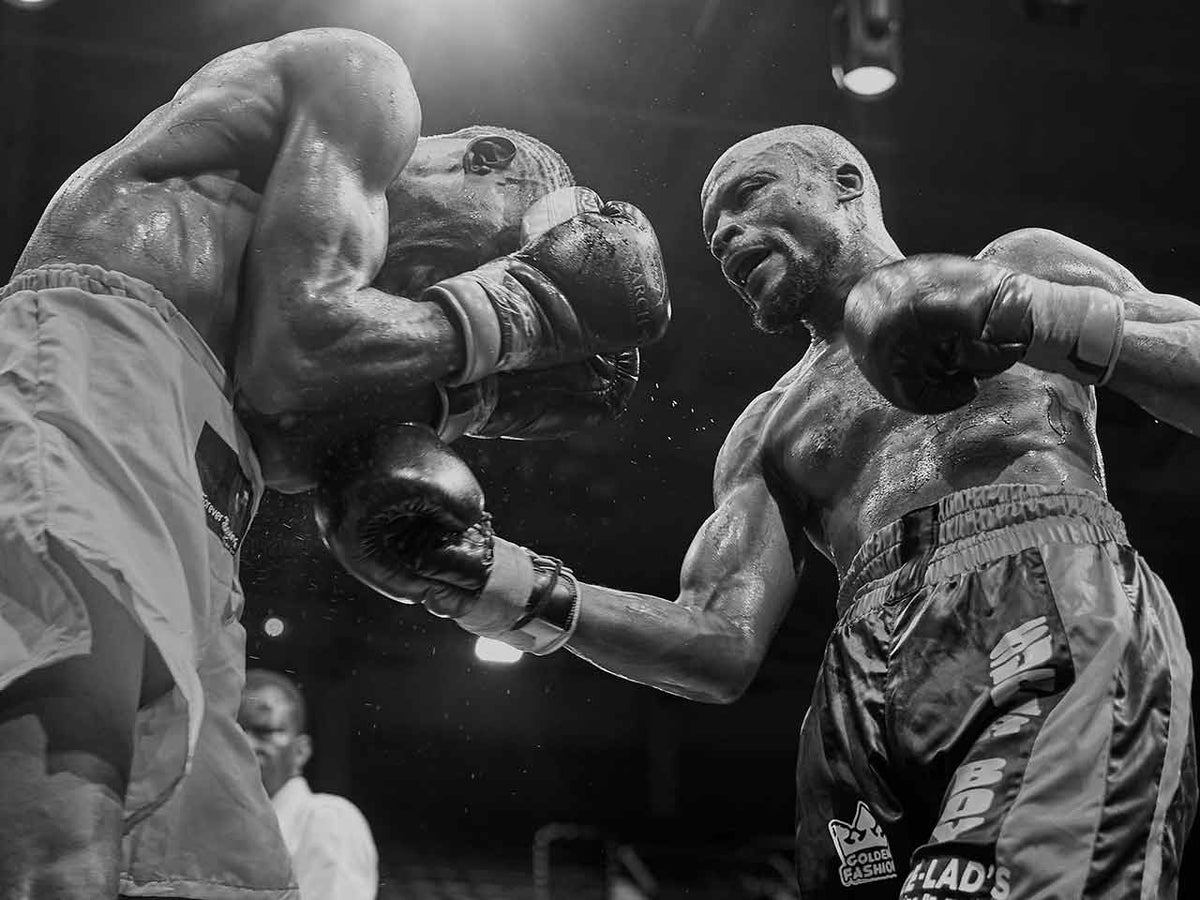
Punches - all boxing punches to the head and body
Kicks - low kicks, body kicks, and head kicks, depending on the ruleset
Knees - in K-1 and some other rulesets
Spinning techniques - spinning back kicks and spinning elbows in some rulesets
Millions of people around the world practice the sport recreationally for fitness, self-defense, and competition. At the highest level, organizations such as GLORY, K-1 and ONE Championship bring the best fighters in the world together at events watched by millions of people worldwide.
Kickboxing emerged independently in several countries during the 1950s and 1960s. In Japan , promoter Osamu Noguchi developed a hybrid sport in the early 1960s that combined karate techniques with Western boxing rules. This was the first form of the sport to be widely called kickboxing. In the United States , full-contact karate developed simultaneously during the 1970s, under promoters such as Don and Judy Quine and PKA champion Joe Lewis.
The Dutch contribution to kickboxing is unmatched. Beginning in the 1970s, Dutch trainers, led by the legendary Tom Harinck, developed a unique technical style that combined the precision and power of Dutch boxing with the kicks and footwork of Muay Thai. This synthesis created the Dutch kickboxing style - the most successful and influential striking system in the history of combat sports.
The founding of K-1 in Japan in 1993 transformed kickboxing into a global spectacle. K-1 brought together the best fighters from kickboxing, Muay Thai, karate, and boxing under a single ruleset and broadcast the events to an audience of tens of millions. During this period, the greatest concentration of heavyweight talent in combat sports history emerged.
Legendary eras and defining moments
The golden K-1 period (1993-2008) produced the best kickboxers the sport has ever known. Four fighters defined this period more than anyone else. Together, they are known as the Four Horsemen of Dutch kickboxing:
Ernesto Hoost - four-time K-1 World Grand Prix champion and the most technically complete kickboxer of his era
Peter Aerts - three-time K-1 champion, The Demolition Man, known for his devastating high kicks
Remy Bonjasky - three-time K-1 champion, The Flying Gentleman, known for his extraordinary athleticism and spinning techniques
Semmy Schilt - four-time K-1 champion and the most dominant heavyweight fighter in the tournament's history
Outside the Dutch dynasty, Andy Hug from Switzerland became one of K-1's most beloved figures. He was a karate-based fighter with explosive techniques and a personality that made him an icon in Japan. His death in 2000 at the age of 35 was mourned by fans worldwide. Mirko Cro Cop from Croatia brought a new dimension to heavyweight kickboxing. His left high kick became the most feared single attack in combat sports and ended careers with one strike.
In the modern era, GLORY Kickboxing carries the torch as the world's leading kickboxing organization. Dutch fighters continue to dominate, with champions such as Rico Verhoeven setting new standards for athletic performance in the heavyweight division.
03. / Development
Development
Kickboxing around the world
The Netherlands - the undisputed world leader in kickboxing, with more world champions than any other country. The Dutch style is the dominant technical system worldwide
Japan - the birthplace of modern kickboxing and home of K-1, with a passionate domestic fan base and strong Japanese fighters
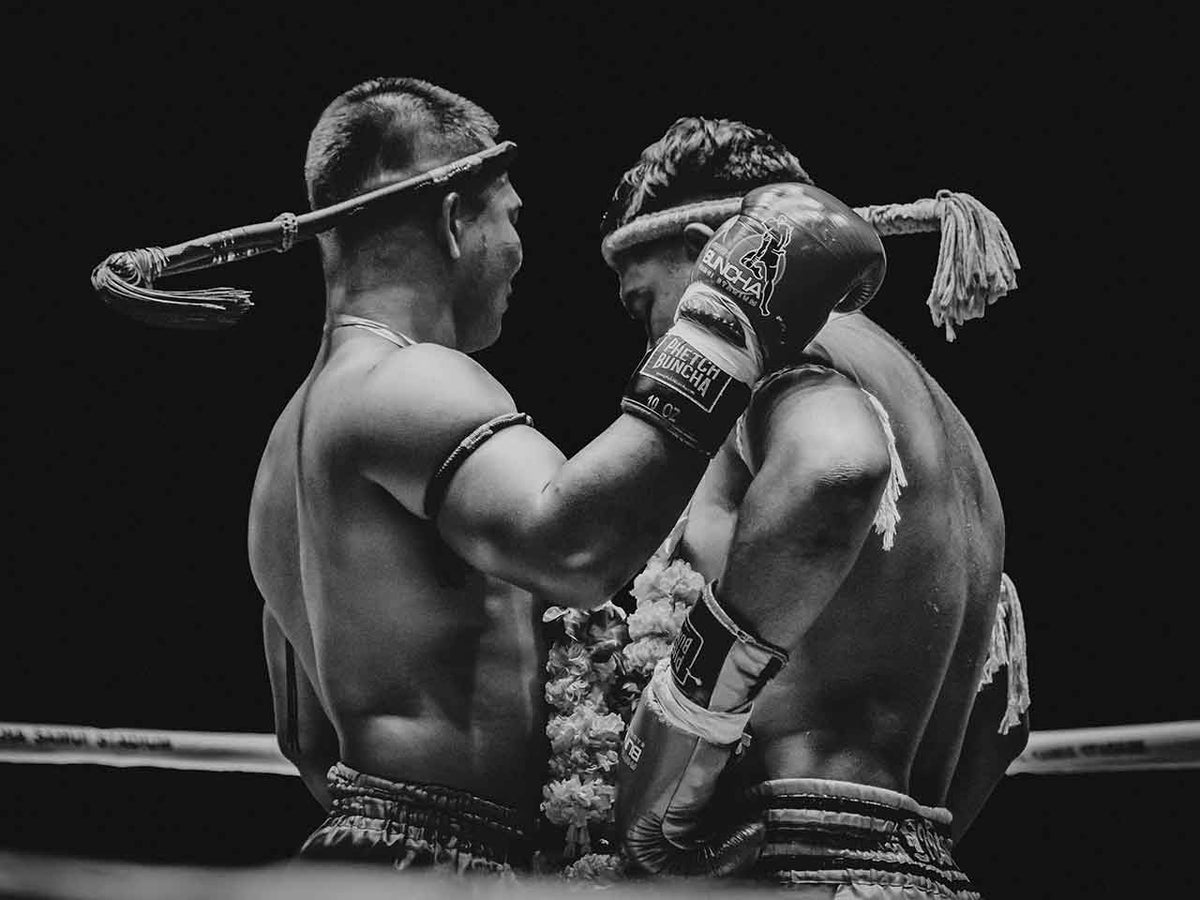
Thailand - Muay Thai champions such as Buakaw Banchamek compete in and dominate international kickboxing, blurring the line between the two sports
Croatia - produced Mirko Cro Cop, one of the most feared strikers in history
Switzerland - Andy Hug put Swiss kickboxing on the global map with his iconic K-1 career
Belgium and France - strong European kickboxing communities with major promoters and competitive athletes at every level
Kickboxing in the Netherlands
The Netherlands is the greatest kickboxing nation in history. No other country has produced so many world champions, such a dominant technical system, or such an influential coaching lineage. Dutch kickboxing is not just a fighting style; it is a cultural institution.
The story begins with Tom Harinck, who built the Dutch system from the ground up by combining Dutch boxing precision with Muay Thai power. His gym produced Ramon Dekkers, Ernesto Hoost, Peter Aerts and many others. Johan Vos continued the tradition and added his own innovations, producing the next generation of Dutch world champions.
During the K-1 Grand Prix era, Dutch fighters were simply dominant. Ernesto Hoost won four titles. Peter Aerts won three. Remy Bonjasky won three. Semmy Schilt won four. In the history of the K-1 World Grand Prix, Dutch fighters have won more titles than the rest of the world combined.
Today, Rico Verhoeven carries the Dutch flag as GLORY heavyweight champion and the most dominant kickboxer of the modern era. Dutch gyms, from Amsterdam to Breda, continue to produce world-class talent. Kickboxing remains one of the country's most popular combat sports at every level, from recreational training to elite competition.
04. / Training
Training
Training Culture and Technique
The Dutch kickboxing training system is the most widely followed and admired system in stand-up combat sports. It is built around frequent pad work, technical drills, and hard sparring, producing fighters with exceptional all-round skills. A typical training session at a Dutch gym consists of:
Boxing Technique - combinations of jabs, crosses, hooks, and uppercuts drilled until they become automatic and precise
Kicking Technique - low kicks, body kicks, and head kicks seamlessly incorporated into punching combinations
Combination Work - punch-kick combinations that flow naturally together and are difficult to defend against
Hard Sparring - the Dutch system is known for its culture of hard sparring, which produces mentally and physically strong fighters
Conditioning - exceptional cardiovascular and strength training to maintain a high work rate for five rounds
The Dutch gym system, with clubs in Amsterdam, Rotterdam, and The Hague at its core, has produced more world champions than any other national kickboxing system in history. Coaches such as Tom Harinck, Johan Vos and their students have built a coaching lineage that still influences the best strikers in the world.
17. / Gear
Gear
Kickboxing equipment – what do you need?
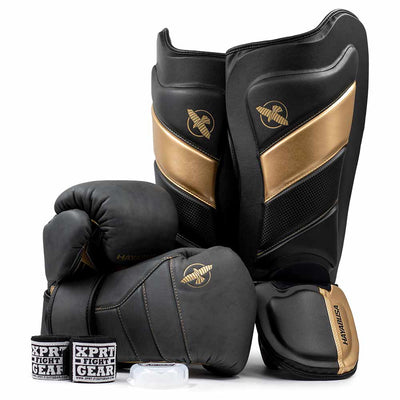
For kickboxing, you need a combination of boxing and Muay Thai equipment. Essential equipment:
Kickboxing gloves - 10–16 oz, designed for both punching and blocking kicks. Brands: Fairtex, Twins, Booster, King, Adidas
Handwraps - essential protection during every training session
Shin guards - required for sparren, to protect both the shin and instep during kicking exchanges
Kickboxing shorts - designed for complete freedom of movement when kicking. Both Dutch-style shorts and Muay Thai shorts are suitable
Mouthguard - absolutely essential during contact training
Groinguard - required for sparren and competitions
Headgear - required for sparren, to protect against punches and kicks to the head
Thai pads - the most important tool for combination training with a partner or trainer
At Fight2Win, you’ll find a complete range of kickboxing equipment from Fairtex, Twins, Booster, King, Super Pro, and Adidas - brands trusted by champions at every level of the sport.