Muay Thai
- The Art of Eight Limbs - fists, elbows, knees and shins. Thailand's national sport and one of the most effective striking arts in the world.
Stats
- Origin
- Thailand
- Founded
- 1238
- Governing body
- World Muay Thai Council
What is Muay Thai?
Muay Thai - also known as the Art of Eight Limbs - is a striking combat sport originating from Thailand that uses fists, elbows, knees and shins as weapons. It is one of the most complete and effective standup striking arts in the world and forms the striking foundation of modern MMA.
Unlike boxing, which uses only punches, Muay Thai fighters can attack with eight points of contact. This makes the art uniquely dangerous and versatile:
- Fists - jabs, crosses, hooks, uppercuts
- Elbows - horizontal, diagonal, spinning, upward - often fight-ending weapons
- Knees - straight, diagonal, flying - devastating from the clinch
- Shins - low kicks, body kicks, head kicks - the signature weapon of Muay Thai
The clinch - known as the plum or double collar tie - is another defining element, allowing fighters to control and punish opponents with knees and short elbows at close range.
History
History & Origins
Muay Thai evolved from Muay Boran - ancient Thai unarmed combat developed by the military of the Sukhothai Kingdom as early as the 13th century. Soldiers trained in these techniques as a close-range alternative when weapons were lost or unavailable in battle.
The sport is deeply woven into Thai national identity. The legendary warrior Nai Khanomtom is celebrated as the father of Muay Thai - according to historical accounts, he defeated ten Burmese fighters in succession after being captured, earning his freedom through his fighting skill. His victory is commemorated annually on Muay Thai Day on 17 March.
During the reign of King Rama V in the late 19th and early 20th centuries, Muay Thai became formalised as a sport with defined rules and rings. The Lumpinee Boxing Stadium in Bangkok - opened in 1956 - and the Rajadamnern Stadium (opened 1945) became the twin cathedrals of the sport, where champions were made and legends were born. A Lumpinee or Rajadamnern title remains the most coveted achievement in Muay Thai.
Eras
Legendary Eras & Defining Moments
The golden era of Thai stadium Muay Thai in the 1980s and 1990s produced fighters of extraordinary technical mastery. Dieselnoi Chor Thanasukarn was so dominant at lightweight that he was forced into retirement at 23 because no one would fight him. Coban Lookchaomaesaitong became one of the most decorated fighters in history with over 200 victories.
The arrival of Dutch fighters in Thailand transformed Muay Thai's international reach. Ramon Dekkers - known as the Diamond - became the first and most celebrated Western fighter to win multiple Muay Thai titles in Thailand, earning the respect of Thai fans who considered him one of their own. His eight world titles and extraordinary heart in the ring made him a legend on both sides of the world.
In the modern era, Buakaw Banchamek became the global face of Muay Thai through his dominance in the K-1 World MAX tournament and his electrifying fighting style. Saenchai is widely regarded as the greatest technical Muay Thai fighter of all time - a four-weight Lumpinee champion whose combination of creativity, speed and ring intelligence set him apart from every other fighter in history.
Training
Training Culture & Technique
Muay Thai training is demanding, methodical, and deeply rooted in tradition. A traditional Thai camp session includes:
- Running - typically 5-10 km at the start of every session to build an aerobic base
- Shadowboxing - warming up technique and visualizing combinations
- Pad work - with a trainer holding Thai pads, the core of technical development
- Bag work - heavy bag work for power and combinations
- Clinch work - drilling the plum, knee strikes, and off-balancing techniques
- Sparring - controlled application of all techniques
- Conditioning - shin conditioning, core work, and body hardening
The Wai Kru Ram Muay - the pre-fight ritual dance - is a defining feature of Muay Thai competition. Performed before every bout, it honors the fighter's trainer, gym, family, and the traditions of the sport. Each gym has its own unique Wai Kru, passed down through generations of fighters.
Traditional Muay Thai gyms in Thailand operate twice-daily sessions, with fighters often completing 30-40 rounds of pad work per day during fight camp. The discipline and volume of training produced by the Thai system are unmatched in any other combat sport.
Global reach
Muay Thai Around the World
From its origins in Thailand, Muay Thai has spread to become one of the most widely practised combat sports on the planet. Key countries and regions:
- Thailand - the spiritual home, with thousands of gyms, daily televised stadium events at Lumpinee and Rajadamnern, and Muay Thai as a core part of national identity
- Netherlands - the most successful Western Muay Thai nation, producing Ramon Dekkers and a generation of world-class fighters under coaches like Tom Harinck
- Japan - home of the K-1 and RISE promotions, which helped globalise Muay Thai and kickboxing through the 1990s and 2000s
- United Kingdom - one of Europe's largest Muay Thai communities, with the British Thai Boxing Council and UKMF governing the sport
- France & Belgium - strong Muay Thai cultures with major European promotions and competitive athletes
- United States - rapidly growing Muay Thai scene driven by MMA's popularity and the crossover appeal of striking arts
Muay Thai achieved a landmark moment when it was officially included in the 2026 Asian Games programme, a significant step toward potential future Olympic inclusion.
In the Netherlands
Muay Thai in the Netherlands
The Netherlands punches far above its weight in Muay Thai. No Western nation has produced more high-level Muay Thai fighters competing successfully in Thailand, and the Dutch Muay Thai style - powerful, aggressive, technically precise - is recognised worldwide.
The story begins with Tom Harinck - the legendary Dutch trainer who brought Muay Thai to the Netherlands and built a system that produced world champions across both Muay Thai and kickboxing. Harinck trained icons including Ramon Dekkers, Ernesto Hoost and Peter Aerts, creating a coaching lineage that continues to influence Dutch combat sports to this day.
Ramon Dekkers remains the greatest Dutch Muay Thai fighter of all time and one of the most beloved foreign fighters in Thailand's history. His relentless pressure, granite chin and devastating punching power made him a revolutionary figure - proving that Western fighters could not only compete in Thailand but genuinely thrive at the highest level.
Today, Dutch Muay Thai gyms are among the best in Europe. Cities including Amsterdam, Rotterdam, Breda and Eindhoven have strong Muay Thai communities, with fighters regularly competing at international level in ONE Championship, GLORY and Thai stadium events.
Muay Thai in Film & Documentary
Essential Documentaries
- The Diamond (2013) - The definitive documentary about Ramon Dekkers, tracing his extraordinary journey from Breda to the stadiums of Thailand. Essential viewing for any Muay Thai fan.
- Saenchai: Impossible to Forget (2019) - A profile of the greatest technical Muay Thai fighter of all time, following Saenchai through training, competition and his unique philosophy of the sport.
- Fight Life (2013) - An intimate look at the lives of professional Muay Thai and MMA fighters, shot across Thailand and North America.
Essential Films
- Ong-Bak (2003) - Tony Jaa's explosive debut brought Muay Thai to global cinema audiences. The film's fight sequences - performed without CGI or wire work - remain some of the most thrilling ever committed to film.
- Chocolate (2008) - JeeJa Yanin stars as an autistic girl with extraordinary Muay Thai abilities. A stunning showcase of the art's techniques and a landmark film for female martial arts cinema.
- Beautiful Boxer (2003) - Based on the true story of Nong Toom, a transgender Muay Thai fighter who became a champion in Thailand. Powerful, beautiful and unique.
- Tom Yum Goong / The Protector (2005) - Tony Jaa again, with extended uncut fight sequences that showcase Muay Thai's devastation in a way no other film has matched.
Legenden
Buakaw Banchamek
Thai
Saenchai
Thai
Ramon Dekkers
Dutch
Coban Lookchaomaesaitong
Thai
Trainers & Oprichters
Alle Muay Thai vechters
Wordt geladen...
Aankomende events
Wordt geladen...
Historische events
Wordt geladen...
Gear & Equipment
Muay Thai Gear - What You Need
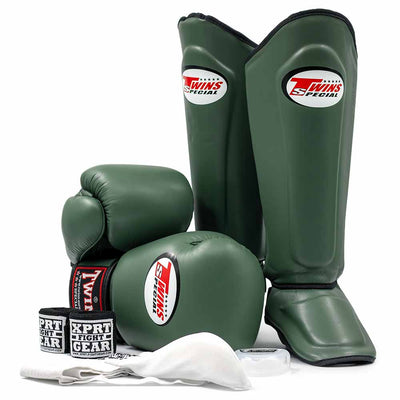
Muay Thai requires specific equipment designed for the sport's unique demands - particularly the use of elbows, knees and shin kicks. Essential gear includes:
- Muay Thai gloves - typically 10-16oz, designed for both punching and clinch work. Key brands: Fairtex, Twins, King, Booster
- Hand wraps - essential protection for every session
- Shin guards - critical for sparring, protecting both the wearer and their partner during kicking exchanges
- Muay Thai shorts - cut high on the thigh for full kicking range of motion. Traditional Thai shorts are a hallmark of the sport
- Mouthguard - non-negotiable for any contact training
- Groin guard - required for sparring and competition
- Thai pads - for trainers and pad holders. Quality Thai pads are essential for proper pad work development
- Heavy bag - a longer, heavier bag (at least 40kg) suited to shin kicks and knees
At Fight2Win we stock a full range of Muay Thai equipment from leading brands including Fairtex, Twins, King, Booster and Super Pro - the same brands used by professional fighters in Thailand and around the world.