An international combat sports organization is defined by the bouts it stages: a rising talent’s first appearance, a technically impressive victory and a final where everything comes together. In February 2026, SENSHI looked back on its development since its first event in 2019. The overview brought together 373 fighters from 59 countries, 347 bouts and 119 knockouts.
Those figures set the stage for SENSHI 30, which had been announced for 28 February 2026 in Varna. This article preserves that snapshot: the statistics after 29 editions and the fight card published at the time for the anniversary gala.
Seven years of SENSHI, brought together in one overview
According to the organizer’s report, the first SENSHI event took place on 23 February 2019. On 24 February 2026, KWU SENSHI published a look back at 29 galas. It highlighted both the size of the international field and the sporting milestones.
With 373 fighters and 347 bouts, the figures tell different parts of the story. The number of fighters describes those who competed at SENSHI events; the number of bouts shows how many contests had been held across the editions. The 119 knockouts were a striking part of the overview.
It was a fitting moment to look back. SENSHI was approaching its thirtieth edition and had announced five Grand Prix tournaments in different weight classes for 2026. The first of those announced tournaments focused on the up to 75 kg weight class.
Fighters from 59 countries
The international reach is one of the most striking aspects of the report. Fighters from 59 countries had entered the SENSHI ring. According to the organization, 14% of the fighters were Bulgarian. It also named Spain, France, Romania, Brazil, the Netherlands and Serbia as countries with many participants.
Italy, Turkey and Morocco completed the top ten. The Netherlands was also clearly among the countries contributing fighters. For Dutch kickboxing fans, that makes the international organization feel more familiar: the ring brought together different fighting styles and sporting backgrounds, including fighters from their own kickboxing scene.
The overview also mentioned eleven female professional fighters who had competed at SENSHI. That is a separate participation figure from the same historical retrospective.
347 fights, 119 knockouts and sporting milestones
Across its first 29 editions, SENSHI reported a total of 347 fights and 119 knockouts. The busiest competition year in the published overview was 2023, with 71 bouts. Those figures give a concrete picture of the competitive platform the organisation had built during that period.
Alongside the standalone bouts, the announcement described the titles associated with the event. The organisation had crowned six European champions and named its first Grand Prix champion in the over 95 kg division. In the announcement for 2026, that tournament format was set to expand across multiple weight classes.
For viewers, titles and tournaments add another storyline. A standalone bout centres on two opponents; a Grand Prix links several bouts to the same title contest. That combination of individual matchups and a broader tournament story made the SENSHI 30 announcement interesting.
The announced Grand Prix at 75 kg
The announced fight card for 28 February 2026 in Varna featured a Grand Prix at 75 kg under the organisation's KWU FULL CONTACT rules. The four opening bouts brought together eight fighters from different countries.
- Carlos Barbosa from Brazil against Zhulien Rikov from Bulgaria.
- Constantin Rusu from Moldova against Florin Lambagiu from Romania.
- Jordi Requejo from Spain against Konstantin Stoykov from Bulgaria.
- Jorge Davila from Spain against Christian Baya from DR Congo.
The announced format called for semifinals after the opening round, followed by a third-place match and the grand final. That final would determine the SENSHI Grand Prix champion at 75 kg. This is the fight card as it was presented in the lead-up, not a results summary of the gala event that followed.
Reserve bouts and three separate superfights
The Grand Prix also included two announced reserve bouts. Aibek Amanov from Kazakhstan was matched against Viktor Krashevski from Bulgaria. Fernando Tigre from Portugal was set to face David Kinhefner from Hungary. These bouts were part of the published tournament announcement.
Alongside the Grand Prix, the announced card featured three superfights under KWU FULL CONTACT rules. Two were in the up to 70 kg division, with another bout in the over 95 kg division.
- Hirokatsu Miyagi from Japan against Samo Petje from Slovenia: up to 70 kg.
- Charalampos Digkas from Greece against Diyan Dimitrov from Bulgaria: up to 70 kg.
- Francesko Xhaja from Albania against Giannis Stoforidis from Greece: over 95 kg.
The combination gave the announced edition two distinct parts: an ongoing title contest in the up to 75 kg division and separate international matchups outside that tournament.
From watching matches to focused training
A match can also inspire your own kickboxing training. For example, focus on one technical theme rather than just the strikes that land: how a fighter creates distance, returns to guard after a combination or uses a punch to set up a kick. That focus gives your next training round a clear goal.
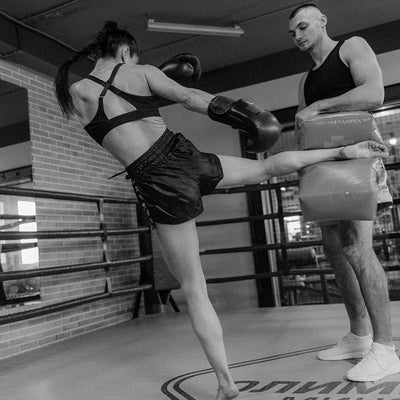
On a punching bag, you can work specifically on the rhythm of a combination and returning to your starting position. With pads or a kicking shield, you also have a target presented by a partner. This lets you practice judging distance and responding at the moment the target is presented.
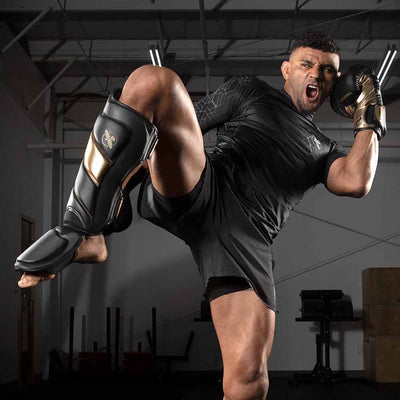
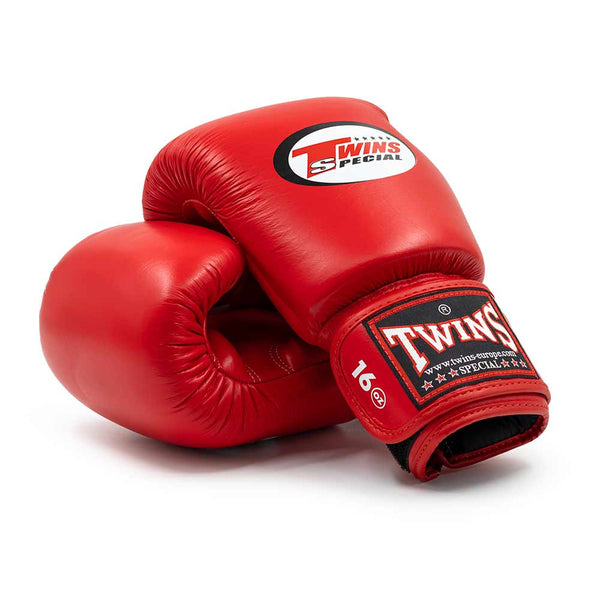
The right equipment makes these drills easier to do. Kickboxing gloves provide a useful foundation for punching practice; shin guards are part of the partner drills designed for them. Kickboxing shorts give you room to step, turn and kick. This practical section is separate training advice that supplements the historical SENSHI report.
A notable milestone before the thirtieth edition
The strength of the February 2026 overview lies in the combination: 29 editions, participants from 59 countries and hundreds of bouts since the start in 2019. The figures showed how SENSHI had developed up to that point, while the announced Grand Prix marked the next step in the sport.
This makes the report a look back at a specific moment in the organization's history. For those who practice kickboxing themselves, there is also a practical link from the international ring to the training floor: watch closely, choose a technical theme and practice it with focus.