Which martial art is right for your child? Judo, karate, taekwondo, boxing, kickboxing, BJJ and wrestling offer very different ways to move and train. There isn’t one discipline that’s the best choice for every child. So start with what your child enjoys, how the kids’ class is structured and the atmosphere on the mat. The name on the sign only tells part of the story.
With more than thirty years of experience in various martial arts and a broad interest in martial arts, I’d like to help you make this choice. I’ve practiced karate, boxing, kickboxing and ITF Taekwon-do, and have also taught classes. That has shaped my preferences, but it has also shown me how much the atmosphere and instruction can vary from one gym to another. My personal experience is a starting point, not proof that the same sport suits every child.
At our showroom, we get similar questions from adults: what’s the best boxing club or kickboxing club nearby? My advice is to visit different classes and choose the one that feels like the right fit. The same applies to children. Below, I combine my own perspective with practical questions to help you evaluate a trial class, instructor and youth group.
Start with your child, not a ranking
One child may enjoy learning kicks and patterns. Another may prefer grappling on a mat, while a third mainly wants to join a friend. These are all useful starting points. You don’t have to treat the choice as a decision for the next ten years.
Ask your child what they imagine the sport will be like. Maybe the idea came from a film, a demonstration or a story at school. Make it concrete: does practicing with a partner sound fun, or performing a technique together? Does your child want to wear a uniform and earn belts, or are gloves and a punching bag more appealing?
A shy child doesn’t automatically need self-defense, and an energetic child doesn’t automatically need a supposedly strict school. Don’t choose based only on a label. See how your child responds in an actual class and whether the instructor makes room for them to participate in a way that suits them.
A good first choice is a class your child wants to try and where you understand how the training works. Keep expectations modest: get acquainted, move around and see if it’s a good fit.
Judo for children: falling, balance and practicing together
Judo is high on my list when parents ask about a first martial art. I mainly come from stand-up disciplines myself, but I find learning about balance, falling and groundwork an interesting introduction. Your child doesn’t just practice a move on their own: a partner moves along and responds.
In a judo class, children might practise off-balancing someone, setting up a throw and holding or escaping a position on the ground. Learning how to fall is part of it. How it is taught makes a big difference: beginners should be able to understand what they are meant to do before an exercise becomes more difficult.
For a child who enjoys play wrestling, working together on the mat can be appealing. For another, close contact may take some getting used to. So watch how a new participant is supported and how partners are chosen. Judo is not automatically a good fit just because a child is young.
At a trial class, what I especially want to see is a coach who explains things calmly, sets clear boundaries and lets children practise without the strongest one always taking charge. Also see how the judo uniform is used and what your child can wear for their first visit. You can wait to buy a full set of gear until you know whether you like the club and the class.
Wrestling for children: moving, gripping and choosing a position
In my view, wrestling deserves a place among the familiar options more often. Parents quickly think of judo, karate or kickboxing, while a wrestling class offers a very different and interesting way to move. Posture, balance and responding to a partner are central.
An exercise might involve holding a position, moving past an opponent or carefully off-balancing someone. That takes more than simply pushing harder. As they practise, children notice that the placement of their feet, their posture and the timing of their movements make a difference.
The direct partner work may appeal to your child if they enjoy being active and trying things out. At the same time, you want to see a real youth class, not an open-ended wrestling session where the loudest or strongest participant sets the tone. Watch how the coach structures the exercises and steps in when someone gets too enthusiastic.
I would assess wrestling mainly based on the group that is actually available. A welcoming, accessible youth group is more valuable than the idea that a particular discipline must be the perfect foundation. Let your child experience what practising on the mat feels like, then ask what they would like to try again.
BJJ and grappling for children: problem-solving on the mat
Brazilian jiu-jitsu and grappling involve a lot of positions, control and escaping on the ground. An exercise might start with one participant on top and the other on the bottom, with a clear task for each. That makes it different from a class where you mostly practise punching or kicking combinations.
It can feel like a moving puzzle: where can your arm go, how do you make space, and how do you stop your partner from moving past you again? Some children enjoy figuring that out. You don't have to be the strongest or most outspoken child to enjoy it.
Youth programmes differ in their techniques and rules. Ask how positions are taught, which actions the group does and doesn't practise, and how children learn to stop an exercise. It must be clear that a signal to stop is respected immediately. An adult competition video doesn't tell you how a beginner class for children is run.
In BJJ, classes are held in a gi, while other grappling classes are taught without one. So first check what the club requires. What appeals to me about these disciplines is the different range at which you learn to move. It's a great complement to my own background in stand-up martial arts, but your child doesn't need to take up two sports at once.
Karate for children: technique, forms and a focus on execution
Karate is part of my own background; I have practised Wado Ryu. I still appreciate the focus on posture, technique and etiquette. That's why I'm happy to recommend a good karate club to parents looking for a martial art for their child.
A class may include basic techniques, kata and partner exercises. In basic technique practice, for example, you practise a stance, punch or kick. In kata, you perform movements in a particular sequence. Partner work adds judging your distance from someone else and responding to each other.
I find the way forms are taught especially important. A child doesn't have to memorise a sequence straight away to enjoy karate. An instructor can break movements down, demonstrate them again and help children understand what the exercise is about. The next belt can be a fun milestone, but it doesn't have to become more important than the practice itself.
Karate is not a standardised lesson programme that is taught the same way everywhere. Ask about the style, how the children's classes are structured and what contact training means at that club. My personal preference for traditional martial arts is a reason to go and see for yourself, not to skip the trial lesson.
Taekwondo for children: learning kicks, footwork and patterns
I have also practised ITF Taekwon-Do. What appeals to me about it is the combination of kicking techniques, footwork, hand techniques and patterns. For a child who enjoys copying movements and learning new techniques, a taekwondo class can offer plenty to discover.
A kick involves more than lifting your leg high. You also practice the stance beforehand, the direction of the movement, and bringing your foot back down. During a trial class, see how the instructor explains these elements. Understanding a small movement well can be more interesting for a beginner than having to copy an impressive demonstration.
In ITF Taekwon-do, you'll encounter patterns called tuls; in other taekwondo styles, you may come across poomsae. These differences are a good reason to ask about the club's program. Not every school uses the same forms, clothing, and protective gear.
My preference applies here too: don't let a belt or exam define the whole experience. It's great when a child is proud of a new pattern, but needing extra practice is not a failure. Look for a group where technique and enjoyment can go hand in hand.
Next, make a considered choice of clothing. An ITF dobok with a front fastening is not automatically suitable for every taekwondo club. Our Taekwon-do uniform ITF Dobok has a hook-and-loop fastening and is also available in smaller sizes. Check the required style and fit before buying.
Boxing for children: hands, feet, and rhythm
Boxing is much broader than two people facing each other in a ring. A youth class may focus on stance, guard, footwork, shadowboxing, bag work, and pad work. So your child can learn about boxing technique without being able to tell from the sport's name alone what kinds of contact the class involves.
What appeals to me about boxing is how precisely the hands and feet have to work together. Throwing a straight punch, returning to guard, and then changing position may seem simple, but there is plenty to work on. A good youth class makes these tasks easy to understand and varied.
For a child who enjoys being active and is looking for rhythm in movement, this can be a fun introduction. See how long exercises last, how instructions are given, and whether there is still attention to technique when the pace picks up. Simply throwing lots of punches is not a clear lesson objective.
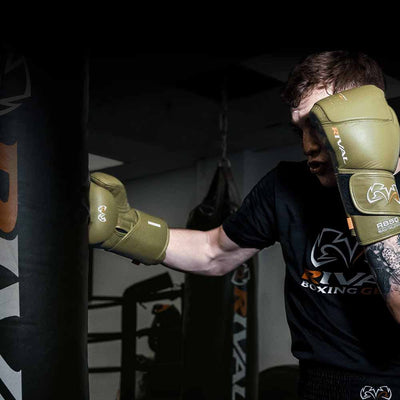
Ask separately about sparring and other contact between participants. That is not the same as bag work or pad work and should be explained clearly. When choosing gloves, consider how they will be used and how they fit. Prescribing a fixed ounce size based only on a child's age does not take these factors into account.
Kickboxing and thai boxing for children: combining hands and legs
Kickboxing and thai boxing are also among the disciplines I’m very interested in. The combination of hand and leg techniques makes training varied: you work on a combination, find your distance again and learn to regain your stance after a kick.
A children’s class may include techniques, footwork, drills with a kicking shield or punching mitts, and other agreed activities. The techniques and types of contact used depend on the programme for children. So don’t assume that a children’s class covers the same material as adult competition training.
Kickboxing and thai boxing aren’t simply two names for exactly the same thing. But when choosing a beginner class for children, I think it’s more important to look at the actual class than to memorise the differences in competition rules. What will your child practise, how will it be taught, and how do people in the group treat one another?
You don’t need to be put off in advance by its old, tough image. On the other hand, a nice gym or a well-known name isn’t a reason to skip all your questions about supervision. With these sports, I look for the same combination as elsewhere: enjoyment, understandable techniques and clear guidelines.
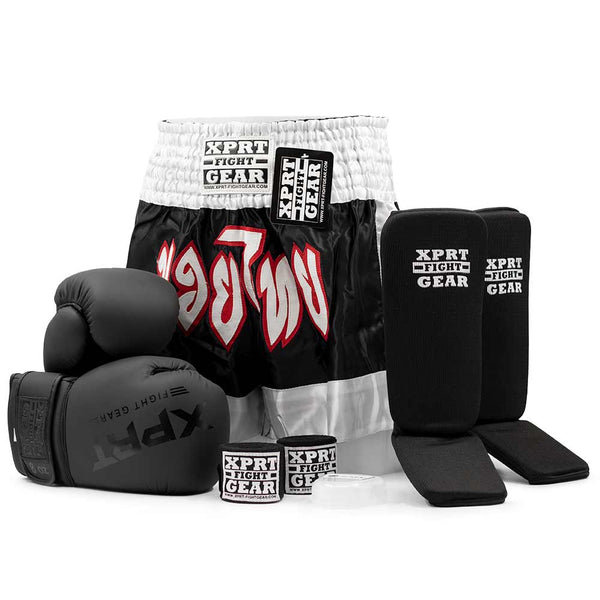
Once you’ve made your choice, a children’s kickboxing set can be practical. Check what’s included and choose the size for each item individually. Gloves, shin guards and shorts may each need to be sized differently. You don’t need to have a complete set ready for the trial class.
Krav maga for children: self-defence in a suitable programme
Krav maga has a different focus from a sports class centred on scoring points or taking a belt test: self-defence is the starting point. In my original advice, I strongly recommended this option to parents interested in building their child’s confidence and ability to stand up for themselves. I still think that’s a good reason to look into a suitable programme for children.
For me, an introductory session isn’t just about learning an isolated self-defence technique. I also want to know how the class covers setting boundaries, creating distance, getting away and seeking help. The situation a child practises should be easy to understand and appropriate for the group.
So ask which scenarios are used and how the instructor explains them. A children’s class doesn’t need to reenact an adult emergency as dramatically as possible. It’s more important for a child to understand what they can do and to know they can ask for help or set a boundary.
I wouldn’t choose krav maga based on the promise that bullying will simply stop as a result. Adults remain responsible for addressing bullying. A children’s class can be a place to practise how to respond and set boundaries, but it shouldn’t make the child responsible for solving the problem.
Here, too, the actual class is what matters most. Look beyond a name or an impressive demonstration, and ask what clothing and protective gear are needed for that specific group. That way, you can make an informed choice about a suitable program instead of buying based on a big promise.
Why I like to include judo, wrestling, and ground work in the selection
I mainly come from stand-up disciplines: karate, boxing, kickboxing, and ITF Taekwon-do. Still, when looking for a first martial art for children, I like to consider judo, wrestling, and grappling as well. Working on balance, falling, gripping, and positions on the mat offers a very different introduction from punching and kicking. I like that as part of a broad foundation.
That interest also has a personal history. When I was a teenager, the first UFC events were held, and Fred Royers wrote for the budo magazine Zendokan. Downloading or streaming wasn’t an option. Whenever I could, I tried to find videotapes of UFC 1, 2, and 3. Ground fighting made a big impression on me and changed how I looked at what I knew from my own training.
That story is, of course, about my development as a martial arts enthusiast, not about what a children’s class should look like. A children’s class doesn’t have to become a mini UFC. What I take from it when making this choice is above all a sense of curiosity: don’t rule out a discipline just because you’re less familiar with it.
Over the years, while training or teaching at various gyms, I’ve had good experiences with judo’s structured approach. That’s my experience, not an endorsement of every individual judo club. Here, too, I want to see how the trainer treats children. A welcoming children’s group in karate or kickboxing may be a better fit than a judo class where your child doesn’t feel at home.
What appeals to me about traditional martial arts
I’m a fan of the philosophy behind traditional martial arts. At the schools where I trained, I valued the focus on technique, etiquette, and calmly repeating movements. That combination can be a wonderful introduction to martial arts.
My personal preference doesn’t mean respect can only be found in traditional styles. In boxing, kickboxing, BJJ, and wrestling, too, you can find a group where people treat one another exceptionally well. So look at what the trainer actually does, not just the tradition the school claims to follow.
I find forms such as kata, tuls, and poomsae interesting and valuable. At the same time, in a children’s class, I want to see explanations tailored to the group. Not every child memorizes a sequence at the same pace. A pattern or the next belt should not become more important than understanding and enjoying the practice of the movements.
If there's a good club nearby, I'm happy to include karate or taekwondo in the first visit. But I wouldn't make it a compulsory route where every child has to train traditionally before trying anything else. The class and your child's interest are what ultimately matter.
Look at the children's group rather than an ideal starting age
An age range on the website is useful for knowing which group to ask about. It doesn't guarantee that the class will suit your child. Pay attention to how long explanations take, the pace of transitions and what is expected of the children.
Ask what a beginner is expected to be able to do. Does a child need to take part in the whole class independently, or can they try part of it first? Are activities demonstrated? Can children watch for a while before joining in? These kinds of arrangements make the first visit easier to navigate.
Even within an age group, children differ in experience, attention and need for explanation. A trainer can show how they handle this. Don't just check whether the group is a good fit on paper; also consider whether your child can follow the instructions and feels welcome.
Don't treat a belt test or a series of forms as a test of whether your child is suited to martial arts. Ask how the club teaches new elements and what happens when someone needs more time to practise.
A good trainer makes expectations clear
A good children's class isn't simply an adult class in smaller sizes. See how the trainer speaks to the children, builds up activities and responds when something doesn't go well. You want to understand what the group is learning and how differences in experience are taken into account.
Pay attention to everyday moments. How is a new child introduced? What happens when an exercise gets too enthusiastic? Is a mistake corrected calmly, or is someone laughed at in front of the group? Clear corrections and friendly interactions can go hand in hand.
Ask who teaches the children's classes, what training and experience they have, and how the club handles parents' questions or concerns. Also ask who to contact if you'd rather not raise something directly with your child's trainer.
You don't have to assess everything during a single visit. But a club that clearly explains how it works makes it easier to make an informed choice. If an important answer remains vague, ask follow-up questions before signing up.
Ask exactly what contact during class means
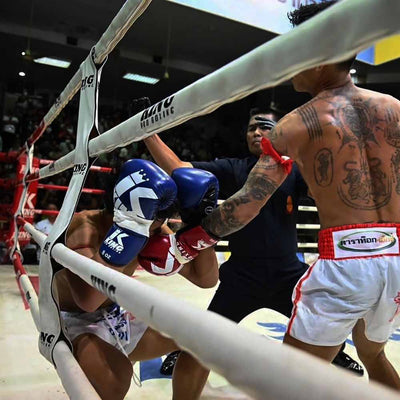
A uniform, gloves or a ring in the background don't tell you how much contact takes place in a children's class. So ask about the exercises themselves. Performing techniques in the air, hitting a pad, a set partner drill and freer sparring are different activities.
Ask the coach to explain how children are paired up, which areas of contact are used, and how power and pace are limited. Also ask whether a beginner takes part in everything right away or practices other activities first.
For ground work, you’ll want to know how children learn to signal that an exercise should stop and how quickly the coach responds. For striking and kicking drills, you’ll want to understand what rules apply to that specific group. Don’t make assumptions based on the name of the sport.
Protective gear isn’t a license to train harder. Headgear doesn’t make head contact risk-free. If you have questions about an injury, a medical condition, or recovery, seek personal advice from a qualified healthcare professional, not from a product description.
Make the trial class a relaxed introduction
Tell your child in advance what you know: where the class is, who’s going along, and that they don’t need to know anything yet. Ask the club what to wear and whether equipment can be borrowed. That way, the first class won’t start with a rushed purchase of equipment that may not be needed.
Arrive on time so there’s room to get to know the gym and coach. Let them know it’s a first class and share any relevant information needed to make it a positive experience. Arrange whether to observe or join in according to the club’s procedures.
Try not to correct every movement from the sidelines. Your child is already getting guidance from the coach and also needs to get used to the group. The goal isn’t to show how quickly they improve during the trial class, but to experience what the class is like.
Afterward, ask what was fun, difficult, or surprising rather than whether your child did well. A specific response like ‘I wanted to play that game again’ or ‘I didn’t understand when we had to switch’ can help with the next step.
Use these six points to compare classes
A first impression is valuable, but a few consistent points to consider can help you compare different clubs fairly. You don’t have to work through a checklist in the gym. Afterward, calmly talk about what you saw.
- Enjoyable exercises. Which activity did your child like? Was it the sport itself, playing together, or mainly the friend who already trains there?
- Clear instructions. Were the instructions clear, and was anything demonstrated again when needed? Could a new child join in without already knowing everything?
- How the group interacts. How did the children treat one another? Did anyone pay attention to someone who wasn’t sure what to do or found an exercise intimidating?
- Clear communication about class rules. Do you understand how partner drills are organized, when children stop and what beginners do and don’t do?
- A manageable weekly routine. Do class times, travel time and other activities fit your family? A good club should also be easy to get to on an ordinary weekday.
- Clear practical arrangements. Do you know what membership includes, what equipment is needed and which extra activities or costs are optional?
Take your child’s reaction seriously without expecting them to be able to explain everything right away. Sometimes another trial class is useful. Sometimes the choice is clear after one visit. You don’t have to stick with a club where the atmosphere doesn’t feel right just because the discipline seems like such a good fit on paper.
Belts and competitions aren’t the only goal
A new belt or a first competition can be something to look forward to. It doesn’t have to be the reason your child joins. Ask how the club accommodates recreational participants and whether competitions are genuinely optional.
There are concrete things to be proud of even without a trophy: understanding an exercise, calmly trying again, helping a partner or walking into class on their own. Point out what you see instead of constantly comparing your child to someone who has been training longer.
A belt also doesn’t tell you everything about the class experience. The meaning of colors, grading exams and levels varies by discipline and organization. Use your own club’s system to explain the learning path, not as a universal ranking of children.
If your child is interested in competitions, ask separately about preparation, coaching, participation requirements and the commitment involved. A regular children’s class and a competition program are not necessarily the same package.
Keep expectations about confidence and resilience concrete
Perhaps you’re looking for a sport because your child wants to feel more confident, find it easier to fit in or learn something new. Those are understandable wishes. Just don’t promise that one discipline will solve a problem on its own.
Ask how the instructor teaches teamwork, setting boundaries and dealing with mistakes during class. Examples tell you more than a brochure listing discipline, respect and confidence. A clear rule about stopping or a calm explanation after a failed exercise shows how those values are put into practice.
For bullying, a sports class is not a substitute for addressing the situation at school or elsewhere. A child should not be made responsible for stopping bullying by learning to fight better. As a parent, keep talking with the adults involved and arrange whatever help is needed.
Let sports just be sports. Enjoying a new movement, being part of a regular group, and having something to look forward to are all valuable reasons to train.
Choose clothing that suits the class and discipline
For a first trial class, the club will let you know what your child can wear. Once it’s clear they want to keep training, you can buy the right gear. Ask about the type of uniform, the style, and any club requirements before choosing based on appearance.
A judo uniform, karate uniform, and taekwondo uniform aren’t interchangeable. There are also different styles of taekwondo uniform. An ITF dobok is a specific choice for a class that requires that style, not automatically the right uniform for every taekwondo club.
The Taekwon-do uniform ITF Dobok in our range is an example of this specific style. It has a hook-and-loop front closure and is also available in shorter lengths. Choose the size based on the product information and fit, not just your child’s age.
Have your child make a few everyday movements in new clothes. Can they squat, raise their arms, and do the movements from class without constantly pulling at their uniform? Buying a larger size to allow room to grow isn’t practical if the sleeves or trouser legs get in the way during training.
Choose gloves and sets based on use and fit
Boxing and kickboxing call for different equipment choices than a class where boxing gloves aren’t used. Start with the activity, then consider the fit. The ounce rating on a glove doesn’t fully describe the amount of room inside.
For example, the Kinder boxing gloves Booster Combat Black are made of synthetic leather and have a hook-and-loop closure. Specific features like these help you compare products. They don’t mean that one size fits every child of the same age, or that every glove is suitable for every partner drill.
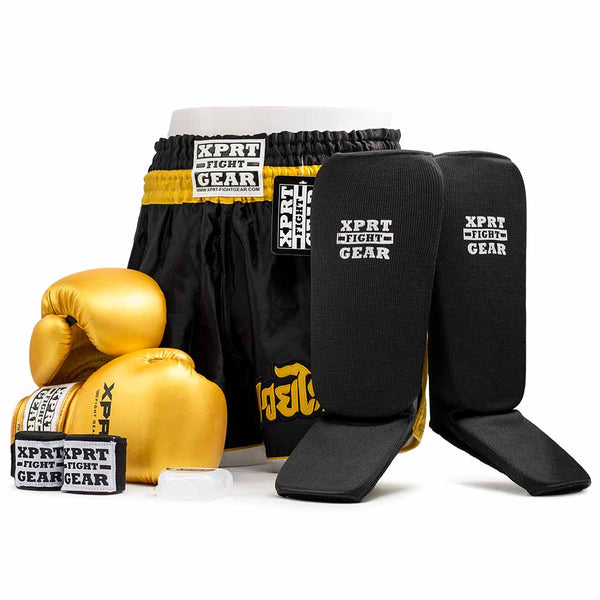
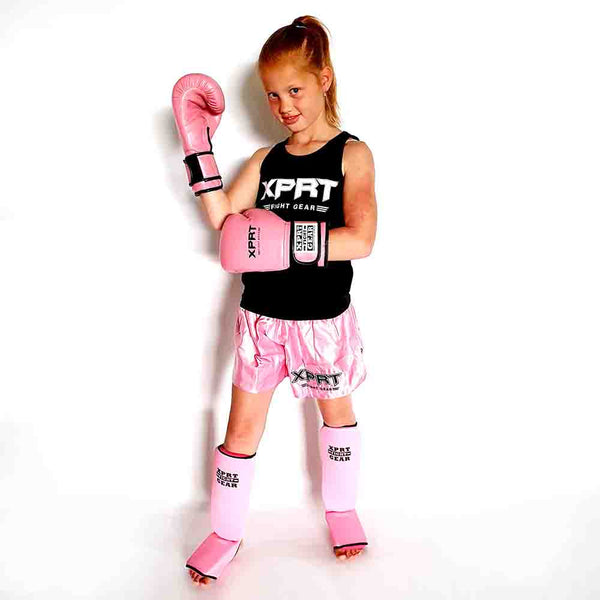
A kids’ kickboxing set can be practical when you need several items. Check what’s included: the Kinder Kickboks set XPRT Gold contains gloves, sock-style shin guards, and shorts. The Kinder Kickboks Set Booster Combat Pink consists of the basic items: gloves and shin guards. Additional items are sold separately.
So a complete set does not automatically mean that every item you need for your class is included. Check which items your child will use, which sizes you can choose for each item, and what can wait until later. Don’t choose everything in one size for convenience when hands, shins, and clothing require a different fit.
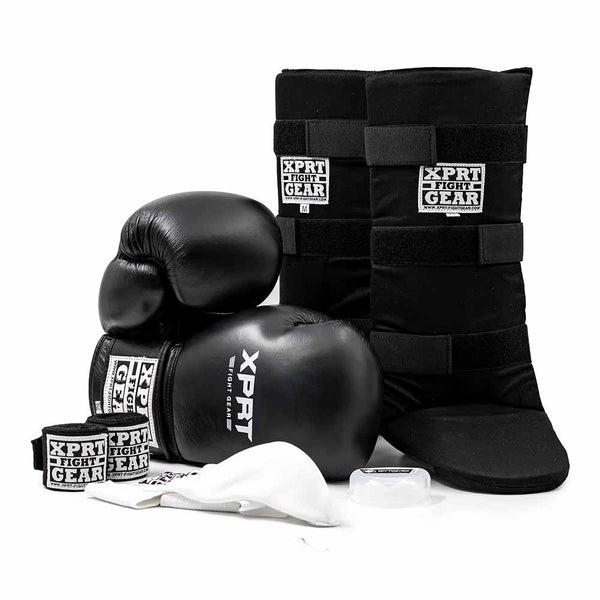
The same applies to taekwondo: the ITF Sparring Set and the Complete ITF Set have different contents. A set with hand and safety kicks is not the same as a package that also includes a dobok. Check what’s included before you order.
Make the choice practical for your family too
It’s easier to stick with an enthusiastic start when classes fit into your regular week. Consider travel time, meals, school and any other sports. A club that’s conveniently nearby may work better in practice than an ambitious program that makes every training session a major undertaking.
Ask in advance which costs are included in the membership and which aren’t. Think about clothing, exams, events and competitions. Also check the practical terms of the membership. That way, you’re comparing not just the class fees, but the choice you’re actually making.
Don’t plan a full training week before you know how your child feels during the first few weeks. Start with a manageable routine and then decide together how to proceed. You can always make an informed choice to add another class later.
If you’d like to browse and try on equipment, you can do so at our showroom in Waddinxveen. Bring the information about the required uniform or protective gear. This makes it easier to compare than trying to tell several almost identical products apart at home.
Give them time to settle in during the first few weeks
The first lesson and the first few months don’t always feel the same. At first, everything is new; later, some exercises become more familiar, and challenging parts emerge too. Ask your child from time to time what they enjoy and what they find difficult.
Don’t mistake a difficult exercise for the wrong choice of sport. It may help to have something explained again at a relaxed pace. At the same time, a child doesn’t have to stay at a club they consistently dread or where they don’t feel they’re treated well. Try to understand what’s behind the reaction.
If the class isn’t a good fit, you can first see whether a different group or class time makes a difference. Sometimes another club within the same sport is a better fit. Sometimes your child discovers that they enjoy a completely different discipline more.
The best martial art for your child isn’t a fixed title, but a suitable combination of interest, lesson content, coaching and a manageable routine. Start with a good introduction, ask specific questions and only choose equipment once you know what’s needed for the class. That way, the step onto the mat feels manageable and, above all, fun.