In kickboxing and Thai boxing, you use punches and kicks, train on the punching bag and pads, and learn to keep an opponent at a distance. Yet they are not two names for exactly the same sport. The difference becomes especially clear at close range: which knee and elbow strikes can you use, how much room do you have to clinch, and what happens when someone throws their opponent off balance?
Thai boxing is the Dutch name for Muay Thai. Kickboxing is a broader family of competition formats, including full-contact, low-kick and K-1-style formats. That is why the common explanation 'kickboxing has no knees, Thai boxing has knees' is incorrect. Knees are also permitted in several kickboxing formats.
The difference lies in the combination of rules, technique, competition culture and training. Comparing these aspects helps you understand what happens in the ring and choose the classes and types of training that appeal to you.
Points of contact in Muay Thai
8
Two fists, two elbows, two knees and two legs.
Full-contact in Los Angeles
1974
An important world championship in the sport’s development in the United States.
The Mejiro trip to Japan
1975
Jan Plas meets Kenji Kurosaki in Tokyo.
Formal founding of WAKO
1977
An international organization takes shape in Berlin.
The difference in brief
In Muay Thai, punches, kicks, knees and elbows form the technical foundation. Clinch work has a distinct place in the sport. In the kickboxing seen at many Dutch fight events and international kickboxing events, punches, kicks and permitted knee strikes are central, while elbows and prolonged clinching are generally not part of the format.
Alongside that general description, check the rules for the specific bout. Youth competitions, amateur championships and professional title fights may each have their own conditions. For Muay Thai, check which competition format the organizer uses, such as the specific rules of ONE Championship.
Why 'kickboxing' does not mean one fixed set of rules
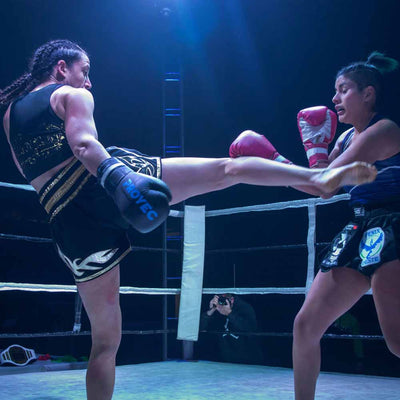
A kickboxer can excel under their usual rules and still need time to adjust when fighting under different ones. It starts with the permitted targets. In full-contact, the emphasis is on punches and kicks above the belt. Low-kick adds attacks to the legs. In K-1-style formats, knees are also allowed.
That changes the choices you make in the ring. When low kicks are allowed, your lead leg must do more than support your stance: you also need to be able to protect it. When knees are allowed, moving forward after a punching combination is a different move than when only punches and kicks are permitted.
K-1, GLORY, and ONE rules are not interchangeable either. They can differ in the grips allowed, when the clinch is broken, bout duration, and other provisions. So 'we fight under kickboxing rules' tells you less than the name of the actual format.
That does not make kickboxing any less clear or complete. It explains why the sport has different training traditions and fighting styles. The goal is always to move well within the rules of the bout you are actually fighting.
Muay Thai and the eight limbs
Muay Thai is often called the art of eight limbs. This refers to the two fists, two elbows, two knees, and two legs. It does not mean eight separate techniques: you can use each of those points of contact to deliver different attacks.
A roundhouse kick to the body requires a different distance than a straight knee strike. An elbow strike works at a much shorter distance. A good Muay Thai fighter moves between those distances while taking into account how the opponent might respond.
The eight limbs also explain why Muay Thai is more than kickboxing with a few extra attacks. Elbows, knees, and clinch work change how you defend, how you position yourself, and how you make contact. You cannot always use a boxing technique in the same way when a knee or elbow strike could follow.
That technical system does not mean every student performs every technique with contact in every training session. What you practice on pads, what you agree to do with a partner, and what is allowed in a bout are different things.
Knee strikes are not exclusive to Muay Thai
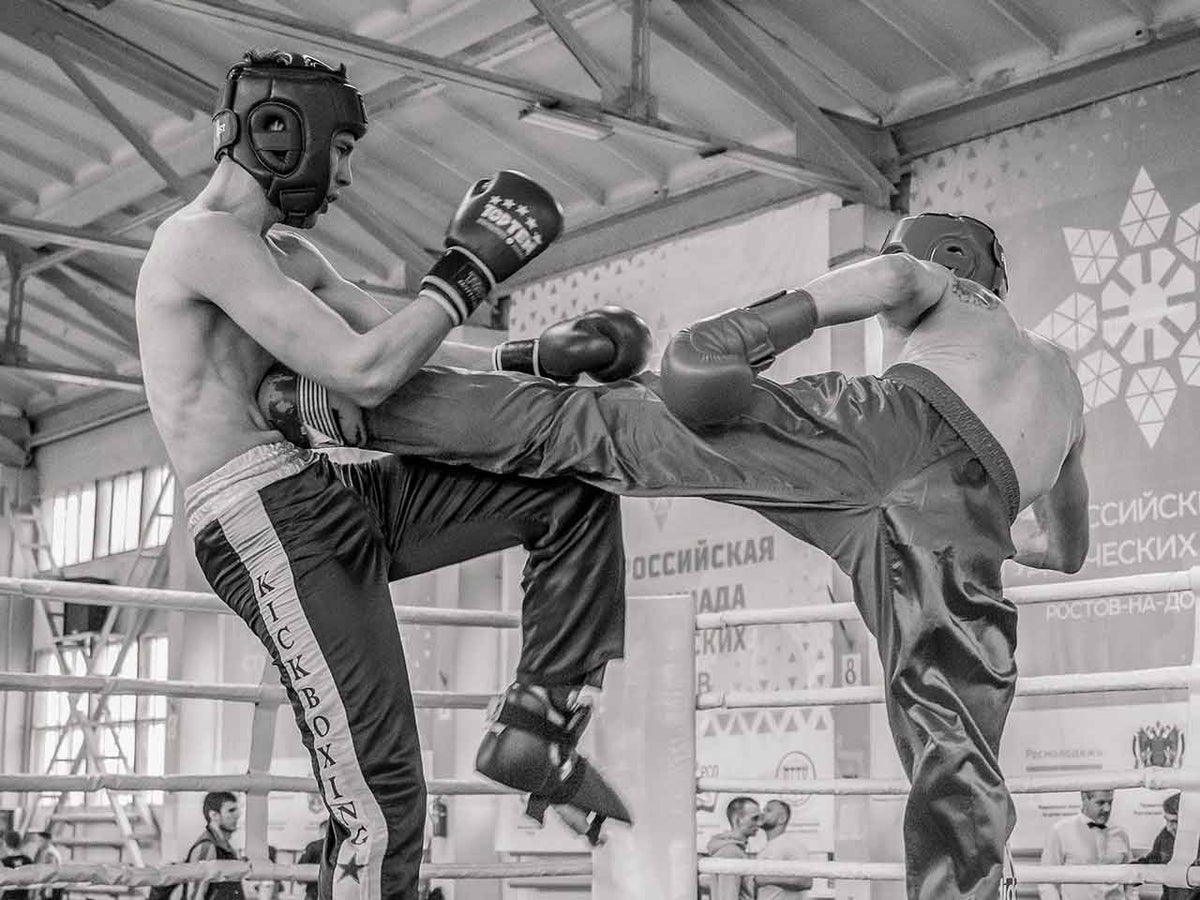
If you watch international kickboxing, you will regularly see knee strikes. A knee strike can be thrown directly as an opponent comes forward, follow a punching combination, or involve a jump. The presence of those attacks does not make a bout Muay Thai.
The key difference is how much room you have to set up the knee strike. Can you hold your opponent? What kind of grip is allowed? Can you keep working from that position, or will the referee quickly break the clinch? Those conditions determine how you set up the attack.
In Muay Thai, a knee strike can be part of a longer battle for posture and balance in the clinch. In a kickboxing format, there may be much less room for that. Finding the right distance immediately becomes more important because you do not have the same time to establish your position.
So it is better to let go of the rule that 'knees are only part of thai boxing'. Look at the competition format and what is allowed before and after the knee strike.
Elbows change close-range fighting
An elbow is a compact attack. You do not need as much space as you would for an extended straight punch. That makes it useful when the distance closes and both fighters' arms are close together.
In Muay Thai, elbows can travel along different paths: horizontally, diagonally, upward or downward. The threat they pose affects how you step forward and how you position your guard. Simply holding your gloves against your head does not tell you whether you are at the right distance.
Elbows are not allowed in common K-1-style kickboxing formats. This changes the options for fighting at close range. Fighters may look for room to throw hooks and uppercuts, for example, or try to regain their position before kicking again.
Elbows can cause cuts and other injuries. That is why competition restrictions and agreements during partner training are part of the sport. The fact that a technique is part of Muay Thai is no reason to introduce it unexpectedly during ordinary sparren.
The clinch is more than just holding on to each other
From the outside, a clinch can sometimes look like a pause in the fight. Two fighters stand close together, their arms entangled, and the big punching combinations disappear. In Muay Thai, a lot of technical work can happen at precisely that moment.
You try to affect your opponent's posture without losing your own balance. You use your arms to gain position, change the angle and make room for a knee strike. Your opponent tries to do the same, or to break your control.
It goes beyond putting both hands behind the head and pulling. A good position depends on footwork, hip placement and how you use your arms. If you rely on strength alone, you can just as easily throw yourself off balance.
In kickboxing, this contact is generally more restricted. A fighter who spends a lot of time in the Muay Thai clinch must adapt their approach when kickboxing rules do not allow that freedom. Conversely, someone who mainly trains free-flowing punch-kick combinations may suddenly find themselves without their usual space in an active clinch.
Balance, catching kicks and sweeps
Balance matters in both sports, but Muay Thai makes the battle for balance at close range especially visible. Moving or turning an opponent can create an opening for a knee strike or another permitted attack.
Catching a kick and putting an opponent off balance can also be part of a Muay Thai format. That does not mean every throw or every move against the supporting leg is allowed. Muay Thai is not a free-for-all wrestling match.
In kickboxing, check what the applicable rules allow when it comes to catching kicks, holding, moving an opponent and sweeps. That helps you understand how the available techniques shape the match and what differences you see compared with a Muay Thai format.
When watching matches, it is worth noting what the referee allows to continue. It is not just the technique used, but also the position the fighters are allowed to maintain afterward, that tells you a lot about the format.
Stance and footwork follow the available attacks
There is no single stance that every kickboxer uses and another that every Muay Thai fighter uses. Body type, personal style and the opponent all make a difference. Still, the permitted attacks influence how you stand and move.
A stance that works well for long punching combinations may be less useful when you need to quickly lift your lead leg to block a kick. Putting a lot of weight on one leg gives you different options from a position that makes it easier to shift your weight.
Head movement also calls for awareness of your surroundings. A deep slip that lets you get under a punch in boxing can, in a sport with knees and kicks, put you in the path of the next attack. That does not make slipping wrong, but it does mean its effectiveness depends on distance and timing.
In both sports, you see calm, calculated fighters and fighters who apply a lot of pressure. The contrast 'kickboxing is fast, Muay Thai is slow' is therefore not very helpful. It is more interesting to look at why someone changes their pace and which attack they are setting up.
Punching combinations, low kicks and the Dutch style
The Dutch kickboxing style is often recognized by boxing techniques that flow smoothly into kicks. A punching combination can draw attention to the head and body, followed by a low kick to the leg. The attacks work together rather than appearing as separate demonstrations one after another.
That approach has roots in a meeting of different martial arts. Japanese kickboxing influences, karate, Western boxing and Muay Thai came together in Dutch gyms. Trainers made their own choices and developed distinctive methods.
Dutch Style is not an official set of rules or a fixed sequence that every Dutch athlete follows. Mejiro, Chakuriki and Vos Gym each have their own history. The term describes an influential training and competition culture rather than a precisely defined sport.
That is why you might also encounter a Dutch approach focused on combinations in a Muay Thai class. And a kickboxer can use many Thai techniques without fighting under full Muay Thai rules. Techniques travel across styles; the competition rules determine which ones you can use.
Where the sports come from
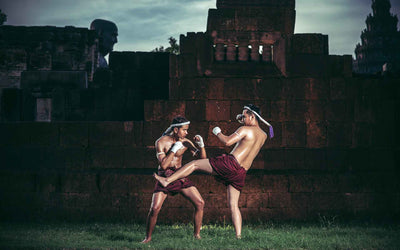
Muay Thai grew out of older local fighting traditions in Thailand and developed into a modern ring sport. Its cultural history predates today's competitive format with gloves, rounds, a ring and referees. Older fighting practices and the modern rules are therefore not exactly the same.
Stories about historical heroes and earlier fights hold an important place in Thai culture. They are part of what the sport means, but they do not all need to be read as accurate accounts of matches. Muay Boran is also an umbrella term for older and traditionally presented forms, not simply the name of a single, uniform precursor found worldwide.
Modern kickboxing developed through exchanges between karate, boxing and Muay Thai, among others. Japan played an important role in this. A separate full-contact tradition with roots in karate also emerged in the United States.
WAKO describes the full-contact world championship in Los Angeles in 1974 as an important moment in that American development. The organization was formally established in 1977 and held its first world championships in 1978. This history explains why the story of kickboxing cannot be told through just one country, one founder or one technical system.
The development on one timeline
The modern sports did not emerge at a single moment. Thai fighting traditions, Japanese kickboxing formats, American full-contact and Dutch gyms each contributed to their development.
01 · Twentieth century
Muay Thai takes shape as a modern ring sport
Older Thai fighting traditions develop into a competitive sport with gloves, rounds, a ring and referees. The cultural tradition remains recognizable.
02 · Twentieth century
Japanese kickboxing formats gain ground
Karate, boxing and Muay Thai influence one another. Japanese trainers and organizers develop their own kickboxing culture, which later reaches the Netherlands.
03 · 1974
American full-contact takes center stage
The world championship in Los Angeles is a milestone for the American full-contact tradition, with pioneers such as Joe Lewis and Mike Anderson.
04 · 1975
The Mejiro tradition connects Japan and Amsterdam
Jan Plas travels to Tokyo with Jan van Looyen and Peter van der Hemel. Their meeting with Kenji Kurosaki in Mejiro marks an important chapter in Dutch kickboxing history.
05 · 1977
WAKO is formally established
An international organization brings structure to kickboxing. Its development runs alongside Japanese, Thai and Dutch competitive traditions.
06 · 1978
The first WAKO World Championships
International championships give the sport a shared stage. Different kickboxing disciplines retain their own technical emphasis.
07 · The nineties
K-1 brings training schools together
Fighters from diverse backgrounds meet under shared kickboxing rules. Dutch champions become familiar names to international audiences.
08 · Twenty-first century
Multiple international competitive circuits
Muay Thai and kickboxing continue to grow through federations, gyms and promotions. ONE features both sports side by side; GLORY is building its own professional kickboxing circuit.
How Japanese and Thai influences reached the Netherlands
An important Dutch tradition can be traced through Jan Plas and Mejiro Gym. In 1975, Plas traveled to Japan with Jan van Looyen and Peter van der Hemel. In Tokyo, they met Kenji Kurosaki at his dojo in the Mejiro neighborhood. The Amsterdam gym was named after that neighborhood.
In Amsterdam, Mejiro developed a training culture built around combinations, timing, conditioning and technical work. Its ties to Japan and Thailand remained important. Fighters such as Rob Kaman and Remy Bonjasky helped make the gym internationally known.
Thom Harinck and Chakuriki also played a major role. The sporting rivalry between Chakuriki and Mejiro helped establish the Netherlands as a kickboxing nation. Johan Vos and Vos Gym are also part of Amsterdam's influential training traditions.
That history explains some of the terminology used in Dutch gyms. Kickboxing and thai boxing are sometimes used almost interchangeably because their techniques, trainers and competitive circuits have long influenced one another. A class name can therefore cover a mix of training styles. What is actually practiced tells you more than the name on the class schedule.
K-1, GLORY and ONE showcase different competitive worlds
K-1 became an international stage where fighters from different backgrounds could compete under a shared set of kickboxing rules. Dutch fighters such as Ernesto Hoost, Peter Aerts, Remy Bonjasky, and Semmy Schilt became familiar names to a wide audience.
GLORY further developed the international professional kickboxing circuit. The organization uses its own rules. The techniques you see at such an event belong to that format and do not represent everything allowed in Muay Thai.
ONE Championship makes the distinction particularly clear because it offers both kickboxing and Muay Thai. In its published kickboxing rules, ONE lists punches, kicks, and knees as techniques that can produce a knockout. For Muay Thai, ONE also lists elbows and legal throws.
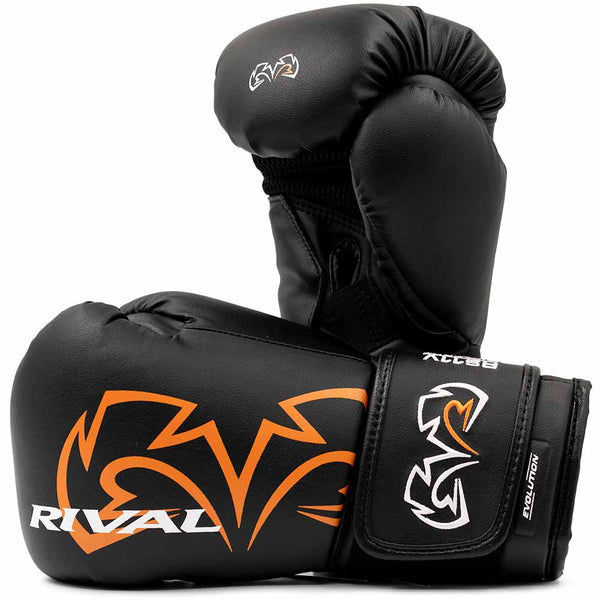
The gloves also differ within that same organization. ONE uses 4 oz MMA gloves for Muay Thai. For kickboxing, ONE specifies 8 or 10 oz boxing gloves, depending on the weight class. That is a specific choice by ONE. Check the competition rules of each organization for the required glove type and weight.
A fighter can compete in several of those competitive settings. Their background stays the same, but the available attacks and preparation change. A kickboxing title and a Muay Thai title are therefore not two names for exactly the same achievement.
Scoring: more than counting how often someone lands a strike
When watching a fight, many people start by counting punches and kicks. That is understandable, but it is not enough. A strike may hit the gloves, clearly knock the opponent off balance, or have little effect. Those moments are not the same.
The judging system used determines how the fight is scored. You cannot apply one fixed rule to every Muay Thai and kickboxing match. The claim that 'kicks always count more than punches in Muay Thai' is too simplistic.
ONE provides a clear example of its own system. For both Muay Thai and kickboxing, the organization scores rounds using a 10-point must system. Its published judging criteria list knockdowns, damage, the number of clean strikes, and aggression plus control of the ring or cage.
That also means both sports can be judged on similar criteria within one promotion, even though the permitted techniques differ. The name of the sport alone therefore does not tell the whole story about the judging.
As a viewer, you can get a better grasp of a match by watching for clean strikes, their effect, and each fighter's position after an attack. Who attacks without leaving themselves open? Who keeps their balance? Who repeatedly forces the other fighter to recover? Those are better questions than simply asking who makes the most moves.
What you will recognize during training
At first glance, a kickboxing class and a Muay Thai class can look very similar. You will see shadowboxing, punch-kick combinations, bag training, pad training, and partner drills. Jumping rope, conditioning, and movement are also part of many classes.
The difference often lies in what else is consistently included. In a Muay Thai program, dedicated clinch work can be an important part of training. You practice position, balance, and knees at close range, not just individual attacks on a pad.
In a combination-focused kickboxing program, more time may be spent linking boxing and kicks, changing angles, and regaining distance after an attack. That does not rule out Muay Thai influences; it simply places the emphasis elsewhere.
A gym can practice elbow techniques on pads and use different rules for contact during sparren. That gives each type of practice its own place in training. Consider the goal and content of drills, partner contact, and matches separately.
Bag training and pad training: the same equipment, different focuses
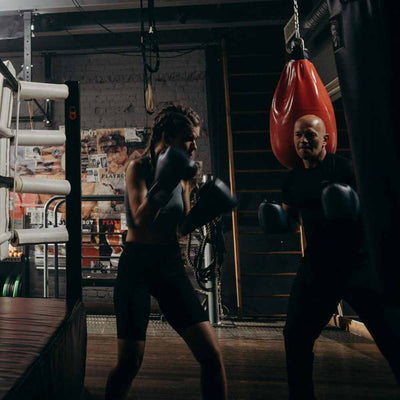
A punching bag is useful for both sports. You can use it to repeat punches and kicks, structure rounds, and work on rhythm. Depending on the drill, knees and other techniques may also come into play.
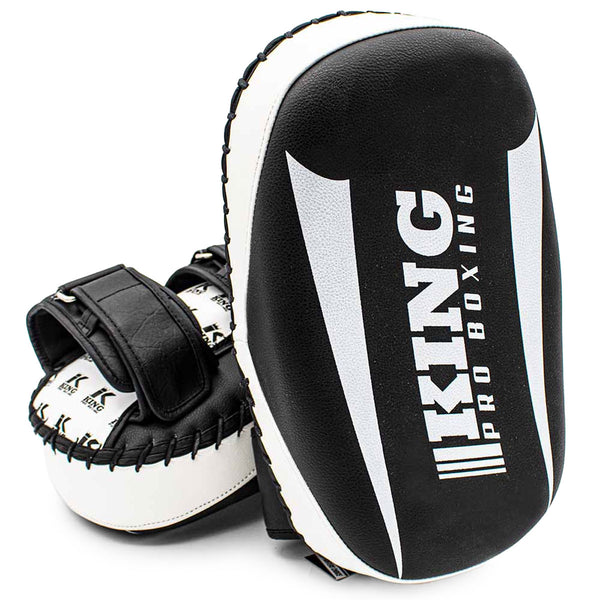
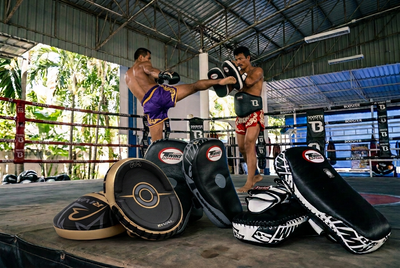
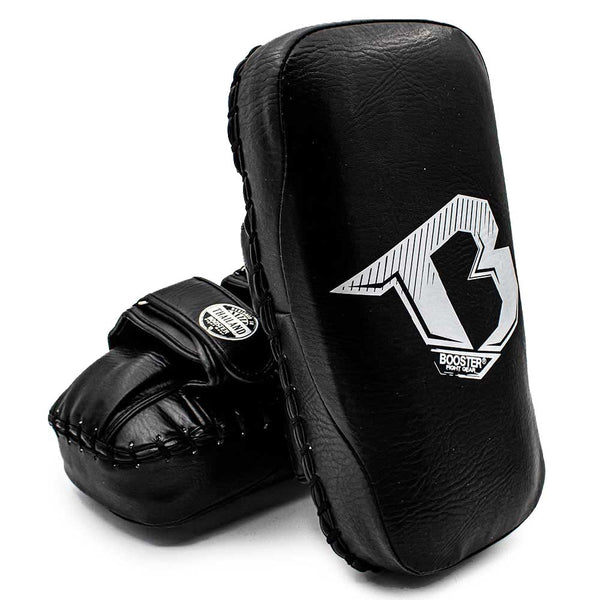
When working on pads, a partner influences the target and the distance. Small punching mitts emphasize different things than Thai pads or a large kicking shield. A combination of punches and a low kick calls for different preparation than a series of body kicks or knees.
The training goal determines which tool is useful. Bag training, reacting to a moving target, pad work, clinching, and sparren each offer different ways to practice. By combining them deliberately, you can develop different aspects of your sport.
That does not mean one type of training is better than another. They complement each other. You can repeat a technique on the bag, practice distance on pads, and work with a partner to find out whether you really spot the opening at the right moment.
sparren is not the same as a professional bout
A spectacular match shows what experienced fighters can do within a particular format. It is not a blueprint for the intensity of a regular class. That applies to both kickboxing and Muay Thai.
In sparren, the agreed techniques, level of contact and protection used are what matter. An exercise focused on distance and timing has a different purpose from hard contact. The inclusion of knees or elbows in competition rules does not automatically change those agreements.
Even if you have no plans to compete, you can learn a lot from both sports. Bag work, pad work, technique drills and controlled partner exercises give you room to work on fitness, coordination and movement. You do not have to copy a professional's competitive career to train seriously.
Protection does not make contact risk-free. Training through sharp pain or striking hard objects with your shins is not part of a useful comparison between the two sports. The question is not which sport seems tougher, but which training suits what you want to practise.
Gloves, shin guards and clothing
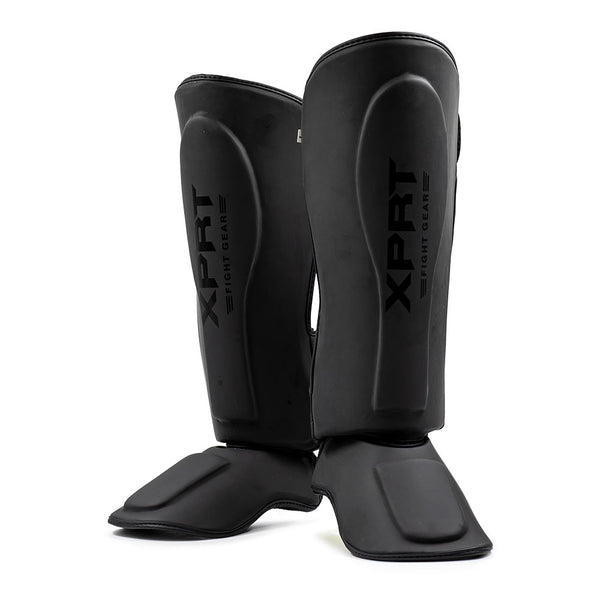
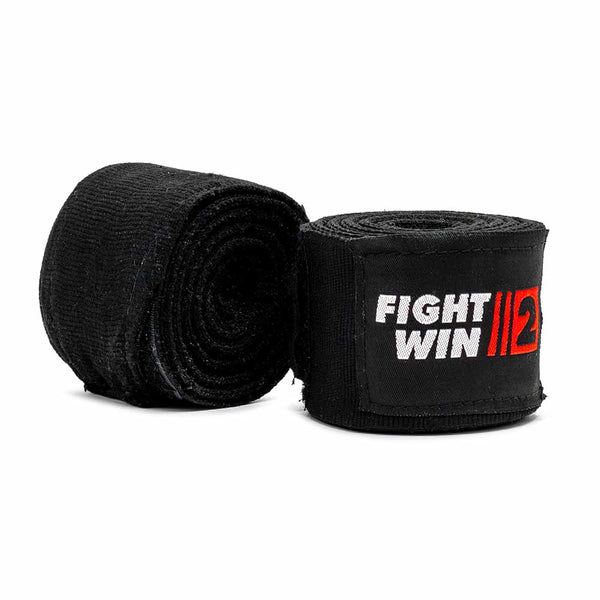
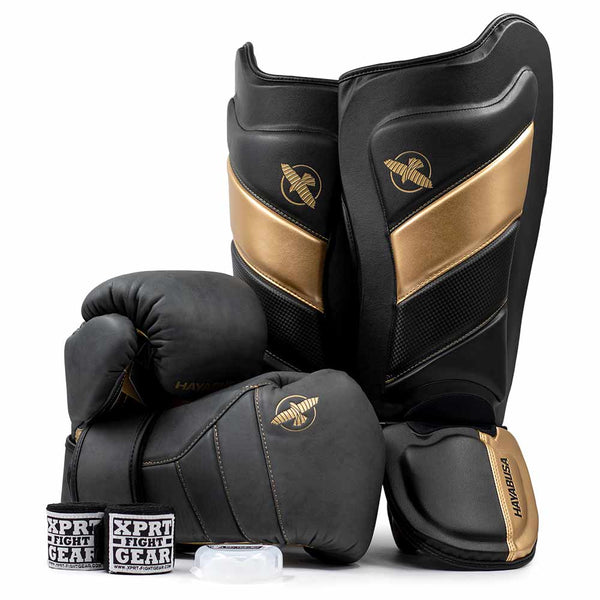
For many training sessions, the gear overlaps considerably: gloves, handwraps, shin guards and suitable additional protection for contact training. What is required depends on the exercise, the gym and the competition format.
For sparring practice, choose gloves and protection designed for it. The small gloves used in ONE belong to that specific competition format. Match your own training gear to the exercise and the agreed level of contact in class.
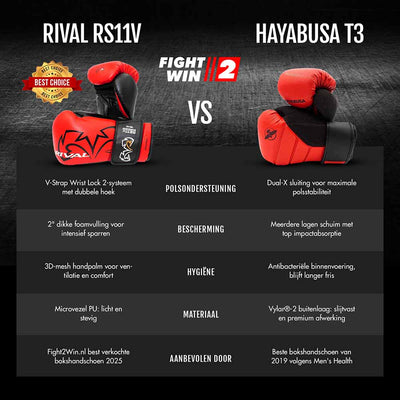
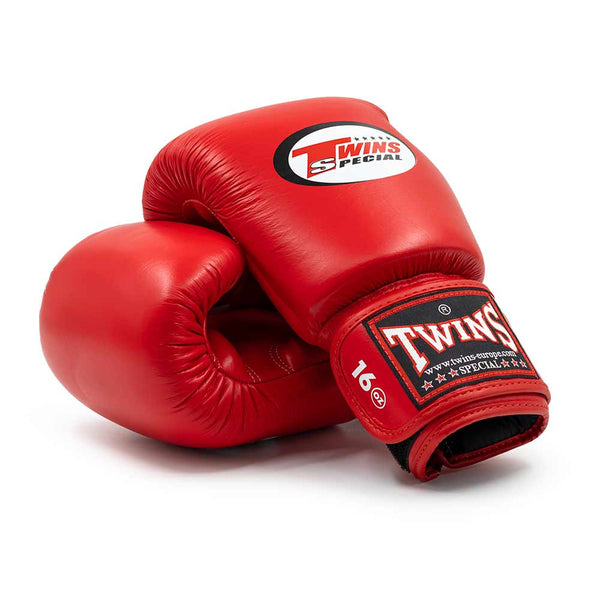
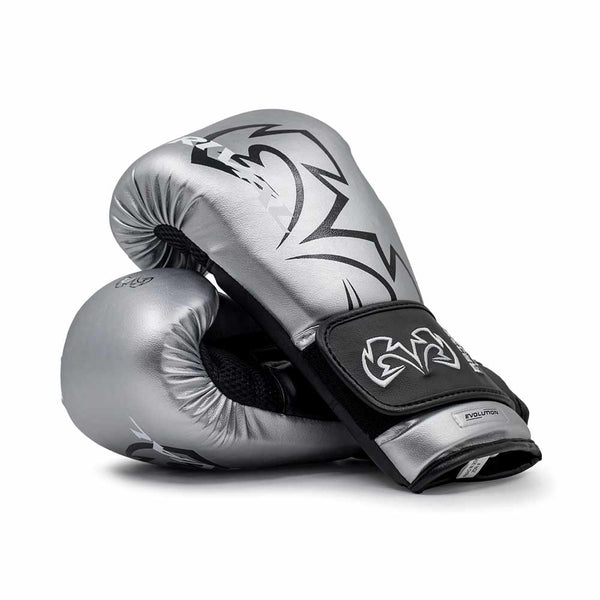
A label such as 'Muay Thai glove' or 'kickboxing glove' is not enough to make a choice. Fit, wrist closure, training purpose and the model's limitations matter more than the name alone. A glove designed solely for bag training does not become a sparring glove because of a sport label.
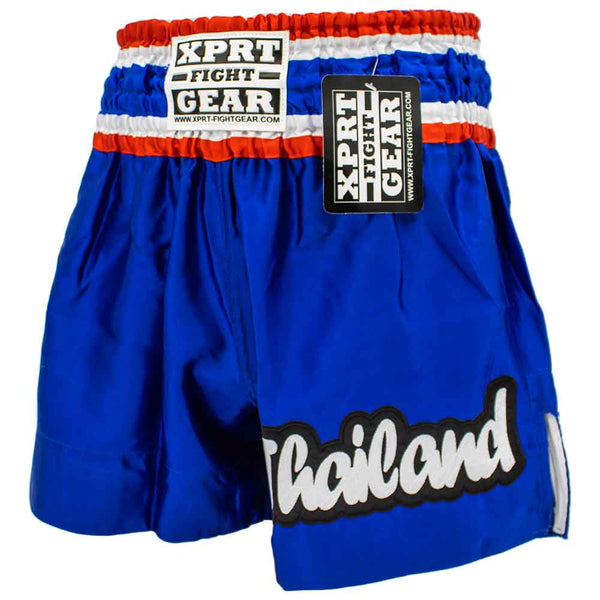
With shorts, what matters in practice is freedom of movement. You need to be able to lift and turn your legs without the fabric holding you back. Thai boxing shorts and kickboxing shorts can differ in cut and appearance, but the name of the shorts does not determine which techniques you can use.
Wai Kru, Ram Muay and the cultural side
Muay Thai has a distinctive Thai ritual tradition. The Wai Kru Ram Muay before a bout connects movement with respect for the teacher, the school and the passing on of the sport. It is not just a warm-up for the audience.
The mongkhon and pra jiad also have cultural significance. The mongkhon is the headband you may see before a bout; pra jiad are worn around the upper arms. They are part of tradition and identity, not a universal belt system like those found in some other martial arts.
How prominent those rituals are varies between events and gyms. An international television production may be organized differently from an evening at a Thai stadium. That does not diminish the heritage of Muay Thai.
Kickboxing also has strong gym cultures, coaching lineages and its own history. The difference is not 'Muay Thai has respect and kickboxing does not'. Respect also shows in how you treat training partners, keep your commitments and practice the sport.
Which sport is right for you?
Do you mainly want to combine boxing techniques with kicks and knees in a straightforward kickboxing format? Then a kickboxing class focused on combinations could be a good fit. Or does close-range work appeal to you, with clinch positions, balance, knees and the broader Thai technical tradition? Then a Muay Thai program could be worth exploring.
Both sports can be appealing for conditioning, bag work and pad work. In that case, the class program is often more important than a theoretical difference between two sets of competition rules. A technique class, a conditioning class and a competition group can be run very differently within the same gym.
So look closely at what the training involves: is there separate clinch work, how much partner training is there and which techniques are practiced regularly? Does that match what you enjoy practicing? You are choosing how to train, not just a name.
Both sports offer their own challenge. The rules shape the techniques, pace and choices in a fight. Compare which way of moving and training appeals to you and how classes are structured at a gym.
The real difference lies in what happens after the first attack
You will recognize punches and roundhouse kicks in both sports. Then look at what happens next. Can the fighters keep working at close range? Do elbows come into play? Is the clinch actively used or quickly broken up? Which attacks and positions are allowed under the rules?
That is where the distinction becomes clear. Kickboxing and Muay Thai share many techniques and have strongly influenced each other, especially in the Netherlands. But the permitted follow-up moves, the training and the competition culture give each format its own character.
Kickboxing and Muay Thai each have their own combination of rules, techniques and training habits. Understanding those differences makes it easier to see the choices a fighter makes and discover which sport and training style appeal to you.