Aikido
Stats
- Origin
- Japan
- Founded
- 1942
- Governing body
- International Aikido Federation
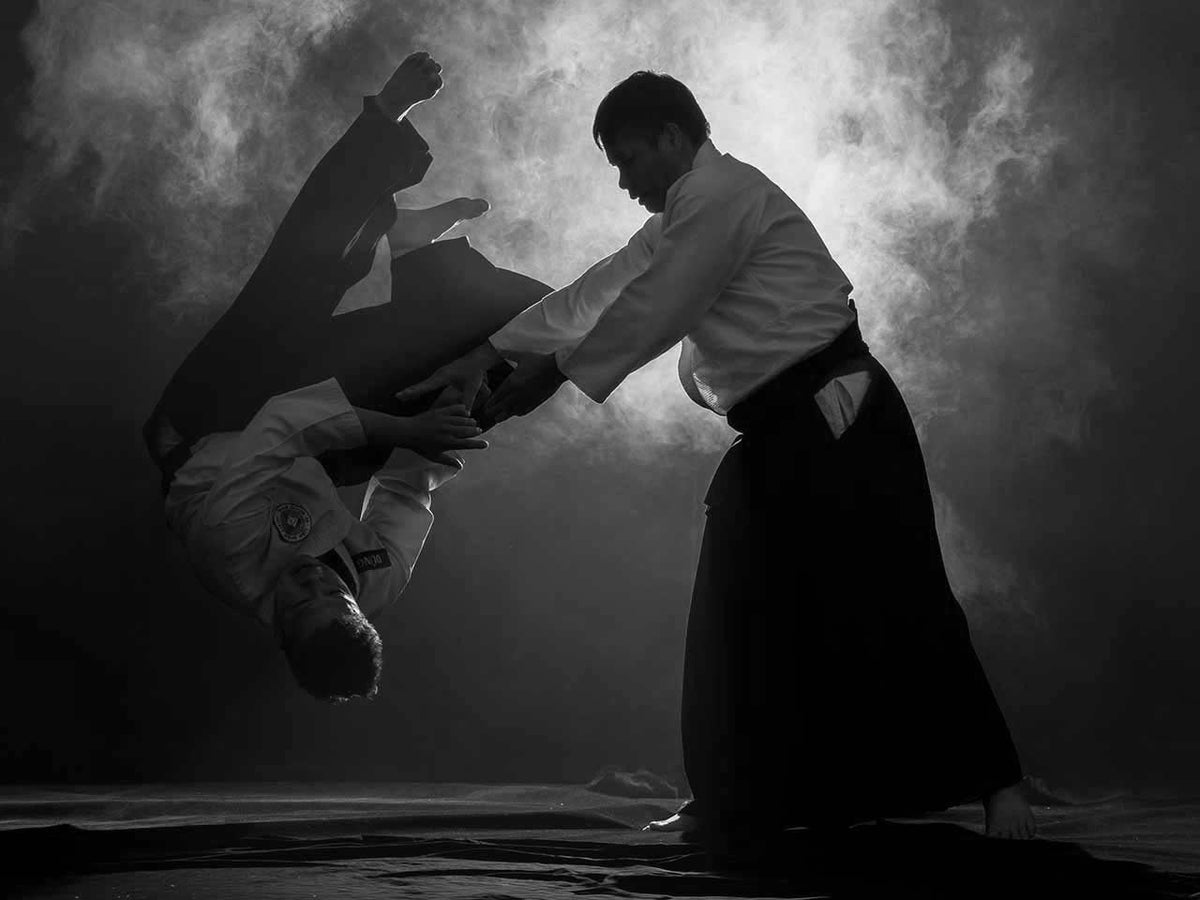
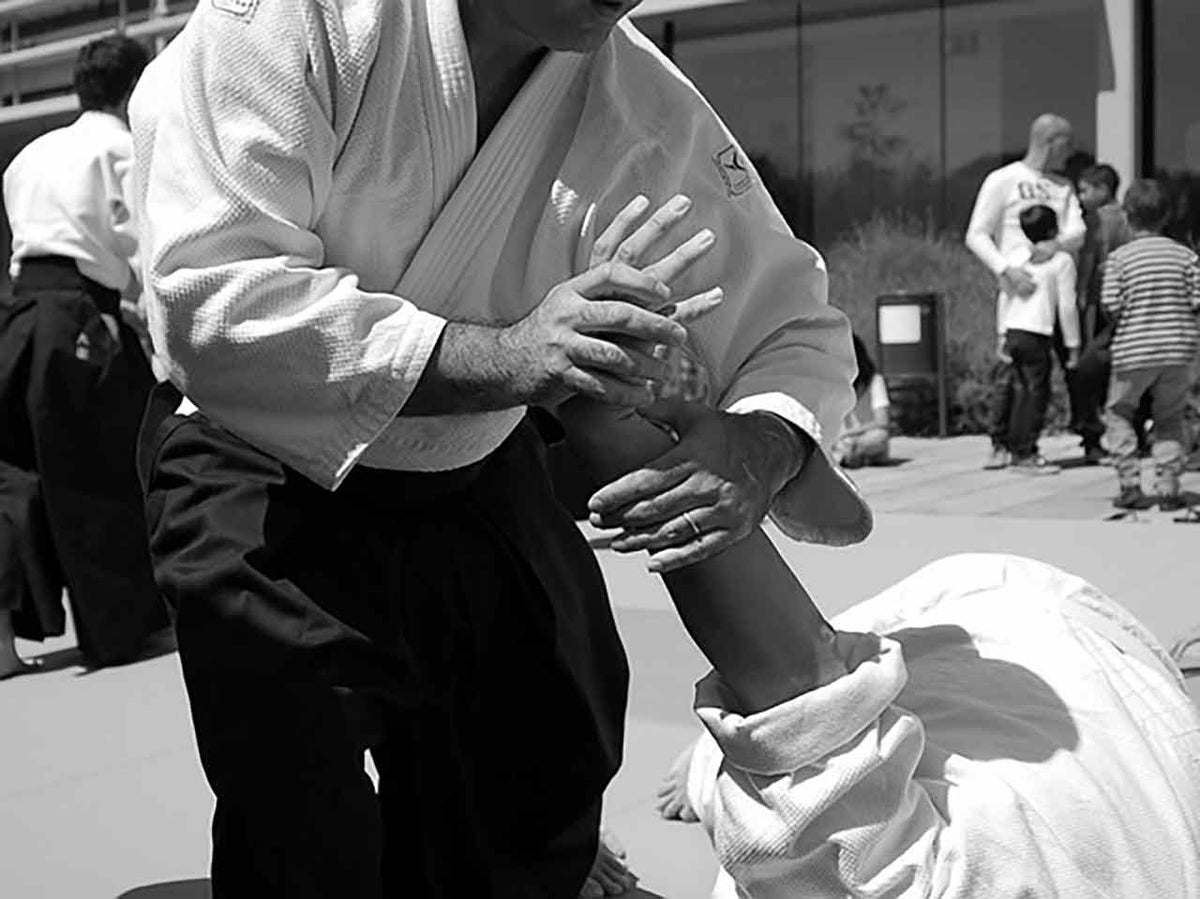
Aikido is a Japanese martial art created by Morihei Ueshiba (O-Sensei) in the early 20th century, based on the principle of harmonising with and redirecting an attacker's force rather than meeting it head-on. Characterised by flowing circular movements, joint locks, throws and pins, Aikido is unique among martial arts in its explicit philosophical commitment to non-aggression - the goal is to neutralise an attack while causing minimal harm to the attacker. Practised by millions worldwide, Aikido is as much a spiritual and philosophical discipline as a physical one.
History
Morihei Ueshiba - From Warrior to Peacemaker
Morihei Ueshiba was born in 1883 in Wakayama Prefecture, Japan. A sickly child who became obsessed with martial arts, he mastered multiple systems - most crucially Daito-ryu Aiki-jujutsu under the legendary Sokaku Takeda, which became the primary technical foundation of Aikido. Ueshiba was also a devoted student of the Omoto-kyo religion, and it was his spiritual development - particularly a profound enlightenment experience in 1925 - that transformed his approach to martial arts entirely.
He described his experience as a realisation that 'the true martial art is not about defeating others but about harmonising with the universe'. From this point he began developing what would become Aikido - a martial art built on aiki (harmonious spirit), irimi (entering), tenkan (turning) and the principle of using an opponent's energy against them rather than opposing it with force.
Aikido Techniques and Principles
Aikido techniques (waza) are predominantly defensive, applied after blending with an attack. Core technique families include: irimi-nage (entering throw), kote-gaeshi (wrist reversal throw), shiho-nage (four-direction throw), nikyo, sankyo and yonkyo (progressive wrist and arm control locks), kokyu-nage (breath throw) and ikkyo (first teaching - basic arm control and pin).
Weapons training - bokken (wooden sword), jo (short staff) and tanto (knife) - is integral to traditional Aikido practice. Ueshiba's sword and spear training deeply influenced the empty-hand movement patterns of Aikido, and understanding weapon work illuminates the logic of the empty-hand techniques.
The Major Styles
Aikikai: The original style, headquartered at Hombu Dojo in Tokyo under the Ueshiba family lineage (Doshu). The reference standard for traditional Aikido worldwide.
Yoshinkan: Founded by Gozo Shioda, a senior student of O-Sensei. More structured and martial in character, used to train the Tokyo Metropolitan Police. Known for its precise, powerful execution.
Iwama-ryu: Developed by Morihiro Saito at the Iwama dojo where O-Sensei spent his later years. Emphasises the connection between weapons and empty-hand technique. Now largely integrated into Aikikai.
Ki Society (Shin Shin Toitsu Aikido): Founded by Koichi Tohei, emphasising ki (energy) development and mind-body unification alongside martial technique.
Training
Training in Aikido
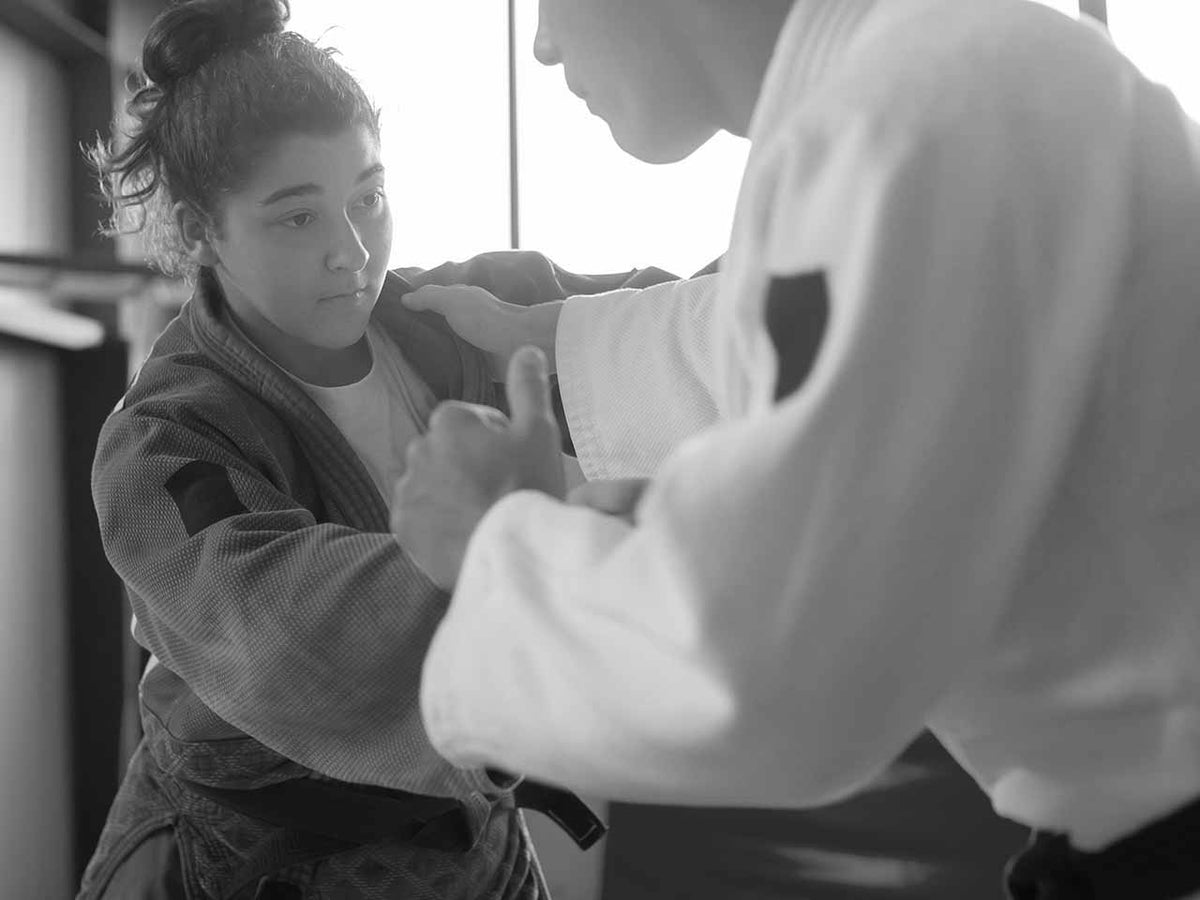
Aikido training is cooperative rather than competitive - there are no tournaments in mainstream Aikido. Practice is structured around uke (the attacker who receives the technique) and tori/nage (the defender who applies it), with partners alternating roles. This cooperative format allows techniques to be practised safely at full extension, developing sensitivity to an opponent's balance and movement.
Ukemi (falling and rolling) is a foundational Aikido skill - practitioners must learn to receive throws and locks safely before they can be applied with full commitment. Advanced ukemi is a martial skill in itself, allowing practitioners to regain posture and continue after being thrown.
The belt system runs white to black (dan grades), with coloured kyu grades varying by organisation. Progress is measured by technical examinations rather than competition results.
Aankomende events
Wordt geladen...
Historische events
Wordt geladen...
Gear & Equipment
Aikido Gear Guide
Aikido gi: Similar to a judo gi—sturdy enough to withstand grabbing and throwing. White is standard for kyu grades; hakama (wide, pleated trousers) are worn from black belt (or earlier in some schools) over the gi.
Hakama: The traditional divided skirt worn in Aikido and Kendo. In Aikido, it symbolises the seven virtues of Budo. Some schools require it from the first day; others from shodan (first-degree black belt).
Bokken, jo and tanto: Wooden training weapons essential for Aikido weapons work. The bokken (wooden sword) is used for suburi (solo cutting practice) and paired kata. The jo (short staff, approximately 128 cm) is used for Aiki-jo practice.