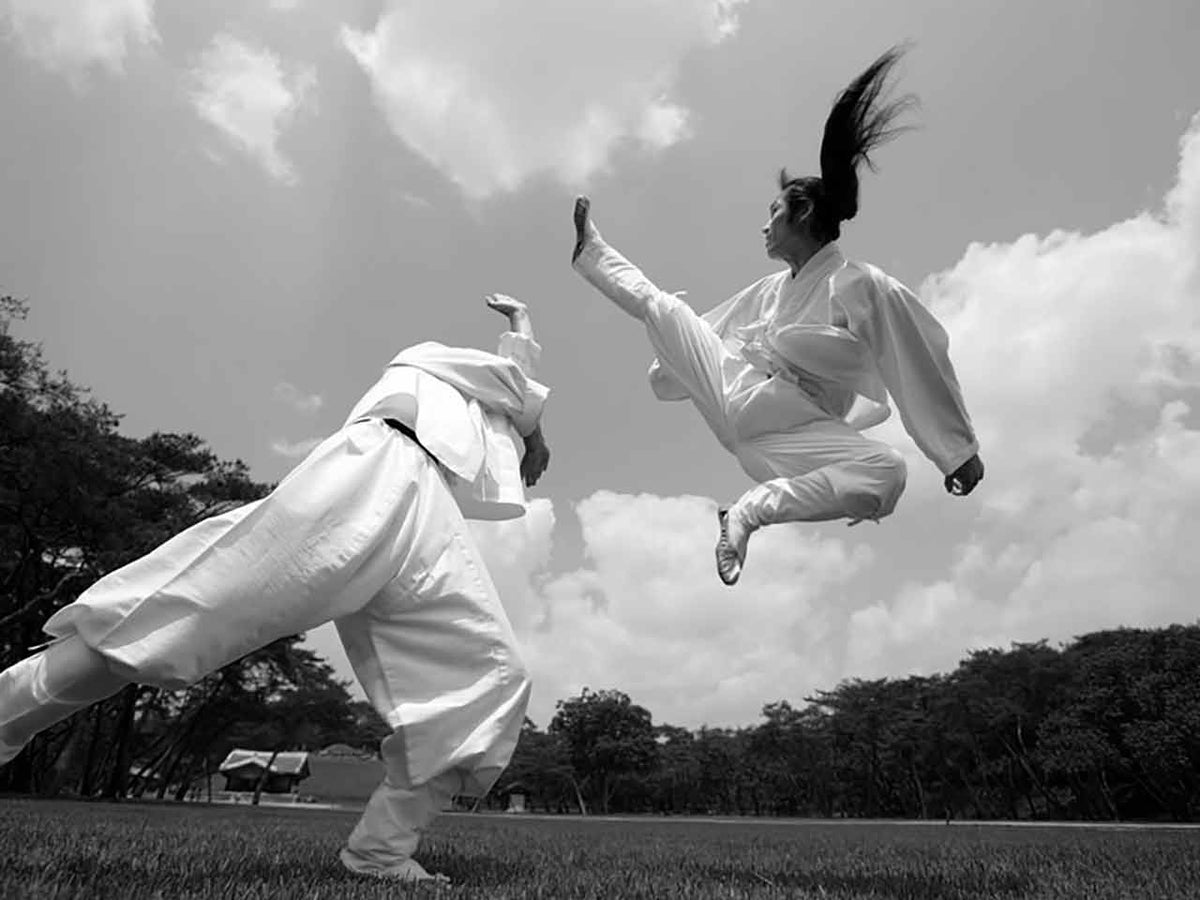
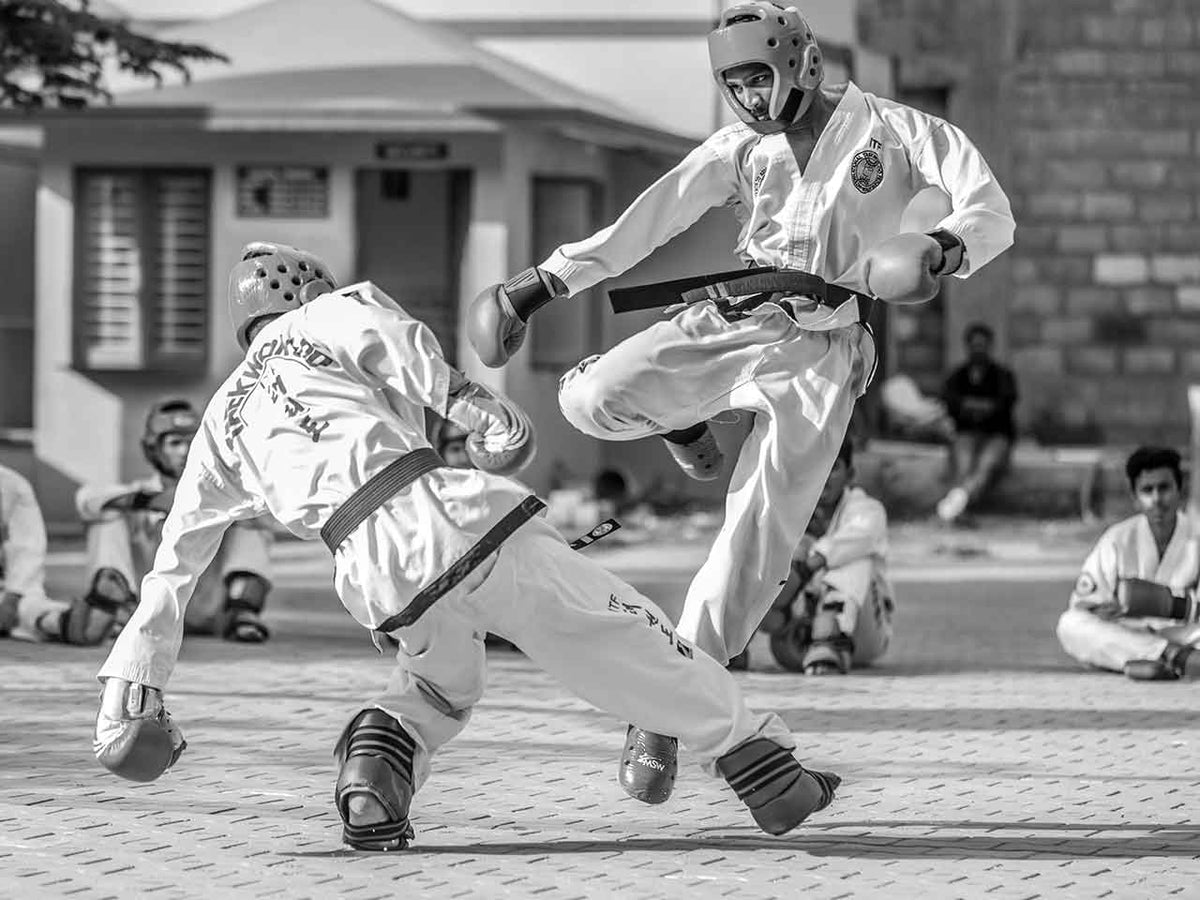
Taekkyon
- Korea's ancient rhythmic foot-fighting art - fluid, dance-like and deceptively powerful. A UNESCO Intangible Cultural Heritage nearly lost during Japanese occupation, saved by a single master and revived as a symbol of Korean identity.
Stats
- Origin
- South Korea
- Founded
- 1983
- Governing body
- Korea Taekkyon Association
Taekkyon (also spelled Taekkyeon) is the ancient Korean folk martial art of rhythmic foot fighting - a fluid, dance-like combat system built around flowing footwork, leg sweeps, kicks and trips rather than the hard linear techniques of modern Taekwondo. Recognised by UNESCO as an Intangible Cultural Heritage of Humanity in 2011, Taekkyon is one of the oldest documented Korean martial arts, with roots stretching back to the Goguryeo Kingdom (37 BC - 668 AD). Nearly lost during the Japanese colonial period, it was revived in the 20th century through the efforts of a single master - Song Duk-ki - who preserved the tradition into the modern era. Taekkyon is the living ancestor of Taekwondo and a profound expression of Korean warrior culture.
History
Ancient Korean Foot Fighting
Taekkyon's origins are documented in ancient Korean murals—paintings found in Goguryeo tomb complexes dating from the 4th to 7th centuries AD depict figures in postures that martial arts historians identify as Taekkyon stances and positions. The art was practised as a folk activity across Korea, particularly during the Joseon Dynasty (1392–1897), when it was enjoyed both as a festive competition and as a martial practice at the village level.
During the Japanese colonial period (1910–1945), traditional Korean cultural practices were systematically suppressed. Taekkyon nearly disappeared entirely—by the mid-20th century, only one known master, Song Duk-ki (1893–1987), retained living knowledge of the complete tradition. Song's preservation of Taekkyon, and his transmission of it to students including Shin Han-seung, provide the direct link between the ancient tradition and its modern revival.
Taekkyon and Taekwondo – Ancestor and Descendant
The relationship between Taekkyon and Taekwondo is historically significant but contested. Taekwondo's founders—including Choi Hong Hi and the masters who formed the Korean Taekwondo Association—drew on multiple sources, including Japanese Karate, Chinese martial arts, and Korean native traditions such as Taekkyon. Taekkyon's flowing kicking-and-sweeping aesthetic is visible in Taekwondo's emphasis on kicking, but Taekwondo's hard, linear technical vocabulary diverges significantly from Taekkyon's soft, rhythmic character. Taekkyon practitioners often emphasise that the two arts are distinct traditions that share a family resemblance rather than a direct lineage.
UNESCO Recognition and Modern Status
Taekkyon's inscription on the UNESCO Representative List of the Intangible Cultural Heritage of Humanity in 2011 was a landmark moment for Korean martial arts—the first martial art to receive this recognition. The inscription acknowledges Taekkyon not merely as a fighting system but as a living cultural tradition encompassing music, rhythm, community practice, and historical memory. The Korea Taekkyon Association, established in 1983, governs competition and promotes the art nationally and internationally.
Training
Training in Taekkyon
Taekkyon training is distinctive for its rhythmic, flowing character - practitioners move in a constant gentle bounce (called Pum Balgi or 'triangular stepping'), generating the momentum and unpredictability that powers the art's techniques. This rhythm is fundamental: Taekkyon without the rhythmic base is not Taekkyon. Techniques include: leg sweeps (biting the opponent's lead leg), pushing kicks, hooking kicks, trips and throws, and hand strikes used as setups rather than primary weapons.
Competition Taekkyon (Gyeorugi) matches are scored on sweeps, throws and clean leg techniques - the rhythmic character of the art makes scoring feel more like a dance competition than a combat sport to outside observers, but the technical demands are significant.
Aankomende events
Wordt geladen...
Historische events
Wordt geladen...
Gear & Equipment
Taekkyon Gear Guide
Uniform: Traditional Taekkyon uniform (Taekkyon-bok) - a white linen or cotton outfit with traditional Korean design elements, distinct from the synthetic Taekwondo dobok. The traditional uniform reflects the art's folk heritage.
Bare feet: Taekkyon is practised barefoot, as the art's footwork and sweeping techniques require direct ground contact and sensitivity.
Protective gear: For competition - light leg and foot protection. The sweep-and-throw focus means upper body protection is less critical than in striking arts.