Taekwondo

Taekwondo

  • A Korean martial art built on precision kicking, hand techniques and 24 codified patterns - practised by tens of millions worldwide across two distinct traditions: the traditional ITF style and the Olympic WT style.

Stats

Origin
South Korea
Founded
1955
Governing body
International Taekwon-Do Federation, World Taekwondo

What is Taekwondo?

Taekwondo is a Korean martial art built on fast, precise kicking technique, hand strikes and a codified system of forms. It is practised by an estimated 80 million people across more than 200 countries, making it one of the most widely practised martial arts in the world.

Understanding Taekwondo means understanding that there are two distinct traditions that share a name but have developed along very different lines.

The International Taekwon-Do Federation (ITF) style follows the original system created by General Choi Hong Hi: a semi-contact art rooted in self-defence, with 24 patterns (Tul) as its technical backbone.

World Taekwondo (WT) is the Olympic version - full-contact sparring under international sport rules, contested at the Olympic Games since Sydney 2000.

Both are legitimate. Both are Taekwondo. But they are not the same sport.

History

Origins and the Founder

On 11 April 1955, a Korean army general named Choi Hong Hi formally presented a unified Korean martial art under the name Taekwon-Do - the way of the foot and the hand.

The name synthesised traditional Korean Taekkyon footwork, Japanese Shotokan karate influences and General Choi's own scientific analysis of power generation and biomechanics.

On 22 March 1966 General Choi founded the International Taekwon-Do Federation (ITF) in Seoul. The technical heart of the system was the 24 patterns (Tul), each a precise sequence of techniques whose number represents the 24 hours in a day or a human lifetime.

He documented the entire system in a 15-volume encyclopaedia of extraordinary precision - still the definitive technical reference for the art.

In 1973 the South Korean government established World Taekwondo in Seoul, developing the competitive sparring format that would eventually reach the Olympic Games. After General Choi's growing ties with North Korea caused a political rift, he left South Korea for Canada in 1972. The split between ITF and WT became permanent.

Eras

The Split and What Followed

General Choi Hong Hi died in Pyongyang on 15 June 2002. What followed was a fracture in the ITF that has never fully healed.

Three organisations today operate under the ITF name, each claiming legitimate succession from the founder. The ITF headquartered in Vienna, led by General Choi's son Choi Jung Hwa, is regarded by many as the most direct continuation of the original vision. A second faction maintains historic ties to Pyongyang. A third splinter group operates its own membership and competition calendar.

Meanwhile World Taekwondo continued its growth as the Olympic governing body, now the largest Taekwondo organisation in the world by membership. Its sport—hogu sparring, electronic scoring, point-based competition—bears little resemblance to ITF-style semi-contact fighting.

The fragmentation is real, and practitioners feel it. But the core of what General Choi built—the 24 Tul, the sine wave, the philosophy of the Do—continues to be practised faithfully by millions worldwide.

Training

ITF or WT - Know the Difference

Most people outside the sport don't realise there are two completely different versions of Taekwondo. They share a name, a country of origin and a lot of the same kicks. Everything else is different.

How They Fight

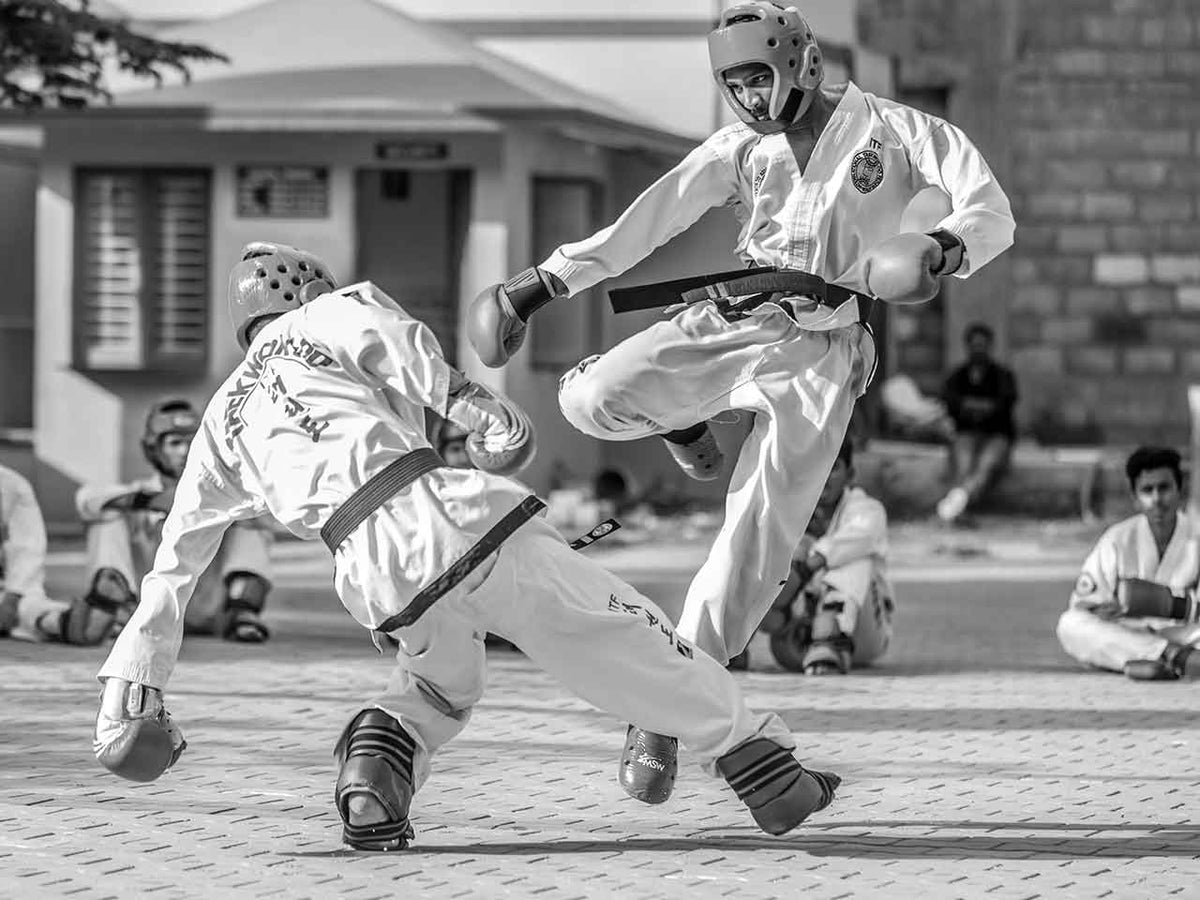
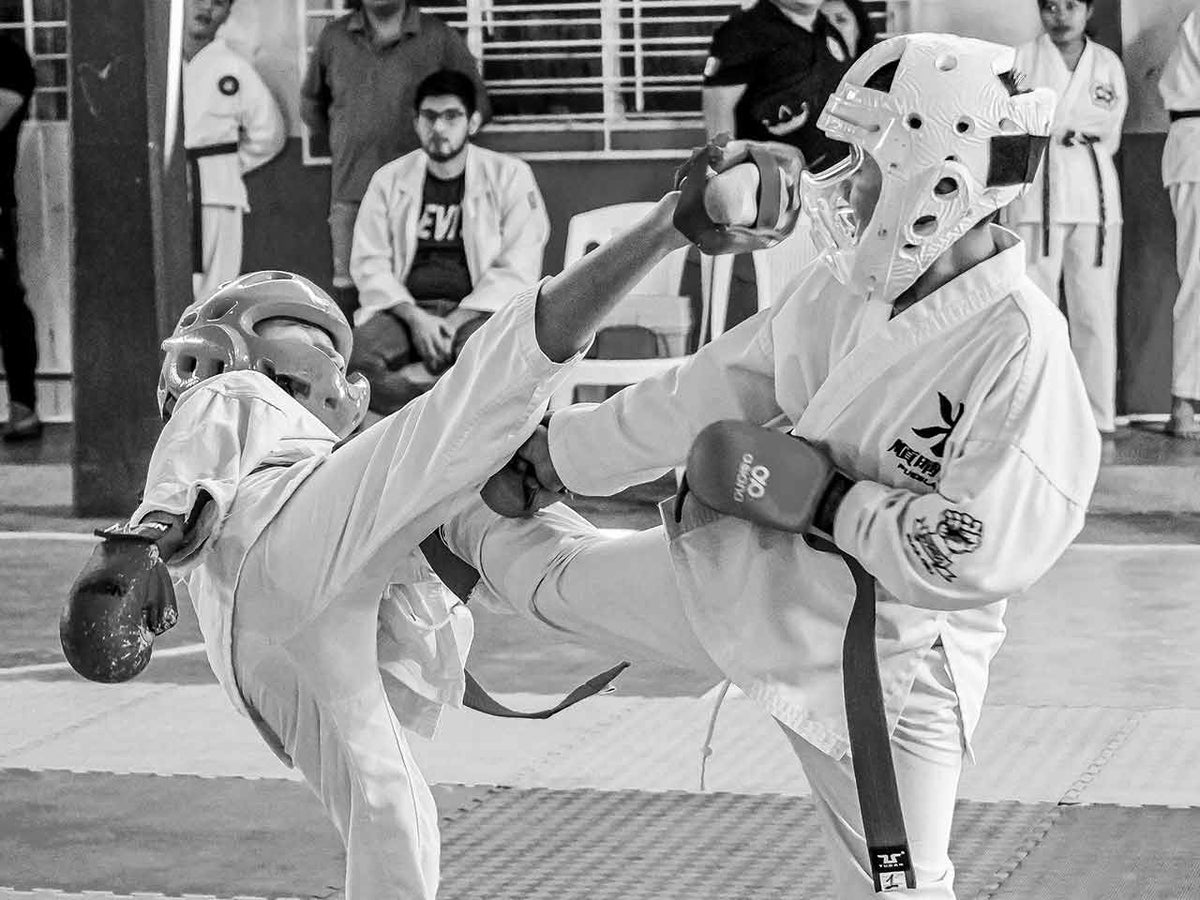
ITF (semi-contact): The defining feature is the Sine Wave - a controlled rise and fall of the body that loads power through mass, not just speed. Hands and feet are used equally. Punches to the face are allowed. Knockouts are not - clean control is the standard.

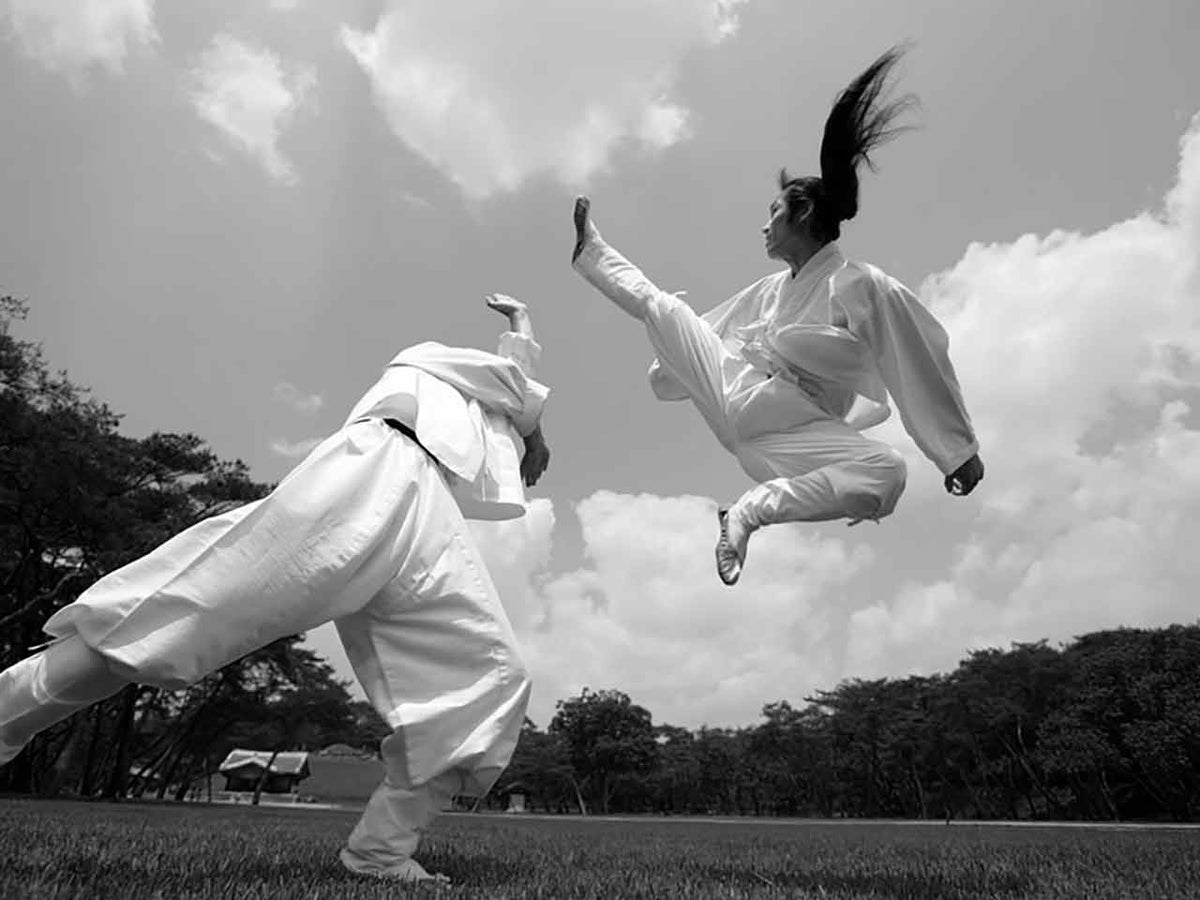
WT (full-contact): Linear, explosive, almost entirely kick-based. Because punches to the head are banned, the game is built around fast, high-scoring leg techniques - spinning back kicks, jumping roundhouses, consecutive combinations. Electronic sensors in the chest protector and socks register points automatically.

Patterns

ITF (Tul): 24 forms, known as the Chang Hon style. Every movement carries the Sine Wave - you see it in the knee bend, the weight transfer, the recoil. Patterns are judged on biomechanical precision, not just shape.

WT (Poomsae): Taegeuk series for lower grades, higher Poomsae for black belts. Crisp, direct, no wave motion. Judged on speed, accuracy and power expression.

The Uniform

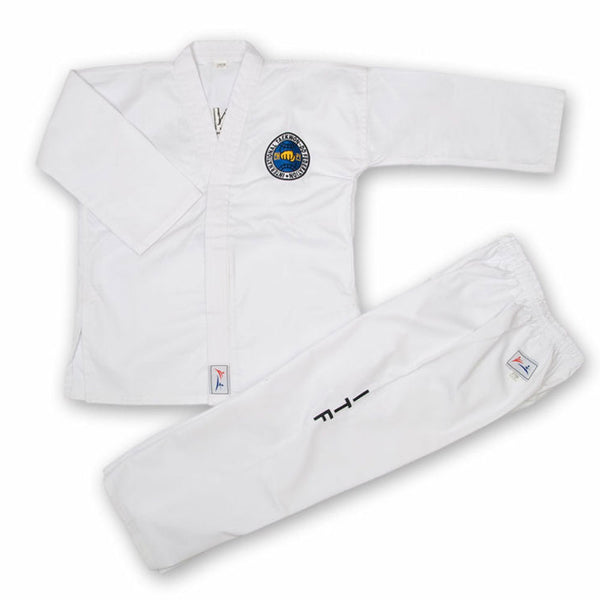
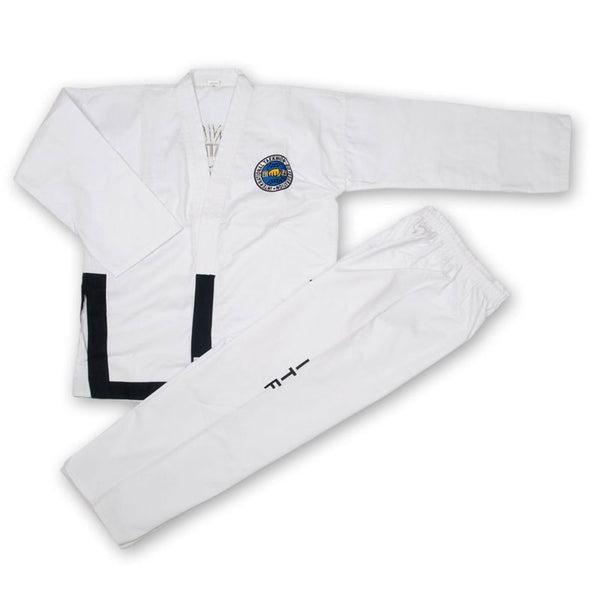
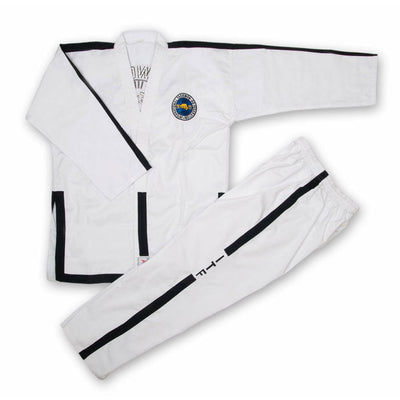
ITF dobok: Jacket with a vertical Velcro fastening at the front. Black belts wear a black trim along the bottom edge.

WT dobok: V-neck jacket pulled over the head. White for colour belts, black for black belts.

Side by Side

Primary focus: ITF - traditional self-defence art / WT - Olympic competition sport

Punches to the head: ITF - allowed / WT - prohibited

Contact level: ITF - semi-contact, controlled / WT - full-contact

Patterns: ITF - Tul, 24 forms / WT - Poomsae, Taegeuk series

Biomechanics: ITF - Sine Wave / WT - linear and direct

Olympics: ITF - not Olympic / WT - Olympic sport since Sydney 2000

Global reach

How Taekwondo Spread Across the World

The global reach of Taekwondo was built by twelve Korean masters dispatched by General Choi in the 1960s and 1970s to introduce the art country by country.

GM Park Jong-soo brought it to the Netherlands and later Canada. GM Rhee Ki-ha landed in the UK in 1967, invited by RAF personnel he had trained in Malaysia, and never left - building the UKTA and later the All Europe Taekwon-Do Federation. GM C.K. Choi established the sport in Malaysia and opened the first Taekwondo school in Western Canada. GM Park Jung-tae pioneered the art behind the Iron Curtain in the Soviet Union, Poland, Hungary and Czechoslovakia.

Because South Korea had no diplomatic relations with Soviet bloc and communist-aligned countries, the ITF was able to build a massive following in Eastern Europe and Cuba that WT could not reach. That Cold War geography is one reason ITF remains particularly strong in Poland, Slovenia and parts of Latin America to this day.

In the Netherlands

Taekwondo in the Netherlands

The Netherlands has an unusually rich Taekwon-Do history rooted directly in the original ITF pioneer mission. GM Park Jong-soo, one of the twelve original masters, arrived in the Netherlands in 1966 and founded the Nederlandse Taekwon-Do Associatie (NTA). By 1984, the Netherlands were ITF World Team Champions.

GM Wim Bos, from Appingedam, became the most technically complete Dutch ITF practitioner of his generation—seven-time Dutch champion, 1976 European champion, and later Technical Director of the Italian federation for 32 years. He is the author of the definitive ITF Patterns Manual.

The Tapilatu family from Groningen - Master Wijnand, part of the 1984 world champion team, and his son Stephen, two-time ITF World Champion and King of Taekwondo—represent the deep roots the sport has established in the Netherlands.

Today, several Dutch federations, including ITF Royal Dutch maintain direct affiliation with the Vienna-based ITF under Choi Jung Hwa.

World Taekwondo (WT) - The Olympic Discipline

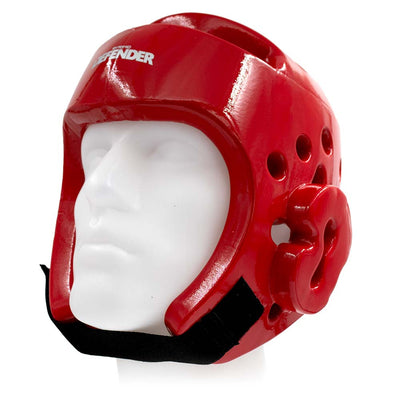
World Taekwondo (WT) is the larger of the two major international Taekwondo bodies, with over 210 member nations. WT Taekwondo has been an Olympic sport since Sydney 2000 and is the version that most people worldwide associate with competitive Taekwondo. Points are scored electronically via sensors in the hogu (chest protector) and head guard, rewarding power and precision simultaneously. Head kicks score higher than body kicks, incentivising the spectacular spinning and jumping techniques that define elite WT competition.

The Greatest WT Champions

Steven López (USA) is the most decorated WT champion in history: five World Championship gold medals, two Olympic gold medals (Sydney 2000, Athens 2004), and an Olympic bronze (Beijing 2008) across a twenty-year career. Powerful, precise, and psychologically dominant, López set the standard for what Olympic Taekwondo excellence looks like.

Lee Dae-hoon (South Korea) is widely considered the most technically gifted WT fighter of his generation. Three World Championship gold medals, an Olympic silver (London 2012), and an Olympic bronze (Rio 2016) tell only part of the story—the quality of his movement, his distance management, and his combination accuracy place him in a category of his own. His footwork and ability to manipulate an opponent's rhythm made him virtually untouchable at his peak, and his matches remain required viewing for any serious student of Taekwondo.

Jade Jones (Great Britain), a two-time Olympic champion (London 2012, Rio 2016), became the face of Taekwondo in Europe—her explosive head-kick accuracy and aggressive pressure style bringing the sport to millions of new fans through Olympic coverage.

ITF vs WT - Understanding Both Traditions

The split between ITF and WT Taekwondo is one of the most consequential divisions in martial arts history. General Choi Hong Hi founded the ITF in 1966 as the authentic original system - 24 patterns (Tul), semi-contact competition, and a philosophy rooted in Korean cultural identity. When South Korea's government formed the World Taekwondo Federation in 1973 to pursue Olympic recognition, the split became permanent.

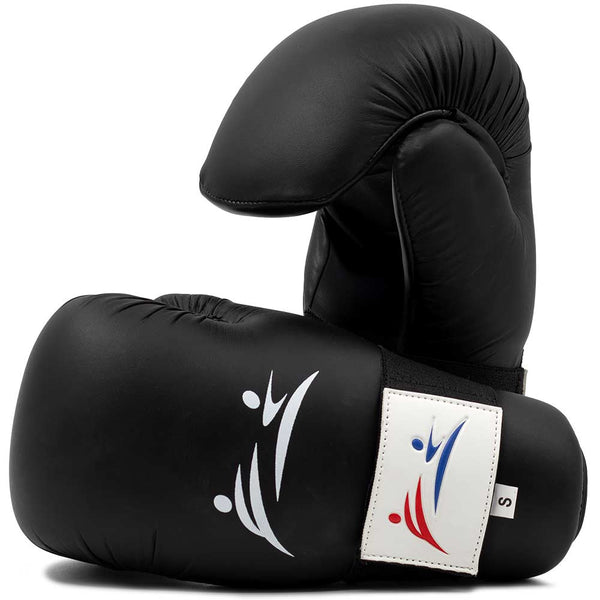
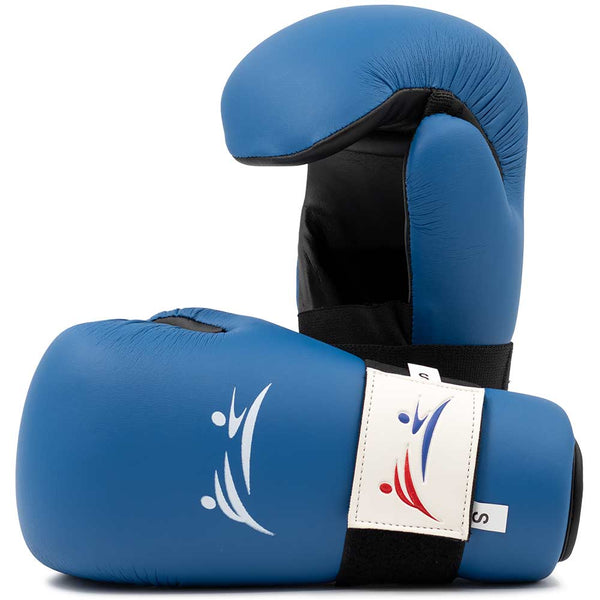
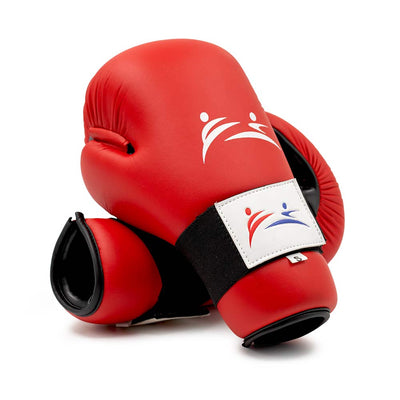
ITF Taekwondo: Semi-contact competition with hand protectors only. Patterns (Tul) are the technical core. Emphasis on power generation, sine wave motion and the complete art as a self-defence system. The 24 Tul are named after significant figures and events in Korean history. Strong presence in Europe and North America.

WT Taekwondo: Full-contact Olympic sport with electronic scoring. Patterns (Poomsae) exist but Kyorugi (sparring) dominates competition. Over 210 member nations and Olympic inclusion since 2000 make it the defining version for most of the world. Poomsae competition is also a growing WT discipline at World Championship level.

Both are legitimate expressions of Taekwondo's core principles. The practitioner who understands both traditions has the fullest picture of what Taekwondo is and what it can be.