During ground work, your knee repeatedly comes into contact with the mat. You slide into another position, tuck a leg under your body or lower yourself from a standing position. That contact can feel uncomfortable, even when you move slowly and with good technique. A padded knee pad puts a soft layer between your knee and the mat at that point of contact.
That's the main benefit: more comfortable contact with the mat and coverage as you move. The padding and a comfortable fit make a difference during your drills. In this article, you'll learn what the padding is for, how to recognize a comfortable fit and how two specific models differ. We'll also distinguish between protecting the outside of your knee and issues you shouldn't try to solve with an extra layer of fabric.
What does a padded knee pad do during training?
A padded knee pad combines a snug sleeve with a softer section in front of the knee. The sleeve keeps the padding where you make contact. When kneeling or doing ground work, there's not just a thin layer of clothing between your knee and the mat, but padding too.
That combination can feel comfortable during repeated contact. Think of a drill where you work from your knees, ease into a takedown or move into a low position several times. You're comparing not just how soft the padding feels, but also how the pad behaves as you bend and straighten your leg.
Combine the padded layer with controlled movement. Adjust your speed and level of contact to the surface, and pay attention to your technique and position when kneeling and standing up. That way, you can use the pad as a practical part of your gear.
Padding and coverage are different features
The padding at the front and the fabric around it each have a different role. The padding provides a soft layer on contact; the fabric covers your skin and helps keep the padding in place. Compare the size and fit to make sure the padding stays over the area that makes contact.
As you slide and turn, you'll notice how the two parts work together. If the padded section stays in front of your knee, you won't have to keep adjusting the pad. If the sleeve twists to the side, an unpadded edge may end up at the point of contact. More fabric won't solve that fit problem on its own.
Smooth seams and a snug fit keep the covered skin comfortable. As you move, check whether a fold or edge rubs against your skin. So don't just look at the large front panel in the product photo. The back and the fit around your leg also affect how comfortable it feels.
Freedom of movement starts with bending and standing up again
A knee pad can fit perfectly well when you’re standing upright but become uncomfortable in a deep stance. As you bend, the fabric shifts. At the front, the pad needs room to move with you; at the back, material can bunch up behind your knee.
So try a few movements you use in training. Slowly bend your knees, bend and straighten your leg, and rise to standing from a low position. The padded section should stay over your knee without an edge digging in sharply or the material at the back bunching into a thick fold.
A snug feel can be comfortable, but getting the tightest possible fit isn’t a good buying goal. You want a secure fit and enough freedom to move. If you constantly have to pull the pad back into place, that tells you something about the size, cut or how you’re wearing it - it’s not something to ignore every round.
Two models as a practical point of comparison
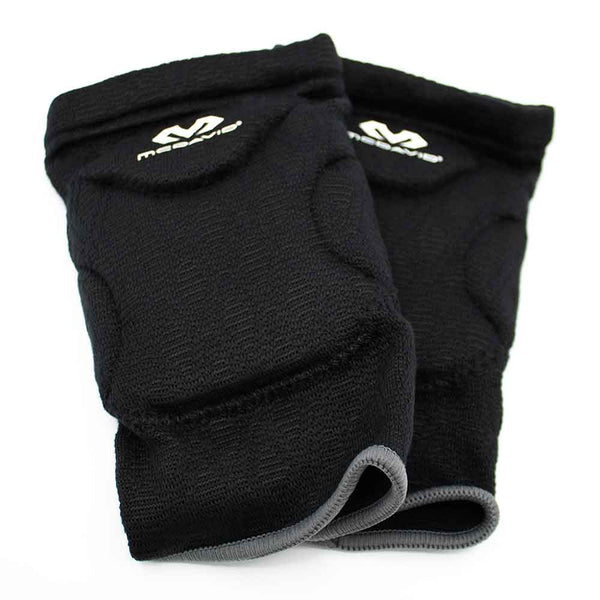
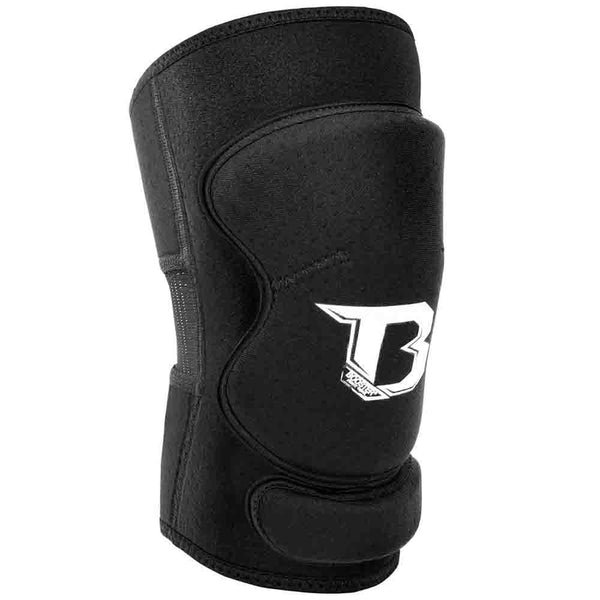
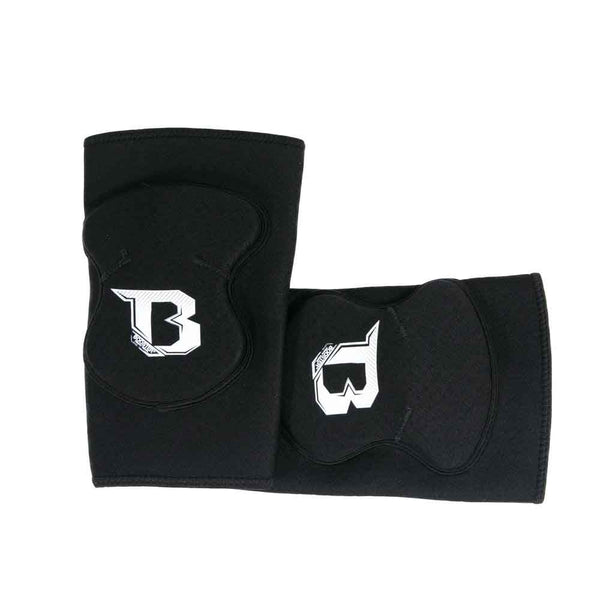
The McDavid Flex Force and Booster B-Force show how you can compare knee pads based on specific features. According to the product details, both are padded models made with neoprene. Differences in their design are more useful than a blanket claim that one brand is better for every athlete.
McDavid Flex Force
The product details for the McDavid Flex Force mention anatomically shaped padding and silicone edges designed to help keep it in place. That makes the pad’s position while you move worth checking. Don’t just assess how it fits when you’re standing upright; check whether the front stays over your knee when you bend and change position.
The model-specific size chart uses knee circumference. That’s useful for choosing a size, provided you measure at the indicated point. A circumference measurement doesn’t tell you everything about how it will feel to wear: the cut, the edges and how it works with your training clothes also matter.
Booster B-Force
The product details for the Booster B-Force describe stretchy mesh panels at the back and a soft inner lining. When trying it on, check the back of your knee too: how does the back sit when you bend your leg, and does it feel comfortable when you stand up again?
The available product size chart lists the pad’s dimensions, not knee circumference. You can’t compare those numbers directly with McDavid’s circumference measurements. A size appearing in a chart does not guarantee availability, either: the product page shows which variants you can actually order.
Compare these design differences using the same movements: bending, working low and standing up again. This will help you find the combination of padding, back and edges that feels right to you.
Compare the whole construction, not just the thickness
A noticeably thick cushion catches your eye in a photo. But there is more to consider than how much padding you can see. The shape of the padding determines where the soft layer sits, while the sleeve and edges determine how it moves with you during training.
Pay attention to the inside and the finish, too. Comfortable padding can be undermined by a seam that rubs the same spot every time you bend your knee. A soft back may feel good, but it also needs to fit snugly enough to keep the pad from shifting.
Heat and moisture also affect how a pad feels to wear. Compare the different fabric sections, the back and the overall fit as you move. That way, you can choose the design that feels comfortable to you.
BJJ, grappling, wrestling and MMA: consider contact with the mat
In BJJ and grappling, you switch between positions where your knees rest on the mat, move across it or lift off it again. A padded knee pad can provide a comfortable layer through those transitions. What matters is that you can still bend your knee easily and the padded section stays in place over it.
In wrestling and takedown drills, the transition from standing to working low is important. So do not judge a pad only while standing still. See how it performs when you lower yourself in a controlled way, bring one leg forward and return to your starting position.
MMA adds other types of training. A model that feels comfortable during ground work must also remain practical when you move upright. What you do in training determines what to look for, not just the sport listed on the product.
During gi training, check the pad together with your trousers. See how the fit feels with that extra layer of clothing as you move. For competitions, also check which type of pad and clothing combination the specific event allows.
Knee techniques and clinch work call for a different approach
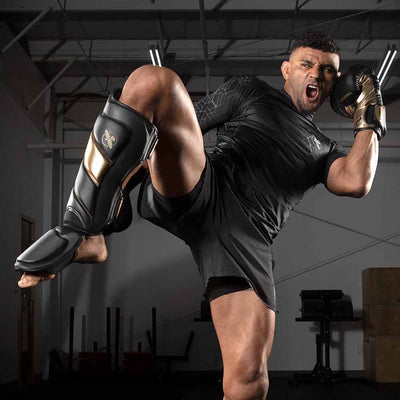
In Muay Thai and other training that involves knee techniques, it is not just your knee that touches the mat. Your knee may also make contact with a training partner. That is different from kneeling comfortably during a ground exercise.
A softly padded model does not automatically make a hard knee strike suitable for partner training. The intensity, target area and rules of the exercise still matter. Don’t treat the presence of padding as an invitation to use more force.
Assess the knee pad by how it fits and the contact area covered by the padding. Use it for its intended purpose and for controlled contact during training. For techniques involving a different kind of impact, choose equipment designed specifically for that use.
A knee pad is not a treatment for knee problems
A soft layer on the outside of your knee is not the same as a medical assessment or a brace prescribed for a specific purpose. A padded sleeve may feel comfortable, but that does not tell you why your knee hurts or what level of activity is advisable at that point.
That’s why we don’t claim these models will repair ligaments, protect against wear and tear, or guarantee joint stability. Those are different questions from whether you can kneel more comfortably on the mat. An existing knee problem is not a reason to wear a pad extra tight and train through the pain.
The NHS lists severe pain, being unable to move or put weight on the knee, significant swelling or a change in shape, and a knee that locks or gives way as reasons to seek urgent medical advice. Have symptoms like these assessed. In the Netherlands, you can contact your GP or an out-of-hours GP service. Advice from a shop about padding is no substitute for that assessment.
How to check the fit while moving
Put the pad on carefully and smooth out the fabric before assessing the fit. Position the padded section over the front of your knee and check that the top and bottom edges feel comfortable. A sleeve pulled on crookedly can give a misleading impression of the fit.
Then bend your leg, take a low stance and stand up again. Check that the padding stays in the intended position and that the back does not press sharply into the bend of your knee. Also check how it fits with your trousers or other training clothes.
Check each leg separately if you wear a pair. Don’t assume that tighter automatically means more protection. A well-fitting pad stays comfortably in place without you having to adjust the edges after every movement.
Washing and drying are part of using them
Knee pads come into contact with sweat and the mat during training. Take them out of your bag afterward and keep used gear separate from clean clothes. Do not leave them rolled up and damp in a closed compartment for long.
Our linked care instructions for knee and elbow pads recommend washing them inside out, using no fabric softener, washing in cold water at no more than 30 degrees, and preferably washing by hand. If machine washing is suitable, use a delicate cycle with a low spin speed. Always follow the sewn-in label on your particular pads.
Do not tumble dry the pads; let them air-dry completely. Only then put them back with your clean gear. That way, you will not start your next training session with a damp pad left in your bag from the previous session.
As part of that routine, also check the seams, edges and padding. A spot where the lining is coming loose or an edge that has permanently stretched can affect comfort and fit. Care is not just about keeping them smelling fresh, but also about getting to know your equipment.
A pad works alongside your training routine
Good equipment is most comfortable when it fits naturally into your routine. Put the pads on carefully, check their position during your warm-up and see whether they still sit comfortably after your first technical drill. This helps you notice sooner if an edge shifts or a trouser leg pulls awkwardly over a pad.
Controlled contact remains important for your training partner. Padding is not a license to kneel harder, force a technique or hold an uncomfortable position for longer. The equipment and the way you perform the exercise go hand in hand.
If you often switch between standing and ground work, test that transition when trying them on. That way, you can feel whether the padding stays in place as you lower yourself, turn and get back up.
Conclusion: choose comfortable contact and the right design
The practical value of padded knee pads lies in the soft layer and coverage when you make contact with the mat. They also need to fit well enough to keep the padding over your knee while leaving enough room to bend, turn and get back up.
Compare models in full: padding, cover, back, edges and sizing information. The McDavid Flex Force and Booster B-Force offer two specific points of comparison, but their charts do not show the same measurements. Knee circumference and product dimensions are different measurements.
Combine the right choice with careful use and regular washing and drying. That way, you can enjoy the soft layer and coverage during your next training session.