A boxing glove looks like a simple product from the outside. Leather or microfiber, a layer of padding, laces or hook-and-loop fastening. But for someone who wraps hands, laces up gloves and catches punches day after day, the most important differences lie in the details. Where does the cuff sit? How easily can the hand make a fist? What happens to the fit when you tighten the closure?
That is the world Rival Boxing Gear grew out of: the everyday work of a boxing trainer and cutman who spent years seeing what boxers and trainers needed. Russ Anber turned that experience into a brand that has earned a recognizable place in gyms and world title fights since 2003.
This is the story of that development: from a modest first production order to an international boxing brand, from clever wrist closures to specialized training equipment. And from the man behind the brand to the way we offer Rival as an official VIP Partner and distributor at Fight2Win.
1. Russ Anber: boxing first, the company second
To understand Rival, you have to start with Russ Anber. He is not only the founder of an equipment brand, but also a boxing trainer and cutman: someone who works on a boxer’s day-to-day development and has to act under pressure in the corner. Those roles give equipment a very practical meaning. A closure needs to work comfortably and effectively. A glove needs to fit the hand. A trainer needs to be able to use their pads with confidence.
In an interview with Boxing News, Anber says he first worked in a professional boxer’s corner on October 2, 1979, during a fight between Vinnie Curto and Marciano Bernardi at the Montreal Forum. He was eighteen at the time. He greatly admired the experienced people in the corner: their composure and bearing under pressure made an impression on him.
That is one of the keys to understanding what Rival later became. It is not just the big fight night that matters, but everything that comes before it: preparing hands, working through rounds, adjusting equipment and finding the small improvements that make everyday work easier. The perspective of the trainer and cutman runs through the brand’s story.
2. The ideas emerged long before the name Rival
Rival was founded in 2003, but the story began much earlier. In the brand’s original account of its history, Anber describes how he started selling boxing equipment in the 1980s to help fund his amateur team. That brought his experience in the gym together with his knowledge of what was available on the market. He used equipment, sold it and thought about how to improve it.
That is a particularly productive combination. Someone who only looks at a product sees its shape. Someone who puts it on, laces it up or holds it every day also learns where its construction could better suit its use. The fit around the wrist, the way a strap tightens and the position of the hand then become more than isolated specifications: they become real design questions.
Around the start of the 2000s, those ideas began to take a business direction. Rival became an opportunity not just to sell existing equipment, but to develop its own solutions. The brand did not enter the boxing world with a blank slate: it already had years of hands-on experience behind it.
3. 2003: a first order and a clear ambition
According to Rival's own account of its origins, its first production order was $2,000. Anber resolved that each subsequent order would be larger. It is a small, concrete detail that shows the scale of the beginning. The international brand it later became started not with a huge order, but with a first step and a clear ambition.
From the start, Rival focused on serious boxing equipment for amateurs, professionals and gyms. That positioning is still evident today in its attention to fit, closures, materials and the different demands of different training goals. Not every product needs to do the same job; a purpose-built design can make all the difference.
The motto from the original story neatly sums up that background: “By Boxing People For The Boxing World.” It is the voice of a brand that draws its identity from the sport itself. That makes its history interesting: a trainer tries to turn his own ideas about better equipment into products that find a place beyond his own gym.
4. Designing around the hand and wrist
A key part of Rival's design philosophy concerns the connection between the hand, wrist and forearm. A boxing glove is not a straight tube around a straight arm. The hand needs to be able to close, the wrist has its own position, and the cuff needs to fit comfortably around that transition. Rival has made this anatomical approach visible in several constructions.
The tapered design is one example: the fit is narrower around the wrist than at the opening around the forearm. Ergonomically shaped hand compartments follow the same principle. On the RS100, Rival calls this Ergonomic True Fist Construction, a design approach focused on making and relaxing a fist.
For the wearer, it ultimately comes down to a simple experience: how naturally does the hand sit in the glove? Does the closure feel like part of the fit? Can you focus on technique and timing? Because Rival starts with questions like these, its different techniques come together in a recognizable design style.
5. Laces with a purpose
The path of the laces plays an important role in Rival's lace-up gloves. The Ergo Lace Track System and the Angled Lace Track System reflect the same focus on wrist position and adjustment, but they are separate design names. In the original account, they are listed among the innovations that shaped Rival's development.
The reasoning is practical: how a trainer tightens the laces helps determine how the glove fits around the hand and wrist. A well-positioned lacing system allows for precise adjustment. So it is not just about how a lace-up glove looks, but also where the closure does its job.
That approach explains why veterans of the boxing corner can place so much value on seemingly small construction details. They do not use the glove only for a single fitting. They lace it up for training, check the fit and, through repetition, learn how a model can be adjusted. Rival has made that daily work a visible part of its product identity.
6. Wrist Lock and Wrist Lock 2: the closure as part of the fit
With hook-and-loop gloves, too, Rival sees the closure as more than a strap that keeps the cuff closed. Wrist Lock and Wrist Lock 2 represent the development of systems that make the glove fit around the wrist. The aim is a stable fit that the boxer can adjust themselves.
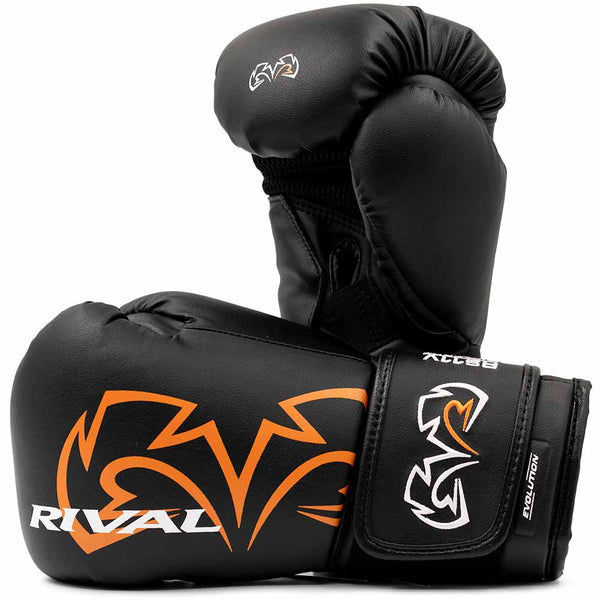
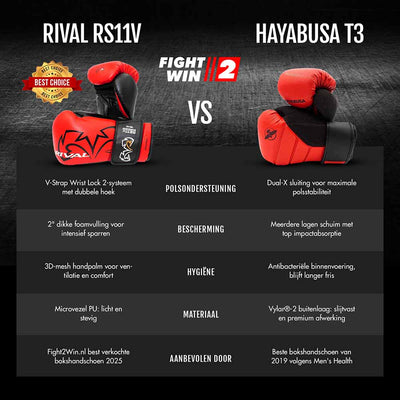
On the Rival RS11V Evolution, Wrist Lock 2 is recognizable by its double diagonal V-Strap. When you tighten the closure, it draws in both sides of the cuff. This design is a good example of how Rival rethinks a familiar action: not just tightening the glove, but distributing tension deliberately across its construction.
This also has a practical benefit during training. You can put the gloves on and take them off yourself, and readjust the fit between sessions. A technical design thus shows up in something very ordinary: being able to train comfortably without interruption. A well-designed closure becomes a natural part of training.
7. D3O and Intelli-Shock: a focus on the inside
Much of a glove's character comes from the inside. The padding construction, hand compartment and materials used together determine how it feels during training. Rival uses D3O in certain bag gloves, known within the range as Intelli-Shock.
D3O describes its impact materials as materials that become stiffer under rapid loading and help manage energy. Rival uses this material technology within the overall construction of the glove in question. It is therefore a different part of the design from, for example, a closure or a lacing system.
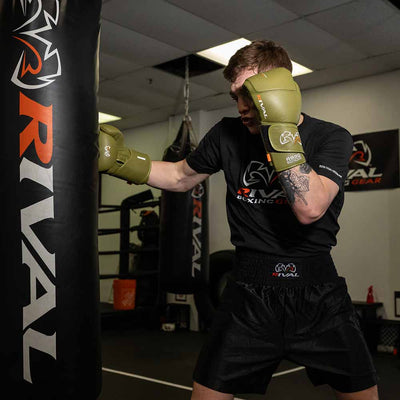
One example from our range is the Rival RB50 Intelli-Shock. This bag glove combines D3O with an ergonomic hand compartment and a diagonal Ergo-Strap closure. That makes the thinking behind the technology tangible: different design choices come together in one product, each with its own function.
Such specialist bag gloves also have a clear purpose. The RB50 is designed for bag training. Anyone who plans to sparren should choose a suitable sparring glove instead. That distinction between training goals is part of a thoughtfully designed range.
8. Choosing materials for their function
Rival’s development is not just about closures and padding. Outer materials are part of the story, too. The range includes both leather and microfiber constructions. The choice depends on the model’s design and intended use, not solely on the image associated with a traditional material.
The RS11V Evolution shows this approach clearly. Its microfiber exterior is paired with thick, layered padding and a targeted wrist closure. The RB50, by contrast, pairs a leather exterior with Intelli-Shock technology. Two different gloves, with different purposes and distinct constructions.
That also makes the brand’s story relevant to people who use its equipment every day. Innovation does not always mean an entirely new product. Sometimes it lies in the combination of a material, a shape and a fastening. What matters is how those elements work together to support the intended training.
9. The trainer takes center stage, too
A brand founded by a trainer naturally considers the other side of the punch, too. Punching mitts and training equipment are therefore an important part of Rival’s identity. For a trainer, factors include the weight in the hand, the shape of the striking surface and how comfortably the pads fit during longer sessions.
Names such as Air Cushion System, Parabolic Design and The Wedge appear throughout Rival’s technical history. They are different answers to questions about cushioning, shape and support. Together, they show that the design thinking extends beyond the boxer’s boxing glove.
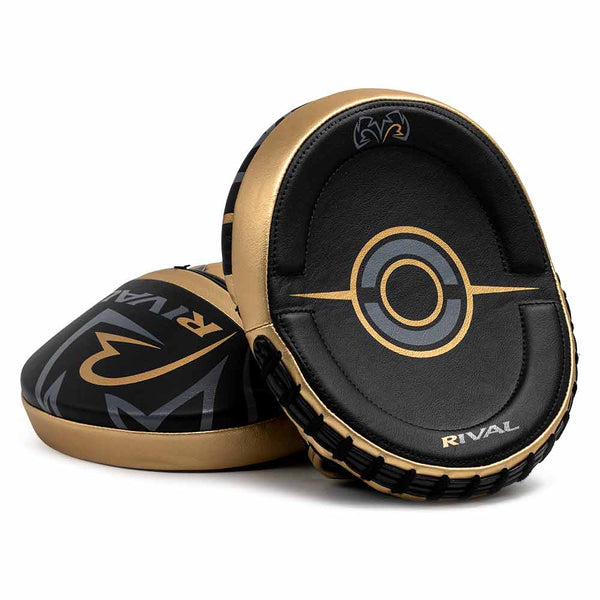
In the Rival RPM100 Professional, that attention to detail is evident in the pre-shaped construction, separate compartments for the left and right hands, soft lining and angled wrist strap system. The Feather Lite layered foam construction reflects the focus on making training equipment comfortable to use.
For trainers, that is no minor detail. Pad training involves moving, giving instructions, building combinations and absorbing punches. When the equipment fits comfortably, it supports that teamwork between trainer and boxer. That fits perfectly with Rival’s origins.
10. From Canada to an international brand
Rival’s growth is not just a story of famous names in the ring. Its international locations also mark important milestones. From its Canadian roots, the brand built a network that brought it closer to boxing markets around the world.
In September 2014, Rival opened a location in Las Vegas. The United Kingdom followed in July 2017, and Australia in July 2019. That sequence shows how the company developed: first building a foundation in Canada, then expanding internationally step by step.
Alongside the big stages, Rival’s ties to amateur gyms are an important part of its story. After all, the sport does not live only on major fight nights. The everyday gym is where boxers get their start, trainers build their programs and equipment proves its worth.
Rival’s Canadian roots remain a distinctive part of its identity. Its international growth also owes much to the connections between gyms, boxers, trainers and different countries. The brand reached new markets while keeping its story tied to the people involved in boxing.
11. Rival on the biggest stage
The brand’s visibility in professional bouts added another dimension to its story. Jean Pascal is an important early example: according to Rival, he was the first boxer to wear its gloves in a world title fight on HBO.
At various times, Anthony Joshua, Vasiliy Lomachenko, Oleksandr Usyk, Artur Beterbiev, Katie Taylor and Amanda Serrano, among others, have used Rival gear. These examples from the brand’s history show how it found a place across the international boxing world: different weight classes, backgrounds and styles all became part of its story.
Two fight nights make that breakthrough particularly clear. In March 2013, Tony Bellew and Isaac Chilemba faced each other wearing full Rival gear. And in July 2018, Oleksandr Usyk and Murat Gassiev both wore Rival gloves in the World Boxing Super Series final for the undisputed cruiserweight world championship and the first Ali Trophy.
For a company that started with a modest first order, those are meaningful moments. Equipment designed to be useful in the gym also appeared on the sport’s biggest stages. That link between daily training and a world title night is precisely what gives Rival its appeal.
12. More than one famous glove
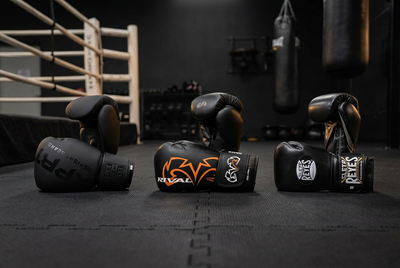
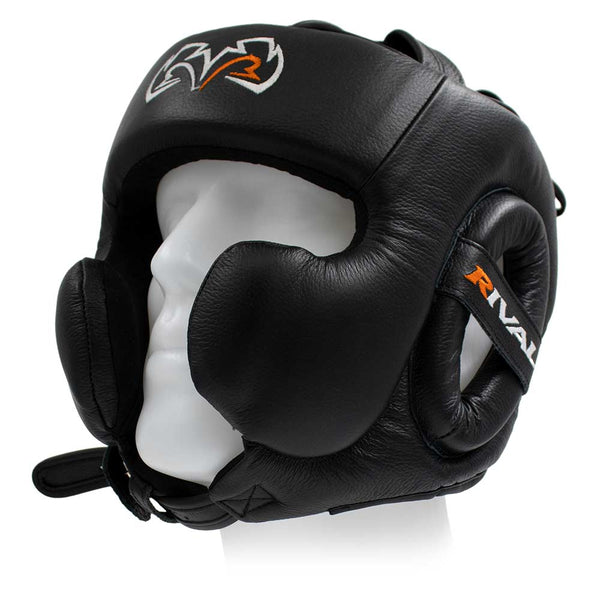
The RFX-Guerrero line has a distinctive place in the brand’s history, but Rival has grown beyond a single model or competition glove. Its range includes training gloves, punching mitts, headgear, handwraps and clothing. Demand for custom boxing apparel also grew as the brand became more visible.
That breadth reflects how a boxer and a trainer experience the sport. Training begins with preparing the hands and does not end with the last punch. The equipment needs to work throughout the session: bag work, pad work, sparren and corner work.
That is why a glove sometimes tells only part of the story. A wrist closure, a shaped pad compartment and a handwrap that is comfortable to wrap come from different product categories, but they can all show the same attention to practical use. That shared approach makes them recognizable.
13. Rival at Fight2Win: official VIP Partner and distributor
At Fight2Win, we offer Rival as an official VIP Partner and distributor. It is a natural fit for a brand with a history so closely tied to the real-world experience of boxers and trainers. We are happy to help you turn that background into equipment that suits your training.
It is also important to make a clear distinction between uses. A good bag glove serves a different purpose from a sparring glove. A trainer looks for different qualities in punching mitts. We are happy to explain how the various designs and closures work and where each model fits in the range.
We are also a point of contact for stores, online shops and gyms that want to offer Rival. In the separate wholesale section of this article, you will find our B2B information and the option to apply for a business account. Explore the options for your store, online shop or gym and submit your business details through the application page.
14. The growth is clear, but the roots remain recognizable
What makes Rival special is the connection between its origins and its development. A trainer and cutman thinks about what could be better. A first order turns those ideas into a business. Closures, hand compartments and material choices give the designs their distinctive character. Then, the company’s locations and world title fight nights show how far its reach can extend.
That growth does not make the early story any less important. On the contrary, the hands-on background helps explain why the details get so much attention. Rival is interesting because the brand, its products and its people have developed together.
Whether you know the brand from the gym, a world title fight or your own gloves, there is a clear belief behind the name. Good boxing equipment starts with attention to the people who use it. That is the idea Russ Anber started with, and it makes the history of Rival a distinctive boxing story.