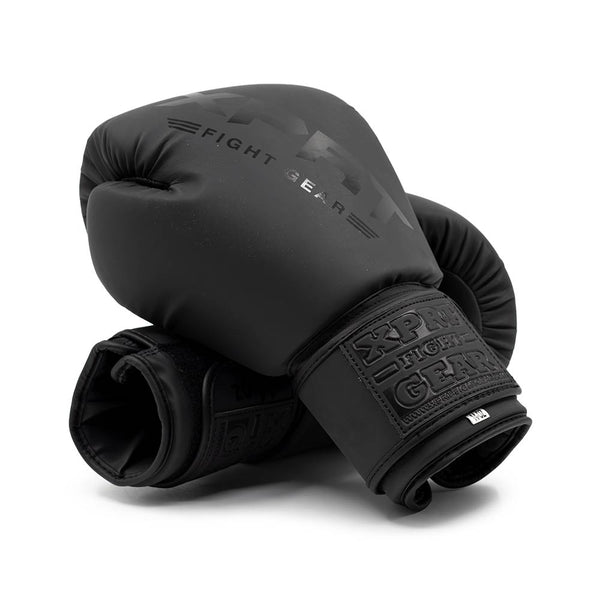
Leather, synthetic leather and microfibre offer different options when choosing boxing gloves. Leather appeals for its natural feel and finish. Synthetic leather can be a practical starting point for varied classes, while technical microfibre is also used for specialized sparring gloves. With leather XPRT Top Gloves and microfibre Rival RS11V, you are comparing two complete training glove designs.
The most comfortable pair combines an outer material you like with a suitable fist shape, padding and wrist closure. That is where the interesting differences lie: how does the glove fasten, what material touches your palm and how well does the whole glove suit bag work, pads or sparren? You will find a range of designs in every material category.
This guide compares leather, synthetic leather and microfibre using models from XPRT, Cleto Reyes, Twins, Rival, King Pro Boxing and Hayabusa. You will learn what the different materials offer, which construction details you can assess and how to care for your pair. That way, you can choose with both your training and your own preferences for feel and finish in mind.
Leather or synthetic leather is primarily about the outer material
A boxing glove is more than the layer you can see. Beneath the outer material is the padding. Inside are the lining, the space for your fingers and the components that help you make a fist. Around the wrist are a cuff and a closure. These parts work together, but they do not all serve the same purpose.
The outer material encases the construction and is exposed to bending, friction and moisture during training. The padding over your knuckles serves a different purpose. An attractive leather exterior therefore tells you nothing about how many layers of foam are inside, how the padding is distributed or how the model is built for sparren.
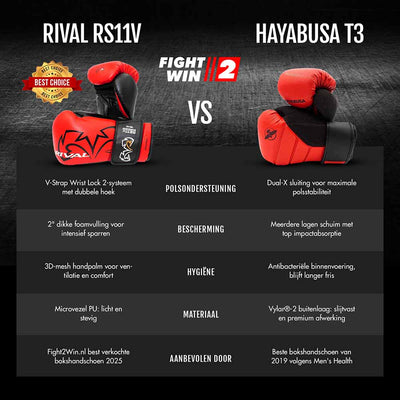
XPRT Top Gloves combine leather, multilayer foam and a wide hook-and-loop closure. Rival RS11V combine microfibre, layered foam padding and the V-Strap Wrist Lock 2 system. So you are comparing two complete gloves, not just two pieces of material.
A good first question is: what do I want to use this pair for? Only then does it make sense to choose an outer material. For some athletes, the feel of leather is an important part of the decision. For others, being able to fasten the gloves themselves, a particular fist shape or a separate pair for sparring matters more.
Leather boxing gloves: differences within leather
Leather is a natural material, but that alone does not tell you how a glove feels. The type of leather, its thickness and finish, and how the panels are assembled all affect the result. Two leather gloves can therefore fit and flex very differently.
A supple exterior may feel comfortable, while a firmer finish may be just what you are looking for. Still, you cannot tell how flexible the whole glove is from its surface alone. The padding, seams and pre-curved fist also affect how much effort it takes to close your hand.
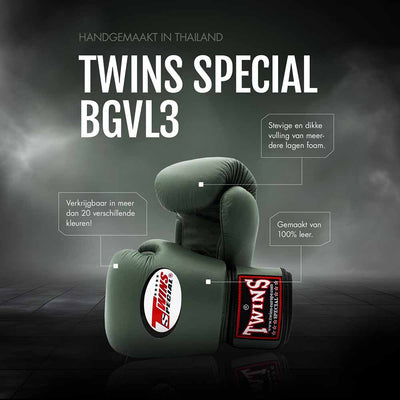
You can see that variety in our range. Twins BGVL3 uses cowhide leather and polyurethane foam. XPRT Pro V3 combines leather with multilayer foam padding. The Cleto Reyes combines leather with latex foam and its own design around the hand and wrist. The Hayabusa T3 LX has Italian full-grain leather, five-layer foam and the Dual-X double closure. All three have leather exteriors, but that does not make the models interchangeable.
If you are looking for a particular leather feel, it is worth handling and trying on different models. Feel not just the back of the glove, but also the thumb side and cuff. The points where the sections meet are where you notice how the model moves around your hand.
Faux leather and synthetic leather: a category, not a quality rating
Faux leather and synthetic leather are often used as umbrella terms for an outer material that imitates leather without being animal hide. You will also come across terms such as PU and microfibre in product descriptions. Those terms are useful, but you should not assume that every synthetic material has the same construction.
PU stands for polyurethane. The term can refer to an outer layer, but also to foam used as padding. Twins BGVL3 is a clear example: it has a leather exterior with polyurethane foam inside. So the presence of the word polyurethane does not make that glove a synthetic leather model.
So pay attention to what a material label actually refers to. A product description that only says ‘synthetic leather’ does not tell you the full composition of the coating, backing or lining. Nor is it a reason to call the outer material PVC, PU or microfibre without further information.
What matters most when choosing is the overall construction. An entry-level synthetic leather model can make sense when you are discovering the sport. A specialist microfibre glove may be worth considering when you are looking for a specific sparring construction. They are different purchases, even though neither is made from traditional leather.
Microfibre: why synthetic does not mean entry-level
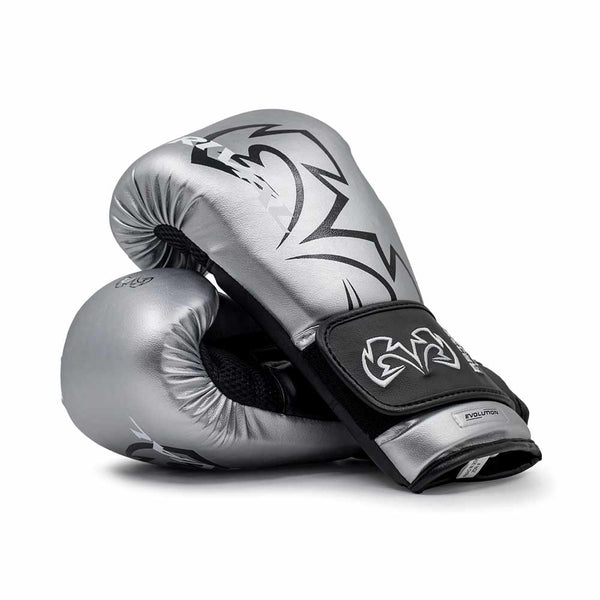
Microfibre is a material made from very fine fibres. Rival explicitly describes the outer material of the RS11V and RS100 as microfibre. That makes these models good examples of why the simple idea that ‘leather is premium, synthetic leather is cheap’ does not hold up.
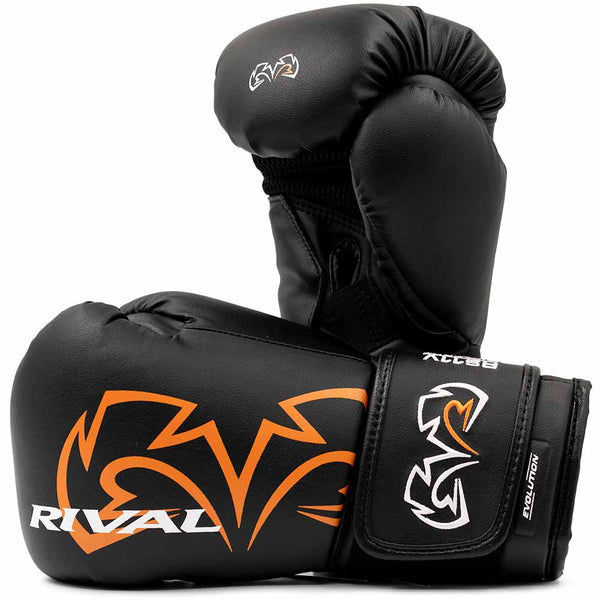
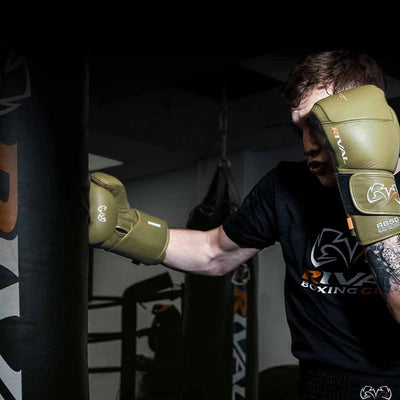
The RS11V Evolution is a Sparring glove with layered foam padding and a diagonal V-Strap Wrist Lock 2 closure. The RS100 Pro Sparring also uses microfiber, but combines it with a mesh palm, the Ergonomic True-Fist Construction and an Angled Lace Track lace-up closure. So the difference between the two is not just the material.
Rival calls this outer material ‘Indestructible’. The RS11V and RS100 show how a technical synthetic outer shell combines with a specialized fist construction and wrist adjustment. When choosing, focus on each model’s specific construction and care for the pair according to the instructions.
The RS11V and RS100 remain Sparring models. Their microfiber outer shells do not automatically make them suitable for heavy bag or pad work. This shows exactly why you need to consider material and training purpose separately: an outer shell may be appealing for intensive use, while the model is designed for a specific type of training.
What determines how long your gloves remain usable?
A pair you’ll enjoy using starts with the right combination of construction and training purpose. Heavy bag work puts different demands on the striking surface than controlled sparren. How you air out, store and wipe down your gloves also helps maintain the condition of the outer shell, lining and closure.
A glove can still look neat on the outside even when the padding has become misshapen or uneven. Conversely, a superficial crease from use may be visible without the closure or padding losing its function. Appearance and usability are not the same thing.
When checking your gloves, look for open seams, separating layers, a closure that no longer fastens securely, damaged lining and noticeable changes in the padding. Assess each part by the job it needs to do. With a sparring pair, it’s not just about your comfort, but also whether the gloves are suitable for contact with a partner.
Match your material preference to your training week. For varied classes, compare suitable all-round models for hand room and closure. If you do a lot of heavy bag work and separate sparring sessions, you can use a dedicated pair for each. That way, you tailor not just the outer shell but the entire construction to how you’ll use it.
Padding and outer material: two different choices
The outer shell and the padding each deserve their own attention. Leather, synthetic leather and microfiber form the glove’s outer shell; the padding forms the shock-absorbing structure over and around your knuckles. So compare how the materials feel, the foam construction, fist position and training purpose side by side.
The XPRT Enforcer V4 combines synthetic leather with multilayer padding. XPRT Top Gloves uses leather and multilayer foam. The Twins BGVL3 has cowhide leather with polyurethane foam. The Rival RS11V uses microfiber with a layered foam construction. So the exterior and padding can be combined in different ways.
With multilayer padding, the shape, density and distribution of the layers all contribute to the overall feel. Check how your knuckles sit in the pre-shaped fist and whether you can make a fist comfortably. That gives a technical specification meaning when you try the gloves on.
For partner training, choose a model offered for that purpose in the agreed sparring weight. A comfortable fit, suitable handwraps and controlled contact all matter in practice. Use dedicated Rival sparring models for sparren and choose a version designed for bag work.
Fit: hand room, fist position and wrist closure
A soft exterior can feel convincing as soon as you pick up the glove. Once you put it on, the real assessment begins: where do your knuckles sit, how much room do your fingers have, and is your thumb in a comfortable position? That's the fit of the whole model.
Try making a fist without forcing it. You shouldn't have to keep squeezing hard to hold the glove closed, but your hand shouldn't move around freely inside it either. Then check how the cuff closes around your wrist and whether you can adjust the closure without it feeling too tight.
Try them on with the hand protection you use during training. It takes up space and can change how your fingers and wrist sit. Oz indicates the stated weight, not a universal measure of interior space. Two models with the same weight can fit differently.
New gloves can feel different with use. But don't expect a painful thumb position or a clearly cramped hand compartment to fix itself just because the pair is made of leather. The basic fit should already feel comfortable when you try them on.
Ventilation: check the palm and lining, not just the leather
After an intense class, you'll appreciate a glove that can air out easily. Check the palm, lining and opening at the wrist. Ventilation holes and mesh are specific construction details you can compare alongside the material on the back of the glove.
The Rival RS100 combines microfiber with a mesh palm. The Twins BGVL3 and XPRT Pro V3 have ventilation holes in the palm. These are different solutions in a different area from the striking surface.
Also look at the lining and the opening at the wrist. How well a glove can air out after training does not depend on a single material. A breathable or odor-resistant lining is no substitute for proper drying and care.
Take the pair out of your bag after class, open the closures and give the lining room to dry. Place the gloves somewhere well ventilated, away from direct sunlight and heat sources. This simple routine is worthwhile for leather, synthetic leather and microfibre alike.
XPRT: from entry-level synthetic gloves to leather training gloves
Within XPRT, you can compare materials without switching brands. The Competitor V1 and Enforcer V4 use synthetic leather or faux leather. Top Gloves and Pro V3 are leather models. This gives you several starting points within the same brand.
Competitor V1 and Enforcer V4
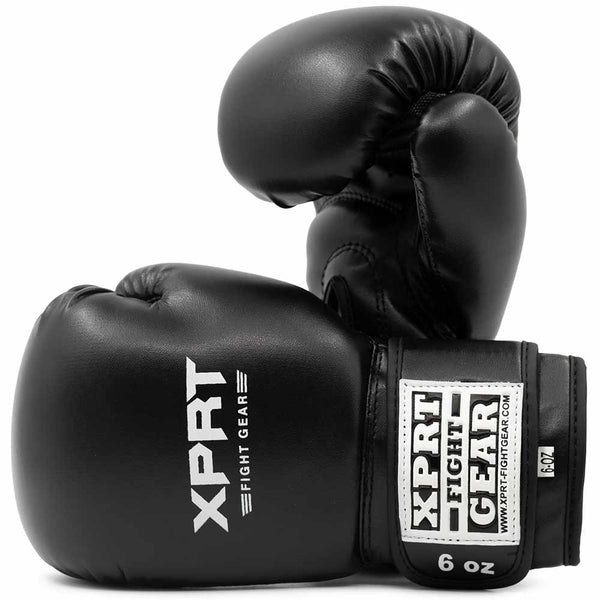
The Competitor V1 is offered as an entry-level model, with synthetic leather, an attached thumb and a long hook-and-loop closure. Enforcer V4 combines synthetic leather with multi-layer padding and a long, wide closure. Both are options for beginners and recreationalists looking for a first pair.
Do not choose between those models based on the term synthetic leather alone. Look at the shape, the fit around your wrist and the training you have in mind. Above all, a practical first pair should suit the classes you plan to take.
Top Gloves and Pro V3
Top Gloves uses leather, multi-layer foam and extra padding at the wrist. The model is offered for bag work, pads and light sparren. Pro V3 combines leather with multi-layer foam padding, a shaped thumb, ventilation holes and a long, extra-wide wrist strap.
When choosing between Top Gloves and Pro V3, it pays to compare the interior shape and closure. Check the room for your handwraps, how the glove lets you make a fist and how it adjusts around your wrist. That makes your choice more concrete: you can choose the leather model whose overall construction suits your hands and your classes.
The Pro family also includes other versions. For example, Pro Legend V3 Retro uses nappa leather. That is a specification of that version, not a reason to describe every Pro V3 as having the same leather. Focus on the exact version you are considering.
Cleto Reyes: leather, latex-foam and two closure options
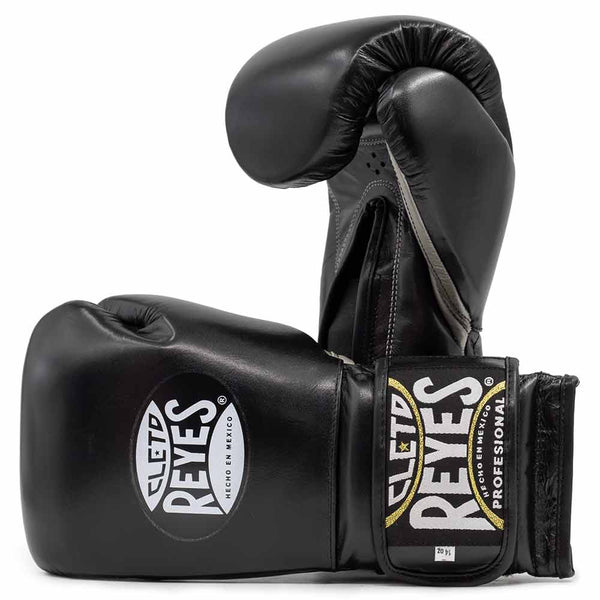
Cleto Reyes deserves a place in any comparison of leather boxing gloves. The models discussed are handmade in Mexico and combine a leather exterior with latex-foam padding. That combination makes Cleto an interesting pair to try on alongside XPRT, Twins and Hayabusa: you can compare the feel of the leather as well as each model’s fist shape, padding and cuff.
The material description is just the starting point. Feel how your knuckles sit inside the glove, how your thumb fits and how much room your handwraps take up. Check the finish around the palm and wrist, and compare how the complete model feels. That gives leather a practical role in your choice, alongside the finish you like.
Cleto Reyes Velcro Sparring: leather with hook-and-loop closure
The Velcro Sparring combines a leather exterior and latex foam padding with a long, wide hook-and-loop closure. That is practical when you want to put on your gloves yourself during a class or switch them between exercises. The lining is moisture-resistant nylon. Try the glove on with the handwraps you use and feel how the cuff fits around your wrist once fastened.
The black version clearly shows the classic shape and brand label. When trying it on, focus on the space around your hand and how your fist closes. For sparren, choose the agreed training weight and pay attention to the condition of the padding. That use is part of choosing the model, alongside your preference for leather and the Cleto feel.
Cleto Reyes with laces: the same material choice, a different fit adjustment
The black lace-up version discussed here also combines leather and latex foam with a moisture-resistant nylon lining. The laces allow a different fit adjustment along the cuff. A training partner or coach can help lace them up; that works well for a session where you keep the gloves on for a longer time.
Compare both versions side by side if you are deciding between fastening the gloves yourself and adjusting them with laces. Compare how your fist sits in each glove and how each fits around your wrist. That gives Cleto Reyes its own place in this material comparison: a leather glove with a distinctive finish and construction, chosen to suit the way you train.
Twins BGVL3 and Hayabusa T3 LX: two approaches to leather
Twins BGVL3 and Hayabusa T3 LX show why material choice is only the beginning. Both are leather gloves, but their shape and wrist closure give them a different feel.
Twins BGVL3: cowhide leather and a rounded profile
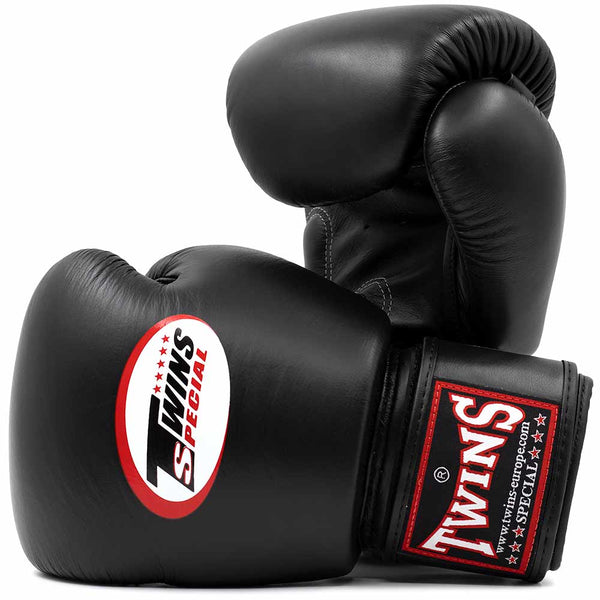
The BGVL3 is handmade in Thailand and uses cowhide leather, polyurethane foam and a wide hook-and-loop closure. The palm has ventilation holes. In the photos, you can see the rounded shape around the knuckles and how it transitions into the wrist section.
If you combine boxing and kickboxing, the BGVL3 is an interesting model to try alongside other training gloves. See how the rounded shape feels in your guard and how easily you can open and close your hand. Then check how the thumb position, hand space and wide wrist strap fit together.
Hayabusa T3 LX: full-grain leather and Dual-X
The T3 LX uses Italian full-grain leather, five-layer foam, a splinted support structure and the dual Dual-X closure. It is offered for bag training, pad work and sparren. The double wrist strap offers a practical contrast to the single wide closure on Twins.
If you want the leather finish and that way of adjusting the fit, the LX is a model worth trying. Compare how both wrist straps fit around your wrist and how the overall stiffness or flexibility of each model suits your exercises. The leather designation alone does not answer those questions.
For both, the required weight and the condition of the padding remain important for sparren. A leather model that can handle several types of training still needs to suit the exercise at hand.
Beginner, recreationalist, or young athlete: where do you start?
If you’re just starting boxing or kickboxing, you may not yet know what your training week will look like. A solid entry-level synthetic model is then worth a look. XPRT Competitor V1, Enforcer V4, and King Pro Boxing Revo are examples in this category.
The King Pro Boxing Revo line uses synthetic leather, multi-layer padding, and a wide hook-and-loop closure. The model is offered for beginners and recreationalists. Here too, it’s about the glove as a whole: the material, closure, and padding need to work together for your class.
As a beginner, you can also choose a leather model right away if you like its feel, finish, and fit. Top Gloves and Pro V3 are examples to compare with entry-level synthetic models. Let your training plans and the glove as a whole guide you toward a comfortable starting choice.
For children, choose a suitable children’s model with comfortable room for the hands, a wrist strap that adjusts well, and a training weight appropriate for the class. Try it on with the handwraps the child uses. An appealing color makes the gear feel personal; a comfortable fit around the fist and the right size make the pair practical for training.
If you train more often: invest in what you actually use
As you train more often, you’ll get a better sense of what you like in your gear. You might want a different fist shape, a pair that’s easier to fasten yourself, or a lace-up pair for planned sparren sessions. Those are more concrete reasons for your next purchase than simply wanting to switch from synthetic leather to leather.
For a dedicated sparren pair, you can consider microfiber models such as the Rival RS11V and RS100 alongside a suitable leather model. The RS11V has a diagonal closure you can fasten yourself. The RS100 has laces and adjusts differently around the wrist. Compare both with your sparren needs in mind.
A leather Cleto Reyes model with a hook-and-loop closure or laces is another focused option if you like the latex-foam feel and Mexican finish. Compare how it fits your fist with your handwraps on, and decide which closure suits your training routine.
All-round models can be a good choice for varied classes when they’re available for the exercises you do. If you do a lot of bag work and sparren, a separate pair for each can be useful. That way, you don’t have to expect one design to cover every purpose.
Invest in the features you value in every training session: a finish that feels comfortable, a closure you can adjust easily and a fist shape that fits. With these specific preferences in mind, you can compare leather and synthetic options rather than treating material names as a fixed price ladder.
Caring for leather and synthetic materials
Start with the care instructions for each model. Leather and synthetic outer materials do not necessarily need the same product. Leather grease or leather cream is not a universal treatment for every glove that looks like leather.
Let the gloves air out after training, avoid storing them damp for long periods and clean the outside as directed. Use care products only if they are suitable for the finish. A glossy finish, matte coating or other outer layer may call for a different approach.
While cleaning, check the practical details too. Does the hook-and-loop fastener still hold securely? Are the seams intact? Does the padding still feel even? This routine helps you assess not just how the pair looks, but how well it continues to function.
A glove deodorizer is a useful addition to that routine. Use it as directed to keep the pair fresh between training sessions, and first give the gloves room to air out properly. Combine care with regular checks of the seams, closure, lining and padding.
Want to avoid animal leather? Look beyond the outer layer
If you do not want to use animal leather, the outer material is naturally an important factor. A model described as synthetic or microfiber tells you about its outer material. That is a starting point, but it does not tell you what every component is made of.
If you want a glove entirely free of animal-derived materials, check the composition of the whole product. A clear manufacturer’s statement may cover not only the outer material but also other components and adhesives. A synthetic outer material is therefore a useful starting point; the full product specifications help you check the rest against your material preferences.
If you want to make an environmentally conscious material choice, origin, production, use and replacement are also worth considering. Assessing the overall environmental impact requires information about the entire chain. When buying, look for verifiable product information and choose a pair you enjoy using and can maintain well.
A thoughtful material preference and a practical glove can go hand in hand. Consider your preferred outer material alongside the fit, closure and intended use. Airing, cleaning and storing your gloves properly are then simple ways to look after your equipment.
How to choose between leather, synthetic leather and microfiber
You want to explore the sport
Look at which exercises your classes include and try on a suitable entry-level model. XPRT Competitor V1, Enforcer V4 and King Pro Boxing Revo are examples with synthetic outer materials. Compare the room for your hand, closure and fist shape, and choose the version that feels comfortable for those classes.
You're looking for an all-round leather pair for training
Take a look at XPRT Top Gloves, Pro V3, Twins BGVL3 or the leather training gloves from Cleto Reyes. Compare the inner fit and profile of each model while wearing your handwraps. Pay attention to how the fist closes, thumb position and wrist adjustment. That way, you can combine the leather feel you want with a practical pair for training.
You want a dedicated sparring pair without insisting on leather
Rival RS11V and RS100 show that microfibre is also used in specialized sparring gloves. Choose between their designs based on fist position, closure and whether you prefer to put them on yourself or use laces, not on the assumption that a non-leather glove is automatically an entry-level choice.
You value a leather finish and a double wrist closure
Then the Hayabusa T3 LX is a strong candidate, with Italian full-grain leather and Dual-X. When trying it on, feel how the belts work together and whether the support leaves enough room for your movements.
You're deciding between two models
Compare them with the same training goal in mind. Putting an entry-level model for varied classes next to a specialized sparring glove can be useful, but it won't tell you which material is ‘better’ in general. What you’re mainly seeing is two different equipment choices.
The best choice starts with your training
Leather offers a natural feel and a range of finishes. Synthetic leather and microfibre offer other options, from an accessible first pair for training to a specialized sparring model. That variety makes it worthwhile to try on different designs side by side.
Choose your training goal first, then the complete glove. A leather Cleto Reyes glove with latex foam, an XPRT training glove and a microfibre Rival sparring model give you different options to make that choice tangible. Consider the padding, fist shape and wrist closure alongside the outer material. Add your preferences for feel, appearance and care. That way, the material is one part of a good purchase, rather than a label that is supposed to explain everything.
If you want to feel those differences for yourself, you can try on models in our showroom in Waddinxveen. Tell us which classes you take and what you like or dislike about your current pair. Then we can make a focused comparison: not simply leather versus synthetic leather, but the gloves that suit the way you train.