Boxing trunks and kickboxing shorts differ mainly in their cut and the room they give your legs. Classic boxing trunks often have longer, loose-fitting legs and a wide waistband. Many kickboxing and Muay Thai shorts are shorter, combining roomy leg openings with side slits or notched edges to allow knee raises and kicks.
In both sports, you need to move comfortably. Boxing requires room for footwork, pivots and bending your knees. Kickboxing also involves opening your hips, raising your knees and kicking. The right trousers support those movements with a cut that fits your waist, hips and thighs.
Here we compare those differences using examples from Cleto Reyes, XPRT, Rival, Twins, Booster and King Pro Boxing. From classic satin boxing trunks to microfiber Thai shorts and styles with mesh panels, you’ll discover which details to compare when choosing your training gear.
Cut and length: a longer boxing style versus short Thai shorts
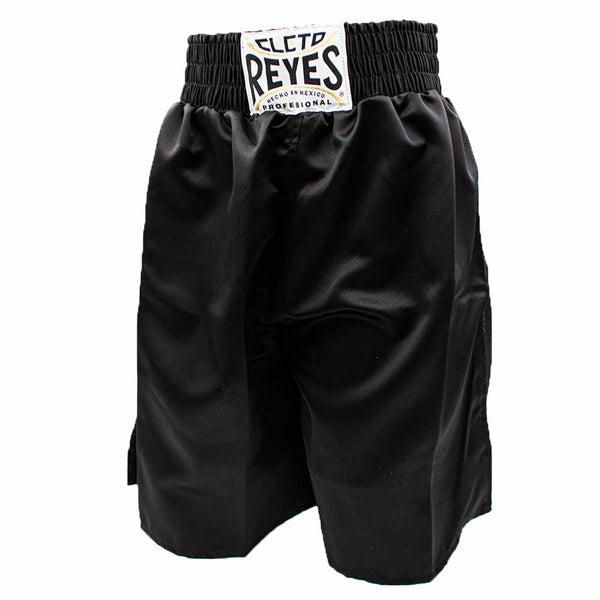
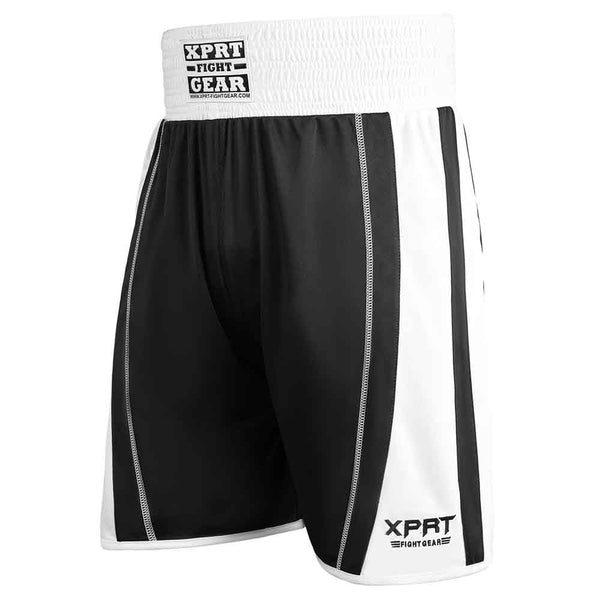
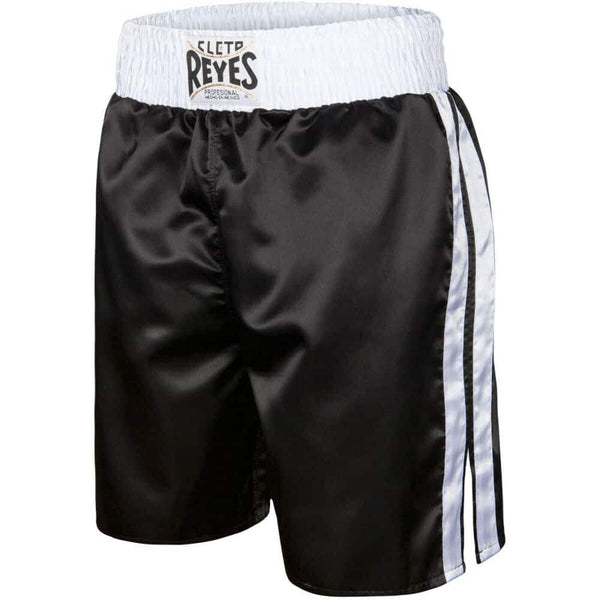
You can recognize classic boxing trunks by their longer, loose-fitting legs and wide elastic waistband. Cleto Reyes, XPRT Boxing and Rival Competition are clear examples. This style usually reaches toward the knee and has the familiar boxing look you see in the ring. Where the hem falls on your leg also depends on your height and the size you choose.
Room around the hips and thighs is useful for footwork. You step to the side, pivot and change the height of your stance. Loose-fitting legs give you room to do that, while the waistband keeps the trousers in place. So compare both the length and the proportions of the waist, hips and legs.
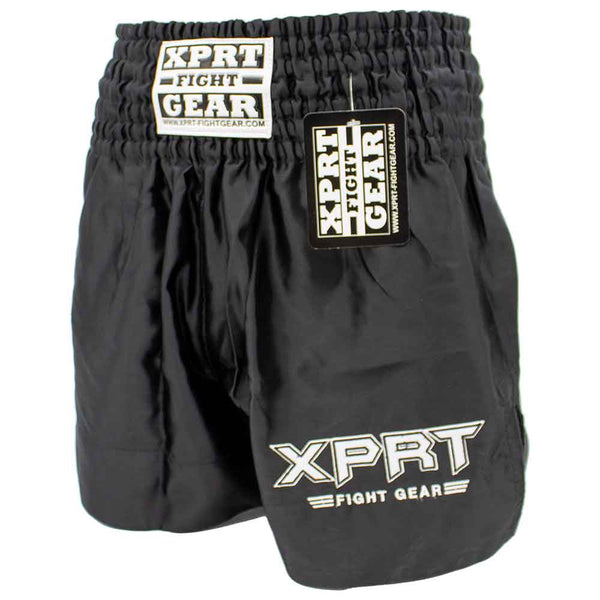
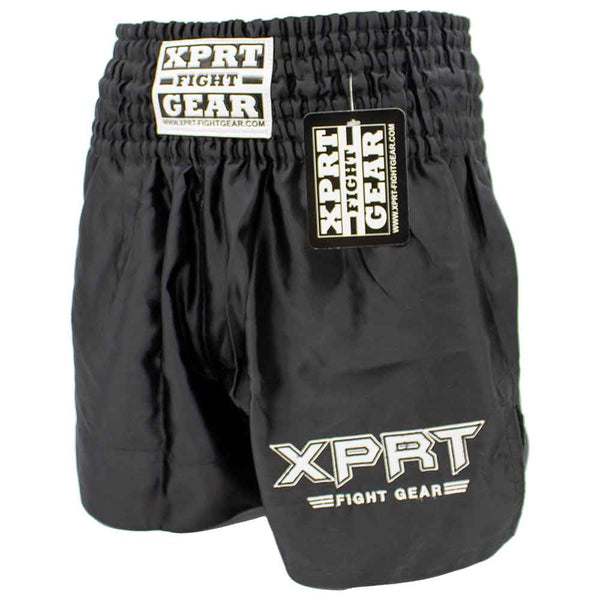
Short kickboxing or Muay Thai shorts have different proportions. The legs end higher up and leave room to raise your knee and extend your leg. With XPRT Basic, that freedom of movement comes from the wide cut and notched legs. With Twins TTE, a side slit is part of the design.
Thai-style designs come in a range of shapes. Traditional wide shorts fit differently from a more compact retro style with cut-out sides. The leg openings can be roomy even when the outer sides of the trousers look quite short and compact. That combination makes it worth comparing the overall cut.
The fabric also contributes to the look. Cleto Reyes uses satin for the boxing style discussed; XPRT Boxing and Rival Competition use polyester. The sheen and the way the fabric drapes give each style its own look. Later, we'll look at how the fabric name relates to its composition and finish.
Freedom of movement: comparing trousers as you move
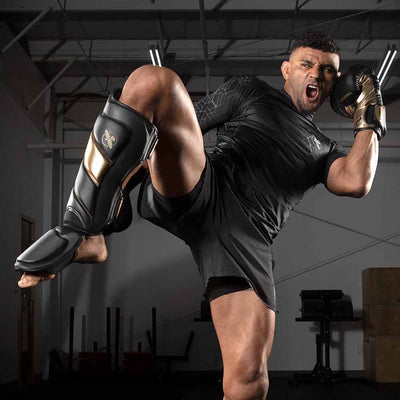
In kickboxing and Muay Thai, the hips, knees and legs move in different directions. Think of a front kick, raising a knee or turning for a roundhouse kick. A suitable cut gives the fabric room to follow those movements, with enough space at the crotch and thighs.
A side slit lets the edge of the leg opening spread further. A wide leg also provides room around the leg. Both features can be combined in one pair of trousers. So look at the combination of leg opening, slit and hip room: this gives you a better sense of how the construction works with your movements.
King Pro Boxing Retro Mesh combines a cut-in side slit with satin and mesh panels. XPRT V2 Fighter uses microfiber with cut-in leg openings. These are two examples of kickboxing styles that serve a similar purpose with different fabric construction and finishes.
Compare the trousers while doing a few gentle training movements. Step forward and sideways, turn and bend your knees. Then raise one knee and make a controlled kicking motion. This lets you feel whether the waistband stays in place and where the leg gives you room. Start slowly so you can focus on the fit.
For boxing, use the same practical approach when stepping, turning and moving lower. The waistband may fit well while you prefer a roomier cut around the hips. A different cut is then worth considering: compare the shape of the trousers rather than switching only between letter sizes.
Compare it with the clothing and protection you usually wear during training. Compression shorts or a groinguard change what you wear under your trousers. Wearing them when you try on the trousers lets you feel how the waist, crotch and thighs fit with your complete training kit.
Waistband and size: the relationship between waist and legroom
A wide elastic waistband is found on both boxing trunks and kickboxing shorts. It gives them a distinctive look and spreads the fit across a wider part of your waist. When choosing, what matters most is how the waistband sits at the height where you wear your trousers.
A drawstring gives you more room for adjustment. XPRT Basic, Twins TTE, Booster TBT Plain V2 and King Retro Mesh combine an elastic waistband with a drawstring. This lets you adjust the waistband further, while the size you choose determines the basic fit around your hips and thighs.
Where you wear the waistband also affects the rest of the fit. If you pull the trousers higher, the position of the crotch and where the legs end will change. So compare them at the height you find comfortable for training, and try some gentle movements at that height too.
Next, use the size information for the specific model. XPRT Boxing is described as loose-fitting. Twins TTE and King Retro Mesh, on the other hand, use smaller Thai sizing. The corresponding size chart will help you account for these differences when choosing.
As well as your waist, consider your hips and thighs. With the same waist measurement, a different proportion between the waistband and legs may fit more comfortably. Well-fitting trousers combine a snug waistband with the room you need to move during your exercises. Your preference for a higher waistband or slightly longer legs can also factor into your choice.
Satin, polyester, microfiber and mesh: comparing fabrics and construction
Polyester refers to a fiber material; satin refers to a weave. Satin fabric can therefore be made from polyester. The terms tell you different things about the trousers: one refers to the fiber, the other to how the fabric is woven.
Microfiber refers to fine fibers. In finished sports trousers, the cut, fabric construction and finish also affect how they feel to wear. Mesh has an open structure and is used, for example, as a panel in otherwise satin trousers.
In this comparison, XPRT Boxing and Rival Competition are polyester boxing trunks. The fabric of Cleto Reyes, XPRT Basic, Twins TTE and Booster TBT Plain V2 is described as satin. XPRT V2 Fighter uses microfiber, while King Retro Mesh combines satin with mesh panels. This gives you different constructions to compare side by side and feel for yourself.
Satin gives many boxing and Thai styles their familiar smooth, glossy look. Its fluid drape shows especially well in loose-fitting legs. With a microfiber style, you can compare the fabric’s own texture and feel. Open mesh panels add a different panel construction to the design.
Also check the inside, seams, and finish of the slit. You’ll feel those details against or close to your skin as you move. Compare how the fabric hangs, how the leg hems are finished, and how the panels fit together. This turns a fabric name into a practical comparison of the trousers as a whole.
If you specifically want a stretchy style, check the listed fabric composition and construction. With many boxing and Thai shorts, freedom of movement comes mainly from the roomy cut and leg openings. That is different from stretch in the fabric itself, and it helps to assess both separately.
Specific styles: cut, fabric, and finish
Cleto Reyes: satin and a classic boxing cut
The Cleto Reyes boxing trunk is a prime example of a classic boxing design: longer, loose-fitting legs, a wide elastic waistband, and satin fabric. The black version discussed here is handmade in Mexico. Together, these features give the trousers the brand’s distinctive look and set them apart from the polyester examples from XPRT and Rival.
The satin and longer cut come together in the way the trousers hang. The wide waistband is a standout feature, while the loose legs give you room to step and turn. When trying them on, check where the hem falls and how they sit around your hips.
Cleto Reyes is a natural choice to consider if you’re looking for that classic boxing style. Compare the fabric and finish as well as the look. That way, you can choose based on the whole design: the cut, the waistband, and how it feels during boxing training.
XPRT Boxing and Rival Competition: two longer boxing styles
XPRT Boxing and Rival Competition use polyester and have a wide elastic waistband and longer, loose-fitting legs. They are practical examples for anyone looking for a classic boxing trunk and wanting to compare different proportions and finishes.
Bear in mind the loose fit of XPRT Boxing when choosing your size. Rival Competition has the distinctive wide waistband and look of competition shorts. Beyond color and brand, compare the fit at your waist, the room around your hips and the length of the legs.
XPRT Basic, Twins TTE and Booster TBT Plain V2: satin kickboxing styles
XPRT Basic combines a loose cut with notched leg openings. Twins TTE has a side slit and an elastic drawstring waistband. Booster TBT Plain V2 also uses satin, with an elastic drawstring waistband and plenty of legroom. These three simple black styles show how much the cut and finish can vary.
Compare the width of the leg opening, the position of the slit and the proportions of the waistband and legs. Bear in mind the Thai sizing for Twins. A plain design is easy to pair with other colors of training clothes and protective gear, while these construction details help you compare how the shorts feel to wear.
XPRT V2 Fighter and King Retro Mesh: different fabric or panel construction
XPRT V2 Fighter uses microfiber with notched leg openings and an elastic drawstring waistband. King Retro Mesh combines satin with mesh panels and a side slit. Here, you can compare both the fabric and how the shorts are constructed from different sections.
V2 Fighter is an interesting option if you want to feel and try on the microfiber version. With Retro Mesh, you can look at the combination of satin and open panels. Bear in mind King’s smaller Thai sizing and compare both styles for legroom, waistband and finish.
These examples offer three distinct choices: a classic longer boxing style, loose satin Thai shorts or kickboxing shorts with a different fabric or panel construction. Comparing these features side by side helps you find the style that suits your training and preferences.
Alternating between Boxing and kickboxing: clothing for your training
Well-fitting kickboxing shorts can also be comfortable for boxing training. The short, loose cut gives your legs room to move when you step, turn and bend your knees. That makes Thai shorts a practical choice when you alternate between different punching and kicking workouts.
If you like the classic boxing look, a longer boxing trunk is a great addition. You can then choose the cut you prefer for each type of training: a longer style for boxing and a short style with roomy legs for kickboxing or Muay Thai.
If you want to wear a boxing trunk for kickboxing, pay particular attention to how it feels when you raise your knees and how much room the leg openings provide. A loose cut may give you enough room for your exercises. By moving gently while trying it on, you can see how the style responds when you open your hips and lift your knees.
Kickboxing clothing also includes longer styles. XPRT All-Style is an example of a long, loose-fitting kickboxing trunk with satin fabric, an elastic waistband and a drawstring. If you prefer a longer style, it's another model to compare for room at the hips, knees and legs.
For competitions, follow the current clothing regulations for your discipline and organiser. These may specify requirements for the style, length, colour and combination with other clothing. Choose your competition shorts based on those specific requirements and the fit you find comfortable when moving.
Conclusion: choose based on cut, movement and comfort
The main difference between a boxing trunk and kickboxing shorts is the combination of cut and freedom of movement. Classic boxing styles give you a longer, loose-fitting look with a wide waistband. Short Thai shorts focus on room around the upper leg and a leg opening that allows you to raise your knees and kick.
First, choose the style that suits your training and taste. Then compare the waistband, room at the hips, leg length and fabric. Cleto Reyes, XPRT Boxing and Rival Competition offer different boxing styles; among the shorter models, you can compare satin, microfibre and mesh panels.
With the right size and a few gentle training movements, you can make that comparison more concrete. Use the model's sizing information and bring your usual training gear when trying them on. Then follow the care label and let the shorts dry thoroughly so the waistband and finishing remain comfortable to wear.
If you want to see and feel the differences for yourself, you can compare and buy boxing and kickboxing shorts in our showroom in Waddinxveen. Put a longer Cleto Reyes or XPRT boxing trunk next to a short pair of Thai shorts and discover which combination of cut, fabric and look suits you.