What's the difference between boxing gloves and kickboxing gloves? The short answer: many models can be used for both sports, but not every glove is suitable for every type of training. It gets really interesting when you compare different models side by side. The shape of the fist, the distribution of the padding, the freedom of movement in the palm and the construction around the wrist can vary considerably. Even two gloves from the same brand can be designed for very different purposes.
At Fight2Win, you'll find Cleto Reyes, Winning, Rival, Twins, XPRT, Hayabusa and Di Nardo, among others. These brands show how much lies behind the labels ‘boxing’ and ‘kickboxing’. Even within the Rival RFX Guerrero sparring range, you can choose between two very different types of padding. A Hayabusa T3 has a different closure design from a Twins BGVL3. And a leather XPRT Top Gloves doesn't necessarily have the same fit or finish as an XPRT Pro V3 just because both are made of leather.
In this guide, we compare the features that make a difference during training. That way, you can choose a glove that better suits your hands, your discipline and your training goals.
Boxing, kickboxing and Muay Thai: the same fist, different exercises
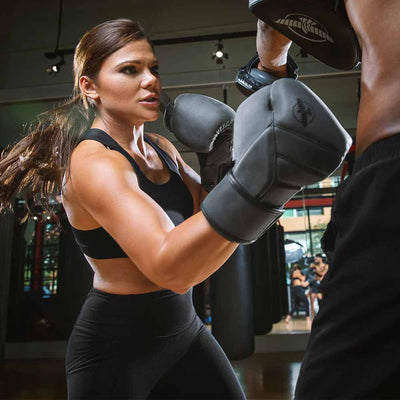
In boxing, you use your gloves to punch, keep your guard up and block punches. Kickboxing adds kicks. In Muay Thai, clinching and other techniques may also be part of the class. That changes not only what you strike, but also the movements you need to make with your gloves.
For punching, you want to be able to make a comfortable fist and align your wrist properly. When defending and doing technical drills with a partner, it can also help to be able to open your hand enough. That range of motion matters in clinch work too. The right balance depends on the exercises and rules at your gym.
Boxing models often focus on punching, while Thai training gloves may also allow for other hand movements. Use that as a starting point, then compare the models themselves. Cuff length, flexibility at your chosen weight and wrist support are model features that can help you make a more informed choice.
Even if you box, a Twins BGVL3 is worth trying on. And if you kickbox, you don't need to dismiss a Rival sparring model right away. What matters in the end is whether the specific model suits the exercise, fits properly and is accepted by your trainer. The category a webshop puts a glove in doesn't tell the whole story.
What good training gloves should have in common
Whatever your sport, some things simply need to fit right. In both sports, your hand should sit comfortably in the glove. You should be able to make a full fist without constantly squeezing hard. The thumb should sit comfortably, and the closure should keep the glove in place.
The padding also needs to suit the intended use. For partner contact, consider not just your own hand, but also whether the model and the condition of its padding are suitable for sparren. For bag work, look for a glove designed for that type of training. So look beyond the sport named on the label.
Handwraps, technique and gym rules remain important with every brand. For partner training, choose controlled contact, suitable padding and the training weight prescribed by your gym.
A good glove fits both your hand and what you use it for. How a brand approaches that varies from model to model. That's where choosing gets interesting.
Shape, fist position and thumb: more than just good looks
The outer shape affects how much volume there is around your fist, but the inner shape determines how your hand actually sits. So don't judge by a product photo alone. A glove that looks rounded may feel different inside than you expect, and a compact profile tells you nothing on its own about the room for your fingers.
When trying it on, pay attention to where your knuckles sit, where your fingers curl and how much space you have at your fingertips. You should be able to make a fist without your nails or fingers being pressed against anything. At the same time, you don't want so much room that your hand shifts inside the glove.
For the RS100, Rival highlights its Ergonomic True-Fist Construction: a design that puts the hand in a fist position. That makes the RS100 worth trying if you want to feel how a pre-shaped fist position works for your hand. When trying it on, take time to notice whether your fingers and knuckles sit comfortably.
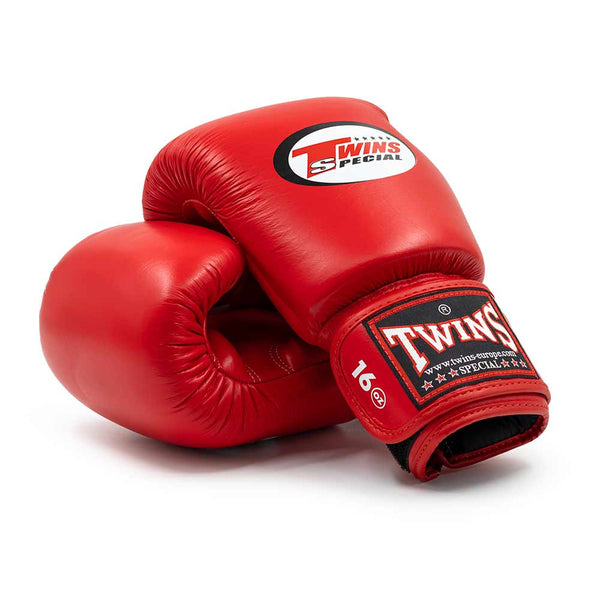
The Twins BGVL3 has a distinctly rounded profile in the product photos. The long cuffs of the Rival RFX Guerrero and Di Nardo Worldwide show a different proportion between the fist and wrist area. You can compare these differences side by side, but you won't know how much effort it takes to close the glove until you try it on.
Check the thumb too. Even with an attached thumb, its shape needs to fit your hand. Assess the thumb's angle, length and room while making a relaxed fist. A comfortable thumb position is an important part of a good fit.
Padding: material, distribution and use
Padding is the cushioning inside the glove. When comparing gloves, you can ask three questions: what material is used, where is the padding, and what is the construction designed for? Asking only whether a glove is ‘thick’ or ‘soft’ leaves out much of the picture.
Compare the padding over the knuckles with the padding on the back and sides of the hand. This helps you assess how the glove’s overall profile suits your punching and guard. Beyond its bulk, pay attention to how the padding is distributed and how the glove stays in place as you move.
Our Cleto Reyes training models use latex-foam. Rival uses multi-layer foam padding in the RS100 and RS11V. The RFX Guerrero SF-H combines foam with a layer of padded horsehair, while the HDE-F has a high-density EVA foam construction. Twins BGVL3 uses polyurethane foam. XPRT Pro V3 and Top Gloves have multi-layer foam constructions. Hayabusa T3 uses a five-layer foam construction.
Each construction gives a model its own feel. Compare how the padding springs back, how your knuckles sit and how easily you can make a fist. This helps you discover the difference between a latex-foam construction, layered foam and the more flexible foam-and-horsehair combination of the SF-H.
In Winning’s MS600 line, the emphasis is on its multi-layer foam construction and the cushioning feel the brand often describes as ‘pillow’. That makes the line worth trying on alongside a latex-foam or firmer foam-filled model.
The condition of the padding remains essential. Check used gloves for deformation, noticeably hard spots, and uneven or heavily compressed padding. Closing a glove more tightly or having a higher oz rating on the label does not make it suitable for partner contact again.
Palm, ventilation and freedom of movement
The palm gets less attention than the knuckles, but it can have a major effect on how the glove feels in use. The opening, seams, padding and finger construction together determine how easily you can open and close your hand. A glove that feels comfortable with your fist constantly closed may not feel as comfortable for every technical drill.
For kickboxing and Muay Thai, it makes sense to do more than throw a punch when trying on gloves. Try holding your normal guard and gently opening your hand, too. Do this without forcing the glove to bend. You want to know whether the model supports your movements, not how much force it takes to pull a new glove into a different shape.
The Rival RS100 has a mesh palm. Twins BGVL3 and XPRT Pro V3 have ventilation perforations. Besides these ventilation features, assess how easily the palm opens and how much room your fingers have to move. These are separate features to compare when trying the gloves on.
A breathable or odor-resistant lining is no substitute for care. Let gloves dry after training, and do not leave them damp in a closed gym bag for long periods. Ventilation helps, but letting them dry thoroughly should remain part of your routine.
Wrist, cuff, and closure: support versus freedom
The cuff is the wrist section of the glove. Its length is noticeable, but length alone does not tell you how much support you will feel. Stiffness, padding, the direction of the closure, and how it fits your wrist also matter.
A long cuff that fits poorly can be less comfortable than a shorter wrist section that fits well. A rigid support structure can be comfortable if that is what you want, but may feel restrictive when you need more freedom of movement for certain exercises. So compare not just ‘more’ and ‘less’ support, but which type of support suits your hand and training.
Standard hook-and-loop, diagonal closure, or double belts
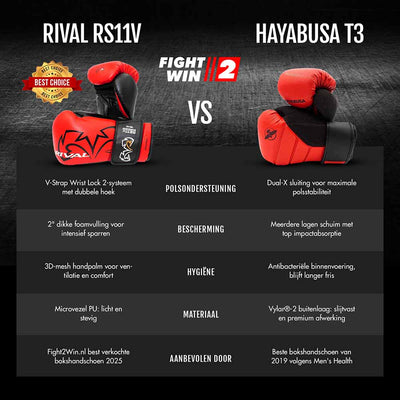
Twins BGVL3, XPRT Pro V3, and Top Gloves use wide hook-and-loop closures. Cleto Reyes Velcro Sparring has a long hook-and-loop closure. The Rival RS11V uses the diagonal V-Strap Wrist Lock 2 system. Hayabusa T3 and T360 use the double Dual-X closure, combined with a support structure around the wrist.
Compare the closures for adjustability, feel, and ease of use. Choose a system you can fasten for a good fit and that stays comfortable during your exercises. This will help you assess what the design does for you in practice.
Laces offer a different fit, but take more preparation
You can adjust a lace-up closure along the wrist section. You will usually need help to put the gloves on and tie them in the usual way. This can work well for a planned Sparring session with a trainer or partner, but may be less convenient if you often switch between gloves, pads, and other exercises during a group class.
The RS100 uses Rival's Angled Lace Track System. Winning MS600, the RFX Guerrero Sparring models discussed, and Di Nardo Worldwide also have lace-up closures. But they do not all feel the same: the cuff and the space around your hand make a difference too.
During partner training, make sure closures and laces do not cause unnecessary chafing, and follow your gym’s procedures. Tighter is not always better. Your wrist should feel secure, but it should not tingle or hurt.
Sparren, bag, pads and competition: the key distinctions
If you remember just one distinction from this guide, make it this: the intended use matters more than the name of the sport. A sparring glove, a bag glove and a competition model can all be used in boxing, but they are not intended for the same purpose.
Sparren: choose a glove designed for partner contact
For sparren, you want a model intended for it, in the weight your gym requires and with padding that is still in good condition. Control over your punches and intensity, and agreements with your partner, remain essential. An expensive glove or a high oz rating is not permission to spar harder.
The Rival RS11V and RS100 are sparring models. The same applies to the RFX Guerrero Sparring SF-H and HDE-F discussed here. Save these models for sparren; choose a glove designed for the bag and pads instead.
Bag gloves: a place of their own alongside your sparring pair
On the punching bag, you work on your punches, combinations and rhythm. On the pads, you follow your trainer’s or training partner’s instructions. You are hitting training equipment, not a sparring partner’s body. That is why bag gloves deserve a place of their own when you choose your gear.
A bag glove is designed for bag training. Depending on the model, it may also be suitable for pad work; check its stated use. When trying one on, look for a comfortable fist, a snug fit around your wrist and padding over your knuckles. A compact appearance, firm padding or low oz rating does not, on its own, tell you whether a glove is right for your training. This category includes different shapes and constructions.
A dedicated bag glove is no substitute for a sparring glove. For sparren, the model must also be intended for contact with your partner. Conversely, the Rival RS100, RS11V and RFX Guerrero Sparring SF-H and HDE-F discussed here are sparring models: choose a glove designed for bag work rather than using them for every exercise.
For a varied class, a suitable all-round training model is a practical choice when it is designed for the exercises in question. Hayabusa T3 and T360 are designed for several types of training. XPRT Top Gloves is also designed as an all-round glove, including light sparren. If you train a lot on the bag and regularly with partners, a separate bag and sparring pair lets you use each for its intended purpose.
Competition: follow the specific rules
Lace-up closures are found on different types of gloves. The Rival RS100, for example, combines that closure with a sparring design. So consider what each version is designed for as well as how it fastens, and choose a model intended for sparren.
For competitions, check the requirements of the organiser or governing body. A model name, its weight and a general reference to professional boxing are no substitute for that check.
One pair or two pairs?
For a beginner who mainly practices technique and takes all-round classes, one suitable pair of training gloves can be practical. If you train intensively on the bag and regularly with partners, a separate pair for sparren is worth considering. You can then choose the right construction for each use and keep your sparring pair for partner training.
That choice doesn't have to mean buying the same model twice in different weights. Instead, you can look for different features: a suitable glove for bag and pad training alongside a dedicated sparring model.
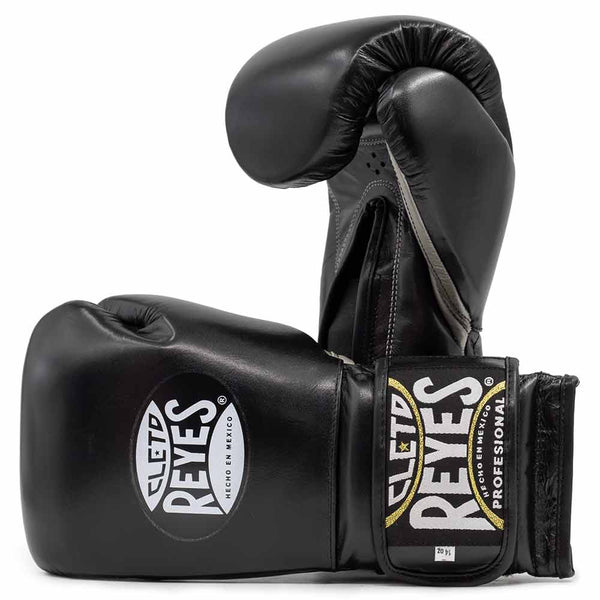
Cleto Reyes: latex foam and classic boxing glove construction
Cleto Reyes shows that a brand with a strong boxing heritage cannot be defined by a single feature. In the training models discussed here, latex foam padding, an attached thumb and a long wrist section are key features. Versions are available with hook-and-loop closures or laces.
The Velcro Sparring combines latex foam construction with a long, wide hook-and-loop closure. The lining is made of moisture-resistant nylon. These training gloves are handmade in Mexico. That craftsmanship and choice of materials give the gloves their distinctive character. The best way to tell whether they suit you is to try them on with your own handwraps.
The latex foam in Cleto Reyes gloves is often associated with a distinct feel on contact. That may be a reason to try the model if you're looking for a classic boxing glove construction. How comfortable you find the padding and fist position is personal. Ideally, compare gloves of the same training weight, such as Winning, Twins or a Rival sparring model.
For kickboxing, consider how your palm moves, how the wrist section fits and how comfortable the gloves feel when you keep your guard up. A model with a long cuff may also suit your training. For clinch-focused drills, compare how much freedom of hand movement and wrist mobility each design allows.
Cleto Reyes versus Twins: both offer leather gloves with hook-and-loop closures, but their padding construction and shape differ. Cleto Reyes versus Rival RS11V: you're comparing not only brands, but also latex foam with a layered foam construction and a long closure with a diagonal V-Strap system.
So don't assume that all Mexican gloves feel the same or that a familiar competition name makes every model suitable for competition. Look at the version you will actually use.
Winning: MS600, MS600B and how closure affects use
With Winning, we focus mainly on the MS600 line. The MS600 has a lace-up closure; the MS600B has a hook-and-loop closure. The line features multilayer foam construction and the cushioning-focused approach Winning is known for.
That makes Winning worth trying on alongside Cleto Reyes. It is not simply a comparison between two luxury brands. You are looking at a different padding construction, a different fist shape and a different way the hand and wrist are enclosed.
The choice between the MS600 and MS600B is also practical. If you want to put your gloves on and take them off quickly by yourself during training, hook-and-loop is a clear advantage. If you have someone to help and want to adjust a lace-up closure, you can compare the MS600. The closure doesn't tell you everything about cushioning, but it does change how you use the glove.
Trying on and comparing Winning gloves for kickboxing
For a kickboxer, the same additional questions apply as with other boxing-oriented models: can you maintain your usual guard, does the hand open enough for your drills, and does the cuff suit the way you need to move? With Winning, too, take the time to try those movements when trying the gloves on.
Winning also has other models, including the MS300 and the SB-3000 bag glove. They are not alternatives to an MS600 sparring pair that you can choose without further consideration. The compact SB-3000 for bag training, in particular, serves a different purpose.
Winning is a premium choice for athletes who value its cushioning-focused construction and careful finishing. Check the closure you want and the room for your hands with your own handwraps: that way, you can choose a version that feels comfortable in every training session.
Rival: RS100, RS11V and RFX Guerrero are different choices
Rival is one of the clearest examples of why you need to compare individual models. The RS100, RS11V and RFX Guerrero share a brand name, but not the same combination of outer material, padding and closure.
RS100: sparren with microfibre and laces
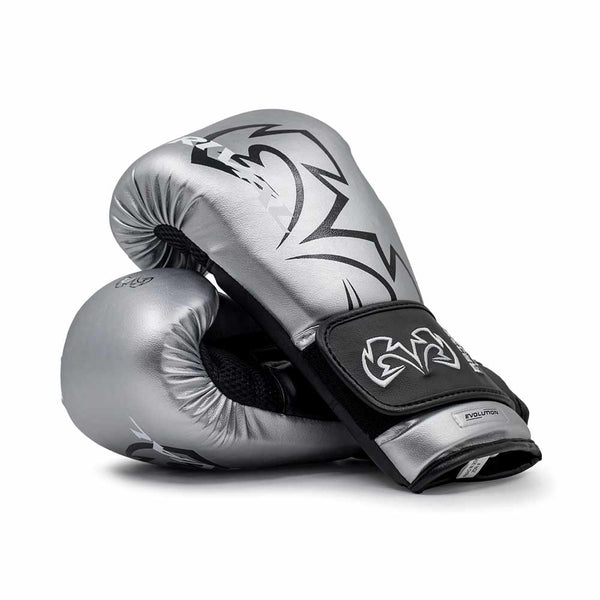
The RS100 Pro Sparring combines Rival's microfibre outer material with multilayer foam padding, Ergonomic True-Fist Construction and a mesh palm. The lace-up closure uses the Angled Lace Track System.
With the RS100, it is about how your fist sits and how you can adjust the cuff around your wrist. Compare it with another sparring glove, not just any bag glove that happens to have the same color or weight.
RS11V: sparren with V-Strap Wrist Lock 2
The RS11V Evolution uses microfiber, layered foam padding and the diagonal V-Strap Wrist Lock 2 system. The closure is a key difference from the lace-up RS100. If you want to put on your sparring gloves without help, that is a difference you will appreciate in every training session.
That does not make the RS11V suitable for every type of training. It is a sparring glove, not a recommendation for pads or the punching bag. Even if you use it in a kickboxing class, the model’s intended use remains the same.
RFX Guerrero Sparring SF-H: foam and horsehair
The RFX Guerrero SF-H has a leather exterior and padding made with shock-absorbing foam and a layer of padded horsehair. Its construction includes a low-density polyurethane foam laminate. The version discussed here has laces.
Within the Guerrero sparring line, the SF-H feels more flexible and more broken-in than the firmer HDE-F. If you want that more flexible feel, this is the sparring version to try alongside the HDE-F. How it feels depends on the entire padding construction: horsehair alone does not tell the whole story.
RFX Guerrero Sparring HDE-F: a firmer foam feel
The HDE-F also has a leather exterior, but combines layered foam with high-density EVA. That makes it a different padding choice from the SF-H. Its construction feels firmer and stiffer.
Compare the two versions side by side to feel the difference in firmness. Pay attention to the fist position, support and freedom of movement you find comfortable.
RS100 versus RS11V is mainly a comparison of construction and closure between sparring models. RS versus RFX Sparring adds differences in outer material and padding. With the SF-H and HDE-F, the choice comes down to the more flexible foam-and-horsehair padding versus the firmer foam construction with EVA. This makes the choices within this sparring line clearer.
Twins BGVL3: a leather Muay Thai training model
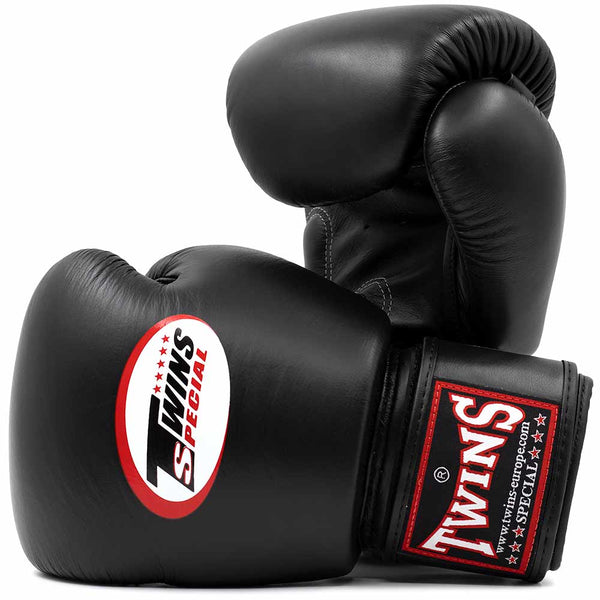
The Twins BGVL3 is a handmade Thai-style model made of cowhide with polyurethane foam, a wide hook-and-loop closure and perforations in the palm. The product photos clearly show the rounded fist profile and separate wrist section.
If you combine boxing and kickboxing, the BGVL3 is a pair worth trying alongside Cleto Reyes, Rival or Hayabusa. Its rounded shape and wide closure give you a different starting point. That way, you can find out which shape feels comfortable for both your punches and your guard.
When trying them on, check how much room your hand has, how easily you can make a fist and how much range of motion you have for your exercises. Also check whether the glove’s bulk feels comfortable when you guard. A rounded profile may feel familiar to one athlete and too bulky to another. You can’t tell that from the country of origin.
Twins versus Hayabusa T3: you’re comparing a wide hook-and-loop closure with a double closure and support structure. Twins versus Cleto Reyes: you’re comparing, among other things, polyurethane foam with latex foam. Twins versus XPRT: the fact that both use leather and hook-and-loop closures doesn’t mean they have the same internal shape or padding.
The BGVL3 is offered for training, including pad work and sparren. For partner contact, choose the right weight and follow your gym’s requirements. A model suited to several types of training still needs to be in good condition and appropriate for the exercise.
XPRT Pro V3 and Top Gloves: which pair is right for you?
XPRT Top Gloves and XPRT Pro V3 are both leather gloves with multilayer foam padding and wide hook-and-loop closures. They are offered for several combat sports. That makes them worth considering if you’re looking for an all-round training glove rather than focusing solely on a specialist boxing design.
Top Gloves: cowhide leather and an all-round design
Top Gloves uses cowhide leather, multilayer foam and extra padding at the wrist. The wide closure makes them easy to put on by yourself. The model is offered for bag work, pad work and light sparren.
For partner training, use the weight your gym specifies. Try on Top Gloves with your own handwraps: you should be able to close your fingers comfortably, and your hand shouldn’t slide inside the glove.
Pro V3: leather, multilayer padding and a wide wrist section
Pro V3 combines leather with multilayer foam padding, an anatomically shaped thumb and a long, extra-wide hook-and-loop closure. The palm has ventilation holes. The model was developed by XPRT Fight Gear, Fight2Win’s own brand.
On paper, Pro V3 and Top Gloves have a lot in common: leather, foam and hook-and-loop closures. When you try them on, you’ll notice the differences in shape, thickness and finish. If you’re deciding between them, try both rather than assuming the model with ‘Pro’ in its name will automatically fit your hands better.
XPRT Pro Legend and how it compares with other training models
The Pro family also includes Legend versions. The Pro Legend V3 Retro uses nappa leather. Do not assume that material specification applies to every other Pro or Legend version: the specific version you choose matters.
XPRT versus Twins compares different leather training constructions. XPRT versus Rival RS11V also compares all-round use with a specialist sparring model. Whether you want one pair for varied classes or a separate pair for sparren is more helpful here than the brand or price range alone.
Hayabusa: look at T3, LX, Kanpeki, T360 and E1 separately
With Hayabusa, the combination of wrist support and closure is particularly important, but there are also clear differences between the lines. It is therefore worth looking beyond the brand name.
T3: five-layer foam and Dual-X
The T3 combines a five-layer foam construction with a splinted support structure and the dual Dual-X closure. The line is offered for bag work, pad work and sparren.
The dual closure gives you different adjustment options from a single wide strap. When trying them on, check how both straps fit together. The construction may appeal to you if you are specifically looking for wrist support, but you should also assess whether the range of motion feels comfortable for your exercises.
T3 LX: the T3 approach with Italian full-grain leather
The T3 LX combines the T3 approach with Italian full-grain leather. Dual-X and the five-layer foam construction remain key features. This lets you combine the familiar T3 construction with the look and feel of a leather version.
The leather gives the LX its distinctive look and feel. Consider the fit and closure when choosing, and tailor its care to this specific leather finish.
T3 Kanpeki: its own combination of leather, foam and lining
The Kanpeki version discussed uses drum-dyed leather, Deltra-EG multilayer foam, 4x Fusion Splinting and Dual-X. The lining and ventilation are also part of this specific construction.
Compare Kanpeki on its own construction and finish. When choosing between LX and Kanpeki, compare their stated materials and support components side by side. This helps you judge which combination suits your preferred fit and feel.
T360: leather and triple-splint support
The T360 uses leather, a triple-splint support structure and Dual-X. The model is offered for bag work, pad work and sparren. Compared with the T3, its support structure is an important point to consider.
Whether that support feels comfortable depends above all on the fit around your wrist. Try them on with your handwraps and assess how the cuff fits and moves. Take your time: a description tells you what’s inside, but trying them on tells you how they feel.
E1: leather, dual-splint support and a single closure
The E1 uses leather, foam padding, dual-splint wrist support and a simple hook-and-loop closure. That makes its closure different in practice from the T3 and T360 with Dual-X.
If you’re choosing between Hayabusa models, start with what you prefer: a single closure, the double Dual-X system, a particular leather version or a specific support structure. Only then does it make sense to compare them with Twins, XPRT or a boxing-focused model.
For kickboxing and Muay Thai, the same applies to Hayabusa: support structures are worth considering, but freedom of movement remains part of the decision. A glove that fits snugly around the wrist is not automatically the best choice for every clinch or partner drill.
Di Nardo Worldwide: leather lace-up gloves with a character of their own
The Di Nardo Worldwide line emphasizes craftsmanship and leather. The versions discussed use assorted cowhide from leftover stock of Italian luxury brands. The look and finish of the leather give each pair a distinctive character.
In the product photos, you can see a long cuff with laces and a distinctly boxing-focused shape. That’s a different practical choice from an all-round glove with a quick-release hook-and-loop closure. Think ahead about whether you’ll have someone to help during training and how often you need to change gloves.
La Bestia, La Fiamma, Viola Furia, Impattatore, Supremo and Pelle di Leone are names in this Worldwide line. For the version you want to buy, consider the hand shape, padding and intended use alongside the finish and color. That way, you compare the actual pair on the qualities that matter for your training.
The leather finish may show minor surface variations. Keep that distinction clear: character in the outer material is not the same as damaged seams, a faulty closure or worn padding. For any glove, the functional components determine whether it is suitable for training.
Compare premium gloves for comfort and use
Di Nardo versus Winning is not simply ‘Italian versus Japanese’. You’re comparing, among other things, the feel of the hand compartment, the cuff and the construction. Di Nardo versus Rival again calls for the right model: a Worldwide lace-up glove is a different purchase from an RS11V with a V-Strap you can fasten yourself.
A handcrafted look can be an important personal preference. Balance it with a comfortable fist position, a good fit around the wrist and the intended use. For a purchase like this, you want the pair not only to look good but also to feel comfortable when you train.
The models side by side: how to make a more informed choice
Here are the key differences in one place. Use this overview to decide which models to try on, not as a ranking. You’ll still need to feel for yourself how they fit around your hand and wrist.
Oz, hand size and handwraps: three different questions
Oz indicates weight, not a universal hand size. Two gloves with the same stated weight can differ in interior space, shape and padding distribution. So you can’t use an oz figure alone to predict fit or cushioning.
For sparren, follow your gym’s rules. For bag work and pads, base your choice on the exercise, the model and your trainer’s advice. A lightweight model that works on training equipment isn’t necessarily suitable for partner contact.
Try them on with the handwraps you actually use. Thick handwraps or extra knuckle protection take up room and can change how a glove fits. Trying them on without handwraps, then finding at home that you can barely make a fist, won’t give you an accurate impression of the model.
Check four things: comfortable room for your fingers, a comfortable thumb position, no uncontrolled movement of your hand, and a closure that fits snugly without constricting. Check both gloves, not just the one on your dominant hand.
New gloves may feel different as you use them. That’s no reason to accept pain, poor thumb positioning or clearly insufficient room as normal. Look for a good basic fit, not a problem you hope to train away.
Which choice suits your training?
You’re starting boxing or kickboxing
Start with the classes you’re going to take and ask what weight and type of glove your gym requires. A suitable all-round model, for example from XPRT, Twins or a Hayabusa range offered for that purpose, can be a sensible starting point for comparison. Don’t let looks or a professional-sounding name outweigh suitability for the intended use.
You’re looking for a separate pair for sparring
Compare specific sparring models such as the RS11V, RS100, RFX Guerrero Sparring, Cleto Reyes Velcro Sparring and the corresponding Winning version. Then look at the padding feel, fist position and closure. Also consider whether you want to be able to put them on yourself or have someone to help you with the laces.
You mainly train on the bag and pads
For bag and pad training, choose a model designed for that purpose. For example, compare an all-round Hayabusa or XPRT model sold for bag and pad work. Save the choice of a dedicated sparring model such as the RS11V or RS100 for the training purpose it is designed for.
You combine kickboxing with clinch-focused drills
Pay particular attention to the hand opening and how freely your wrist can move. For example, try a Twins or XPRT model alongside a glove with pronounced splint support. The aim is not to rule out one construction in advance, but to feel which combination of room and support works for your class.
You want to invest in a premium pair
Compare Winning, Cleto Reyes, Rival RFX, the leather Hayabusa models and Di Nardo on the features that matter to you in practice. A different padding construction, your preferred closure or a comfortable amount of room for your hand may justify the purchase. Brand recognition, origin or leather finish alone will not tell you which pair is best for you.
Care: wipe down, air out and use suitable products
Getting the most out of your purchase also depends on how you use and care for the gloves. Wipe them down after training and let them air-dry in a cool, well-ventilated place. Choose a cleaning or care product suited to the specific outer material and the brand’s instructions. Rival recommends a dry cloth and mild cleaning products suitable for sports equipment; that is a different approach from leather gloves for which the manufacturer specifies a particular leather conditioner.
Check the closure, seams and padding regularly. When assessing sparring gloves, also consider whether they are suitable for your partner. Gloves can look good on the outside even when the padding is no longer in good condition.
Conclusion: choose based on your training and the glove’s construction
If you want to compare models side by side, you can try them on in our showroom in Waddinxveen. Bring your own handwraps and tell us what classes you take and how you train. That way, the conversation is not just about the brand you like, but about the glove you actually need.
So, are boxing gloves and kickboxing gloves the same? Not quite. They share many basic features and overlap in use, but there are clear differences in construction and intended purpose. Choose based on your training goal first, then fit, padding and closure, and only then brand and design. That will help you make a better choice than relying on a label, a country of origin or a blanket opinion about which brand is best.