A boxing match sometimes begins months before the first bell. Not with a qualifying tournament, but with a video, a challenge and two online audiences, each following its own favorite. Then comes something that is easy to underestimate on a screen: the participants have to learn to move, defend, throw punches and deal with an opponent who fights back. The attention is built online; the work in the ring is physical and technical.
That is the appeal of influencer boxing. Entertainment and boxing are not neat opposites that take turns at the arena entrance. They overlap. To understand what you are watching, it helps to look at specific fights: from KSI and Logan Paul to Jake Paul against Tommy Fury, Mike Tyson and Anthony Joshua. Spain’s La Velada and the American Creator Clash also show that there is more than one format.
An online audience changes the buildup to a boxing match
Traditionally, a boxer builds a name through fights. An amateur career, a professional debut, a range of opponents and bigger stages form a familiar path. A well-known creator may already have some of that public attention before stepping into the ring for the first time. Fans know the participant’s humor, conflicts, collaborations and personal stories. They follow not just the result, but the journey to the fight.
That changes how the fight is presented. Training footage becomes episodes in an ongoing story. A press conference produces clips that travel far beyond the original broadcast. An opponent is discussed not only in terms of their suitability as a competitor, but also in terms of the interest a matchup will generate. The fight becomes the centerpiece of a much longer media production.
That does not change the fundamentals of boxing. Keeping your distance, maintaining your balance and recognizing an attack are still skills you have to practice. What changes is the order in which an audience and experience are built. That is why it helps to look at fame, the status of a fight and athletic ability separately.
2018: KSI, Joe Weller and the move toward Logan Paul
An important chapter in modern YouTube boxing history began on February 3, 2018. KSI faced Joe Weller at the Copper Box Arena in London and won by stoppage in the third round. Two creators who had built their audiences mainly online turned their matchup into an event that drew attention beyond the usual boxing channels.
Attention then shifted to Logan Paul. On August 25, 2018, KSI and the American YouTuber faced each other in Manchester. The fight ended in a majority draw: one judge gave KSI a narrow lead, while the other two scored it a draw. That gave the rivalry room to grow. There was still plenty to debate, both groups of fans could offer their own interpretation, and a rematch seemed likely.
These bouts matter as recognizable milestones, not as proof that celebrities had never boxed before. The combination of large creator audiences, an ongoing online rivalry and a real boxing event took a particularly visible form here. It was a model in which the next bout could already be built up during the first encounter.
2019: the professional rematch between KSI and Logan Paul
The rematch on November 9, 2019, in Los Angeles had a different status. This time, KSI and Logan Paul met as professionals. KSI won by split decision. Two judges scored it for him, 57–54 and 56–55; the third scored the bout in Paul’s favor.
That result also shows why a boxing match is more than a collection of clips. Judges score rounds. A knockdown, a foul and a point deduction can affect the final score. The impression a single combination makes on social media does not necessarily reflect how an entire fight was scored. In this rematch, a point deduction for Paul played an important role in the discussion afterward.
The professional status gave the evening a clear sporting significance. At the same time, interest remained closely tied to their personalities and online followings. That dual nature is not unusual in boxing: established professionals also have a story and an audience. For these creators, however, their media identities had developed long before their competitive experience.
2021: Logan Paul against Floyd Mayweather in an exhibition
A different kind of encounter followed in June 2021. Logan Paul boxed eight rounds against Floyd Mayweather in Miami. The appeal was immediately clear: a far bigger online celebrity facing a former world champion in multiple weight classes, with an exceptional professional career behind him.
It was an exhibition with no ringside judges. There was no official winner, and the bout did not count toward their professional records. Reuters described how Paul went the full distance. That is a different factual statement from saying he beat Mayweather, earned an official draw or proved he was on the same level.
For viewers, this is a useful example of why the format of a bout matters. Eight rounds in a ring may look like a regular bout at first glance, while the arrangements for scoring and record-keeping are different. The right question is not just who is the bigger name, but also what kind of event is taking place and what outcomes are possible.
Jake Paul makes his choice of opponents part of his story
Jake Paul built a boxing career of his own, separate from his brother Logan's fame. Their careers are often conflated in public discussion, but they have followed different paths and fought different opponents. Logan's exhibition against Mayweather, for example, says nothing about the result of Jake's fight against Tommy Fury.
With Jake Paul, his choice of opponents became a recurring topic of discussion. A well-known name from another combat sport brings experience, star power and an audience of their own. When assessing a boxing match, what still matters is how much experience someone has under boxing rules, what stage of their career they are in and what terms were agreed for the fight.
That is what makes boxing interesting as a discipline in its own right. Distance, defense and combinations take on a different meaning when kicks, takedowns and groundwork are not part of the fight. That does not erase an impressive career in another sport. You are simply assessing a particular performance under a particular set of rules. The same applies to the influence of age, weight and recent fight experience: those factors belong to the specific matchup, not to a general judgment about all influencers or all combat sports athletes.
2023: Tommy Fury and the value of a full fight
On February 26, 2023, Jake Paul lost to Tommy Fury by split decision in Saudi Arabia. Two judges scored it 76–73 for Fury; the third favored Paul 75–74. The fight lasted eight rounds and marked Paul's first defeat in his professional boxing career.
The World Boxing Council described how Fury kept his distance and used his jab. Paul was clearly looking for powerful punches and even scored a knockdown in the eighth round. So the fight cannot be reduced, in hindsight, to a simple lesson about a single punch. The result came from the bout as a whole, in which point deductions on both sides also played a part.
Fury was also well known outside the ring, partly through reality TV. So the contrast between an unknown boxer focused purely on sport and an online celebrity does not neatly fit this fight. More interesting is what happened in the ring: how the jab was used, who took the initiative and how the two men responded to each other's movements. It is precisely this combination of sporting substance and public interest that defines the crossover genre.
2024: Mike Tyson, modified rules and a major platform
Jake Paul against Mike Tyson on 15 November 2024 was a different kind of event. The matchup in Arlington, Texas, was broadcast worldwide on Netflix. Tyson brought the history and name recognition of a former heavyweight champion; Paul represented a much younger generation of media fame and had several professional boxing matches behind him by then.
The bout was organized as a professional fight, with specific conditions: eight two-minute rounds and 14 oz gloves. ESPN described those terms in the buildup. Paul won by unanimous decision after the full distance. That combination of professional status and unusual round conditions shows why a label alone does not tell the whole story. Even at an event with an official result, the specific terms need to be considered.
Tyson's historical significance makes the matchup special, but it does not erase his age or the years separating him from his championship prime. A performance against the Tyson of 2024 is a performance in 2024. Comparing it with Tyson in his prime is a different discussion, and this result is not a direct test of that.
The same card also featured the rematch between Katie Taylor and Amanda Serrano for the undisputed super lightweight world title. Alongside the headline attraction, the event thus offered an established championship fight. It shows how a broad entertainment platform and world-title boxing can come together on one card.
2025: Anthony Joshua makes the comparison more concrete
On 19 December 2025, Jake Paul faced Anthony Joshua in Miami. The former two-time heavyweight world champion won by knockout in the sixth round. Netflix described the matchup as a professional heavyweight bout and published a report on the result.
That fight gives the debate about influencers and established elite boxers a concrete, dated example. There is no need to invent a hypothetical matchup to say something about the difference in experience. Joshua had his own athletic background, physical attributes and fight experience; Paul had his development in boxing. The actual matchup and its outcome offer a firmer basis than a general prediction about who would always beat whom.
Here too, it is important to keep the conclusion tied to the fight. One bout tells us something about these two men on this particular night. Taken together with earlier matchups, it shows why the opponent's caliber and background deserve a central place in the story. Public interest can make a fight possible. What happens in the ring afterward is determined by other skills.
Professional status and world-class ability are different questions
A fight's professional status tells you something about how it is organized and registered. Athletic level is about the participants' performances, skills and opposition. This distinction exists throughout professional boxing. A debutant and a world champion can both be professionals, even though their experience and abilities differ greatly.
In influencer boxing, this normal variation is especially visible because participants can be so well known to the public. A participant may have felt familiar to viewers for years while having limited experience in the ring. Conversely, a well-known creator can demonstrably develop better skills over several years of training and competition.
A useful assessment therefore looks at stance, footwork, defense, timing and decision-making under pressure. You also consider the opponents and the circumstances of the fight. Popularity and athletic development can coexist. They are simply not interchangeable measures.
La Velada del Año: boxing, creators and music
The English-speaking scene does not tell the whole story. In the Spanish-speaking world, Ibai Llanos has built his own event format with La Velada del Año. Boxing matches between online creators are combined with live music and a large-scale streaming production. As a result, the audience follows an entire evening featuring different participants and performers.
The fifth edition took place on July 26, 2025, at Estadio La Cartuja in Seville. The program featured seven fights, including two women's bouts. Among the announced matchups was Alana against Ari Geli. The stadium's official page describes how boxing, creators and music came together in this edition.
Alternating fights and performances gives the evening its own rhythm. Different creators bring their followers, while the musical interludes also appeal to visitors who came primarily for the performers. Boxing thus becomes part of a broader live program.
La Velada shows that influencer boxing can take different cultural forms. A rivalry between two English-speaking YouTubers is not the only model. A creator community can also support a larger program in which performers, participants and different audience groups all have their place.
Creator Clash: a different approach
Creator Clash provides another example. The first edition was held in Tampa in May 2022, featuring online creators and a charity focus. The published event report describes the main event between iDubbbz and Dr. Mike, which Dr. Mike won on points.
Other creators were also on the card, including Haley Sharpe and Justa Minx. The program was therefore not just one established boxing name facing one online star. Participants from different creator communities prepared for their fights and met in the setting of the same event.
The example is interesting because its motivation and presentation differ from an evening focused heavily on rivalry. Community, the training process and a shared event can also be part of the story. In the first edition, this took shape in a program that brought online creators together around boxing and charity.
Attention can open doors, but development takes time
A widely watched event can spark someone’s interest in boxing. A viewer might discover a championship fight on the same card, start following training videos or try a class themselves. These are all plausible possibilities. Determining whether a particular event actually leads to more gym members requires separate data. Viewing figures, follower counts and attendance figures do not automatically translate into numbers of new participants.
For boxers and promoters, such an evening can offer another platform. An undercard can bring different careers together, as with the world title bout between Taylor and Serrano on the night of Paul–Tyson. In this way, attention on the main event can coincide with the sporting significance of another bout.
It’s still useful to follow a participant’s development over several fights. Who is improving technically? Who is choosing different opponents? How do their pace, defense or response to pressure change? These are interesting questions for a sports fan, even if their initial interest came from a funny video or a striking personality.
How to watch a bout with more insight
You don’t have to be a coach or judge to get more out of a boxing match. A few things to watch for make it easier to separate the online presentation from the fight itself:
- Look at both participants’ backgrounds. Consider their boxing experience, previous opponents and where they are in their sporting careers.
- Read the bout rules. Check its status, the number of rounds, the length of each round and how a winner, if any, will be determined.
- Watch the entire round. Alongside eye-catching punches, pay attention to distance, footwork, defense and how each boxer responds to attacks.
- Put the result in the context of the matchup. Use a specific fight to understand the performance, rather than immediately turning it into a general rule for all influencers or professional boxers.
With that perspective, even a well-known fight takes on more depth. The eighth round of Paul–Fury, for example, becomes more interesting when you consider the earlier rounds and the judges’ scoring. And the exhibition between Mayweather and Logan Paul makes more sense when you know beforehand that there would be no official judges’ decision.
Boxing yourself: from watching to practicing
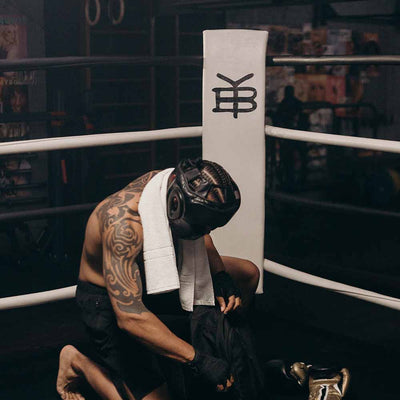
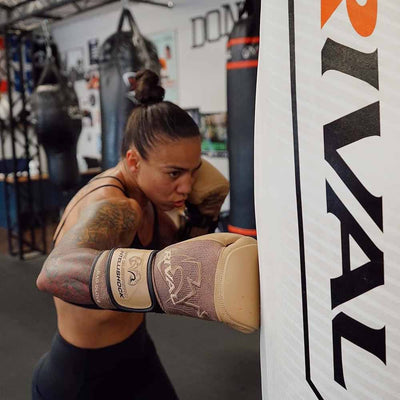
If an event inspires you to train, you can learn about the skills behind the spectacle at a boxing gym. Stance, movement, defense and punching are built up step by step. A trainer can explain drills and guide you as you work with partners. That gives concrete meaning to what looks quick and effortless on screen.
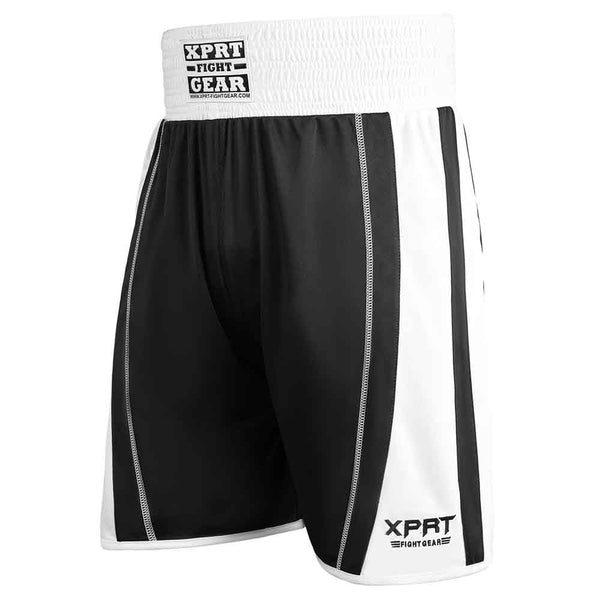
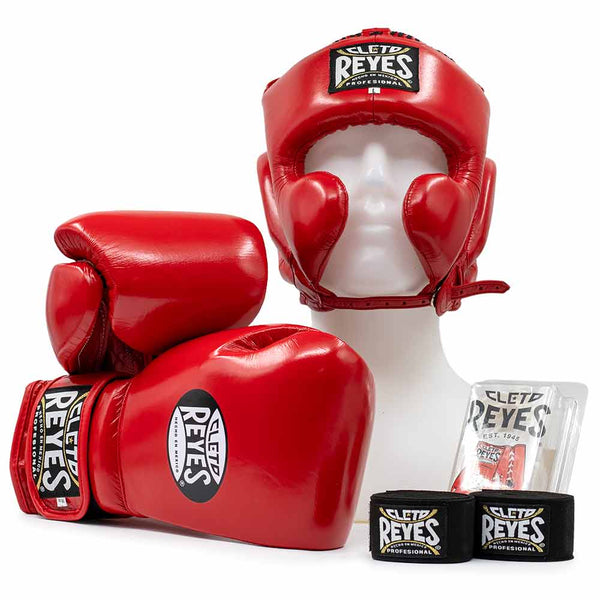
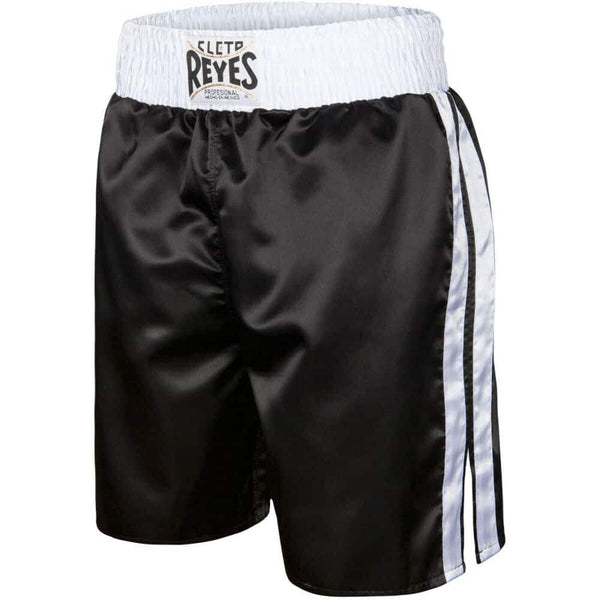
Well-fitting boxing gloves and handwraps form a practical foundation for training. The fit around the hand and wrist, the fastening, and their use for bag-, pad- or partner drills are useful points to compare. Contact training calls for a mouthguard. A boxing trunk or singlet gives you room to move; boxing shoes are a useful extra for focused footwork.
The glove weights from a well-known fight are not an automatic guide for training. The 14 oz gloves in Paul–Tyson were part of the terms of that specific fight. For your own training, consider the equipment and how you intend to use it. In our showroom, you can compare different models up close and buy them, with guidance on fit and use.
Showbiz and sport, but judge what really happens
Influencer boxing becomes easier to understand when you don’t treat it as a single fixed category. KSI–Logan Paul in 2019, Mayweather–Logan Paul in 2021, Paul–Fury in 2023, Paul–Tyson in 2024 and Paul–Joshua in 2025 involved different participants, conditions and sporting backgrounds. La Velada and Creator Clash add other types of events to the mix.
A well-known name can attract attention. Training and competing can develop skills. Professional status and a large following each tell you something, but neither replaces an assessment of the boxing itself. The actual rounds, opponents and results are what make the story interesting.
That is also where the lasting value lies for viewers. Enjoy the atmosphere, get to know the participants and then look beyond the shortest clip. You’ll see how entertainment and sport come together, and where technique, experience and preparation make the difference.