A short preparation, one kick, and a board that splits in two. For many people, breaking tests are part of the image of taekwon-do and karate. You see them at demonstrations and grading exams, but also as a separate competition event. The result is immediately clear: the board breaks or stays intact.
There is more behind that brief moment than muscle strength. You need to stand correctly, judge the distance, and hit the target with the right technique. The board and the way it is held also make a difference. That interplay makes a breaking test interesting: a movement you have practised many times has to come together at one precise moment.
What does a breaking test show?
A breaking test shows how you perform a punch, strike, or kick against a fixed target. It is not only about how hard you hit, but also where you hit, the direction in which you move, and how you maintain your balance. These elements belong together. Arriving beside the point of impact with a lot of force is different from performing a focused technique.
The board provides a clear response. With a kicking shield, you can feel and hear whether you have made good contact; with a breaking board, the material or connection also comes apart. This makes the exercise appealing to watch and gives the athlete a tangible result.
However, a broken board does not tell you everything about your martial arts ability. It does not move, attack, or unexpectedly change distance. Breaking demonstrates a specific technique. It does not replace sparring, combination training, or practising on a moving target.
Why do athletes break boards during training, exams, and demonstrations?
During training, the focus is on performing a familiar technique against a target other than a pad. You prepare the movement, choose your distance, and try to hit the board accurately. The contact feels different from pad training and requires attention to the entire execution.
In an exam, the breaking test is part of the programme of the school or organisation. You receive a specific assignment: perform a technique on the relevant material. Exactly what is required varies by exam programme. Not every taekwon-do practitioner has to break the same number of boards at the same point.
At a demonstration, the audience also plays a role. A board breaking is a result that everyone understands. A combination of hand techniques, kicks, and jumps can show the versatility of a martial art. The spectacular appearance is then part of the presentation, but in itself says nothing about how demanding each attempt is.
Power breaking: one technique on a fixed setup
Within ITF-taekwon-do, power breaking is a separate competition event. The assignment is to break as many boards as possible with one technique. Prescribed hand techniques and kicks are used for this, with a specially designed setup.
That is different from simply laying out a stack of random boards. For a championship, the number of plastic boards and the settings of the setup are specified. This allows participants to perform their techniques under the same conditions.
The preparation and the posture after the attempt are also part of the execution. It is not only about the sound of breaking material, but about a complete technique that begins and ends with control. The board is the target; the movement remains the work of the athlete.
Special techniques: hitting the board at height or distance
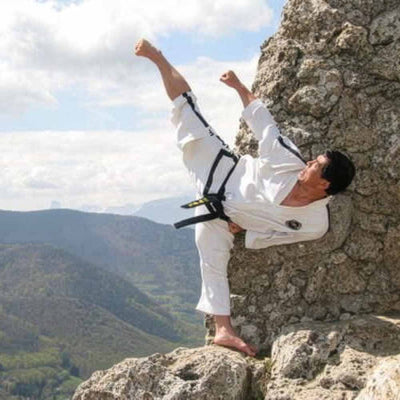
With special techniques, which are also an ITF competition event, the breaking test presents a different challenge. Using a jumping technique, the athlete must hit a board at height or distance. In addition to making contact with the board, maintaining the correct balance also counts.
You can immediately recognise the difference. In power breaking, the focus is on the resistance of the boards. With a special technique, you must also get the jump and reaching the target right. A high kick is not automatically a good attempt when the correct technique or balance is missing.
Here, the board is placed on a stand designed for this purpose. The required height, distance, and execution depend on the competition conditions. These clarify what the athlete must demonstrate, so that a spectacular jump can also be assessed as a sporting performance.
The board holder is part of the breaking test
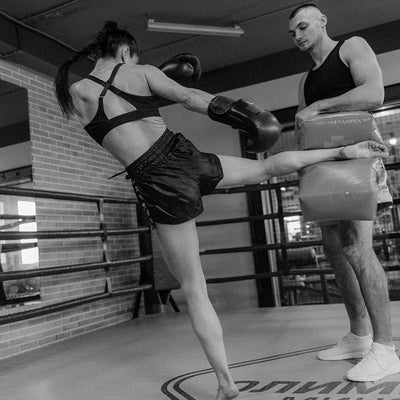
In a demonstration photo, your eyes often go to the person kicking. Yet the board holder also has an important task. The target must remain in the right position so that the technique can make contact as intended. A board that tilts or shifts with the movement changes the test.
The same applies to a fixed stand. The height and angle determine where the target is located. A board at hip height requires something different from the same board placed higher or farther away. This changes not only the setup, but also the movement needed to hit it.
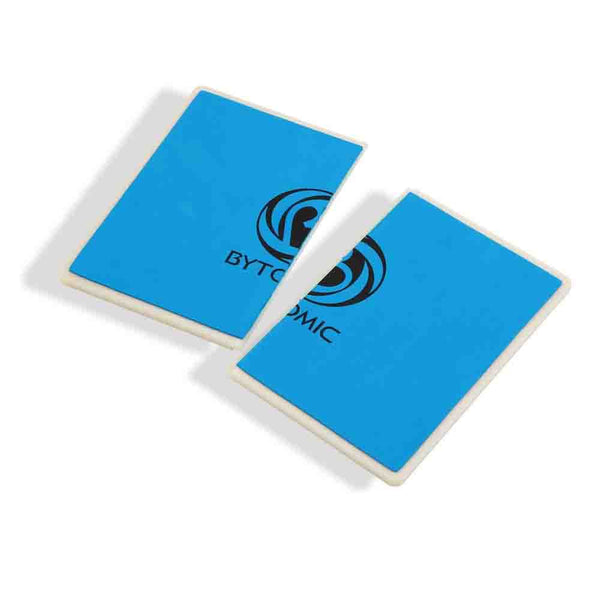
With a rebreakable board, you can clearly see the connection between the two halves. This provides a recognisable target area. It remains important how the board is positioned and from which direction it is hit. Simply picking up a board of a particular colour does not make the entire exercise the same.
Wood breaks; a rebreakable board opens
With a wooden board, the wood itself breaks. After the attempt, pieces remain that cannot be reassembled into the same board. The type of wood, dimensions, and properties of the board affect how it responds.
A rebreakable plastic board works differently. The two parts are connected by a joint that comes apart during the breaking test. You can then slide them back together. This allows you to repeat an exercise without using a new wooden board for every attempt.
This is especially useful during training. You put the board back together and can continue with the same type of assignment. The connection must continue to close properly, though. Wear or damage can change how the board responds; reusable does not mean it lasts indefinitely.
Some boards are compared with a particular wood thickness. Treat this as a guide when choosing a version, not as an exact equivalent to every wooden board. Wood and plastic have a different structure, and the setup continues to help determine how demanding the test is.
From yellow to black: distinguishing the Bytomic boards
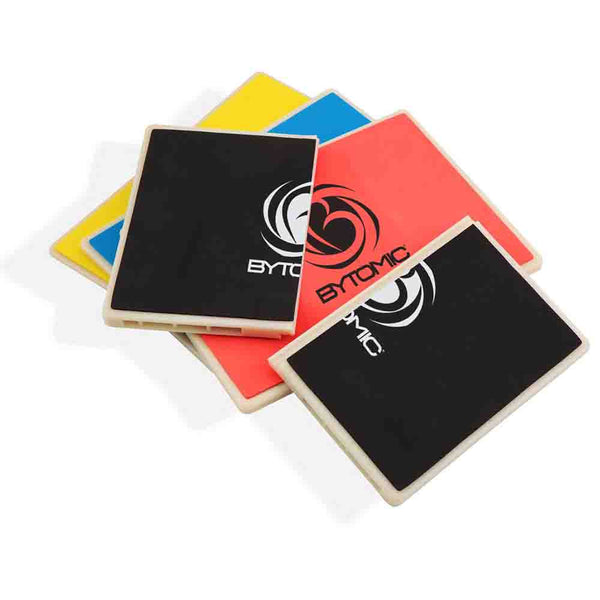
The regular Bytomic range runs from yellow through blue and red to black. Yellow is the light entry-level board for children. Blue requires more resistance to be overcome, red goes a step further, and black is the heaviest version in this colour range. This allows you to offer different challenges without constantly using a different type of board.
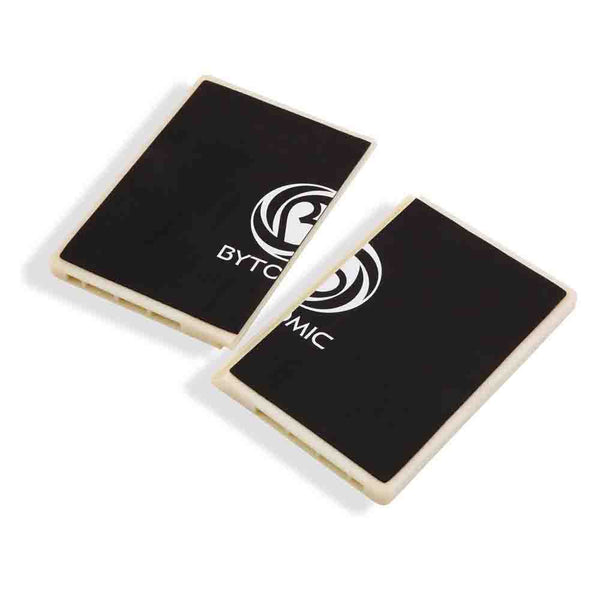
In the photos, you can see the coloured top layer and the two parts left after breaking. The colour makes it easy to distinguish the boards during training. When using multiple versions, you do not have to compare the entire board every time to find the right one.
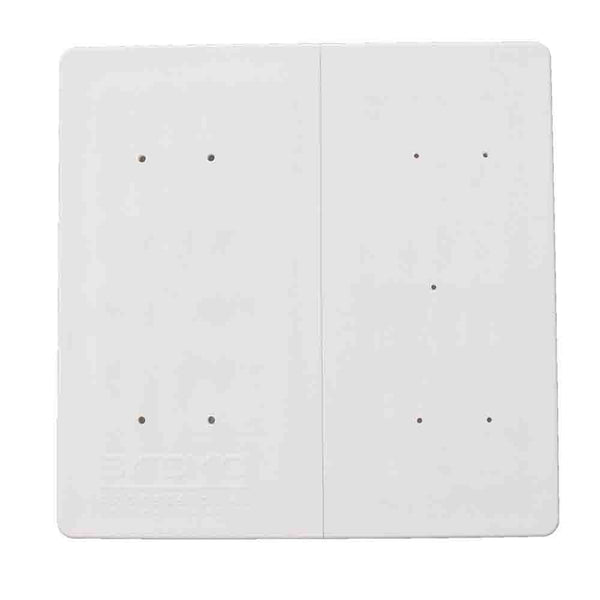
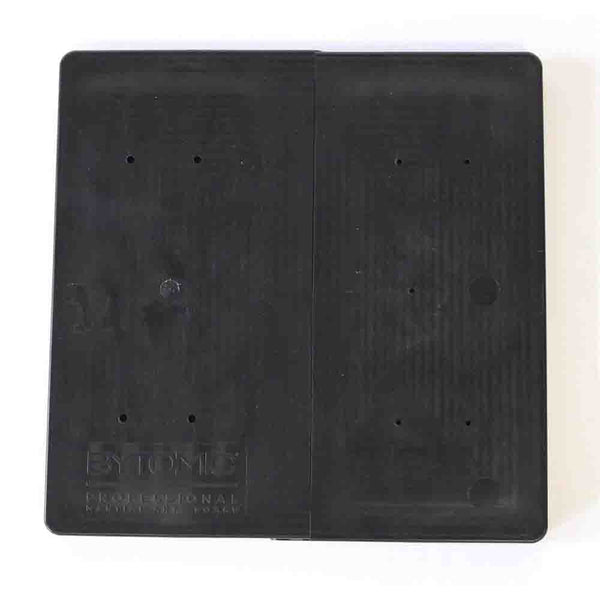
There are also the Bytomic V2 and Heavy models for more demanding breaking tests. Pay attention to the full name. A black V2 is not the same board as the black version from the regular range. For example, the white and black V2 have a different finish from the coloured boards with a top layer.
The colour of a board also has no inherent connection with your belt colour. A black board is not automatically the exam board for every black belt. Your exam assignment determines which material is used; the colour system helps you identify the training boards.
What pad training adds
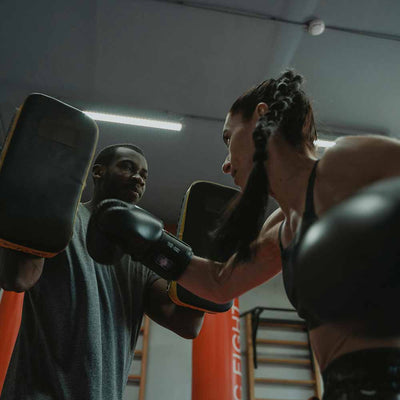
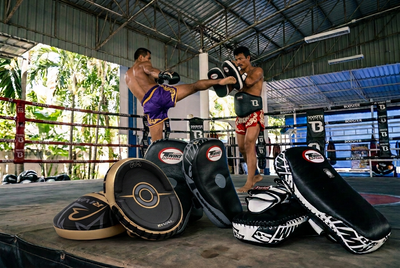
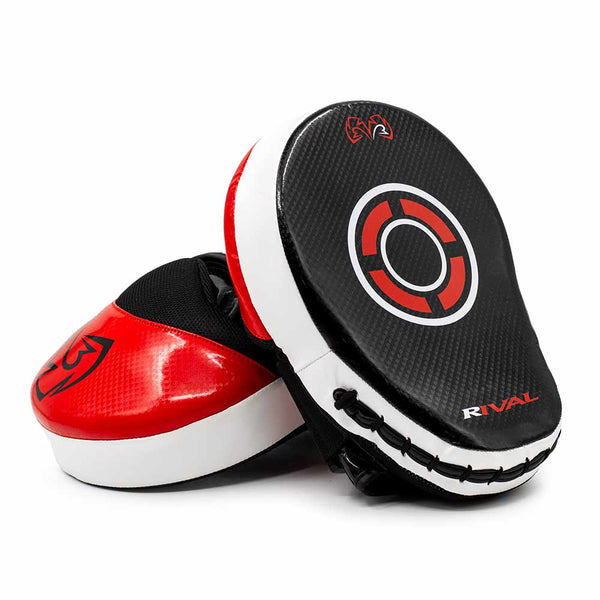
With a kicking shield or punching shields, you can often repeat a technique and practise different movements one after another. A partner can move the target, requiring you to adjust your distance and timing. This makes pad training different from a breaking test against a fixed target.
In a breaking test, one attempt is central. You prepare and perform the agreed movement. As a result, the moment of contact receives a great deal of attention, while pad training offers more room for repetition, combinations, and reacting to a changing target.
These forms of training complement each other. Breaking a board does not make pad training unnecessary, and a good kick on a pad does not guarantee that every board will break. They are different ways of working on a technique.
It is about control and execution, not about making your hands or feet insensitive. Tolerating pain is not a technical goal. You can improve the way you move without turning every training session into a test of your pain threshold.
The board stays intact. What now?
A board that does not break invites a quick conclusion: the next attempt should be harder. But more force is not always what is missing. Perhaps the technique landed beside the connection, the target was positioned differently than expected, or the resistance did not suit the exercise.
So first review the attempt. Where did the contact land? Did the board remain stable? Was the distance right? That gives you more guidance than repeatedly performing the same movement harder without making any adjustments.
A breaking test can also cause injuries. Working on a board rather than an opponent does not make the contact harmless. If you feel pain, stop the attempt, and damaged boards should not be put back into the setup.
Progress does not always have to mean using a heavier board. Performing the same technique more accurately and finishing with better balance may be a more useful step. The aim remains for the movement to be correct, not to force ever more material apart at all costs.
More than a spectacular moment
Breaking tests attract attention because the result is so clear. In a few seconds, you see a preparation, a technique, and a board breaking. This makes them suitable for demonstrating an aspect of taekwon-do or another martial art.
For the athlete, the challenge lies in everything leading up to that moment: standing correctly, judging the target, moving accurately, and completing the technique. The board provides a tangible response, but remains one part of much broader training.
Whether it is an exercise, an exam, or a competition, the value of a breaking test lies in a clear assignment that is executed well. Not only in what breaks, but also in how you do it.