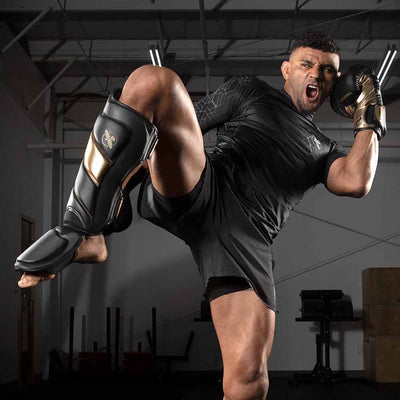
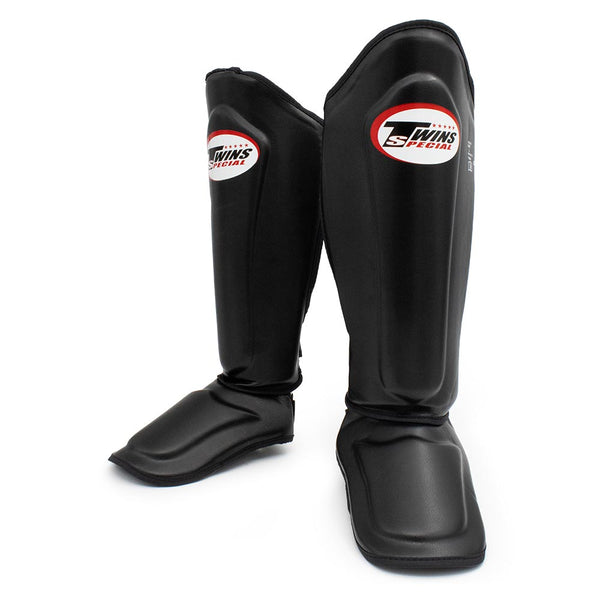
Caring for shin guards starts as soon as training ends: wipe away sweat, clean the inside and outside, and let both guards dry completely. Clean the foot section and straps too. A quick wipe across the front isn’t a complete clean.
Do not use Sukkiri, FreshKO or similar sprays on the outer material, even on synthetic materials such as PU or skintex. Wipe the outside with a soft, slightly damp cloth. Only apply a thin layer of leather cream to a suitable smooth leather exterior if needed. Do not apply it to the lining, hook-and-loop fasteners or elastic straps.
Clean them after every training session
A shin guard takes a beating in more places than just the front. The lining rests against your leg, the foot section touches the top of your foot, and the straps wrap around your calf, ankle and foot. Give all these parts a quick wipe after training, rather than waiting until your bag starts to smell.
Blot away excess sweat and clean the surfaces you can reach. This doesn’t need to be a major cleaning job. What matters most is doing it consistently after every training session and not leaving your guards damp among used clothing afterward.
If you need your gym bag for the trip home, take the shin guards out as soon as you get home. Transporting them and drying them are two different things. Let each guard air out separately, and keep wet handwraps, towels and clothing apart.
Don’t forget the foot section and straps
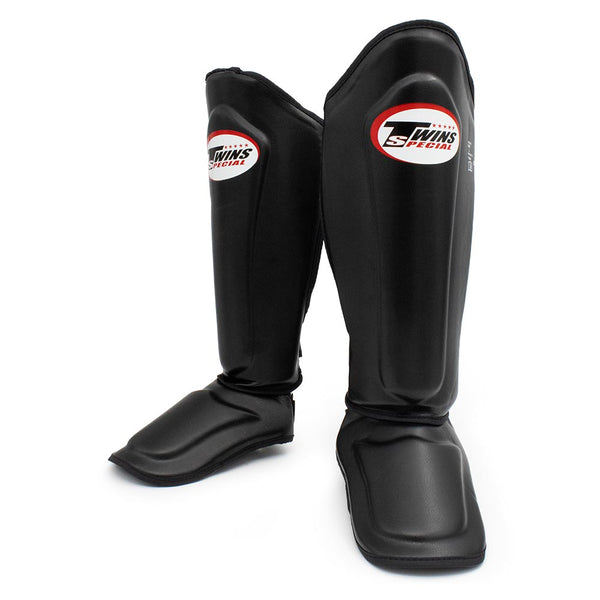
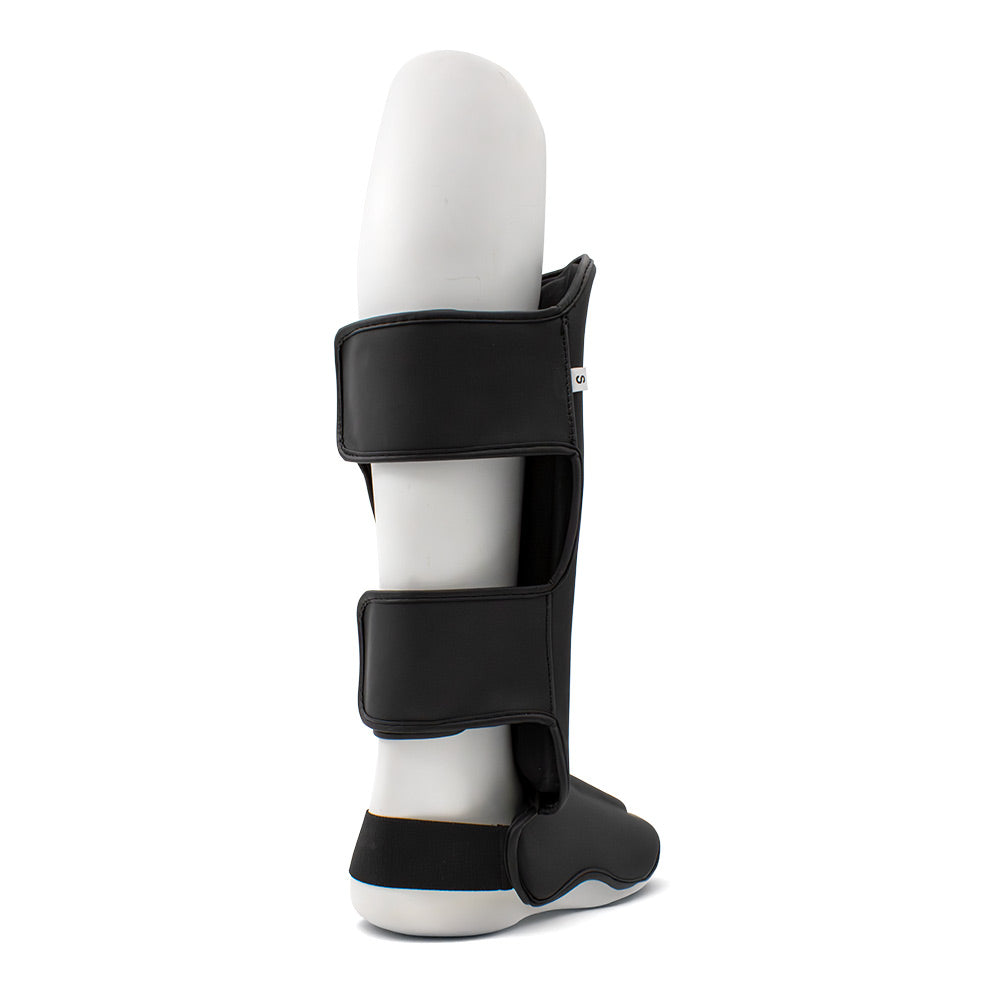
The large shin plate is the most noticeable part, but the surfaces behind it and inside the foot section that touch your body are easy to miss. Open the fastening straps so you can reach the lining with the cloth. Also wipe carefully along the edge between the shin section and the foot section.
Wipe down the elastic under the foot and any ankle strap without pulling on them. Check where the straps are stitched to the guard. You don’t need to bend the material out of shape to clean it: keep its molded contours intact and wipe only the surfaces you can reach.
Use a clean cloth for the lining. Don’t use the same dirty corner to wipe the outside of your bag and then the lining that rests against your leg. A separate, dry cloth is useful for blotting up moisture after cleaning.
Clean in six steps
Get a soft, clean cloth and a dry cloth ready. Lightly dampen the first cloth with lukewarm water and wring it out well. For your usual post-training routine, the aim is to wipe the guards clean, not to use lots of water or a whole range of products.
- Open the fastening belts. Lay the two guards apart. Expose the lining without pulling the shin plate, foot section or belts open by force.
- Pat away the sweat. Wipe the inner lining and the inside of the foot section with the dry cloth. Press gently without squeezing the padding.
- Clean the outside. Wipe the shin plate and foot section with the soft, slightly damp cloth. Do not use Sukkiri, FreshKO or harsh household cleaners on the outer material.
- Wipe the inner lining separately. Use a clean part of the cloth to wipe the area against your leg, the foot section and any edges you can reach. Do not soak the lining or push water into the seams.
- Check the belts and hook-and-loop fasteners. Carefully remove hair and lint. Wipe the belts with a slightly damp cloth and check that the elastic and attachment seams are intact.
- Pat dry and let dry completely. Remove any remaining moisture with the dry cloth. Let both guards dry in their natural shape in a well-ventilated place, away from direct sunlight and heaters.
If some dirt remains on a smooth outer surface, use a clean, freshly wrung-out cloth and gently wipe the spot again. Do not scrub. Do not use bleach, undiluted rubbing alcohol or solvents as a quick fix.
Inside and outside: keep the products separate
Clean the outside with a soft, slightly damp cloth. Sukkiri and FreshKO should not be used on the outer material. So do not spray the entire shin guard, even if it is made of synthetic leather or skintex.
Start by wiping the inner lining clean and letting it dry. If you also want to use a suitable care spray on the inside, apply it lightly and only where needed. Do not spray it on your skin, the outer surface, the hook-and-loop fasteners or the elastic belts. Do not soak the lining with the product, and let it dry completely before training again.
A spray is an extra step, not a substitute for wiping and drying. Adding more product while the lining stays damp in a bag is not a good maintenance routine. Clean the guards first and let them air out.
Leather, PU and skintex do not need the same care
Check the material description for your model, not just the brand name or how the surface looks. Do not condition a synthetic outer layer made of PU, skintex or synthetic microfiber. Wiping it clean and letting it dry is the basic routine.
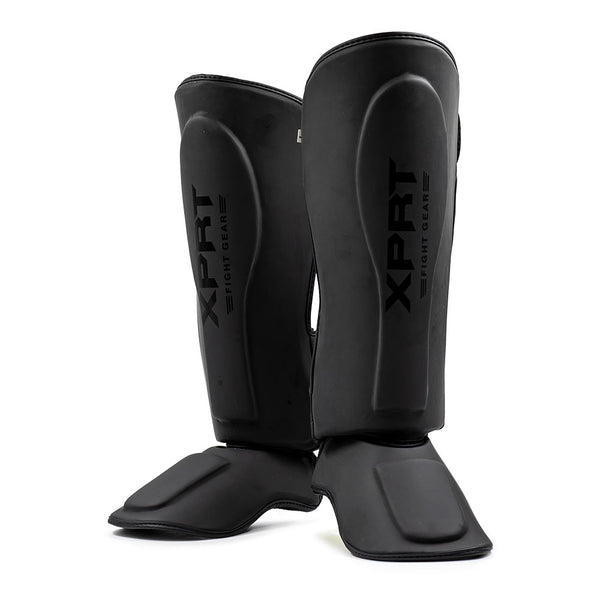
The XPRT Pro V3 Midnight, for example, is made of skintex. Do not apply leather cream to it. Carefully clean the pre-shaped shin section, foot piece, and belts without soaking them. You don't need to treat a synthetic shin plate as if it were smooth leather.
If your model does have a suitable smooth leather exterior, you can apply a thin layer of care product to that part separately. This does not apply to the inner lining or the belts: keep them free of cream. A leather exterior does not mean you should grease the entire shin guard.
Keeping Velcro and foot belts in good condition
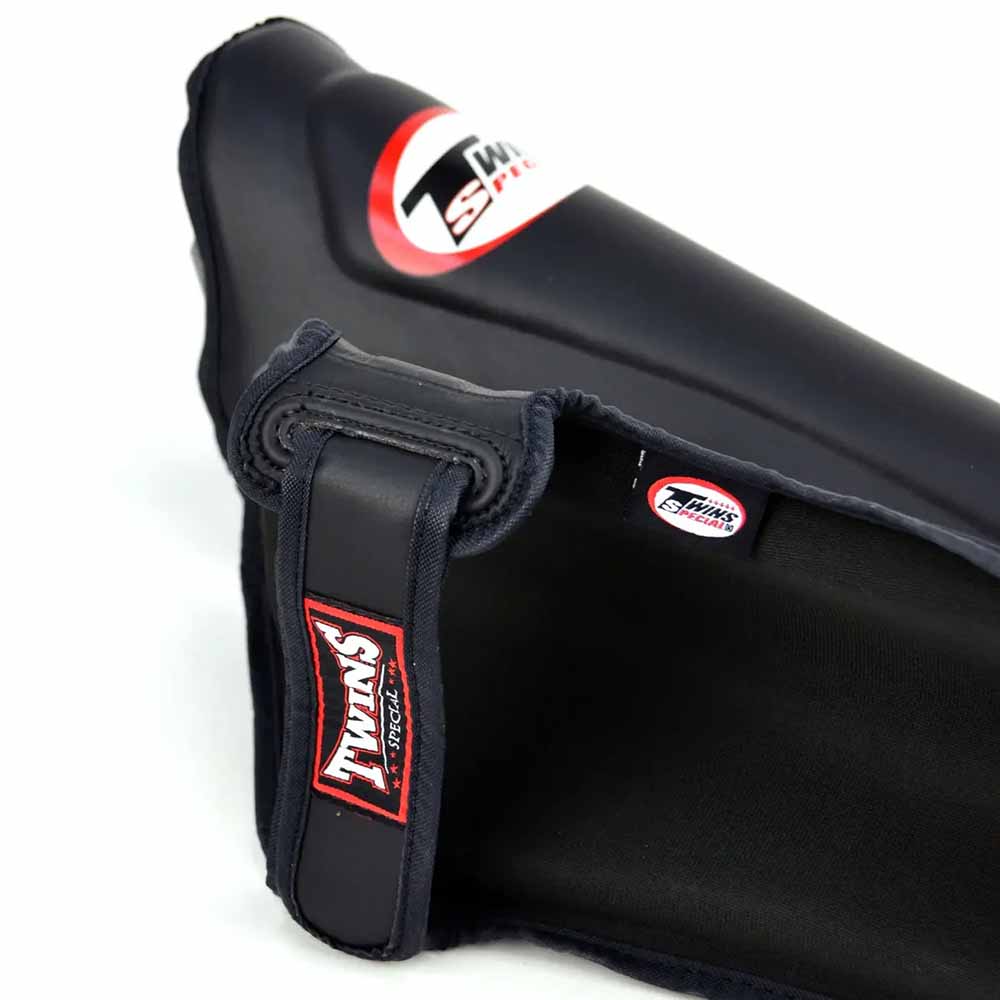
Hooks full of hair and lint won't grip like clean Velcro. Gently remove loose debris with your fingers or a soft brush. Keep the belt flat and don't pull hard on threads or the edge of the stitching.
Also check the less visible parts: the belt under the foot, any belt behind the ankle, and the seams where everything is attached. Wipe them with a slightly damp cloth and let them dry without stretching them. Do not put leather cream on elastic or fastening belts.
Removing dirt and repairing wear are not the same thing. If the Velcro no longer sticks, a belt has become permanently stretched, or a fastening is coming loose, pulling it tighter won't make it secure. Do not use a shin guard with such a defect for sparren.
If the shin guards keep twisting or slipping down even though the fastenings are in good condition, check the size and fit. Tightening every belt more is not automatically the answer. A properly fitting shin guard should stay in place without loose or damaged fastenings.
Applying a thin layer of care product to a smooth leather exterior
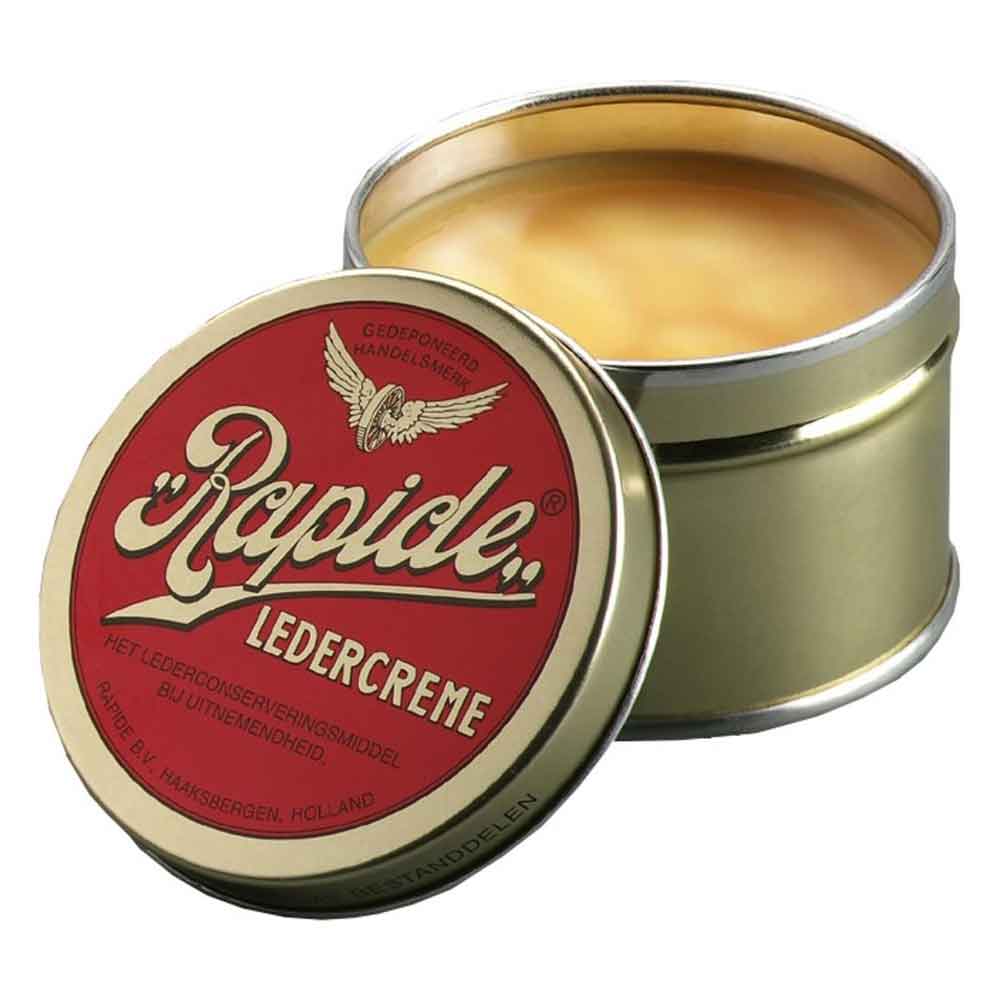
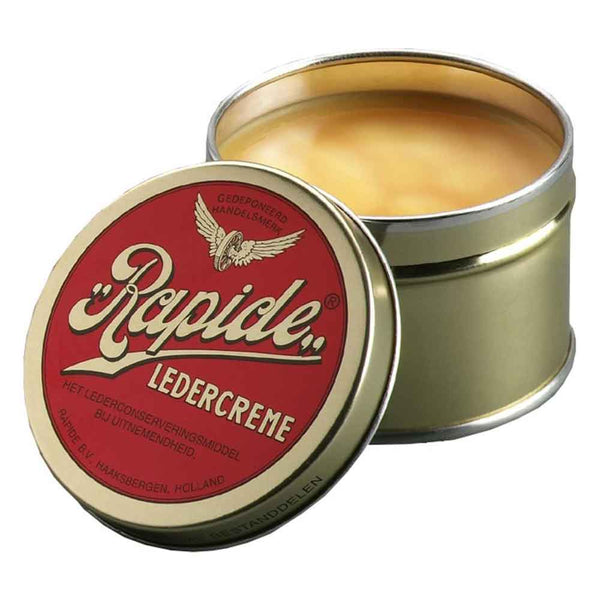
Use leather cream only where it belongs: on suitable smooth leather on the outside. Clean the surface first and let it dry. Then test a small amount on an inconspicuous spot and apply a thin layer with a soft cloth. Wipe away any excess.
Rapide Original is a care product for suitable smooth leather. Use it when your model's care instructions and finish are compatible with this treatment. Keep the cream away from the lining, padding, seams where you might push it inside, Velcro, and foot or ankle belts. The shin guard should feel dry before training and should not leave greasy marks on your partner or the mat.
Our Fight2Win guideline for regular training is to check about once a month whether the leather needs care. If it feels dry or stiff sooner, check sooner. If the leather is still supple and well cared for, don't add another layer. This is a practical check, not an instruction to automatically apply a thick coat every month.
A suitable leather cream is not the same as just any oil, petroleum jelly or heavy grease. Do not use leather grease on a PU or skintex exterior. The ban on using Sukkiri and FreshKO as exterior cleaners still applies there too.
Drying without changing the shape
Let the shin guards dry separately, with the fastening straps open and the lining as exposed as possible. Choose a clean, dry place with good airflow. Keep the pre-shaped shin plate and foot section in their natural position.
Do not fold the foot section under the shin plate or squash the guards under other items. Do not stack them tightly as though they were already dry and ready to store. The inner lining needs to be able to dry, including inside the foot section and along the straps.
Do not use a hairdryer, radiator, tumble dryer or direct sunlight to speed up drying. Before your next training session, do not just check the outside: feel the lining and straps too. If they are still damp, let them dry longer. That is why you should start cleaning and airing them straight after training.
Odour, washing machines and fabric slip-on models
An unpleasant smell is no reason to soak the entire shin guard in water or saturate it with spray. First, carefully clean the inner lining, foot section and straps, then let everything dry completely. Check your bag, too: a clean guard should not go straight back in with damp sportswear.
Pre-shaped kickboxing shin guards with fixed padding must not go in the washing machine or dryer. Do not rinse them under the tap or submerge them either. Care for them by wiping down the surfaces carefully, not by getting them completely wet.
Fabric slip-on models for MMA are built differently from large pre-shaped guards with fastening straps. But a soft fabric exterior is not, by itself, a washing instruction. Do not assume they are machine washable. You can still wipe down accessible surfaces after training and let the material dry completely without soaking it.
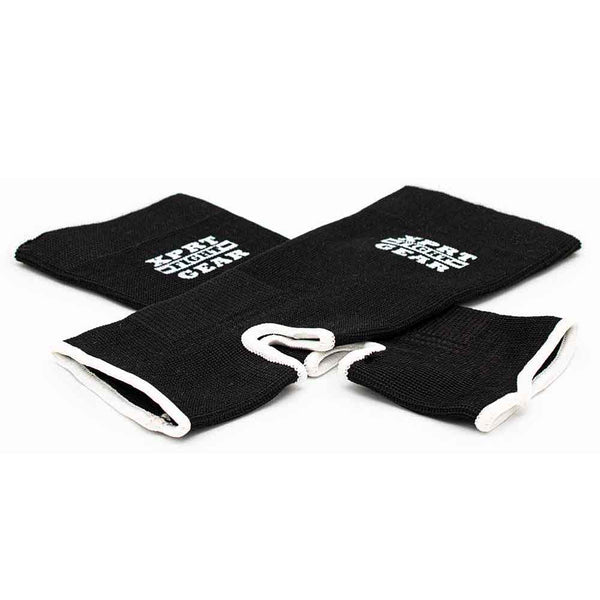
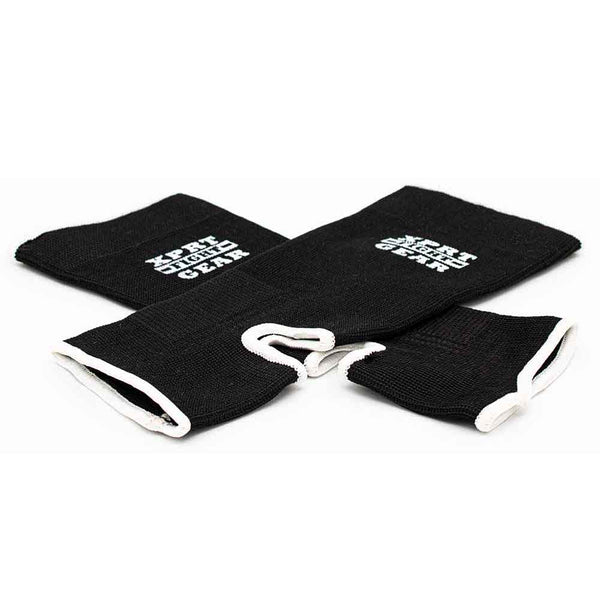
If you wear ankle guards under your shin guards, keep used ones separate and do not store them damp against the lining. If shin guards are shared, clean the contact surfaces between users and let them dry before the next person puts them on. Wiping down only the front is not enough.
Inspect and replace: judge by condition, not just age
Check both guards before every training session. Inspect the covering, foot section, padding, fastening straps and all attachment seams. Feel for any areas that have become permanently flattened or misshapen, and check that no padding is exposed.
Stop using them if the padding is exposed, load-bearing seams are torn, the padding is clearly and permanently misshapen, or the fastenings and belts no longer hold securely. Cream or spray cannot repair this kind of damage. Don’t use a damaged guard for one more sparring round just because the outside has been freshly polished.
If a guard twists or slips down, first check that the lining is clean, then check the size and adjustment. If it keeps shifting despite the right size and proper adjustment, or if the fastening is worn, don’t use it for sparren. Choose a suitable replacement instead of continuing to compensate by tightening the belts.
We don’t tie replacement to a fixed period, such as eighteen or twenty-four months. Use, material, fit and actual condition vary from pair to pair. That’s why checking them before training remains important, even when the guards aren’t old yet.
Transport and storage without flattening
Use your sports bag for the trip home, then take the shin guards out straight away. Keep worn clothing, damp towels and handwraps separate. A closed bag is no place to leave the lining to dry on its own.
Store both guards only when they are clean and completely dry. Fasten clean hook-and-loop straps to protect other fabrics, and don’t put heavy items on the shin plates or foot guards. Keep their natural shape rather than folding them as small as possible.
A dry place at room temperature is fine. Don’t leave the guards in a hot car, a damp room or direct sunlight for long periods. When you use them again after a break from training, recheck the fastenings, seams and fit before sparren.
Conclusion: clean, dry and ready for the next training session
Good shin guard maintenance is mainly about a consistent routine: remove sweat and dirt after every training session, carefully wipe down the inside and outside, and let everything dry completely. Don’t forget the foot guards and belts, and don’t flatten the pre-shaped sections.
Keep care for different materials separate. If the smooth leather exterior is suitable, you can apply a thin layer of leather conditioner as needed; do not apply it to PU, skintex, the lining or elastic belts. Do not use Sukkiri or FreshKO on the outer material. Any treatment for the inside does not replace cleaning and drying.
Before every training session, check that the padding, seams and fastenings are intact and that the guards stay securely in place. If there is obvious damage or a fastening no longer works reliably, stop using them. A fresh smell or a tidy-looking front is not a complete final check.