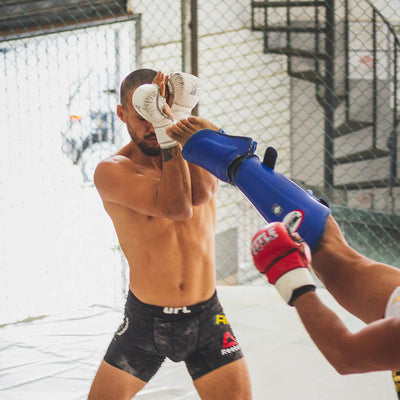
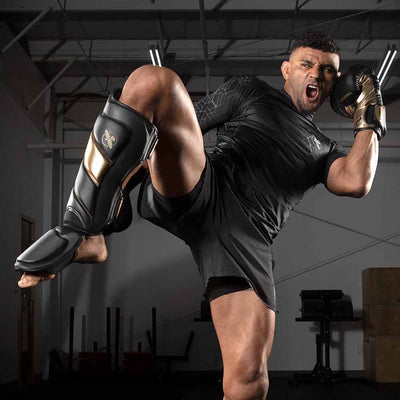
A raised heel, a pivoting lead foot and a flash of colour around the ankle: ankle guards are part of the familiar look of kickboxing and Muay Thai. But do not choose them based only on what you see a fighter wearing in the ring. In your own training, what matters most is a comfortable, snug fit, how your foot makes contact with the mat and how the guards work with your other gear.
A fabric ankle guard feels different from a bare ankle and can be a comfortable addition under your shin guards. So compare the fit and construction. A standard open guard, a version with grip material and a sturdy ankle brace are different products. Below, you can read what you are actually choosing and what to expect.
What is an ankle guard for kickboxing and Muay Thai?
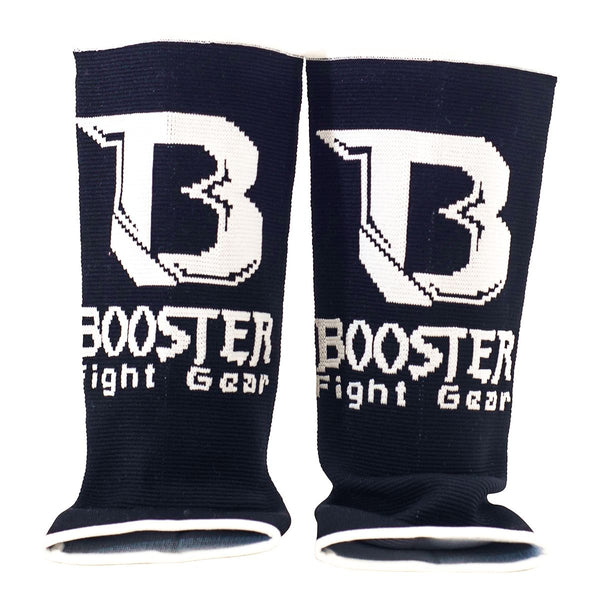
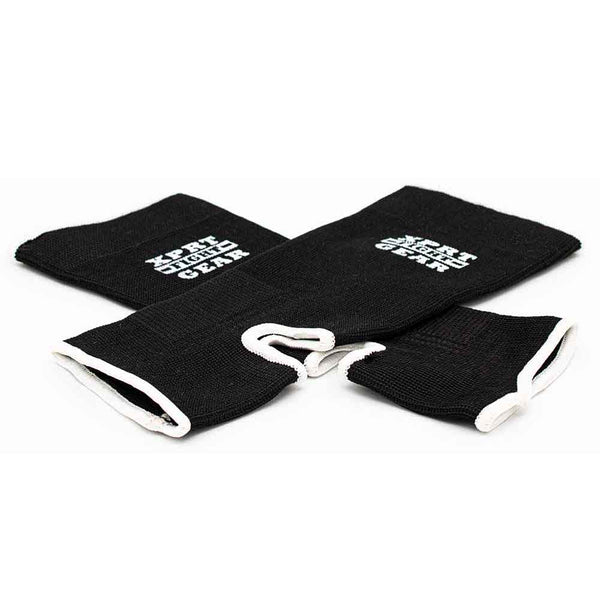
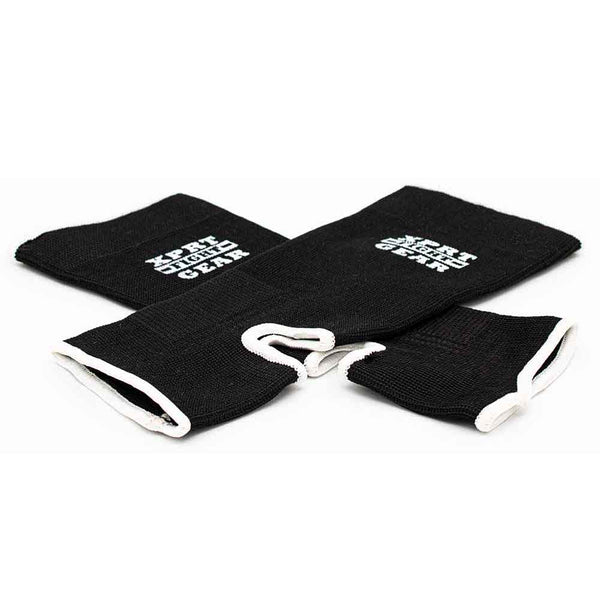
The classic martial arts ankle guard is a stretchy fabric guard that covers your ankle and part of your foot. Your toes remain uncovered, and many styles also have an opening at the heel. There is no sole underneath, as there is with a boxing shoe. The guard stays snug thanks to its size, shape and the stretch of the material.
That simple construction is exactly what makes it a practical accessory. You pull it on before getting the rest of your gear ready and check that the openings sit neatly in place. A well-fitting pair will not bunch up thickly under the foot section of your shin guard.
The term ankle protector is also used for other products. So look beyond the name. A fabric training guard does not have the same construction as a brace with straps, reinforcements or laces. A foot grip with material under the foot also needs to be compared separately.
Why can a snug guard feel comfortable?
An elastic guard sits against the skin around your ankle and midfoot. You can feel it when you step, extend your foot or lift your knee. If you like wearing a snug layer, that can feel comfortable during training. The fabric also covers some of the skin that might otherwise be in direct contact with a strap or edge of your gear.
How it feels to wear is personal. A narrow foot in a roomy guard feels different from the same size on a fuller foot. Pay attention to the top edge too: it should fit neatly, not roll up into a narrow strip that presses against your lower leg. More tightness is not a goal in itself.
A covered ankle may feel warmer, but warmth does not tell you how much protection you have or how well you will perform. Assess the pair during normal, gentle movements. The useful question is whether it fits comfortably and stays in place during your training.
Open heel and toes: contact with the training floor
The cutouts in a standard ankle guard leave parts of your skin exposed. It therefore doesn’t cover your foot like a regular sock. That’s an important design difference, but it doesn’t mean every combination of ankle guard, foot and surface offers the same grip.
Moisture on the mat, sweat, the position of the fabric and the surface all affect contact. Check that you’ve put the ankle guard on properly and that no loose fabric slips under a contact area. Start with gentle steps and turns, not a hard kick, to find out how a new pair feels.
Your supporting foot is part of the whole movement when you throw a roundhouse kick. It needs to be able to move with the technique you’re practicing. More grip is therefore not better for every movement. Pay close attention to the sole design, especially when switching from a classic ankle guard to foot grips.
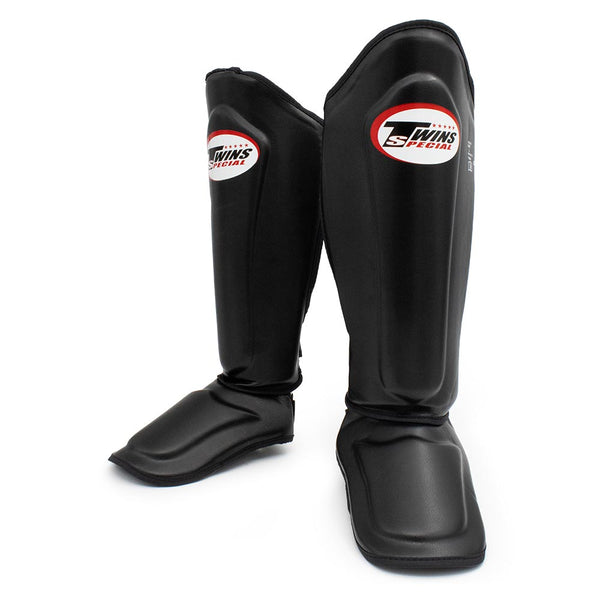
An ankle guard and a shin guard each have their own job
A fabric ankle guard is no substitute for the padding in a shin guard. For partner drills involving kicks and blocks, assess the protection for your shin and instep separately. A thin layer of fabric around the ankle does not make unsuitable contact gear suitable.
If you wear the ankle guard under your shin guard, smooth it out first. Then check the belts, foot section and fit around the ankle. Watch for overlapping edges and folds. A pair that fits well without shin guards may feel different when worn with the full setup.
If a shin guard keeps twisting or slipping down, check its size, shape and adjustment. Choose an ankle guard because you find it comfortable, not to hide a poor fit. Both pieces should stay in place as you move.
Three practical ankle guards from our selection
The main differences between models are how they feel, the sizes available and the finish. The three ranges below are a good starting point for comparison. Choose the version that suits your foot and your training gear.
XPRT Stretch
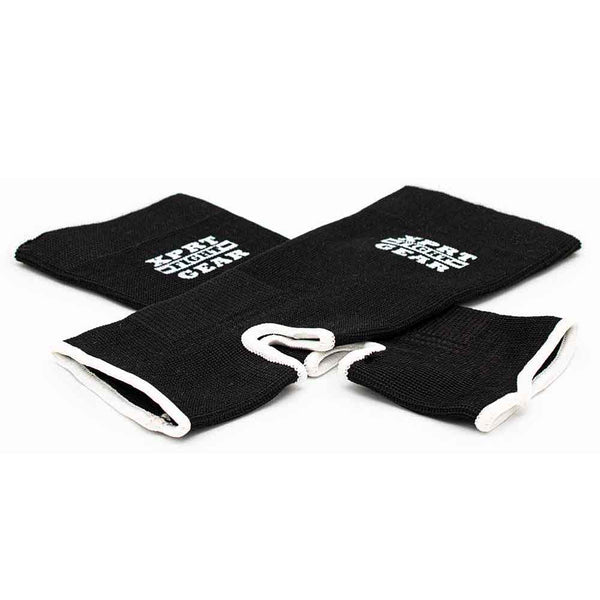
The black XPRT Stretch is a slightly stretchy ankle guard with reinforcement around the ankle and midfoot. You can choose from XS, S, M, L and XL. That gives you several sizes to try, but no single letter is a universal foot size. The black version pairs easily with your other training gear; if you want color, you can look at the separate color options. Available sizes vary by color.
Twins Special AG Thai
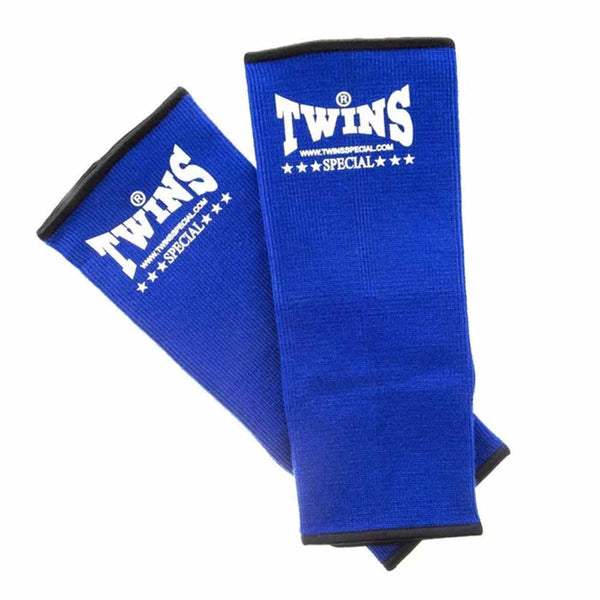
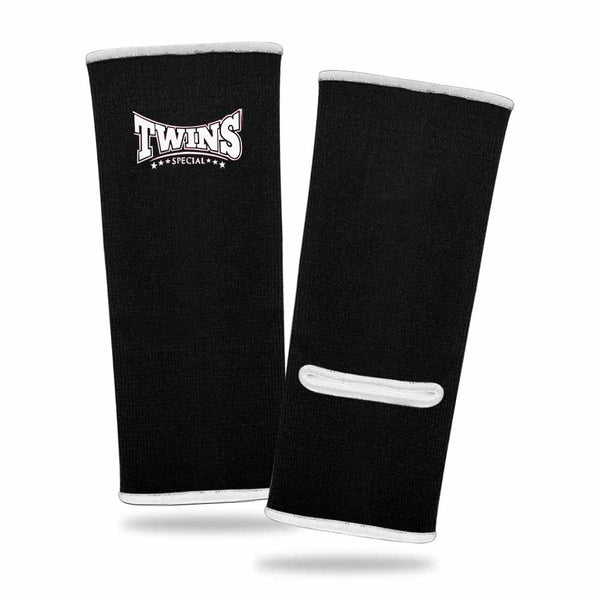
The Twins AG Thai is available in M and L, with blue, red, green and black as color options. The slightly stretchy design is made in Thailand. It’s a good choice for a Muay Thai outfit. Check how it fits around your ankle and where the openings sit, even if you usually wear M in another brand.
Hayabusa Support 2.0
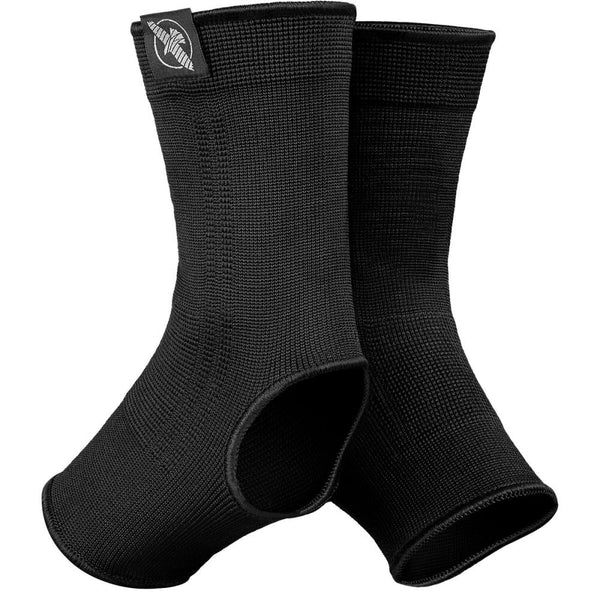
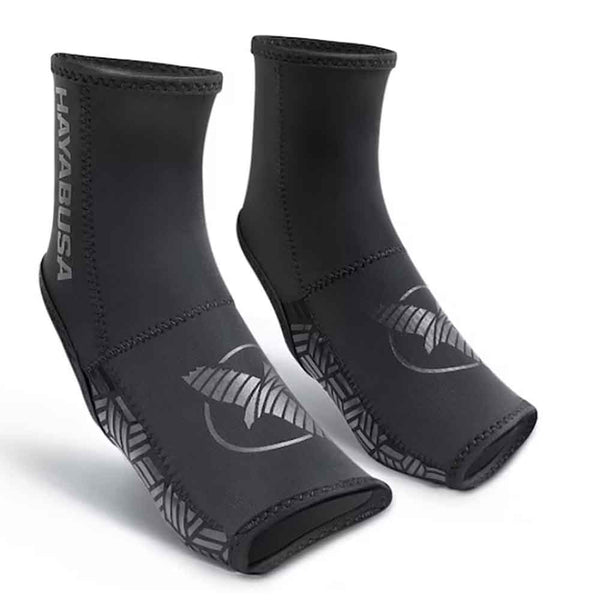
The Support 2.0 is a lightweight, stretchy polyester ankle guard. The available sizes are S, M, L and XL. It is the classic ankle guard in this comparison, not the Ashi foot grip with grip material under the foot. That distinction helps you choose: first compare the construction you want to wear, then the size and fit. The product information recommends washing at 30 degrees.
King Pro Boxing and Booster: check the sizing options
Not every range offers the same sizing options. A version with several letter sizes and a One-size model can both be comfortable, but you still need to assess how each fits your foot. The label is no substitute for checking the fit.
King Pro Boxing AG Thai Black 1
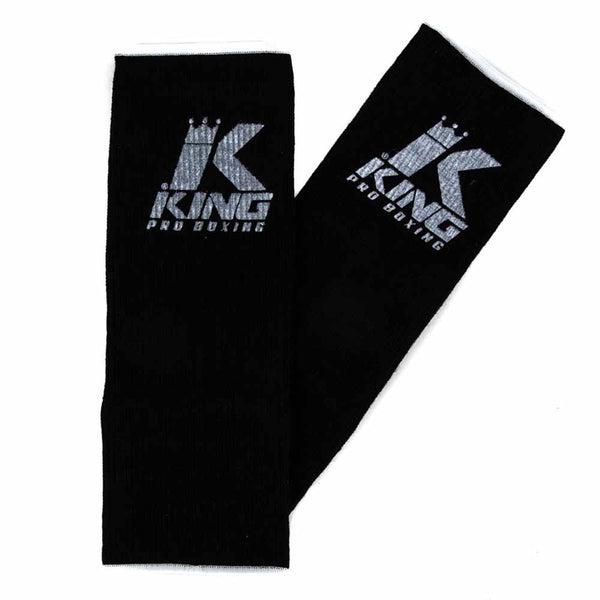
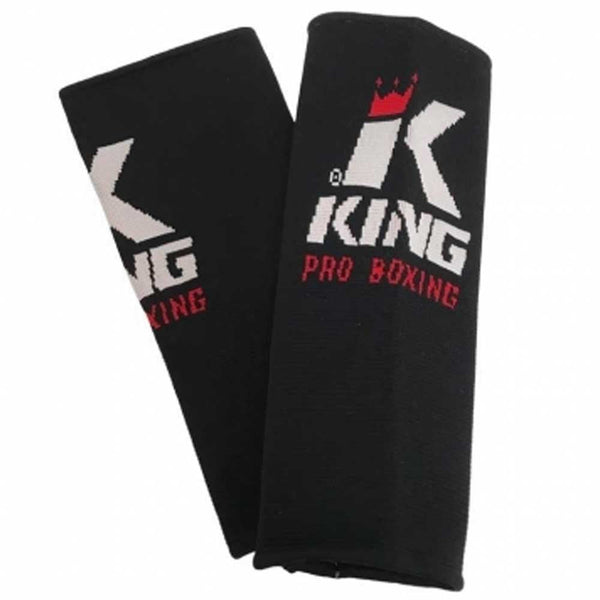
The Black 1 is available in M, L and XL and is made of stretchy material with a woven logo. The Black 2 is a separate product available in One-size. That's a specific difference worth checking when you order. So don't rely only on the brand name or the word Black from your previous order. Check which version you're looking at and how it fits.
Booster AG Pro
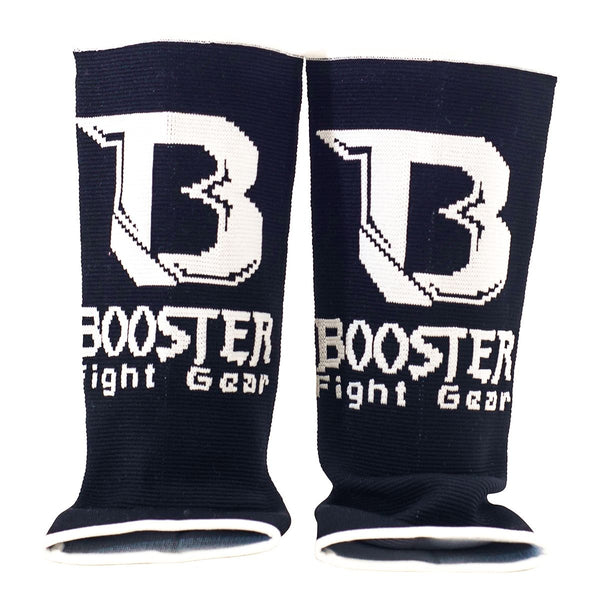
The AG Pro is available in One-size, with black, neon pink, neon green and orange as color options. The product information lists elastic polyester. When trying it on, check that the fabric fits evenly and that the top edge stays comfortably in place. One-size describes the available option, not a guarantee that the same guard will fit every foot equally well.
Foot grips with a different sole construction
A foot grip serves a different purpose from a classic open ankle guard. When choosing one, consider not only what you wear around your ankle, but also what material sits under your foot. That difference matters when you pivot, change direction or do groundwork during training.
Hayabusa Ashi 3.0
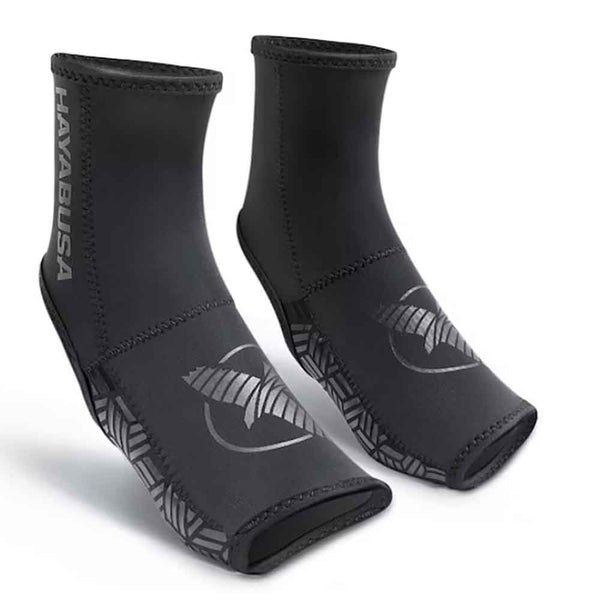
The Ashi 3.0 is a foot grip made of lightweight, stretchy material that moves in four directions. According to the product information, it has silicone grip material under the foot. The current size options are S, M, L and XL. Compare this model carefully with the Support 2.0: the same brand name does not mean the same sole construction or the same contact with the floor.
Check how the grip works with your mat and the exercises you do. A version you choose for groundwork may not feel the same when you pivot on your standing foot during stand-up training. Start slowly with the new combination. Keep the grip areas clean and follow the washing instructions for the model.
How to check the fit
Carefully pull the guard over your foot and position the heel opening correctly. Spread the fabric evenly around your ankle and midfoot, and smooth out any wrinkles. Don't just pull hard on the top edge: that won't automatically position the fabric properly around your whole foot.
Stand up and take a few steps. Lift your knee, extend your foot and make a gentle turning movement. The ankle guard should not dig in, shift or roll up. Then check the fit again with the shin guards you actually use.
A size chart applies to a specific model. The M from Twins does not promise the same fit as the M from XPRT, King or Hayabusa. Even with one-size products, the actual fit is what matters. Tingling, numbness or noticeable pressure are reasons to take the ankle guard off immediately and reassess the fit.
What research on compression and balance shows
Research on compression clothing looks, among other things, at joint position sense: how accurately someone can perceive the position of a joint. A 2024 review brought together 27 studies involving 671 participants. On average, the researchers found a smaller absolute error when participants estimated a joint’s position. Other outcomes, such as certain movement detection tests, did not change significantly. That is a specific measurement result, not a general guarantee of better performance.
A 2021 laboratory study compared ordinary socks, two types of compression socks and a modified ankle sleeve in twelve adults. Reflex responses and some measures of muscle activity changed. In the reported table, the modified sleeve did not significantly shorten recovery time in the dynamic balance test; the static balance tests did not improve significantly either.
Other trials underline that results depend on the test. In a 2020 study of forty young adults, twenty of whom had chronic ankle instability, an elastic ankle support did not significantly improve the landing and balance tests studied. In a 2024 study of sixteen basketball players, a compression sock did not significantly delay the onset of fatigue. After fatigue, the comparison between wearing and not wearing the sock also showed no significant balance benefit.
In the basketball study, a comparison within the ankle guard condition before and after fatigue did show an improvement. That is a different comparison from showing that the ankle guard works better after fatigue than no ankle guard. None of these trials compared our five model ranges during Muay Thai training or tracked how many injuries buyers sustained while using them. So choose ankle guards based on practical product features, not a promised percentage of protection.
Training gear and competition rules are different considerations
What feels comfortable during regular training is not necessarily allowed in a competition. Check your organization’s and event’s current equipment requirements in advance. Pay attention to the exact type: fabric ankle guards, grip material, tape and reinforced braces are different things.
A photo from a professional bout shows you what equipment was visibly worn there. It is not a complete set of rules for your match. Check the rules in good time so you do not have to change your preparations on match day.
Before training, put together a practical combination: shorts that let you move freely, the right gloves and protective gear for your exercises, and ankle guards if you like wearing them. This addition completes your outfit in a way that suits your training and wearing preferences.
Washing, drying and storing
Take worn ankle guards out of your bag after training and do not leave them damp against the lining of your shin guards. A clean pair is more pleasant to put on again. At the same time, check for dirt under the foot and damage to any edges or seams.
Follow the care label on the pair you choose. The product information for Twins AG Thai and Hayabusa Support 2.0 specifies 30 degrees. Use a gentle cycle if the label allows machine washing, and keep the ankle guard from catching on exposed hook-and-loop fasteners. A laundry bag helps keep small pieces of training gear together.
Let the pair air-dry completely before putting it away. Do not stretch it out of shape to make it dry faster. Before the next use, check the stretch, edges and fit again. If the ankle guard stays loose or the edges keep rolling up, it is time to check the size and condition of the pair.
Choosing a suitable pair at our showroom
Even with a small accessory, size and finish can make a big difference. At our showroom in Waddinxveen, you can buy ankle guards and look at the available styles. We are happy to explain which ranges come in multiple sizes and how a regular ankle guard differs from a footgrip.
When comparing options, consider the rest of your gear too. The fit under a shin guard and the material under your foot are more practical starting points than just a logo or the colour worn by a well-known fighter. That way, you can choose a pair that suits the training you plan to do.
A small addition that suits your training
Ankle guards are a familiar and practical addition to your kickboxing or Muay Thai gear. Compare the stretch fit, the openings, the size options and how they work with your shin guards. Choose a colour and range you like wearing, starting with the fit.
A classic ankle guard, a footgrip and a brace do not have the same construction. Research into compression also shows different results from test to test. So choose based on a comfortable fit, a suitable sole construction and how they work with your own equipment. These are practical points you can check yourself when comparing and trying them on.