Skip to content
Fight2WinFight2Win

What size kickboxing shin guards should I choose?

Measure your shin and compare the individual size charts for XPRT, Twins, Hayabusa, Rival, King and Booster. Check the fit around the knee, calf and instep, including for children's models and in-between sizes.

Welke maat kickboks scheenbeschermers moet ik kiezen?

You cannot choose the right size of shin guards by copying the letter from your previous pair. An M in one model may fit differently from an M in another. Start with the size chart for the version you want to buy, then check how it fits your shin, calf and instep.

Your height helps you choose an initial size. The fit determines whether that choice works: the guard should stay in place without pressing against your knee or restricting foot movement. Below, you can read how to measure, how to use the model-specific size charts and when a different fit makes more sense than simply going up or down a size.

Measuring your shin: how to start

Use a flexible tape measure along the front of your lower leg, from just below the knee to above the ankle. Keep your foot relaxed and note the distance. Measure both legs the same way. You do not need a complicated calculation; you are looking for a useful starting point for the size chart and the fitting.

Next, check exactly what the size chart for your chosen model shows. Height, shin length and age are different measurements. A chart listing lengths in centimeters is no guarantee that every leg of exactly that length needs the same size. Always follow the measuring instructions for the specific model if they differ from the general method.

Distinguish between the length of your leg and the shape of the guard. The curve, the width around the calf, the position of the belts and the instep section all determine how the model fits. Two guards with a similar length measurement can therefore feel different.

The fit check: shin, knee and instep

Put on both guards and distribute the tension evenly across the fastenings. Center the padding over the front of your shin. On a model with belts, they should fit comfortably around your calf; tightening them more will not fix a model that is too loose or the wrong shape.

Slowly lift your knee, bend your legs and point your foot. Then make a controlled kicking motion without making contact. Does the front stay aligned with your shin? Does the top edge avoid pressing uncomfortably against your knee? Does the foot section stay on your instep without restricting ankle movement? Check the position again after these movements.

On a kickboxing model, the instep section is not a shoe that needs to enclose your toes. Check how much of the instep it covers and how it fits at the ankle, not just how much of your foot remains visible at the front. Stop trying it on or moving around if an edge or strap causes painful pressure.

XPRT: compare the Pro V3 and All-Round separately

With XPRT, start with the correct model line. The pre-shaped Pro V3 and the All-Round V1 each have their own chart. A familiar size letter is no reason to skip the product chart.

The chart for the Pro V3 Midnight also includes an XS. The standard Pro V3 chart starts at S. Check the version you have chosen rather than assuming that all colors and versions offer the same sizes. The chart below shows the Midnight guideline; choose from the available sizes on the product page.

The All-Round has its own height guideline. Compare sizes using the correct chart, then check the fit. Do not automatically choose the same size as the Pro V3.

Twins SGL7: look beyond your height

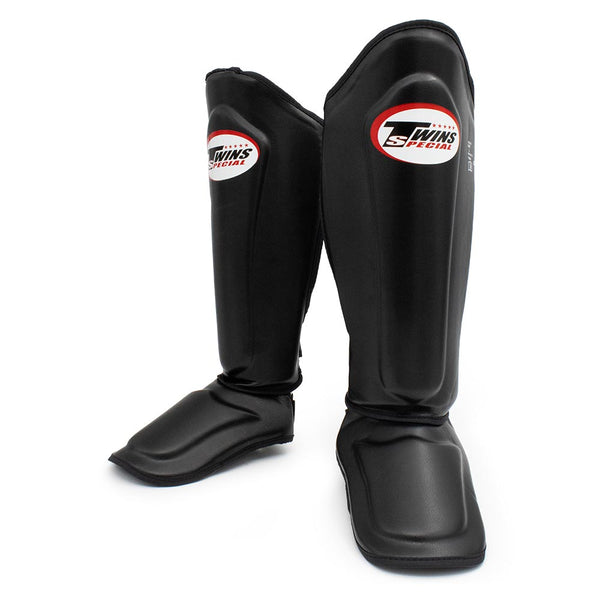
The Twins SGL7 has its own height and shin measurement chart. The model has a pre-shaped shin section and a separate, movable instep section. When trying it on, pay as much attention to the fit above the ankle and the position of the foot section as to the top edge.

At the boundary between S and M, the shin chart lists both 'up to 33 cm' and '33 cm'. Do not treat this boundary as an exact cutoff for every leg. Check the height guideline too and compare how both sizes actually fit. A loose guard will not fit properly just because the measurement on the chart looks right.

Hayabusa: distinguish the T3 from the Core Sleeve

The classic Hayabusa T3 and the T3 Core Sleeve do not fit the same way. The T3 has separate fastening straps. The Core Sleeve is a sock-like version without separate hook-and-loop fasteners. With the latter, the fit is determined by the size and stretch of the material, not by adjusting the straps differently.

The associated height guidelines also differ. An S from one chart is therefore not automatically the right S in another. The compact charts below deliberately keep these models separate. Always read the additional measuring information for the version you choose.

With the T3, check the tension of the belts and how the elastic sections fit around your foot. With the Core Sleeve, check whether the sleeve slides comfortably over your foot and lower leg and does not pull uncomfortably or sit loosely when you move. Do not choose based only on which fastening seems convenient; the fit needs to be right too.

Rival SH20: combined sizes S/M and L/XL

The Rival SH20 uses two combined sizes. The corresponding chart lists S/M for body heights up to 175 cm and L/XL for heights above that. This is an initial guide, not a complete description of your calf width or how the guard fits around your foot.

For this model, check the fastening behind the lower leg and the elastic strap around the ankle. The guard should stay centered over your shin when you move. Do not expect a combined letter size to fit every leg exactly like a separate M or L from another brand.

King Pro Boxing: compare the SG series and SGL7 separately

For King Pro Boxing, the adult SG models and the SGL7 have separate size charts. The letters look familiar, but the measurements in centimeters are not the same across the board. For example, the SG chart lists a different shin measurement for L than the SGL7 chart.

So use the chart for the series you have. A wider or narrower calf can also affect the fit, even when the length is about right. With both models, check how the top edge, the belts and the instep section work together when you bend your legs.

The kids' Hexagon model is not included in these adult charts. The letters M and L have their own meaning there. The size guidelines for kids appear side by side below, so you do not accidentally compare them with adult sizes.

Booster V3: the same letter, its own measurement in centimeters

The Booster V3 has its own chart for body height and shin measurements. Especially if you are switching from another brand, it is worth checking it again. An M here is not simply the same as the M you already know.

After choosing a size, check whether the pre-shaped sections fit comfortably around your lower leg. Fasten the belts without pulling any one section extremely tight, and move your ankle. If the length fits but you can only get the guard around your calf by stretching it a lot, its shape may not be right for your leg.

Shin guards for kids: age is a starting point

An age chart can help you narrow down the options, but children of the same age don't necessarily have the same leg length. Measure the lower leg too, and have your child put on both guards and move around. How they fit now matters more than extra room to grow.

The XPRT Competitor V1 is a sleeve-style model with its own shin-size chart and age guidance. Don't use those figures in place of the Pro V3 chart for the adult branded models above.

Children's sizes vary considerably by model. For example, the XPRT Competitor ranges from XXS to L, Booster Combat uses XS and S, and King Hexagon for children uses M and L. A children's M is therefore not automatically the same as an adult M, or even the M in another children's model.

Alongside age, the King Hexagon chart also gives measurements in centimetres. The linked guideline for Booster Combat is based on age. We don't fill in the missing centimetre column with figures from another Booster model: a similar name or appearance doesn't mean the fit is identical.

Have your child raise their knee, bend their legs and point their foot. A guard that twists with every movement or presses against the knee isn't suitable to wear while waiting to grow into it.

Between two sizes: don't automatically size down or up

Does your height point to one size and your shin length to another? Compare the sizes using the full fit check. There's no general rule that says you should always size down or size up with every brand.

A larger size may give you more room around the calf, but it may also be longer and press against your knee. A smaller size may fit more snugly, but it may be too short or too tight. If neither size feels comfortable, a different model is often a better choice than pulling the fastening even tighter.

Don't treat an old size as a fixed starting point, either. A worn pair can feel different from a new pair, and another model line may fasten around your leg differently. Compare how the pairs you're trying on fit now, not just the letter on the old label.

Muscular calves, slim legs and a high instep

Length alone doesn't tell you how much room there is around your calf. If you have muscular calves, the fastening should close without pinching in one spot. If you have slim legs, the guard should fit snugly without having to tighten all the belts to their limit.

The transition to the foot also deserves attention. An instep section that sits well when you're standing relaxed may press or shift when you point your foot. So test more than one position. If you keep feeling the same hard edge, or the foot section pulls the shin guard out of position, try a different size or shape.

This isn't about choosing a separate women's or men's size letter. It's about your leg length, calf shape, foot and the construction of the model you choose. The colour or intended audience doesn't replace checking the fit.

Belts or sleeve-style model: what can you adjust?

Separate hook-and-loop straps let you adjust the tension at different points around your calf. That's useful when trying them on, but there's a limit to how much you can adjust them. Pulling them extra tight won't fix the wrong length or shape.

With a sleeve-style model, the size and material together determine how it fits around your leg. You can't tighten a sleeve that's too loose with a separate strap. When comparing models, also look at the coverage and construction of the foot section; not every sleeve-style model is intended for the same type of training.

If you also want to compare different types of shin guards, use the accompanying buying guide. This page mainly helps you find a suitable model and use the size chart correctly, not rank brands.

Your choice at a glance

Follow this order: choose a model that suits your training, open its size chart, use the measurements it asks for and check the fit with both shin guards on. The compact overview table below helps you distinguish between the different sizing systems.

Compare products using their own size charts and fastenings. The examples aren't a ranking: the aim is to find the right design and size without treating a size letter or a general height chart as a fixed rule.

Conclusion: the right size stays in place when you move

A well-fitting shin guard fits comfortably around your lower leg and instep, stays in front of your shin as you move and doesn't get in the way of your knee or ankle. The size chart gives you a starting point; trying it on tells you whether the model works for you.

Compare the sizing guidelines for XPRT, Twins, Hayabusa, Rival, King and Booster. If you're unsure, don't automatically size up or down. If the length, calf fit and instep fit don't all work together, try a different shape. That way, you can make an informed choice instead of guessing between S, M and L.

How do you choose the right size shin guards?

What does it depend on?How to make your choice
Model and version Use the size chart for the specific model you choose. Don’t automatically use the same S, M or L as another pair.
Shin length Measure both lower legs and check which measurements the model’s size chart requires. Don’t rely on your overall height alone.
Height Use the height guideline as a starting point, then check the actual fit.
Calf and fastening The guard should fit snugly without twisting or pinching. Tightening it more won’t fix the wrong size or shape.
Instep and movement Raise your knee, bend your legs and point your foot. The top edge and foot section should not restrict your movement.
Children’s sizes Use the model’s children’s size chart and choose a size that fits now. Age is a starting point, not a reason to leave extra room for growth.

The fit around the calf and ankle

Fit check: snug without pinching

CheckGood signAdjust
Shin
  • The padding stays in front of the shin.
  • The protector twists to the side.
Knee
  • You can lift your knee without an edge getting in the way.
  • The top presses against the knee or into the back of the knee.
Calf
  • The fastening distributes the tension comfortably.
  • You have to pull it extremely tight or it creates painful pressure.
Instep and ankle
  • The foot section stays comfortably in place when you straighten and bend your foot.
  • An edge pinches or the foot section pulls the protector out of place.
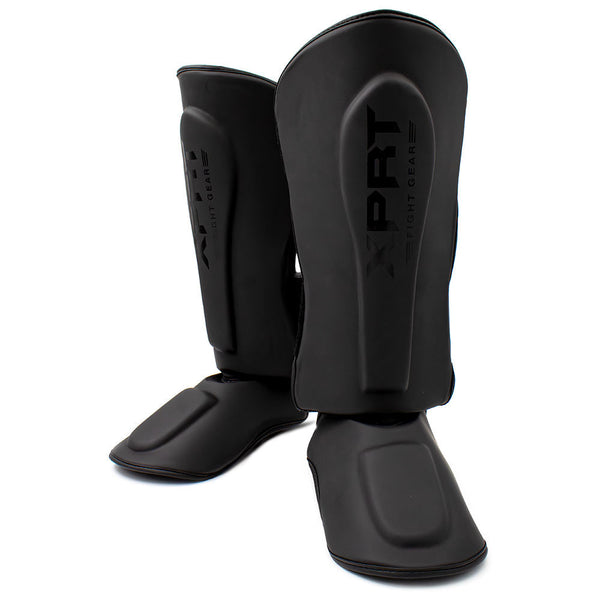
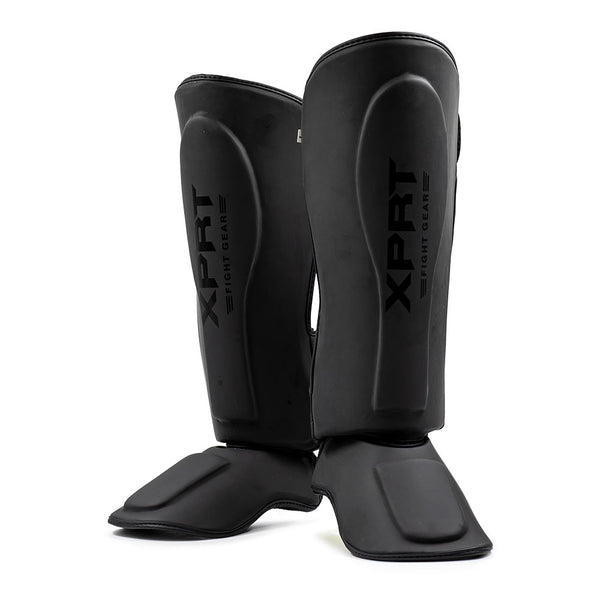
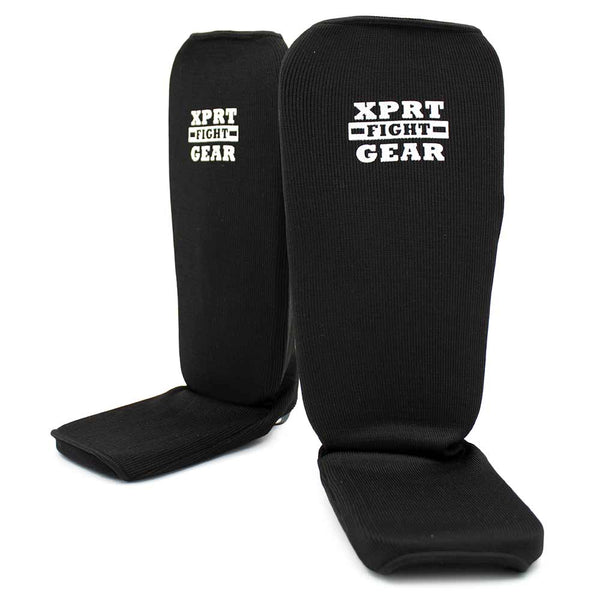
XPRT Fight Gear

XPRT Fight Gear

XPRT: Pro V3 and All-Round

Compare the adult model lines within their own table.

XPRT Pro V3 Midnight

Shin Body height Size
27 cm Up to 150 cm XS
30 cm 150 to 160 cm S
33 cm 160 to 175 cm M
36 cm 175 to 185 cm L
40 cm Over 185 cm XL

This is the size chart for the Midnight version, including XS. Check the size selection for the selected version; the regular Pro V3 chart starts at S.

Maattabellen zijn richtlijnen, geen bindend advies.

XPRT All-Round: body height

Body height Size
Up to 145 cm XXS/XS
145 to 155 cm S
155 to 170 cm M
170 to 185 cm L
Over 185 cm XL

The linked guideline groups XXS and XS together. So the chart doesn't tell you which of the two fits best around your leg.

Maattabellen zijn richtlijnen, geen bindend advies.

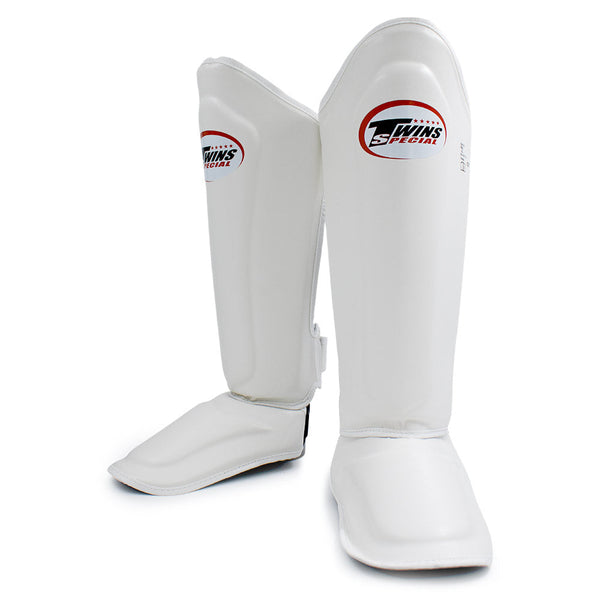
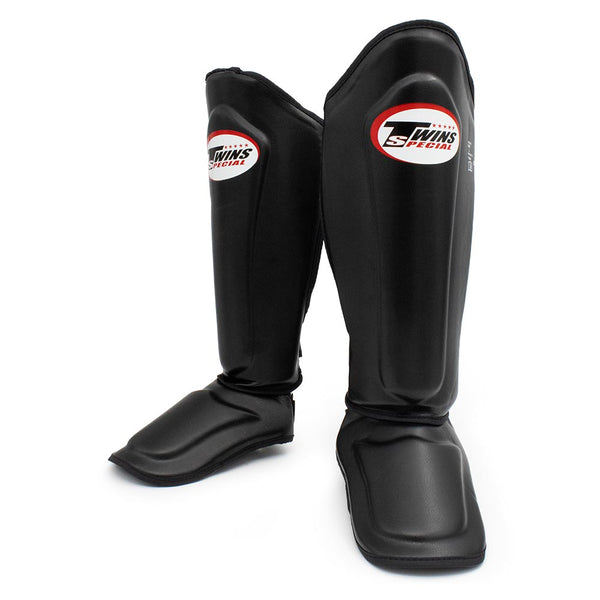
Twins Special

Twins Special

Twins SGL7

Also check how the instep guard moves with your foot.

Twins SGL7: model guide

Shin Body height Size
Up to 33 cm Up to 160 cm S
33 cm 160 to 175 cm M
37 cm 175 to 185 cm L
40 cm Over 185 cm XL

The S and M guidelines overlap at around 33 cm. At that boundary, use the full fit check; the chart does not provide a universal exact cutoff.

Maattabellen zijn richtlijnen, geen bindend advies.

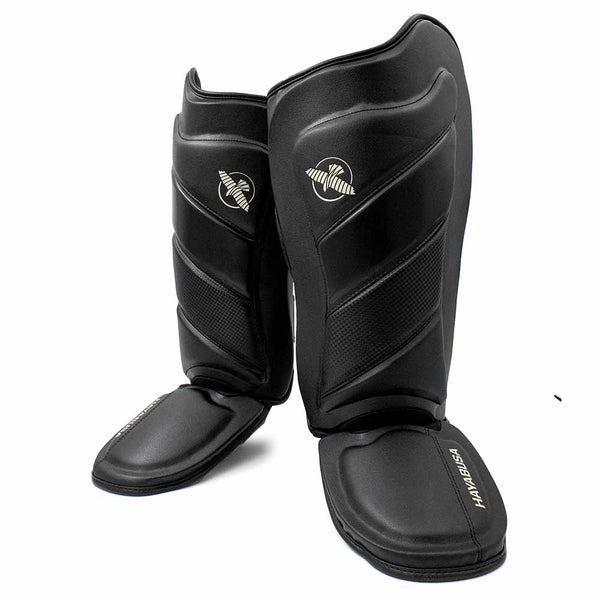
Hayabusa

Hayabusa

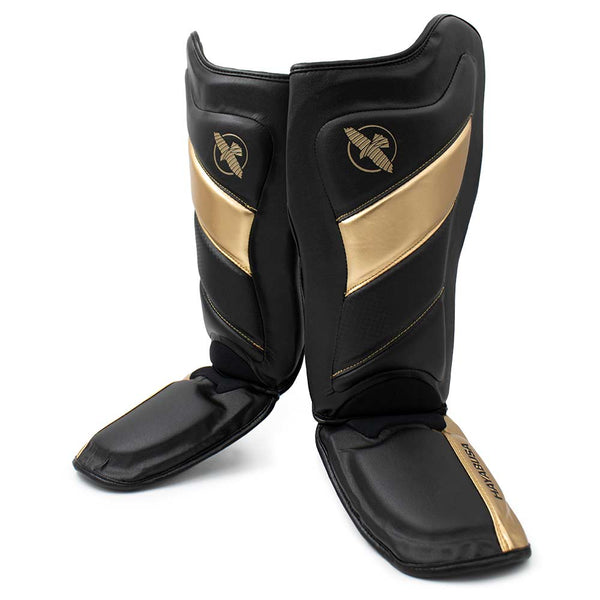
Hayabusa: T3 and Core Sleeve

The same size letter does not mean the same fit.

Hayabusa T3: model guide

Shin Body height Size
30 cm Up to 170 cm S
33 cm 170 to 180 cm M
36 cm 180 to 195 cm L
38 cm Over 195 cm XL

This guideline applies to the classic T3. Do not automatically use the same size for the Core Sleeve.

Maattabellen zijn richtlijnen, geen bindend advies.

Hayabusa T3 Core Sleeve: body length

Body height Size
Up to 160 cm S
160 to 175 cm M
175 to 190 cm L
Over 190 cm XL

This height guide is shown separately. Also use the additional measurement information on the product page and check the fit of the sock.

Maattabellen zijn richtlijnen, geen bindend advies.

Rival Boxing Gear

Rival Boxing Gear

Rival SH20 MMA

Two combined sizes, with the fit as the final check.

Rival SH20: body length

Body height Size
Up to 175 cm S/M
Over 175 cm L/XL

The table uses S/M and L/XL. Check the closure and foot section; height alone does not describe the calf room.

Maattabellen zijn richtlijnen, geen bindend advies.

Different constructions, each with its own size

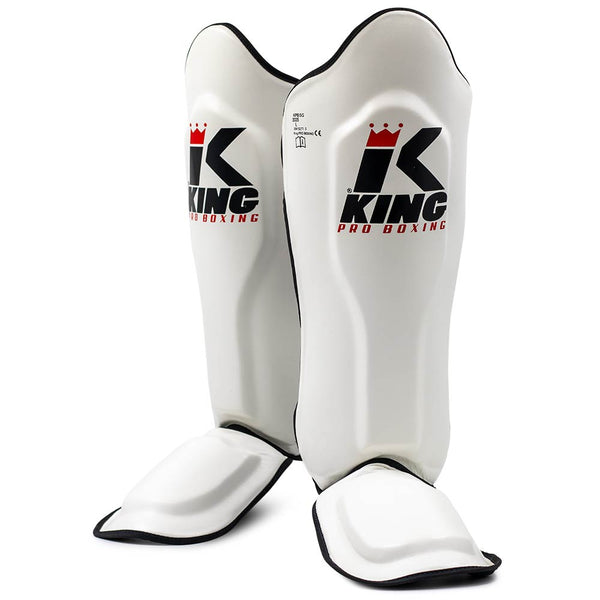
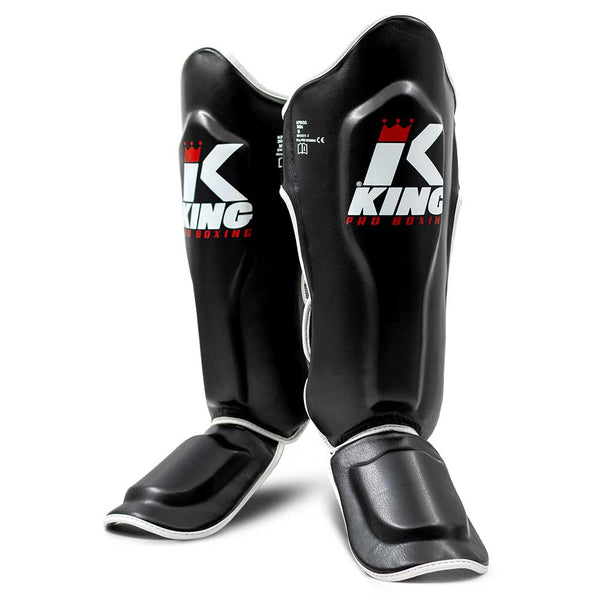
King Pro Boxing

King Pro Boxing

King Pro Boxing: the series has benefited

Compare SG and SGL7 within their own table.

King SG series: model guideline

Shin Body height Size
29.5 cm Up to 155 cm S
33 cm 155 to 175 cm M
35 cm 175 to 185 cm L
38 cm Over 185 cm XL

This table applies to the SG series. Do not compare the values as if they were identical to those for the SGL7.

Maattabellen zijn richtlijnen, geen bindend advies.

King SGL7: model guide

Shin Body height Size
30 cm Up to 160 cm S
33 cm 160 to 175 cm M
37 cm 175 to 185 cm L
40 cm Over 185 cm XL

The L size guide lists 37 cm here, compared with 35 cm in the SG chart. The letter L alone doesn’t tell you enough.

Maattabellen zijn richtlijnen, geen bindend advies.

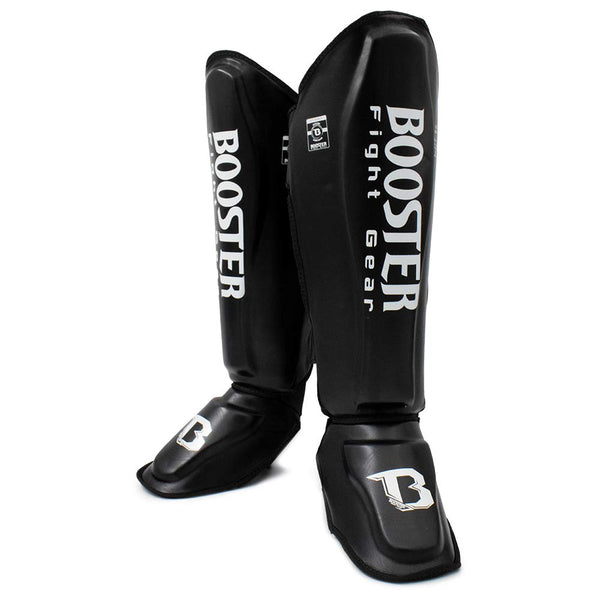
Booster Fight Gear

Booster Fight Gear

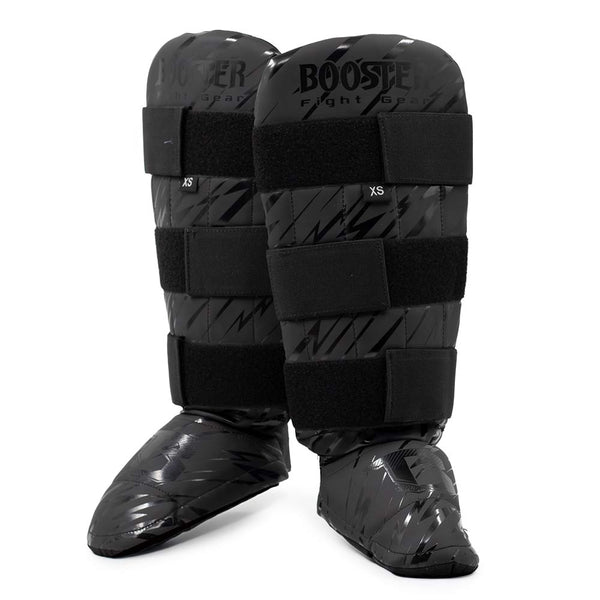
Booster V3

Use your own measurements in centimeters, not your old size letter.

Booster V3: model guide

Shin Body height Size
Up to 33.5 cm Up to 155 cm S
37 cm 155 to 175 cm M
38.5 cm 175 to 190 cm L
41 cm Over 190 cm XL

The V3 has its own sizing guide. The measurements do not automatically apply to Booster children's models.

Maattabellen zijn richtlijnen, geen bindend advies.

Compare the shape of the shin and instep

Pre-shaped models: compare size and fit

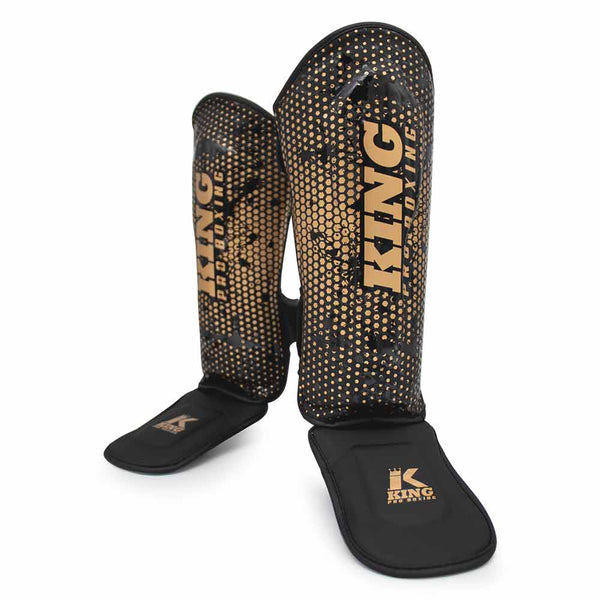
Kinder scheenbeschermers King Pro Boxing Hexagon Black

FIT CHILDREN

Children's sizes have their own meaning

XPRT Competitor V1: separate size chart

Shin Size
21 cm XXS
23 cm XS
24.5 cm S
26.5 cm M
28.5 cm L

The corresponding age ranges are 4-6 years for XXS, 7-8 years for XS and 9-10 years for S; M and L are listed as Junior and Adult. Always check the fit.

Maattabellen zijn richtlijnen, geen bindend advies.

King Hexagon for children

Age Shin Size
up to 8 years 28 cm M
9 to 11 years 30 cm L

M and L are children's sizes here. The linked chart notes that this model runs small; check the actual fit and don't size up for growth.

Maattabellen zijn richtlijnen, geen bindend advies.

Booster Combat for children

Age Size
4 to 8 years XS
9 to 11 years S

The linked Combat table uses age as a guide. Do not use centimeter values from Champion or Marble as a substitute.

Maattabellen zijn richtlijnen, geen bindend advies.

Children's models: which size chart should you use?

ModelSize chart and fit
XPRT Competitor V1 Its own shin size chart and age guidance. Sock-style; do not confuse with Pro V3.
King Hexagon for children Its own age and shin size chart. M and L are children's sizes here.
Booster Combat for children Its own age guidelines with XS and S. Use the chart for the children's version.
Compare children's sizes Its own model and age guidance. Do not use adult size letters or allow room for growth as a fixed rule.

Two kids' models, two different size ranges

Between sizes: what problem are you solving?

You noticeCheck firstContinuation
The top edge presses against your leg when you bend your knee Length and position of the guard Try a shorter size or a different shape.
The guard twists around your leg Fit around the calf and placement of the belts Try a model with a more compact fit.
The calf closure only fastens under a lot of tension Room in the closure and pressure points Try more calf room without unnecessary extra length.
Height and shin length suggest different sizes Both guidelines in the same model's size chart Try both relevant sizes; don't automatically round up or down.

Compact overview: which table goes with it?

ModelSize chart and fit
XPRT Pro V3 Midnight Its own height and shin measurement chart. XS is listed in the Midnight size guide.
XPRT All-Round Its own height-based size guide. XXS/XS is listed as a combined size.
Twins SGL7 Its own height and shin measurement chart. Check the 33 cm cutoff and the instep.
Hayabusa T3 Its own T3 chart. Check both belts and the ankle.
Hayabusa Core Sleeve Its own Core Sleeve size guide. No separate belts to adjust.
Rival SH20 Its own combined sizes. S/M and L/XL are a starting point.
King SG / King SGL7 Each series has its own chart. The measurements in centimeters differ.
Booster V3 Its own V3 chart. Do not apply it to children's models.

Shin guards for adults: size and fit

XPRT shin guards Compare pre-shaped models and sock-style models using their respective size charts. When choosing, consider shin length, calf room, and how the foot section fits.
Twins shin guards Pre-shaped shin and instep guards for kickboxing and thai boxing. Use the chart for your chosen version and check how the instep section moves with your foot.
Hayabusa shin guards Compare the adjustable strap closure with the fit of a sock-style design. Each version has its own sizing; consider both length and room for fastening.
King shin guards Choose the right range and compare the fit around the knee, calf and ankle. The size chart helps you choose the length; moving around shows how well the guard fits.
Booster shin guards Check the adult versions for their specific sizing and closure. Check the position of the padding and the range of motion at the ankle.
Rival shin guards Shin and instep guards with a snug-fitting back and an adjustable top closure. For combined sizes, also check calf room and the fit around the foot.

Shin guards for kids: size and fit

XPRT shin guards View the compact XPRT versions, each with its own model chart. For children, compare shin length and the recommended age range with the actual fit.
Booster shin guards The children's versions have their own sizing. Use age as a starting point and check the fit while your child lifts their knee and moves their foot.
King shin guards Compare the compact children's versions using their respective age and height guidelines. Check the current fit around the lower leg and instep.

Questions & answers

Frequently asked questions about shin guard sizes

How do I choose the right size shin guards for kickboxing?

Use the size chart for the specific model as your starting point. Don’t automatically choose your usual S, M or L from another brand or model. In addition to your height, pay particular attention to your shin length, calf circumference and how the instep piece fits.

Try on both guards and move around in them: raise your knee, point your foot and slowly make a kicking motion. The protective padding should stay centered over your shin without pressing against your knee. The instep piece should cover your foot without pinching or riding up.

Check that the belts overlap enough and fasten comfortably. Tightening them more won’t fix the wrong size. With a sock-style model, the fit depends on the size and stretch of the fabric; you can’t adjust it with separate calf straps.

Should I choose sock-style shin guards or shin guards with a hook-and-loop closure?

With a hook-and-loop closure, you can adjust the straps around your calf individually. Open the straps to put on the guard, then adjust the fit. This is practical if you want to adjust the tension above and below your calf.

A sock-style model like the Hayabusa T3 Core Sleeve pulls over your foot and lower leg. It has no loose strap ends or hook-and-loop fasteners; the size and stretch of the fabric determine the fit. So you can’t tighten an overly roomy sleeve with a strap. It can also take a little more effort to pull on over a damp foot.

Don’t choose based only on the closure. Padding, coverage, and fit also vary by model. The Core Sleeve has a different padding distribution than a thickly padded, pre-shaped pair. For regular partner contact in kickboxing and thai boxing, we recommend starting with well-fitting, pre-shaped models; the Core Sleeve is especially appealing if you deliberately want to train without separate closures.

How do I measure my shin for shin guards?

Measure along the front of your lower leg from just below the knee to above the ankle. Measure both legs the same way. Then check which measurements the size chart for your chosen model requires; height, shin length and age are not interchangeable.

If I'm between two shin guard sizes, should I always choose the smaller one?

No. Compare the length, calf room, fastening and fit over the instep while moving. A smaller size may be too short or too tight; a larger size may reach the knee or twist. If neither fits well, compare another model instead of automatically sizing up or down.

Why does size M for shin guards vary by brand or model?

The length, curvature, calf room and position of the fastenings vary by design. That's why each model line has its own size chart. You may also find different sizing guidelines within the same brand. Don't automatically choose the same size letter as your old pair.

How do I check if the instep section of my shin guard fits properly?

Put on both guards and slowly straighten and bend your foot. The instep piece should rest comfortably on your instep without squeezing your ankle or pulling the shin guard out of position. It does not need to enclose your toes like a shoe. Stop if you feel painful pressure and compare sizes or shapes.

Can I choose shin guards that my child can grow into?

Choose a size that fits snugly now. Extra room is no use if the guard twists, slips down or hits the knee during movement. Age is a starting point; use the children's size chart and check the actual fit around the shin, calf and instep.

What size shin guards should I choose if I have large calves?

Besides the length, check the space around the closure and the fit around the calf. The closure should fasten comfortably without pinching in any one spot. A larger size may offer more room, but it could also be too long. Try a different fit if the length and calf room don't both work.

Read more about boxing gloves and handwraps

View also

Shopping cart 0

Your shopping cart is currently empty.

Start shopping