You can recognise a Speedball by its sound straight away. First you hear individual taps, then an uneven roll, and eventually everything falls into place: your hands make small movements, the ball keeps coming back and the rhythm almost takes care of itself. That moment is what makes this classic boxing exercise so appealing. You can hear immediately whether you’re getting the movement right.
Behind that rapid sound is a foundation you can learn. The height of the platform, the direction of your tap and waiting for the rebounds matter more than trying to go fast straight away. With short practice blocks, you can progress from one controlled contact to a relaxed switch between hands and then to longer rounds.
In this guide, we’ll walk through that progression. You’ll learn how the setup works, what you practise with the Speedball and how to combine it with shadowboxing, punching bag training or pad work. Instructional videos help you see the movement; the training plans give you a practical starting point for your own session.
Why the Speedball fits so well in a boxing gym
The Speedball gives you a specific hand-eye coordination task: watch the ball, time your hand to meet it and repeat the same movement while the target keeps moving. Each rebound makes every tap part of a continuous pattern. You can feel and hear right away when an oversized movement or a rushed next tap changes that pattern.
Your focus becomes part of the exercise too. You can choose one small point to focus on and stick with it for a short sequence. Think relaxed shoulders, both hands near your face, or keeping your left and right hands equally relaxed. That gives a seemingly simple exercise plenty of substance.
When you keep going for longer, you’ll also feel the effort of holding your arms up and moving them. Tony Jeffries cites shoulder endurance as a practical benefit. Give each session a goal: learning technique calls for a different structure than a longer rhythm block at the end of your workout. You can then connect the exercise to punching, distance and movement on the punching bag, with pads or with a partner.
Speedball, double-end ball and reflex ball: know the difference
The classic Speedball hangs by a loop from a swivel beneath a round platform. After a tap, the ball hits the platform and bounces back. That combination of ball, pivot and rebound surface creates its distinctive rhythm. In English-language instructions, this is called a speed bag.
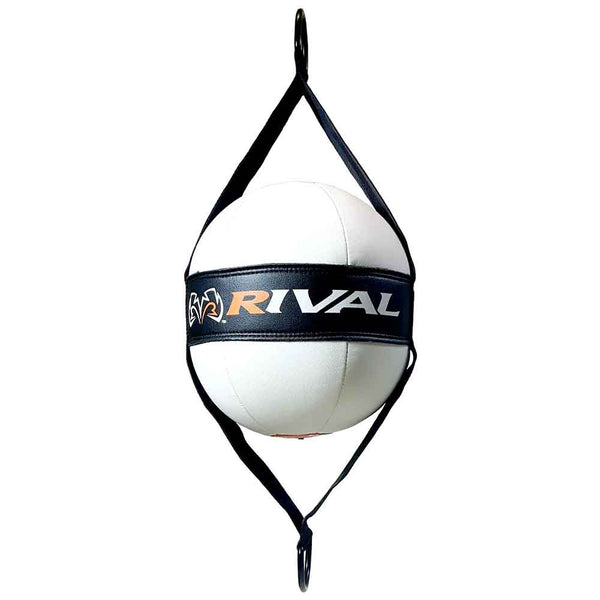
A double-end bag hangs between two elastic cords, usually between a high and a low attachment point. The tension and the direction of your punch determine how it moves. This lets you practice, among other things, landing a punch on a moving target and positioning yourself relative to the returning bag. That's a different exercise from the regular rebound rhythm beneath a platform.
A freestanding reflex bag has a different construction: the bag moves on a stand with a spring-loaded mechanism. Stores sometimes use the name speed bag for these models too. So look at the setup first. This guide focuses mainly on the hanging bag beneath a platform; the other systems offer interesting additional ways to train.
A stable setup starts with the platform and swivel
A clear rhythm starts with equipment that moves predictably. The platform must be securely mounted, the swivel must rotate freely, and the hanging loop must fit properly. Before the first tap, check that everything is secure and that the bag has enough room to move in all directions. Follow the instructions for mounting and securing the relevant system, and check that the supporting structure is suitable.
Next, adjust the height to suit your stance. You want to stand upright in front of the bag, with your hands near your face and without raising your shoulders. Balazs Boxing uses the bottom of the bag at about chin height as a starting point. The length of the bag and the swivel matter too: always check the setup with a few gentle practice taps.
An adjustable platform is practical when several people use the same setup. Secure the adjustment mechanism after every change. At home, the location also deserves attention: contact with the platform makes noise and can transmit vibrations. Careful installation and a suitable training time make the practice area more pleasant to use.
Stand in a relaxed position and keep your hands ready
Start facing the speed bag, with your feet in a comfortable, stable position and your knees slightly bent. Stand close enough to hit the bag with a small movement. You don't need to extend your arm far or lean after the bag with your upper body. Keep your eyes calmly focused on its path as it returns.
Keep both hands near your face, even when you're working with just one hand for now. Your other hand is then ready to take over later. Relax your neck and shoulders and keep breathing. If you notice you're holding your breath, shorten the sequence for a moment and find a steady pace again.
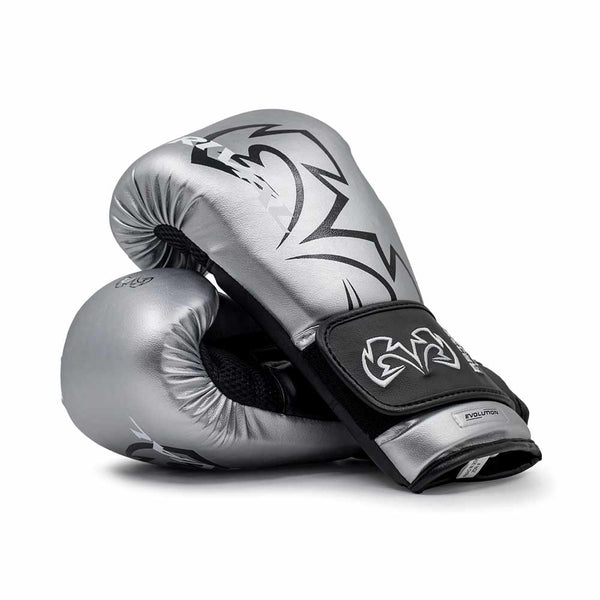
Use suitable hand protection according to the ball's instructions, such as properly fitted handwraps or suitable compact bag gloves. Tuck away any loose ends and start with light contact. This lets you focus on your technique. If your hand or wrist hurts, stop the session and check your protection and movement.
First, learn to land one light strike accurately
Give the ball one controlled strike and watch its path. A common beginner's move is to strike with the side of your fist near your little finger. Keep your wrist in a comfortable, firm alignment. The goal is to send the ball straight toward the platform, not to swing it off to the side with a big movement.
For the first few repetitions, feel free to let it come to a complete stop. This lets you learn the contact and direction separately. Then try linking two or three strikes together. A gentle, accurate strike gives you more time to see what happens than a hard opening strike that immediately leaves you playing catch-up.
If you hit the ball at an angle, first check the direction your hand is coming from and your distance from the platform. Change one thing and try again. TITLE Boxing's beginner instructions show how to build up your stance, light contact and rhythm. Use the demonstration as a visual supplement to your own unhurried practice.
The basic rhythm: strike and three rebounds
After your strike, the ball moves away from you and hits the back of the platform. It then swings toward you and hits the front. Next, it goes back again for the third contact with the platform. When the ball comes toward you again, make your next strike. That is the familiar pattern: strike, one-two-three, strike.
At first, count the rebounds softly to yourself. Listen especially for the difference between a steady sequence and a ball that starts to wobble. The sound gives you useful feedback: you do not need to follow every strike with a quick movement of your head. Let the rhythm tell you when it is time for your next move.
Speed Bag Central calls this the triplet rhythm. It is one of the techniques where you strike the ball repeatedly from the same side. There are other patterns to learn later, such as working from the opposite side too. For now, keep the basics simple: one side, three rebounds and a small, repeatable strike.
From one hand to a smooth hand switch
Practice the familiar rhythm separately with your left and right hands. Your preferred side will often feel relaxed sooner. Give your other hand time to practice on its own so it can learn the movement without having to manage a complicated switch right away. Meanwhile, keep the waiting hand close to its starting position.
For example, start the transition with three taps on the left and three on the right. Once that feels comfortable, reduce it to two per side. Then you can switch after every tap. These are practice steps, not required levels: feel free to return to a longer set with each hand if it makes the transition feel more controlled.
Even as you switch hands, you still hit the bag from the same side. So keep the same three rebounds. Let the first hand make room as the other takes over with a small movement. The aim is a smooth handover, not two hands reaching for the bag at the same time.
Small circles make room for variation
A compact, circular hand movement brings your fist back to a useful starting position after the tap. The wider the path your hand takes, the longer it takes to reach the bag again. Balazs Boxing therefore recommends a smaller circle as the pace increases. Think of moving smoothly in a circle, not forcefully pushing your shoulder forward each time.
Once the basic pattern is working, you can choose one simple variation. For example, change the balance of left- and right-hand taps, or alternate a short, slower section with your usual pace. Keep everything else the same so you can notice how that one change affects your technique.
Tony Jeffries’ instructional video shows different ways to use the speed bag. Watch a demonstration at a relaxed pace first, then choose one element to practice. A demonstration is most valuable when it gives you a clear focus for your next set. Your basic pattern remains the one you can return to.
A first practice session with short work blocks
Give your first sessions a modest, specific goal: find the same pattern a few times in a row. Four work blocks of twenty to thirty seconds, with thirty to forty-five seconds of recovery between them, can be a starting point. This is a practical example; shorter sets also work well if you are still practicing individual contacts.
Use the first block to work on your starting position and the direction of your taps. Spend the next block on your other hand. In the third block, try a brief switch, and in the fourth, repeat what worked best. This lets you practice different elements without making every set faster or longer.
During the break, let the bag slow down naturally, relax your arms and choose your next focus. Afterwards, reflect on one noticeable improvement: a straighter return, a smaller hand movement or a smoother transition. That tells you what to repeat in your next session.
Focused rounds for those who have mastered the rhythm
Once short sequences feel relaxed, you can use rounds to maintain the same technique for longer. One possible example is three one-minute rounds with one minute of recovery between them. The first round uses a familiar basic pattern, the second a controlled hand switch, and the third repeats the pattern you want to feel most comfortable with.
Only lengthen a round when you can still maintain your focus through to the end. Two or three minutes may be a suitable goal later, but you do not have to work longer and learn new variations at the same time. When your arms get tired, pay extra attention to raised shoulders and hands that return lower and lower.
A round does not have to be one uninterrupted display. If you lose the pattern, calmly stop the bag and build it up again. That way, restarting becomes part of the training too. Over time, you may find it takes less and less time to return to a steady rhythm after an interruption.
Combine speed bag work with bag training, pads and shadowboxing
Give each part of your boxing training its own purpose. On the speed bag, for example, you can work on switching hands smoothly. During shadowboxing, focus on your stance and where your hands return after a combination. On the punching bag, add distance, movement and well-placed punches.
On pads, you can practice a specific response to a cue. That makes the exercise different from maintaining a rebound rhythm on your own. This variety makes a training session more rewarding: rhythmic work is followed by exercises in which you adjust your choices and movements to a different goal or a partner.
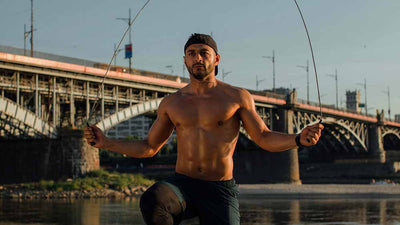
Jumping rope also makes a good pairing. The jump rope calls for coordination between its rotation and your footwork; the speed bag emphasizes hand contact and rebound. For precise technique work, allow enough recovery between exercises. If you want to create a conditioning circuit, choose the duration and order deliberately, with suitable gloves for the bag or pad work.
Choose equipment that supports your training
Start with the size and how the complete setup behaves. A larger model can offer an easier target and a gentler start. A compact model calls for smaller, more precise strikes. The force of your strikes, the air pressure specified in the model instructions, the swivel and the platform all play a part. So compare actual dimensions, not just letters such as S, M and L.
Cleto Reyes Classic
The Classic is a black leather speed bag with red trim, available in several sizes. The listed sizes range from Small at 23 × 15 cm through Medium at 25 × 18 cm to Large at 28 × 18 cm. This gives you room to choose a size that suits your current exercise and a pace you feel comfortable with.
Cleto Reyes Mexico
The green-white-red Mexico version combines recognizable Mexican colors with a leather exterior. You can compare the Medium size at 25 × 18 cm with the Large at 28 × 18 cm. Choose based on your preferred size and the available version, not on an assumed difference in training purpose because of the color.
Super Pro Black-Red
The black-red Super Pro is a leather speedball with an eight-panel construction. It is a compact option for repeatable rhythm training beneath a platform. Follow the same gradual progression of taps, rebounds, and hand switches to get used to how the ball moves.
Super Pro Retro Brown
The Retro Brown has a classic brown look and listed dimensions of 20 × 18 cm. This version is worth considering if you like that traditional look in your training space. The main difference from the black-red version is the design; your training progression stays the same.
A compatible swivel
The swivel connects the hanging loop to the platform. A metal version such as the Super Pro swivel is a practical addition or replacement for a compatible setup. Check how your platform connects and mounts before combining parts. A speedball sold separately does not automatically include a complete mounting kit.
Five adjustments when your rhythm falters
When a sequence breaks down, look for one specific cause. A small adjustment lets you test right away what changes. These five points help you keep the exercise manageable.
- Make the first tap lighter. If the ball comes back too fast or erratically right away, start with less force. Give yourself time to see its path and hear the three contacts with the platform.
- Shorten your hand’s return path. A big swing takes time. Bring your hand back in a compact circle and keep the waiting hand close to its starting position.
- Adjust your distance from the ball. If you have to reach or move your upper body with it, adjust where you stand. Find a position where a small movement is enough.
- Slow down the hand switch. Go back to a few taps with each hand before switching after every tap. Give each hand a clear moment to take over.
- Check the setup too. If the ball keeps moving off-center with controlled taps, check the hanging loop, whether the swivel moves freely, the mounting, and the correct air pressure for the model.
Care for the ball and check the mounting
Wipe down the outer surface after use according to the material’s care instructions and let the ball dry. Check the seams regularly, especially the hanging loop: that is where the ball’s repeated movement is concentrated. Also check its connection to the swivel and make sure the platform and adjustment mechanism are still securely fastened.
Follow the model’s instructions for inflation and use a suitable pump. Handle the valve carefully. There is no universal pressure you can apply to every speedball. The right firmness depends on the ball; an erratic path also calls for a check of the direction of your strikes and the suspension.
Only use care products when they suit the material and its care instructions. A leather outer surface may need a different approach from microfiber or plastic. This quick check after a session helps you start the next one with well-maintained equipment and an organized setup.
Make your progress small and visible
Progress is more than a faster pace. You may be able to stay relaxed for longer, feel more control with your other hand or return to your pattern more quickly after an interruption. Choose one of these points for your next session. This keeps the task specific and lets you notice what is actually improving.
Then change one training variable at a time: the work duration, the number of sets, the hand alternation or a familiar variation. Keep everything else as consistent as possible. If you speed up, work for longer and try a new technique all at once, it becomes harder to tell which change makes the exercise more difficult.
A short video of yourself in action can help you review your hand position and the size of your movements. Above all, compare yourself with an earlier session. The sound and ease of your sequence often tell you a lot before you can produce an impressively fast pattern.
A steady rhythm starts with a small, controlled movement
A suitable setup, light contact and attention to the three rebounds form the foundation of speedball training. Give both hands time to practice, build up the alternation gradually and use short work intervals to find a consistent pattern. Then you can increase the duration and variety step by step.
This gives the speedball a clear place in your boxing training: as a focused exercise for rhythm, coordination and controlled repetition of movements. Combine it with shadowboxing, the punching bag, pads or a double-end ball to work on other parts of your training. Well-chosen equipment supports this progression; your specific training goal gives the session direction.