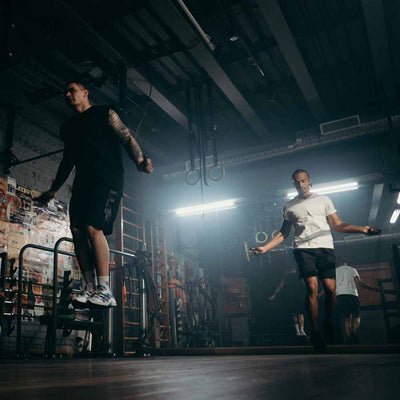
You hear the rope hit the floor, settle into your breathing, and notice your foot movements getting smaller. A few minutes later, the gym feels different: you’re warm, alert, and ready to train. That familiar ritual helps explain why jumping rope appeals to boxers, kickboxers, and MMA fighters.
Behind that simple image is a versatile form of training. You can warm up gently, challenge your fitness, change your rhythm, and practice staying relaxed while your legs keep working. A jump rope also gives you constant feedback: when your jump and rope rotation are in sync, you keep going. If something changes, you notice it right away.
The benefits come from focused practice. A good warm-up calls for something different from a tough conditioning round, and the boxer step calls for something different from a double under. In this article, we connect those goals to technique, equipment choice, and specific training examples. That gives jumping rope a clear place alongside heavy bag work, pad work, shadowboxing, and the other parts of your martial arts training.
Why the jump rope belongs in martial arts training
A jump rope is compact, quick to set up, and suitable for different skill levels. Within the same exercise, you can focus on consistency, variety, duration, or pace. That makes it a practical part of training where you regularly switch between warming up, technical drills, and more intense rounds.
There is another familiar element: martial arts require you to keep your body coordinated while you move. When you jump rope, your feet, hands, eyes, and breathing work together. The rope’s arc shows whether your movements are still in sync. That gives you a simple, repeated task you can refine with practice.
For a boxer, it can be a relaxed way to start training. A kickboxer can use brief changes of pace to shift from easy movement to more active work. An MMA fighter can include the jump rope in a conditioning session alongside technical training. What they share is the training goal, not the same round structure or the need for the same rope.
Build fitness with a familiar rhythm
Jumping rope makes it easy to vary your effort. You can jump at a steady rhythm for a short period, build up to longer work intervals, or alternate easy stretches with brief bursts of speed. How hard that feels depends on factors including your skill, jumping pace, jump height, equipment, and the balance between work and recovery.
That explains why someone with good cycling or running fitness can still tire quickly at first. You still need to learn the movement pattern. Jumping too high and making large arm circles take extra effort. Once you start turning the rope more with your wrists and jumping lower, the same exercise usually becomes easier to manage. Technique and fitness develop alongside each other here.
Research also supports its value as a form of training. A 2022 systematic review with meta-analysis brought together 21 studies involving 1,021 participants and found improvements in cardiorespiratory endurance, among other outcomes. Most of the studies involved young participants. That provides a useful basis for viewing the jump rope as a conditioning tool; tailor your own training progression to your experience and total weekly training load.
Light footwork, timing, and contact with the floor
Good jump rope technique is about a takeoff and landing you can repeat. You lift your feet just high enough for the rope to pass, land with control, and get ready for the next turn. As you become comfortable with the rhythm, you can keep your movements smaller and become more aware of how your weight is distributed across your feet.
In the boxer step, you shift the emphasis between left and right. That is a different movement challenge from continually pushing off with both feet at once. You practice shifting your weight smoothly, keeping the rope turning, and keeping your upper body steady with each landing. This can make the exercise useful for athletes who want to move more deliberately.
You then make the connection to your martial art by practicing the sport itself. In shadowboxing, you work on distance, your stance, and moving after a combination. On pads, you add cues and reactions. The jump rope provides the rhythmic training; technical drills give it a boxing, kickboxing, or MMA purpose. That way, you use each type of training for what it does best.
Coordination and concentration you can practice
With a jump rope, the rotation of your hands and the moment your feet leave the ground have to come together each time. You learn to coordinate those movements. At first, that takes a lot of concentration; later, you have room to change patterns deliberately and then return to your basic rhythm.
Getting back into it is a valuable exercise in itself. You try a variation, catch the rope once, and start again without treating the whole session as a failure. Pick one practical cue, such as relaxed shoulders or keeping your hands closer to your hips. That gives you something specific to work on.
Keep these exercises simple. A short set of relaxed basic jumps followed by a few alternating steps already tells you plenty about your timing. If you try to jump higher, faster and with more complex footwork all at once, it's harder to tell what changed. Focusing on one thing at a time makes your training easier to track and your progress easier to see.
The basic technique: jump low, turn the rope steadily
Start upright, looking ahead with your shoulders relaxed. Keep your upper arms fairly close to your body and the handles roughly beside your hips. The exact position varies a little with your build and the rope, but the aim is always the same: a small, controlled turn without your arms drifting out to the sides.
Turn the rope with a steady wrist motion. Jump as it passes under your feet, and jump no higher than necessary. Land softly, letting your knees bend to absorb the impact. Aim for a calm, repeatable movement rather than jumping as high as possible. If your landings sound loud and heavy, slow down and make your movements smaller.
It helps to practice turning the rope and jumping separately at first. Without the rope, make a few low jumps at a steady pace. Then turn the rope beside your body with both handles in one hand. Next, put the movements together. Short, successful sets give you a clearer learning goal than one long attempt in which you keep repeating the same mistake.
From the basic jump to the boxer step
In the basic jump, both feet leave the floor at about the same time. It's a simple place to start: one rope turn, one small jump. The next step is to land alternately on your left and right foot, as if jogging gently in place. Keep your feet low here too; there's no need to lift your knees high.
The boxer step adds a subtler shift in weight between your feet. Let your center of gravity shift slightly from side to side and keep the rhythm flowing. Aim for a relaxed weight shift, not a wide jump from side to side. Start without the rope to get a feel for it, and add the rope movement once the footwork feels familiar.
Combine new patterns with a familiar foundation. For example, do a short set of jumps with both feet, try a few alternating steps, then return to the basic jump. That transition is an exercise in itself. Crossover steps and double unders can add variety later, but choose a skill for each session that fits your goal. For a good warm-up, a calm, controlled basic jump can be just right.
Which jump rope suits your training?
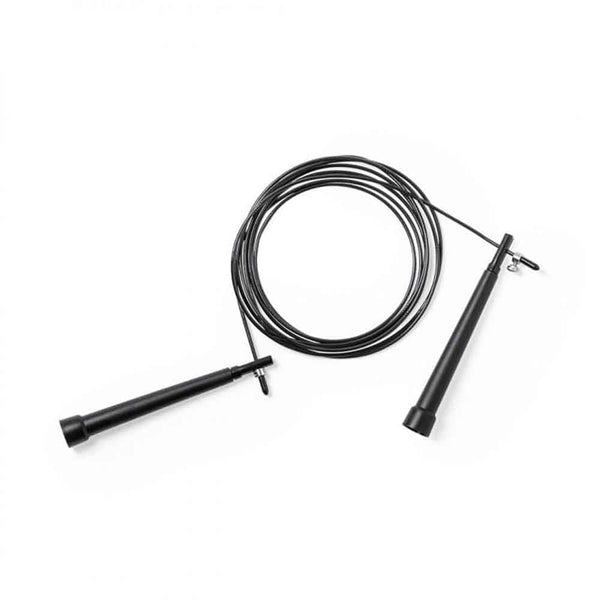
Choose a jump rope based on how the rotation feels, how it adjusts and the kind of training you want to do. A rope that rotates smoothly and has a comfortable grip makes it easier to find a steady rhythm. A speedrope with a thin cable feels different from a thicker plastic rope or a leather version. You will notice this most when you speed up or change rhythm.
With a lightweight rope, it is easy to focus on a quick rotation and small movements. A rope whose movement you can feel more clearly may be helpful when you want to learn to recognize the turning point. With weighted versions, where the weight sits also matters: in the rope, in the handles or in both. These are different equipment choices that feel different when you jump.
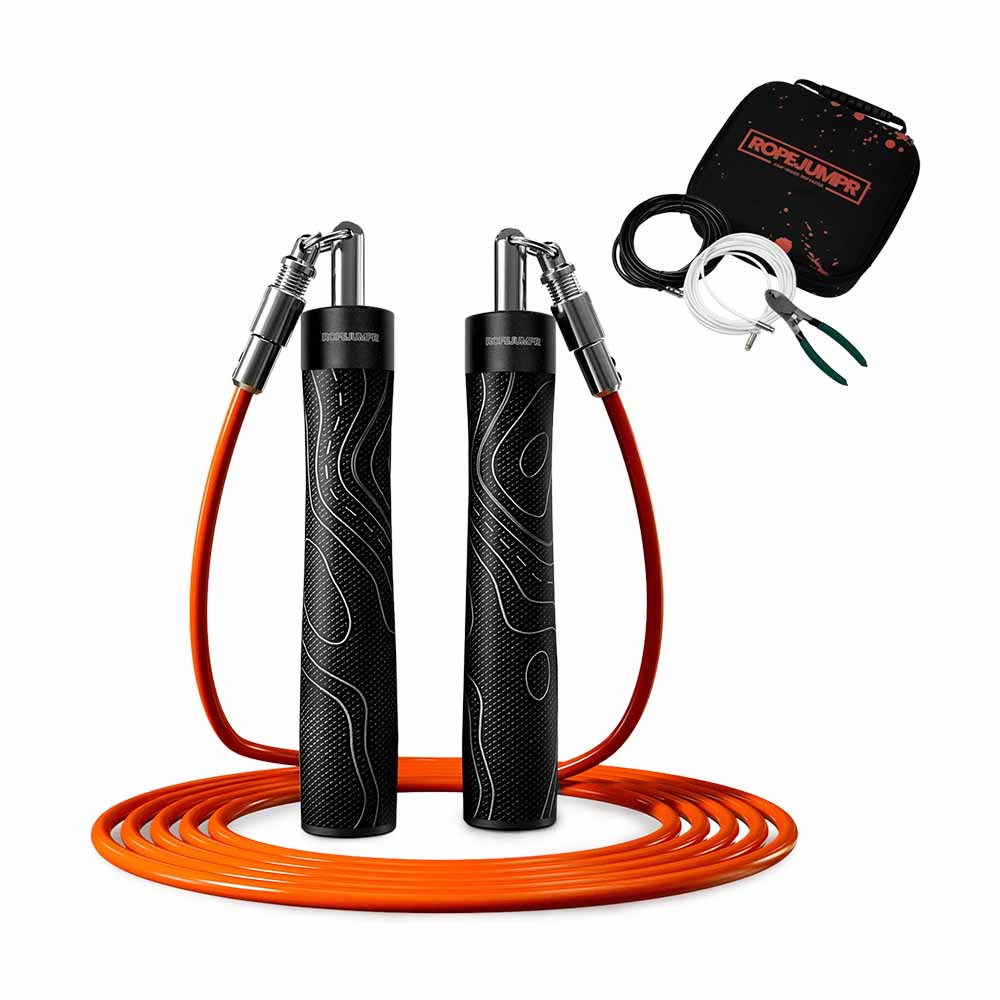
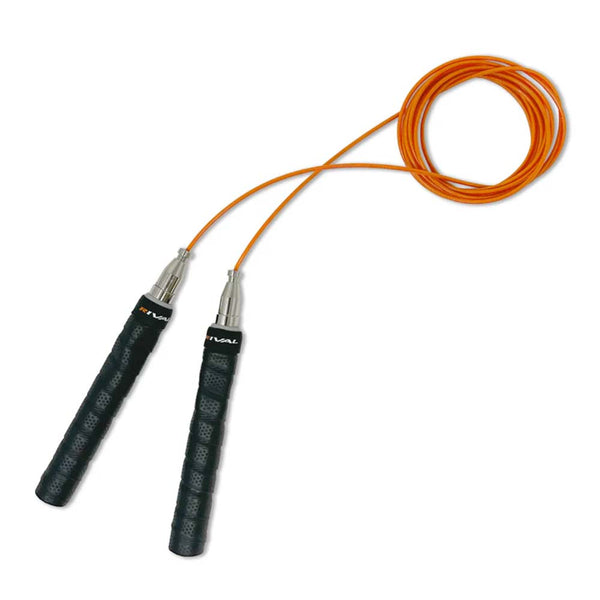
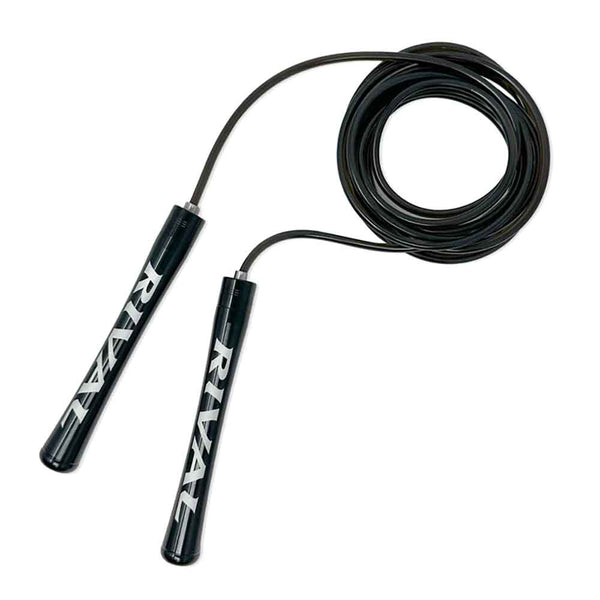
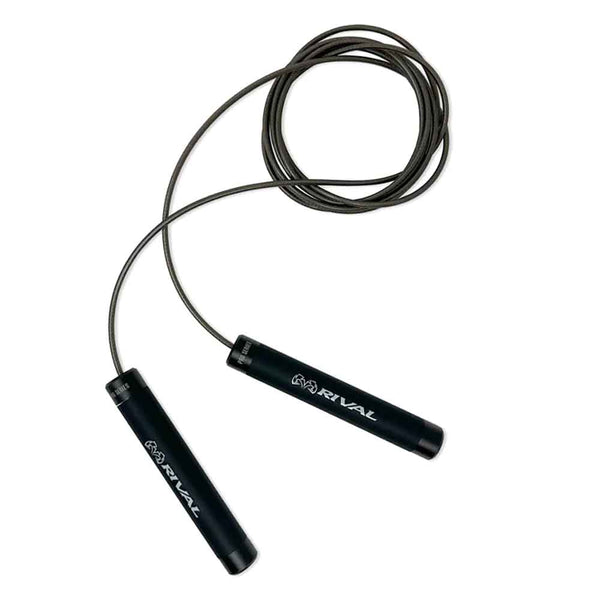
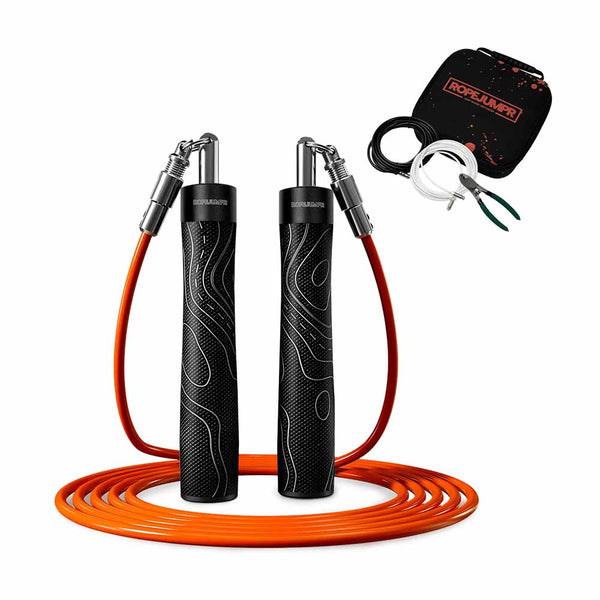
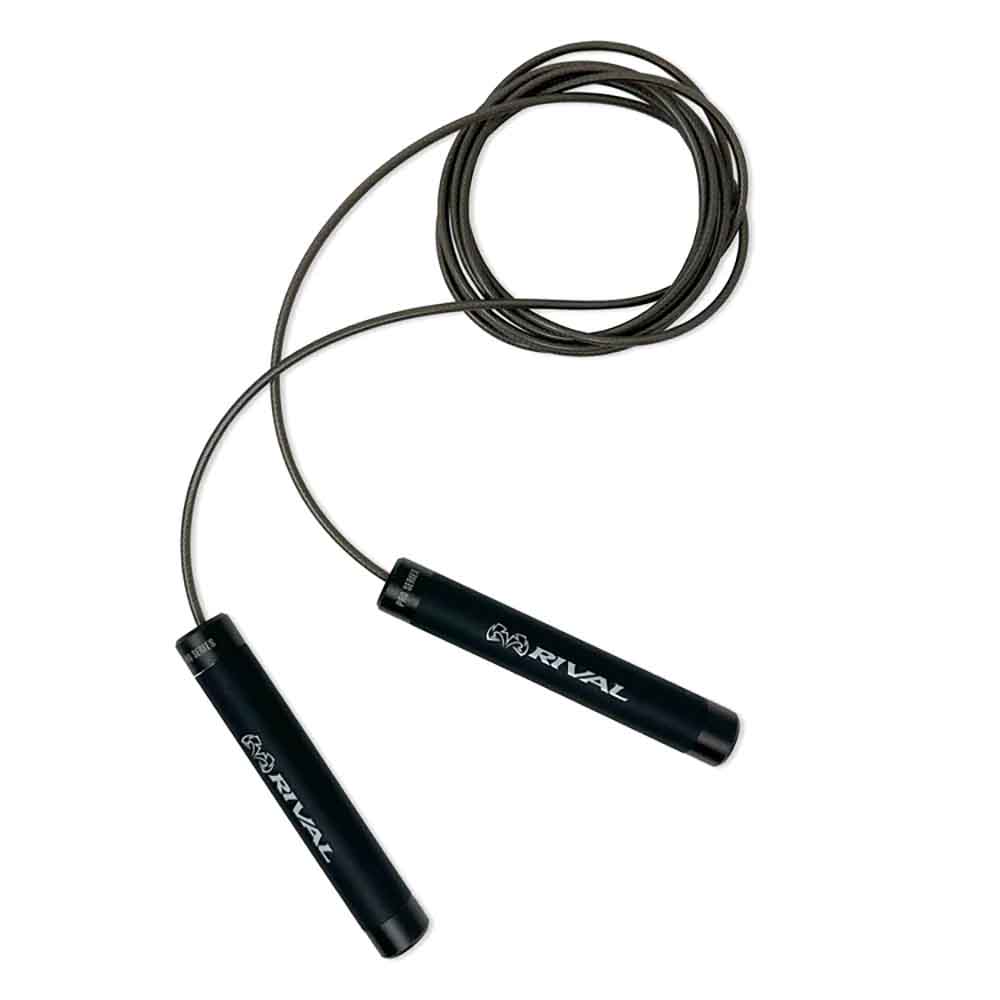
In the range, the Rival Comfort Grip, Rival Aluminum Grip and Fight2Win Classic, for example, offer different options for speedrope training. The Rival Weighted combines interchangeable cables with removable handle weights; the Ropejumpr Complete Set offers different ropes. Choose these designs with a purpose in mind. For a detailed comparison of models, the jump rope buying guide is the natural next step; here, the focus remains on how you train.
Adjusting the length and checking your rotation
The right adjustment gives the rope room to pass around your body while your hands stay in a relaxed position. A loop that is too large can force you to adjust your rhythm; if the rope is too short, you may compensate by changing your posture or arm position. So watch how the rope moves while you jump, rather than relying only on the length shown on the packaging.
First, follow the adjustment method for your chosen model. Some ropes are secured with screws, while others use a clip or knot system. An adjustable cable that needs to be shortened requires a different approach from a rope whose length you can easily change later. Test your chosen length with gentle basic jumps before making any permanent changes.
A common first check is to stand on the middle of the rope and pull the ends upward. That is a starting point, not a final check. The position of the handles, the type of rope and your technique all affect how much length feels comfortable. The key question is whether you can maintain a steady rotation with an upright posture and low jumps.
Surface, shoes and room to move
A flat, non-slip surface and enough clear space make jumping more comfortable and easier to manage. Check that the floor is clean and dry and that the rope can rotate freely above your head and behind your body. In a busy gym, it helps to find a regular spot away from walkways, especially when several people are training at once.
A suitable jump rope mat can help define your training area and protect the rope against a rough surface. The mat should stay firmly in place and provide enough room for your normal rope rotation. A thick, soft surface that you sink into is different from a firm sports floor. The best choice is a combination that lets you land with control and allows the rope to pass smoothly.
Wear sports shoes that fit comfortably and suit the floor and the exercise. Build up the repeated impact from jumping gradually, especially if you also do a lot of running, kicking, or intense footwork. Stop the jumping interval if you feel sharp or increasing pain. Have persistent problems with your foot or Achilles tendon, for example, assessed before increasing the load further.
A warm-up that prepares you for training
Use the start of your warm-up to find your rhythm. Start slowly, relax your shoulders, and choose a simple jumping pattern. You do not need to jump straight into the pace of a conditioning interval. The goal is to become more active gradually, then continue training with focus.
One practical example is three one-minute intervals of easy jumping, with a short break or some gentle movement in between. That is an example structure, not a required amount. If you have little experience with the jump rope, you can make the intervals shorter. If you already jump smoothly, you can use a few easy transitions to an alternating step within each minute.
Then move on to movements that fit your session: shoulder movements, relaxed shadowboxing, and the technical patterns you will use on the bag or pads. For kickboxing, add appropriate kick preparations; for MMA, add the movements from the planned part of your training. This makes the jump rope the start of a focused warm-up rather than a standalone ritual that has to be the same every day.
Start with short, successful sets
If you still often step on the rope, the first training gain is finding a rhythm you can recognize. Choose a slow pace, give yourself enough time to recover, and aim to finish each set with the same relaxed technique you started with. You can also count a short set, then deliberately start again. That makes the exercise manageable.
A first session could consist of six rounds of thirty seconds of practice, with about thirty seconds of easy recovery between rounds. If the rope catches during a work interval, you can start again. The goal is a controlled attempt, not a contest to see how many seconds you can go without stopping. If thirty seconds does not feel comfortable yet, shorten the work interval and keep the generous rest period.
Afterward, note what improved your technique. Did your hands stay steadier, did you jump lower, or was it easier to start again? Those are useful signs of progress. Repeat the format until the exercise feels manageable, then add one small change. A few longer work blocks make more sense than jumping faster, resting less and trying a new trick all at once.
Training in two- or three-minute rounds
Once you have mastered the basics, you can organize rope jumping into rounds. This gives athletes who also use a timer for bag work and pad work a familiar structure. You can adjust the work period to suit your goal, for example to two or three minutes, with a recovery period chosen in advance.
One example of a controlled workout is three two-minute rounds, with a minute of rest each time. Give each round one focus: first jump at a steady pace, then alternate gently between basic jumps and the boxer step, and finally maintain the same pattern while staying relaxed. Keep your pace manageable for the whole round. The round is a success when you clearly carry out your chosen goal.
Jumping for three minutes is a longer task, not an automatic improvement on the same routine. Check whether your technique still holds up in the final stretch. If your main goal is conditioning, the longer work period can be useful. If you want to learn a new pattern, short blocks with a fresh start may work better. The timer helps structure the training; your goal determines how you set it.
Using bursts of speed and weighted ropes with purpose
Changes in pace give a conditioning block a different feel. You can alternate an easy stretch with a short burst of speed, then return to the same base rhythm. The transition back is interesting too: after the faster stretch, can you regain control of your rope turns and breathing?
One possible format for an experienced rope jumper is six rounds of twenty seconds of brisk jumping with forty seconds of easy recovery. Choose a variation you already know well and take enough time afterward to keep moving at an easy pace. This is an illustrative training example. It is not a research protocol or a fixed ratio that gives every athlete the best results.
A heavier rope changes the task again. Turning it can create more noticeable resistance and change the load on your arms and shoulders. Start with shorter, controlled blocks to get used to handling it. Match your choice to what you plan to do next: staying fresh and relaxed for precise technical pad work is a different goal from a separate, intense conditioning block at the end of the session.
The connection to shadowboxing, bag work and pad work
Make the transition to combat sports by performing a specific technical drill after jumping. For example, do a short, relaxed jump rope interval, put the rope away safely and then shadowbox, paying attention to your stance and your position after a combination. The rhythm from the warm-up then carries over into a clear next step.
You can use the same approach in heavy bag training. Choose one combination and set yourself the task of deliberately resetting your position afterward. In pad training, a partner can give you a simple cue to move or perform an agreed action. This also trains the awareness and decision-making involved in that combat sports situation.
For a conditioning circuit, you can alternate jump rope and heavy bag intervals, as long as the pace suits the technique you're aiming for. If you mainly want to practice precise technique, allow enough recovery between exercises. If you want to work with control while tired, make that goal specific too. That way, every round has a purpose rather than becoming a string of exercises.
Build progress without changing everything at once
A useful training log can be very simple: what type of jump did you do, how long were the work intervals, and how well did you maintain your technique? You don't have to count every turn to see progress. Less unnecessary arm movement, a steadier rhythm and a smooth restart are just as much progress as a longer round.
For your next step, choose one variable. For example, lengthen some of the work intervals, add a repetition or practice a new transition. Keep everything else familiar for now. That way, you can better judge which change you handle well and where you still want to spend more practice time.
Plan your jump rope sessions around your whole training week. A session with lots of running, explosive leg exercises or intensive kicking drills also adds to the load on your lower legs. On a lighter day, you can focus on relaxed technique instead. By fitting your jump rope goal into the rest of your training, you keep it a useful part of the bigger picture.
Five adjustments that make your technique smoother
When the rope keeps catching in the same place, one targeted adjustment often tells you more than just trying harder. Start at a comfortable pace and focus on the issue that stands out most in your technique.
- Make your jump smaller. Don't lift your knees high; just let your feet leave the ground enough for the rope to pass underneath. A lower, repeatable jump helps you find a steady rhythm.
- Bring your hands back to a relaxed position. When your arms drift farther apart, the space available for the rope changes. Find a relaxed position beside your hips again and keep the turning motion small.
- Relax your shoulders and grip. Hold the handles firmly enough to control them without gripping them unnecessarily tightly. Let the rope turn mainly through a controlled wrist movement.
- Check the length and surface. If the rope keeps catching on the floor or landing in front of your feet, check its adjustment, the surface and the arc of your swing. Change one thing and test again with relaxed jumps.
- Restart with a familiar basic pattern. If you catch the rope, position it properly behind your feet again and start with a familiar pattern. Add your new step only once you have regained your basic rhythm.
A short video of yourself can help with this. Focus on one thing, such as the position of your hands or the height of your jumps. Then make that the focus of your next attempt; the video is a practical training aid, not a measure of how spectacular your jumps look.
Care for your jump rope and have it ready
After training, wipe down the handles and let any damp parts dry before storing the rope. Take a quick look at the cable or rope itself too, especially where it touches the floor and connects to the handles. It is a small routine that helps you keep track of your equipment’s condition.
A rough outdoor surface can wear down a cable faster than a suitable sports floor or mat. Before use, check that the outer layer is intact and the connections are secure. If any damage leaves sharp parts exposed, stop using the rope; replace the affected part if the model allows it.
Store your jump rope in loose loops, preferably in a suitable bag or case, without bending the cable sharply. For leather versions, follow the care instructions for the material. Keep your training area practical too: have your rope and timer ready, enough clear space and a clear first task. That way, you can start your next session focused.
A small training tool with plenty of possibilities
Jumping rope earns its place in martial arts through its combination of simplicity and variety. You can use it for a gentle warm-up, targeted conditioning and increasingly precise control of the rope’s rotation, your landing and your rhythm. The challenge grows with your skill, from a few controlled jumps to longer rounds and smooth transitions.
The best session is not automatically the fastest or most complicated. It is the session where you know what you are practising and carry out that task with purpose. Choose a suitable jump rope, adjust it carefully and build up the intensity step by step. Then connect that work to your shadowboxing, heavy bag training or pad work. That gives the rhythm of the jump rope a clear place in the rest of your development as a martial artist.