You turn on a night of combat sports. Two fighters face each other, a referee stands between them and the crowd rises to its feet with every clean strike. So far, GLORY and the UFC look quite similar. But as soon as someone closes the distance, you see the difference: in GLORY, it remains a kickboxing fight. In the UFC, that same moment can be the start of a wrestling move and a fight on the ground.
GLORY organizes kickboxing; the UFC organizes mixed martial arts, or MMA. That is the short answer. The more interesting answer lies in what those sports demand of their competitors, which techniques you see and why a fight sometimes unfolds very differently from what you expect.
Someone who mainly wants to see punches and kicks watches with different expectations from someone who also enjoys following a takedown, escape or submission. You do not have to decide which sport is more 'real' or better. They are different kinds of competition, with different possibilities and different problems to solve.
GLORY and UFC are organizations, not names of sports
GLORY and UFC have become so well known that their names are sometimes used as the names of sports. Still, the distinction is useful. Kickboxing is the sport behind GLORY; MMA is the sport behind the UFC. Both sports also exist outside these organizations.
UFC stands for Ultimate Fighting Championship. A UFC fighter competes in MMA, not in a separate combat sport called 'UFC'. Likewise, a kickboxer does not have to fight in GLORY to be a kickboxer.
The organizations put on fights and events, build their own rosters and have their own championships. A title in one organization is therefore not the same as a championship in the other. Even when fighters are similar in body weight, that does not mean they are competing for the same title or under the same rules.
The main differences side by side
Start with the sport, then look at what its rules allow. The fighting area, the techniques and the gloves are all part of the same picture. The comparison below brings those elements together.
This comparison gives the broad picture, not a complete set of competition rules. For a specific fight, the applicable rules of the organization and regulator determine what is allowed. Especially in MMA, changes to the rules and how they are applied can vary by regulator.
What happens during a GLORY fight?
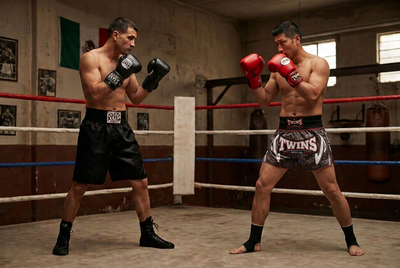
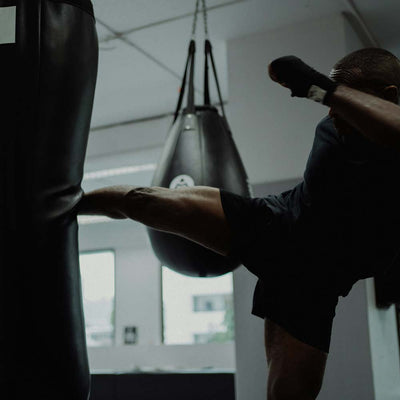
In GLORY, the fight centers on standing attacks and defense. You see punches, kicks and knees under kickboxing rules. Fighters have to find their range, set up attacks and react to what their opponent does in response.
There is more to it than taking turns throwing combinations. A jab can gauge distance or draw a reaction. A punching combination can create an opening for a kick. A step to the side can make an attack miss while putting you in a new position. The better you follow these details, the more you see in an exchange that may look like nothing but speed at first glance.
There is no takedown or submission that lets you shift the fight into a different kind of contest. You have to find your solutions within stand-up kickboxing. That gives the sport a clear focus, but it does not make the task easy. Your opponent faces the same limits and is trying to impose their own game within them.
In defense, distance, footwork and recognizing an attack work together with your guard. A fighter may wait briefly for the right moment. During a series of attacks, watch which strikes actually land and how the other fighter responds.
Knees are allowed in GLORY, but there are limits on the clinch
A common oversimplification is that kickboxing does not allow knees. That is not true for GLORY. Legal knee strikes are explicitly included in the GLORY rules. One key distinction is what is allowed while holding an opponent.
Under the GLORY rules consulted, a fighter may hold their opponent to immediately deliver one legal knee strike. They must then release the clinch right away. Holding on for a long time to rest, pin the opponent down or build a prolonged series of attacks from a holding position is a different matter.
Elbows are not allowed in GLORY. Wrestling techniques, throws, sweeps and submissions are also outside the permitted ruleset. That means GLORY kickboxing is not the same as Muay Thai, even though some attacks and training backgrounds overlap.
For viewers, this explains why a referee sometimes separates two fighters quickly. The fight is not meant to turn into a prolonged clinch contest or a wrestling match. It must continue within the limits of these kickboxing rules.
What does MMA add in the UFC?
In the UFC, stand-up exchanges are only one part of the fight. A fighter can try to close the distance, execute a takedown and continue fighting on the ground. The other fighter must therefore respond not only to a punch or kick, but also to the risk of a change in position.
The possibility of a takedown also changes the stand-up fight. An attack may be intended to land, but it may also be meant to draw a reaction that sets up a wrestling move. A fighter who moves low is not necessarily looking for a body shot. That can make it hard to judge individual techniques without looking at the whole situation.
On the ground, position, control, attacks and escapes become important. Sometimes you see a series of actions right away. At other times, two fighters may appear to be lying almost still while working on their grip, applying pressure or freeing an arm or leg. Not every movement is big enough to notice immediately from the couch.
A submission is an attempt to force an opponent to give up with a permitted choke or joint lock. That is a fundamentally different option from winning with a stand-up attack. At the same time, ground fighting can also focus on improving position, landing permitted strikes or getting back to the feet. Not every trip to the ground leads to the same outcome.
MMA means more options, not fewer rules
The UFC is not a competition where anything goes. MMA allows more types of techniques than kickboxing, but within a detailed rulebook. The Unified Rules of MMA cover prohibited actions, judging, bout structure, weight classes and equipment, among other things.
A permitted technique is still subject to conditions. The target, the opponent's position and the applicable rules all matter. The fact that elbows, knees or ground fighting are allowed does not mean every attack is permitted from every position.
For this comparison, the difference is not 'GLORY has rules, UFC has freedom'. The difference is which actions the rules allow in a match. Both sports have referees, stoppages and limits. Those limits, in turn, shape which strategies make sense.
If you want to know the exact rules for a particular UFC bout, check the current regulations for that event and the relevant regulatory body. An older explanation of MMA can be useful for the broad picture, but may not accurately reflect every detail that has changed since.
Why the ring and Octagon feel different
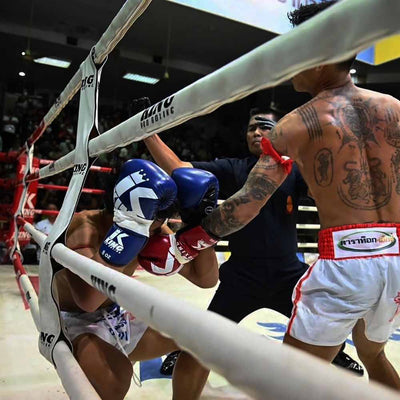
GLORY bouts take place in a ring with ropes. UFC bouts are held in the Octagon: the recognizable eight-sided cage. That difference is more than just a backdrop for television.
In a ring, the available space and position relative to the ropes change how an exchange unfolds. A fighter may try to make the other fighter retreat, limit an escape route or create distance again. Under GLORY rules, this remains part of a stand-up kickboxing match.
In the Octagon, the fence can also play a role in clinching, takedowns and getting up from the ground. A position by the cage is therefore not quite the same as having your back to the ropes. There may be different ways to hold on, defend and move.
Pay attention to the space a fighter can actually use. An opponent's position can block a path even when there is visibly open floor. Watch where a fighter ends up after an attack and which directions remain open.
Why fighters make different choices
A kickboxer and an MMA fighter can both have a strong jab or roundhouse kick. Even so, the same technique may not fit into their fights in the same way. The rules determine what response they need to expect and what is possible afterward.
In GLORY, you do not suddenly have to defend a takedown after a punching combination. In the UFC, you do have to account for that possibility. A stance, distance or attack that works well in one situation can create a different problem in the other.
Kickboxing and MMA each require their own complete skill set. In kickboxing, the contest centers on standing punches and kicks within the rules. MMA adds wrestling and ground fighting, among other things. So compare fighters within the type of contest they train for.
Some competitors have experience in multiple combat sports, but a background does not tell the whole story. Ultimately, what matters is what someone can do against this opponent under the rules of this fight. A hypothetical match between champions from different sports only becomes a meaningful comparison once you agree on which rules they would fight under.
How are fights won and judged?
In both organizations, a fight can end before the scheduled time is up or go to the judges. A knockout or a stoppage by the referee can determine the result. In MMA, a fighter can also win by submission.
When a GLORY fight goes to the judges, not every impression carries equal weight. The rules consulted set out an order of judging criteria: knockdowns, damage inflicted by legal attacks, the number of clean strikes landed, and then aggression or dominance in the ring.
Applying pressure is not, in itself, the same as winning a round. Moving forward, moving a lot and looking active cannot be judged separately from what a fighter achieves by doing so. Counting only how often someone attacks misses part of the story.
In MMA, too, a fight is not simply a contest of who stays on top longest or moves forward most. Offense, defense, position and their effects must be judged according to the applicable judging criteria. The details of those criteria belong in the relevant rules, not in a snap judgment based on one moment on TV.
What makes a victory even more compelling is the path to it. A decisive striking attack and a carefully set-up submission can both decide a fight. As a viewer, it helps to recognize what problem a fighter was trying to solve before the fight ended.
Why the gloves differ
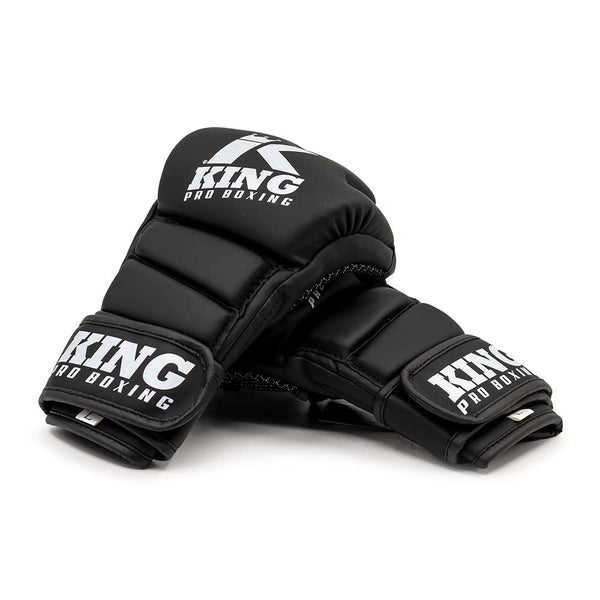
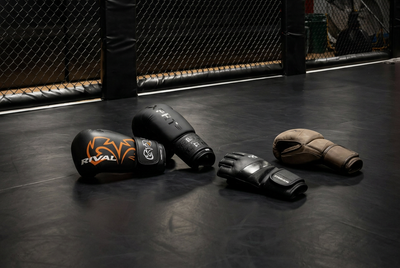
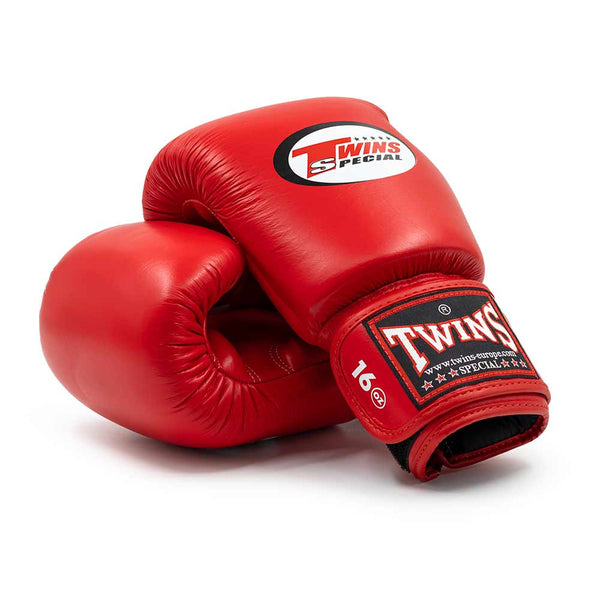
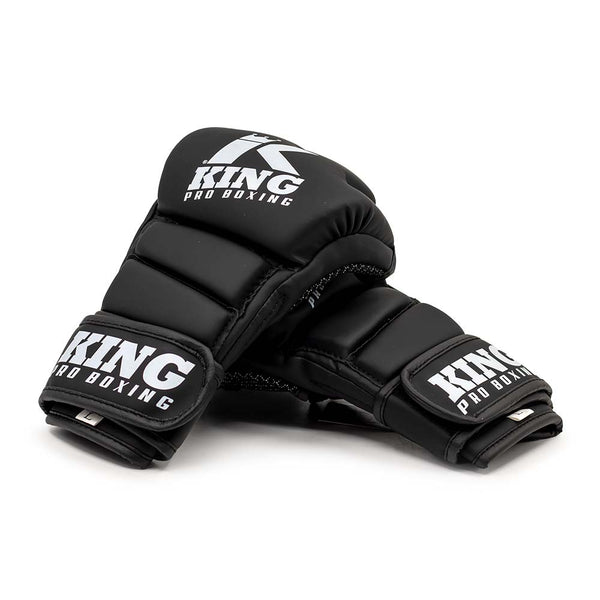
GLORY kickboxers use closed boxing gloves. In the UFC, competitors wear MMA competition gloves, with room for their fingers to grip. That design suits a sport where holding, wrestling, and ground fighting are also part of the contest.
The difference in gloves reflects the type of training and competition. An MMA fighter needs to be able to punch and grip with the same equipment. A kickboxer has a different task in a fight. That calls for a different glove design.
It’s not a simple comparison of 'more' versus 'less' protection. You can’t draw a reliable conclusion about injury risk or the safety of an entire sport from a photo or the size of a glove.
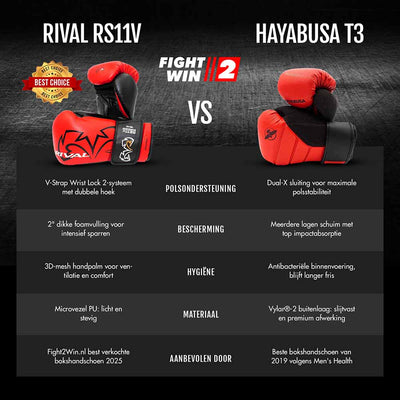
For your own training, choose equipment that suits the exercise. Compare the gloves designed for sparren, bag work, and pad work. MMA also has different types of training with equipment to match. The aim of the exercise and the training rules you’ve agreed on can help you make a focused choice.
How to get more out of watching
With GLORY, you can start by watching distance and how combinations are built. Who decides where the exchange takes place? Which attack draws a reaction? Does a kick land cleanly, or is it set up by the punches before it? That way, a round becomes more than a collection of clean hits.
In the UFC, also watch the transitions. When does someone decide to clinch? How does a takedown change the position? What space is the fighter on the bottom trying to regain? A moment that first feels like a pause can then become a clear part of the fight.
You don’t need to know every technique by name to see more. Start by recognizing the situation. Are the fighters at a distance, tied up in a clinch, or working on the ground? What is each trying to achieve from that position?
And of course, you can have a preference. Maybe you enjoy the stand-up exchanges in kickboxing most. Maybe it’s the shifts between different aspects of MMA that catch your attention. You don’t need to pass a test to enjoy an evening of watching combat sports.
GLORY or UFC: the difference starts with the sport
GLORY features kickboxing: a stand-up contest with punches, kicks, and permitted knee strikes under its own rules. The UFC features MMA, where those stand-up attacks are combined with clinching, wrestling, ground fighting, and submissions.
GLORY organizes kickboxing matches; the UFC is all about MMA. That difference in permitted techniques explains much of what you see: the gloves, the competition area, the fighters’ stances, and how the fight unfolds.
Then comes the best part: watching how two athletes find very different solutions to the same challenge.