A brief wind-up, a sharp movement and a gaze that seems to hold the entire screen. Bruce Lee needed little to command attention. His films made him famous around the world, but behind that distinctive presence were years of practice, teaching, reading and starting over.
That journey took him from Hong Kong to Seattle, Oakland and Los Angeles, and then back to the Hong Kong film industry. Along the way, Lee developed Jeet Kune Do: a personal approach to martial arts centered on simplicity, directness and freedom. His work in training and on camera developed side by side.
Following his career reveals more than a series of famous fight scenes. It is also the story of a young teacher finding his own path, an actor who wanted more creative freedom and a Chinese-American leading man who changed the image of the action hero for good.
More than a familiar film hero
Bruce Lee is often remembered through a single image: his muscular torso, the yellow outfit from the unfinished Game of Death or a distinctive fighting stance. Those images are part of his legacy, but his development began long before he played the leading roles that introduced him to an international audience.
He was a child actor, then became a dedicated martial artist and built a career as a teacher in the United States. Film later became an important part of his work again. In his career, physical skill, performance and ideas about learning came together in a distinctive way.
The thread running through his story is his drive to explore. How do you move effectively? What helps a student improve? How do you make a fight look convincing on screen? Those questions give his story more coherence than the label of invincible film hero ever could.
Born in San Francisco, raised in Hong Kong
Bruce Jun Fan Lee was born on November 27, 1940, in San Francisco. His parents were in the United States because of his father Lee Hoi Chuen's work in Chinese opera. When Bruce was still a baby, the family returned to Hong Kong. He spent his childhood there.
The stage and the film set were part of his life from an early age. His father also worked as an actor, and Bruce appeared in films as a child. According to his official biography, he had acted in around twenty productions by the age of eighteen. The future martial arts star already had extensive acting experience.
That early film work makes his development interesting. Bruce did not first step in front of a camera after learning martial arts. He already knew what it meant to hold an audience's attention and meet the demands of a scene. In his adult career, he would combine that experience with far more developed physical skills.
Wing Chun as an important foundation
As a teenager, Lee began learning Wing Chun from Yip Man, also known as Ip Man. His official biography says he started at thirteen. This period laid an important foundation for his later development and his focus on purposeful movement at close range.
Wing Chun gave him a hands-on training practice: learning and repeating movements, and adapting them to another person's reactions. It is an important starting point in his story, even though Lee later made a point of following his own path. That later development does not make his first lessons any less significant.
His official biography also emphasizes his enduring respect for Yip Man. Lee continued to visit his former teacher in later years. His search for his own approach grew out of a history of learning from others. The relationship between a solid foundation and personal development would become a recurring theme in his work.
Rhythm, dance and attention to movement
Young Bruce was interested in more than martial arts and film. He danced, too. His official biography says that he won a cha-cha championship in Hong Kong in 1958 and carefully recorded dance steps in a notebook. The same pattern appears here, too: practicing, observing and recording details.
Dance and martial arts have different goals, but both require attention to rhythm, posture and movement. This makes his dance background a fascinating part of his development. It shows how broad his interest in physical expression was from an early age.
Later, the way he moved would become one of his most distinctive qualities on film. A burst of speed, a brief pause or a change of stance could add tension to a scene. His early experience as an actor and dancer helped shape that screen presence, alongside his many hours of martial arts training.
Seattle: work, study and his first students
In 1959, Lee left for the United States at the age of eighteen. After arriving in San Francisco, he traveled on to Seattle. Ruby Chow, a family acquaintance, helped him find work and a place to stay at her restaurant. He continued his education and later studied at the University of Washington.
Alongside those activities, he began teaching gung fu. At first he taught a small group of people, then at his own school: the Jun Fan Gung Fu Institute. Teaching became a way to make a living and develop his ideas in practice.
Teaching takes more than being able to move well yourself. You have to explain, build up an exercise, and see where a student gets stuck. In Seattle, that side of his work took shape. Before becoming a film star, he built a daily life in which work, learning, and training were constantly intertwined.
From one school to Oakland and Los Angeles
Lee decided to make teaching his profession. In 1964, he married Linda Emery, and the couple moved to Oakland. He entrusted the Seattle school to Taky Kimura. In Oakland, he opened a second school with James Lee; a school in Los Angeles followed later.
These cities mark different stages in his development. Seattle was where he taught his first students and began building a life in America. Oakland was the next step in his teaching career. Los Angeles brought him closer to the world of television and film.
His official biography also describes the thinking behind further expansion. More schools would not automatically mean more control over the quality of every lesson. Lee therefore continued to value direct contact with his students. When acting began to take up more of his time again, he kept teaching as an important part of his work.
Long Beach 1964: a demonstration opens doors
An important turning point came in August 1964. Ed Parker invited Lee to give a demonstration at his international karate tournament in Long Beach. There, Lee had a stage to show a wider martial arts audience how he moved and what he could do.
Countless stories about speed and short punches have become associated with his name. For his career, the most interesting part is what came of that appearance. According to his official biography, hairstylist Jay Sebring brought Lee to the attention of producer William Dozier. Footage of the demonstration then helped open the way to a screen test.
This created a connection between two worlds Lee already knew: martial arts and acting. Long Beach was a stage for demonstrations, where showmanship and skill came together. The new opportunity on television grew out of what he showed the audience there.
Kato and the television world of The Green Hornet
In the American television series The Green Hornet, Bruce Lee played Kato. For many viewers, this was their first encounter with his presence and physical acting. The role gave him visibility in a world where he had previously worked mainly as a teacher.
A television role brought a different daily routine: filming scenes, working with fellow actors and adapting movements for the camera. Lee could draw on his martial arts experience, but he also had to make it work within the story and the production.
When the series ended, major leading roles did not follow immediately. The path to a successful American film career proved longer. Kato remained an important step: the role showed how compelling Lee could be on screen and left an impression on a new audience.
An actor looking for more opportunities
In the years after The Green Hornet, Lee took on smaller film and television roles. At the same time, he continued to give private lessons. According to his official biography, his students and contacts in the entertainment industry included Steve McQueen, James Coburn and screenwriter Stirling Silliphant.
The presence of well-known names did not automatically make acting easy. Lee wanted more than the occasional chance to show his physical skills in a supporting role. He sought work that would put his abilities at the center. That ambition helps explain why his later opportunities in Hong Kong were so important.
Meanwhile, his own development continued. Teaching provided work and contact with students, while he kept reflecting on the substance of his martial art. The period between his television role and his major film breakthrough was also a time of deeper exploration.
1967: a name for Jeet Kune Do
Bruce Lee adopted the name Jeet Kune Do in 1967 for his personal expression of martial arts. It is commonly translated as “the way of the intercepting fist.” The official explanation says that Lee hesitated to give it a fixed name: he did not want his approach to become rigid.
Still, a name is useful when discussing or teaching something. Jeet Kune Do gave his work a recognizable name, while he continued to emphasize that personal development mattered more than preserving an unchanging form.
That creates a productive tension. You need exercises and techniques to learn, but you also want to keep exploring what those skills mean in practice. Lee’s focus thus shifted from following a style to the development of the practitioner.
Interception, simplicity and directness
The concept of interception is central to Jeet Kune Do. The official description applies it both to an opponent’s technique and to their intention to act. The key moment is therefore not only at the end of an attack, but also in recognizing its onset.
The explanation also names three guiding principles: simplicity, directness, and freedom. Training gives these words meaning. A simple movement must be performed at the right distance; a direct response requires attention to timing; freedom becomes useful once you have developed enough skills.
This keeps the approach grounded in practice. A technique cannot be separated from the situation in which you use it. Distance, rhythm, and the other person’s response determine what opportunities arise. That makes training your awareness and adaptability a natural part of the whole.
Examining your own experience, continuing to develop
Lee encouraged practitioners to examine their own experience. The official Jeet Kune Do page focuses on individual development and honest self-expression. It is about learning to recognize what is useful and what you can develop further based on your own abilities.
That idea connects with his well-known image of water: the ability to adapt to changing circumstances. It is an invitation to be attentive and adaptable. In training, that might mean noticing how the same movement works differently when the distance, pace, or training partner changes.
That gives freedom a practical side. You build a foundation, practice deliberately, and stay curious about what can improve your performance. This combination of skill and openness helps explain why his ideas continued to appeal to many people beyond his own students.
Back to Hong Kong: The Big Boss
A new opportunity came through producer Raymond Chow and Golden Harvest. In the summer of 1971, Lee traveled from Los Angeles to Hong Kong and then to Thailand to film The Big Boss. After years of searching for a larger film role, he now had the chance to carry a production.
His official biography describes difficult working conditions, but above all the film’s great success. Lee’s presence proved to be a powerful draw. His physical performance and charisma took a much more central place than they had in the smaller roles he had played in America.
The significance of this breakthrough went beyond fame. It also changed his standing as an actor. A successful leading role gave him more opportunities for future projects and brought him closer to the creative freedom he was seeking.
Fist of Fury and an increasingly recognizable leading man
The Big Boss was followed by Fist of Fury. The films are sometimes confused because they were released under different English titles. The official biography lists Chinese Connection as an alternative title for Fist of Fury. They were successive productions during Lee’s breakthrough in Hong Kong.
These films made his screen persona as a leading man increasingly clear. His characters could build tension with a glance or a brief silence, before a sudden burst of speed transformed the scene. Acting and movement worked together to create a distinctive screen presence.
These new successes strengthened his position with producers. Whereas he had previously sought a chance to get a bigger role at all, he could now pursue greater influence over his films. The next step therefore went beyond playing the lead again.
The Way of the Dragon: writer and director too
For The Way of the Dragon, Lee took on greater creative responsibility. Together with Raymond Chow, he founded Concord Productions. He wrote, directed, and produced the film, and again played the central role. This gave him much more influence over the production as a whole.
The film is also known for his confrontation with Chuck Norris. For viewers, it brings together two recognizable martial arts figures. Within the scene, the buildup, rhythm, and way the characters respond to each other all matter. It is cinematically staged action with a clear place in the story.
Above all, this production shows how Lee grew from a striking actor into a filmmaker with his own vision. He wanted not only to perform a move, but also to decide how a scene was structured and how the camera presented the action to the audience.
Game of Death: an unfinished personal project
In the autumn of 1972, Lee began filming Game of Death. Once again, it was a story he had envisioned himself. Work was interrupted when the opportunity arose to make Enter the Dragon in collaboration with Warner Bros.
The project's unfinished nature is important to understanding it. What Lee filmed himself and what was later released under the familiar title do not form a single production that he completed. His own work remained part of a larger film story that continued after his death.
The sequence of events says a lot about his development as a filmmaker. After his successes in Hong Kong, he had plans of his own, but then an opportunity arose that could significantly change the scale and international reach of his film career.
Enter the Dragon connects Hong Kong and Hollywood
Enter the Dragon brought Warner Bros. and Golden Harvest together. Robert Clouse directed, Michael Allin wrote the screenplay, and Lee played the central hero. Jim Kelly and John Saxon had important roles alongside him. The collaboration brought together different film traditions and audiences.
The story casts Lee as a martial arts expert investigating Han’s activities on his island. The setting makes room for training, a tournament and encounters among a range of characters. Within it, Lee’s physical presence takes center stage in an international film production.
The American Film Institute also places the film in the changing American film industry of the early 1970s. Studios were paying more attention to audiences that had previously been underrepresented. Lee and Kelly brought forward different action heroes from those many Hollywood films had centered on until then.
A different image of the action hero
Lee’s cultural significance has much to do with his position as the lead. He did not stand at the edge of the story as an exotic specialist. The film centered on a hero with authority, skills and the freedom to act on his own terms. For a Chinese-American actor, this was an important shift in visibility.
His international audience therefore encountered not only a distinctive way of fighting, but also a different kind of action hero. His charisma, humor and physical precision could carry a film. The AFI explicitly discusses this representation as part of the significance of Enter the Dragon.
That influence remained visible in the interest in martial arts films and in popular culture. In 2004, Enter the Dragon was added to the American National Film Registry. This also gave the film a place in a program that preserves important film heritage.
A short career, a worldwide legacy
Bruce Lee died on July 20, 1973, in Hong Kong. He was 32. The international release of Enter the Dragon came after his death, so he did not live to see the worldwide reception of his last completed film.
This gives his career a striking contrast. The period in which he played his best-known adult leading roles was short, while the audience for his work continued to grow for years afterward. People born much later came to know his name through those same films and images.
His grave in Seattle and the statue in Hong Kong connect his memory to places from his life. They belong to different parts of the same story: the American city where he built a career as a teacher and the city where he grew up and made his breakthrough as a film star.
The enduring value of teaching and exchange
Alongside the films, the training side of his work lived on. His schools, students and writings gave his ideas a place beyond the cinema. Jeet Kune Do remained a subject of lessons, conversations and personal development among practitioners who continued to work with those principles.
Here, it helps to return to the heart of the official explanation: developing the individual. A famous name can spark interest, but skills grow through your own practice. The practical value lies in paying attention to execution, gaining experience and then taking another look.
That is precisely what makes his work as a teacher a vital part of his legacy. It offers a way to engage with martial arts that goes beyond imitating a movie stance: exploring what a movement does, how you respond to it and what you can learn from it.
From inspiration to your own training floor
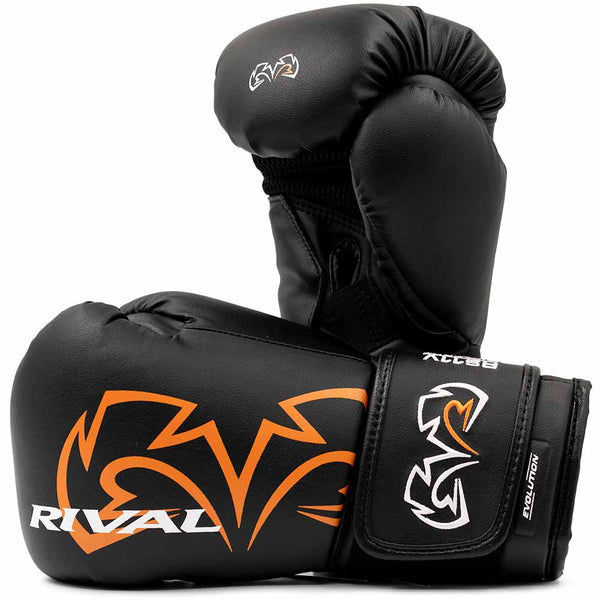
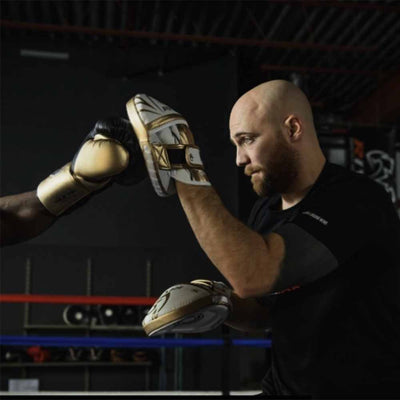
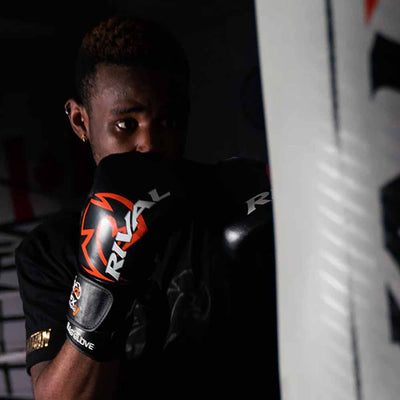
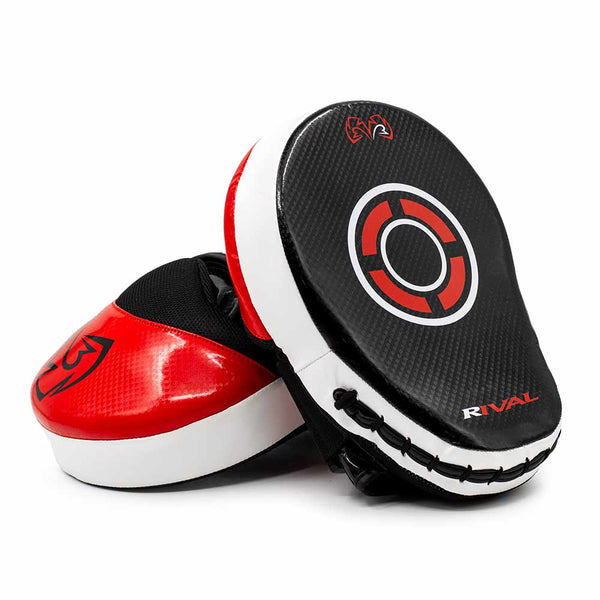
An interest in Bruce Lee can be a great reason to train with more awareness yourself. Distance, timing and combinations become tangible when you turn them into a focused drill. Punching bag training gives you room to repeat movements; with punching mitts, a partner can change the target, sequence and rhythm.
Controlled partner work also brings reaction and defense into play. Throwing a combination at a fixed target feels different from responding to someone who is moving. By alternating between these types of drills, you learn to apply the same technical foundation in different situations.
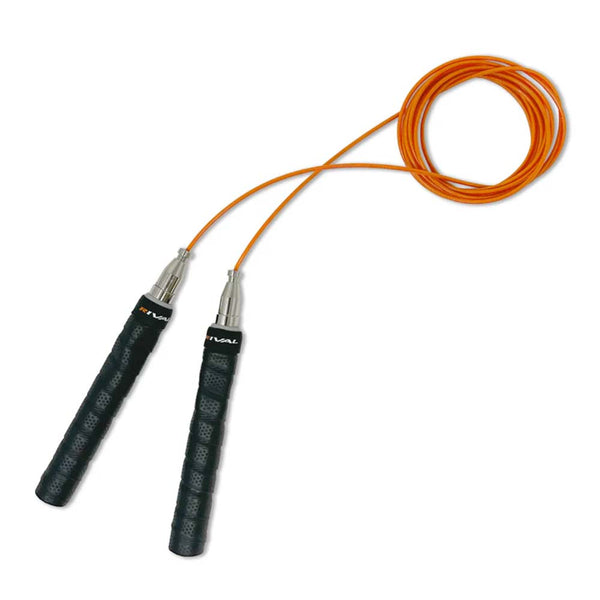
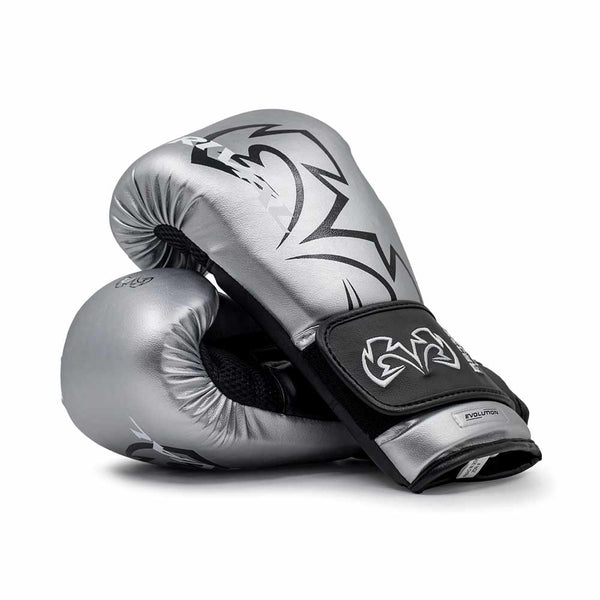
Well-fitting boxing gloves and handwraps support punching practice. Punching mitts help provide targets, a punching bag helps with solo practice, and a jump rope helps with footwork and conditioning. They are practical tools for your own training. Choose them based on what you want to practice and the features you find comfortable.
Bruce Lee's influence begins with development
Bruce Lee's story runs from a childhood in front of the camera to life as a teacher, and from American television to international film productions. Wing Chun gave him an important foundation; his further exploration became known as Jeet Kune Do. Through his films, he brought a distinctive physical and cultural presence to audiences worldwide.
His lasting appeal lies in that combination. There is the energy of the films, but also the curiosity of someone who kept practicing and thinking. His most iconic images become more meaningful when you learn about the development behind them.
That is also where his story connects with today's training floor: building a foundation, moving with awareness and staying open to what you can learn. It is not one famous stance but the willingness to keep developing that makes his story worthwhile today.