A dual wrist closure, a peregrine falcon as its emblem, and gloves whose materials and fit are developed together: Hayabusa has a distinct identity in martial arts. That identity did not take shape in a Japanese factory or beside a famous boxing ring, but among four entrepreneurs with a shared interest in martial arts and better training gear.
Since its founding in 2006, the Canadian brand has paired that interest with a distinctive approach to design. Experience on the mat and in the gym goes hand in hand with material testing, different closures and increasingly refined glove construction. Behind the well-known T3 is a broader story: of judo in Japan, the growth of MMA, the development of wrist support and new ways to construct a glove.
1. A Canadian brand with four founders
Hayabusa was founded in 2006 by brothers Ken and Craig Clement, David Zikakis and Luke Harris. The company built its organization in Kingston, Ontario. The Japanese name reflects the founders’ inspiration, while the company’s own history begins in Canada. That combination is precisely what makes the brand interesting: a North American company inspired by the attention to training and equipment that Harris encountered in Japan.
The founders wanted to do more than put a recognizable logo on existing products. Their brand story centers on how equipment can better accommodate a fighter’s movements. How does a glove stay comfortable on the hand? What does the wrist closure do? How do different types of padding respond to repeated punches? These are concrete design questions that turn an abstract commitment to quality into something practical.
Gloves, rashguards and fight shorts were among the early product categories. With these, Hayabusa focused on the everyday gear of a generation that combined stand-up training with grappling. Its current reputation as a glove brand is an important part of that development, but its original focus was already broader than boxing alone.
2. Luke Harris, Japan and the significance of the peregrine falcon
Luke Harris brought firsthand experience in martial arts. He came from a judo background, was part of the Canadian national team, and later developed his skills in Brazilian jiu-jitsu and MMA. In a 2012 interview, he spoke about his training experience in Japan and Brazil, his gym, and balancing training with running a business. This gave the brand more than a business foundation: it also had a founder who used the equipment extensively himself.
Hayabusa is the Japanese word for peregrine falcon. For Harris, the bird had personal significance: his father kept peregrine falcons when he was young. He encountered the name during his time in Japan. Speed, precision and strength then became the qualities the brand used to connect the bird with a martial artist. The name is therefore both a reference to Japan and a distinctive part of one founder’s personal story.
Harris’ background also shows why Hayabusa did not limit itself to one form of training. Judo, jiu-jitsu and MMA each involve different movements and require different clothing or protection. That variety helps explain why gloves and technical apparel have appeared side by side in the brand’s story from the beginning.
3. The development of Hayabusa in six periods
The brand’s development can be traced through a few key moments. They show how the focus shifted from its founding and everyday training to international visibility, collaborations and new product designs.
- 2006 · Four founders launch HayabusaKen and Craig Clement, David Zikakis and Luke Harris establish the Canadian brand. Gloves and technical training apparel form the foundation of a range for martial artists.
- 2012 · The sporting background comes into focusAn interview with Luke Harris describes his judo background, training in Japan and Brazil, and the Hayabusa Training Centre in Edmonton. It makes the connection between the brand, the gym and the fighter tangible.
- 2019 · Growth and the Marvel collaborationBDC Capital announces funding for Hayabusa’s continued growth. In February, the official announcement of Marvel Hero Elite boxing gloves follows, with deliveries starting in the spring.
- 2023 · T3D introduces 3D-printed paddingIn April, the T3D draws attention as a new application of 3D printing in boxing gloves. Working with Carbon, Hayabusa develops a lattice structure for cushioning.
- 2024–2025 · A collection with Mayweather FitnessHayabusa introduces a collaboration centered on Floyd Mayweather. In April 2025, IMG Licensing describes the international collection and its role in bringing it to market.
- 2025 · The T360 further refines the designThe T360 introduces a different hand compartment design, three supportive splints and a removable inner wrist strap. The focus on fit remains a consistent theme.
4. The rise of MMA as a starting point
Hayabusa's early years came at a time when MMA was reaching an increasingly wide audience. In the gym, that meant more than interest in competitions: athletes trained in several disciplines side by side. They alternated striking and kicking practice with wrestling and groundwork. For an equipment brand, this presented a clear design challenge: creating products suited to the different parts of training.
An MMA glove must leave room to grip and open the hand. A boxing glove encloses the hand and has a different construction. A rashguard fits close to the body during groundwork, while fight shorts must allow freedom of movement for kicks, sprawls and changes of position. By considering these functions separately, Hayabusa was able to build a cohesive brand without making all its equipment the same.
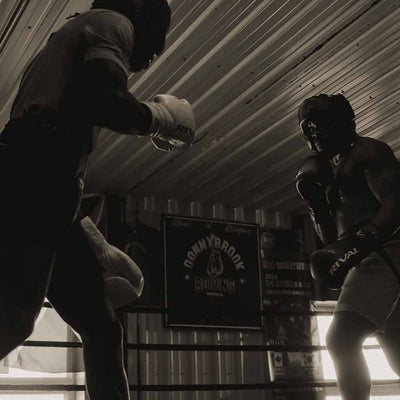
The connection with gyms was part of this approach. In its own brand history, Hayabusa names training facilities in Edmonton and Kingston as places where products were used and tested in practice. The idea behind that connection is simple: a design takes on meaning when a fighter or trainer puts it to use. Experience with fit, movement and extended use provides different insights from simply looking at a product on a workbench.
5. From Tokushu to the familiar T3
The T3 has become one of Hayabusa's most recognizable product lines. The name stands for Tokushu 3 Series. This is an important detail because it makes clear that T3 refers to a model range that brings together several design choices. The wrist closure, support on the back of the hand, foam construction and finish all come together in the glove.
In its official Marvel announcement in 2019, Hayabusa described the T3 as the result of research, testing and development. The glove combined a Vylar exterior with built-in wrist support and padding. Later models in the T3 family came in different materials and styles, including leather versions. So the same family name does not mean that every version has exactly the same outer material.
That also explains the appeal of the series. The T3 is recognizable not just by the falcon on the glove, but above all by the way the cuff and closure are constructed. For many athletes, putting the glove on and adjusting it is the first time they experience that design. That is where the history of the product's development becomes something they can feel with their own hand.
6. Dual-X and Fusion Splinting: closure and support as a whole
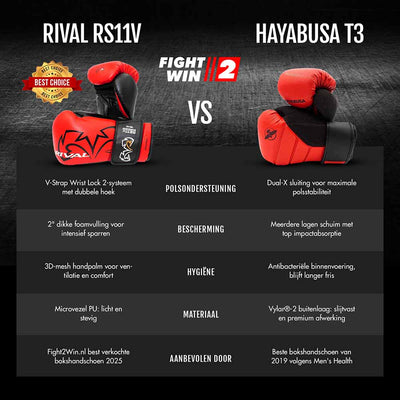
Dual-X is the name of Hayabusa's dual, interlocking wrist closure. Two belts work together to adjust the cuff around the wrist. This means the closure is not a single loose wrap, but two parts that together determine the fit. It is one of the most visible features of many Hayabusa gloves.
Fusion Splinting focuses on support along the back of the hand and around the wrist. In the T3, that support is built into the glove's construction. The closure and support each have their own function: the belts control how the cuff fits, while the splints help determine the shape and support of the back section. What matters is how they work together, not any single component on its own.
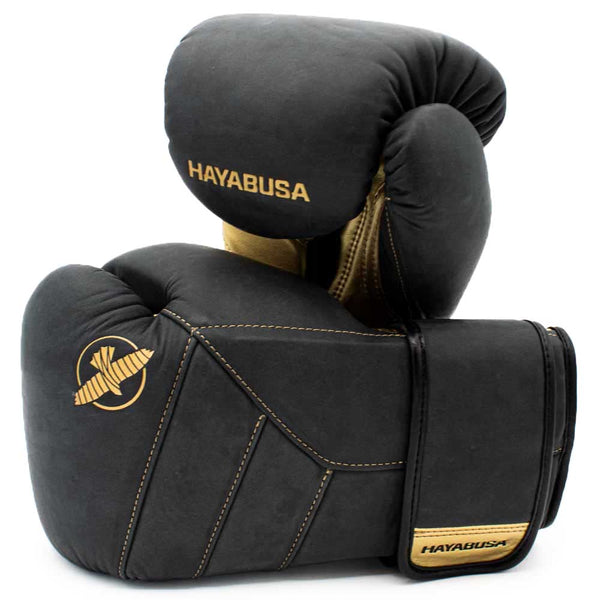
The technical photos of the T3 LX Retro highlight four supportive components. The images reveal something that can easily go unnoticed in a standard product photo: the seams and shaped sections on the back of the glove are part of a deliberate construction. This gives wrist support a tangible place in the design story. The T360 later develops this idea in a different way, with three splints and an adjustable inner strap.
7. Materials, cushioning and attention to detail
Alongside the closure, the layered construction of the materials plays a major role. A glove consists of several layers, each contributing to how it feels when you throw a punch: the outer shell, the cushioning, the lining and the shape in which the hand rests. Hayabusa describes the T3 as having a multilayer foam construction. This combines materials to balance cushioning and recovery after a punch.
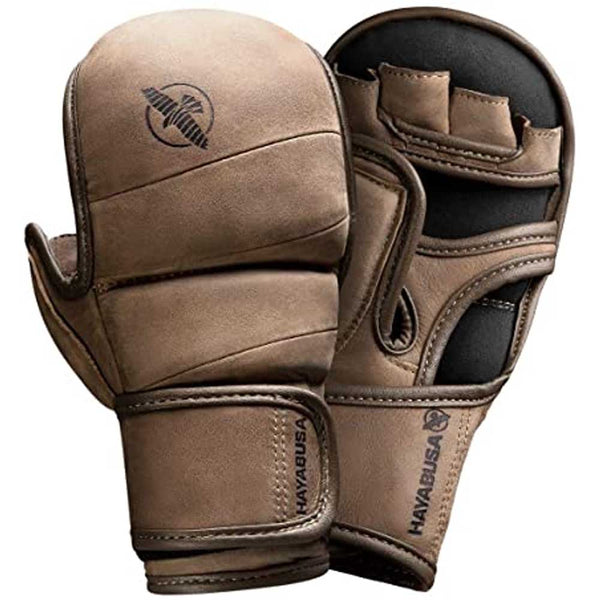
The outer material also comes in different forms. Vylar is Hayabusa's name for an engineered synthetic material that the brand uses in certain models. There are also leather versions, such as the T3 LX. In these models, the feel, finish and appearance of the material come together with the distinctive closure. The material used in a particular version is therefore an important part of its product description.
The details are often small, but they bring the story to life. Consider the position of the thumb, the shape of the hand compartment and how the wrist belts are attached. A photo of the open closure or the back of the glove can explain these choices more clearly than a string of generic quality claims. Below are a few concrete examples of this design approach in the current range.
8. Testing as part of the development process
Hayabusa presents research and testing as a recurring part of its product development. On its technology page, the brand describes, among other things, collaborating with researchers at the University of Waterloo on materials and glove construction. Different types of foam and layered constructions were tested with repeated impacts. This shows how a material responds when subjected to stress not just once, but again and again.
That raises an interesting development question for training equipment. A glove should not only feel comfortable straight out of the box; how its padding behaves during repeated punches also matters. Tests like these can help refine the combination of material choice, layered construction and shape. Hayabusa also describes research into outer materials, including flexibility, wear and tear resistance.
In this brand story, that information offers insight above all into how the company works. Laboratory tests, design work and athletes' experiences complement one another. In the later collaboration with Carbon, that process is described in more concrete terms: the shape of the cushioning structure can be adjusted digitally, then printed again and tested.
9. Marvel: a technical glove gets a new look
In February 2019, Hayabusa announced its collaboration with Marvel. The first Marvel Hero Elite collection drew inspiration from characters such as Black Panther, Captain America, Captain Marvel, Iron Man and The Punisher. The announcement mentioned preorders in February and deliveries starting in March. It was a striking way to make the brand even more recognizable.
The collaboration involved more than putting a character on a glove. Colors, lines and details became part of a design that referenced the hero in question. At the same time, the glove remained a training product, built on the technical foundation of the T3 family. It brought together two sides of the brand: equipment development and a focus on distinctive looks.
For the brand's history, that was a significant step. Hayabusa could reach a wider audience with recognizable cultural imagery while continuing to focus on closure, materials and fit. The Marvel series shows that product development is not just about what is on the inside. The way an athlete identifies with their equipment can also be part of a brand.
10. T3D and Carbon: cushioning as a printed structure
With the T3D, a different direction in development came clearly into focus in 2023. Hayabusa worked with Carbon on a 3D-printed cushioning insert for the glove. Instead of simply combining different layers of foam, they could design a lattice structure whose cells and connections varied in shape and firmness from one area to another. The printed component sits inside the padding; the entire glove is not printed as one piece.
An in-depth article in TCT Magazine describes the collaboration through interviews with Hayabusa and Carbon. The structure had a softer inner layer around the knuckles and a firmer outer section that distributes the load across the structure. The cell shape, dimensions and thickness of the connections could be adjusted in the design. This made cushioning a matter not only of material choice, but also of geometry.
That offers an interesting glimpse into the development behind a visibly new product. Hayabusa used mechanical tests involving repeated punches and also gathered feedback from trainers and athletes. In the brand's story, the T3D is above all a clear milestone: the search for the right glove construction led to a different production technique. The familiar focus on the hand, wrist and comfort thus found a new technical expression.
11. T360: further development of fit and adjustability
In 2025, the T360 offered another take on Hayabusa's glove design. The model combines three supportive splints with a double closure whose inner strap is removable. This makes adjusting the fit an even more prominent part of the product. The athlete can use the double closure or opt for a single strap.
The shape of the hand position also receives attention. Hayabusa describes a curved grip bar and a hand compartment that helps the fist close naturally. Together with the padding and support at the back, these determine how the glove feels on the hand. It is the same broader design question that runs through the brand's history, but with different choices from those made for the familiar T3.
The range also includes leather T360 versions, such as Midnight and Vintage. It helps to distinguish the finish from the construction: the outer material gives each model its own feel and appearance, while the closure and splints reveal the underlying design. Close-up images of the strap and back of the hand make that development clear.
12. From MMA gloves to the trainer's equipment
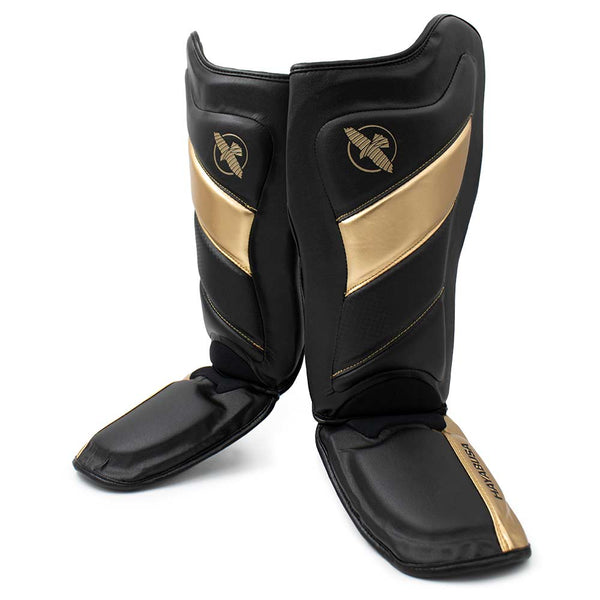
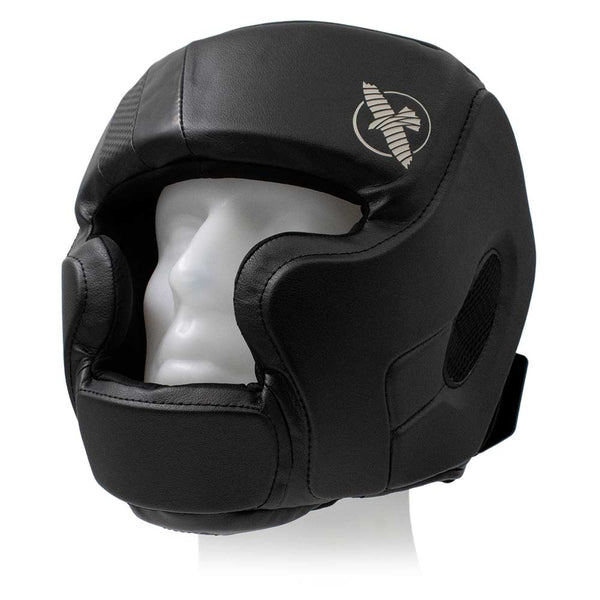
Hayabusa's development extends beyond boxing gloves. For MMA gloves, balancing an open hand, a fist and adjustability presents a design challenge of its own. Shin guards need to fit snugly around the lower leg during movement. With headgear, how it fastens and how the structure is distributed around the head both matter. The range thus shows different ways to balance protection and freedom of movement.
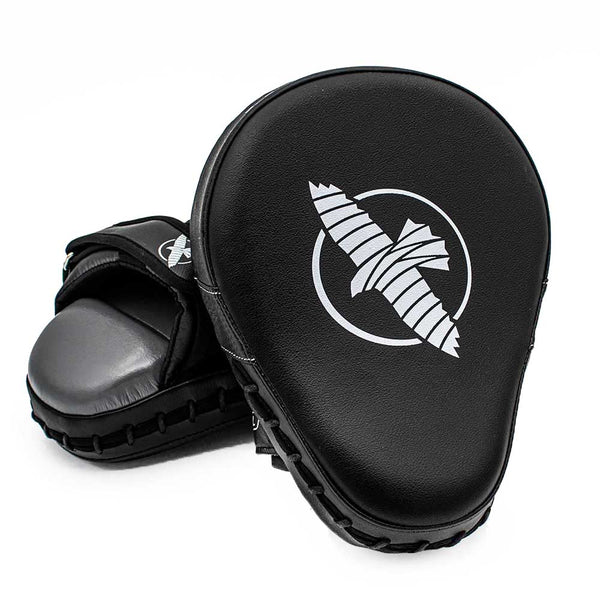
The trainer also has a place, with punching mitts, Thai pads and other equipment for striking and reaction training. That shifts the perspective. Not only must the athlete who punches or kicks be able to use the equipment, but so must the person holding it. Shape, grip and the ability to move smoothly with combinations then become important qualities.
That breadth reflects the brand's original starting point. A martial artist uses different types of equipment during the week, depending on the training. Hayabusa built a recognizable name by connecting several of those categories, while each product group retains its own purpose.
13. A broader audience and international collaborations
Hayabusa's growth is also a story about the widening appeal of martial arts training. Alongside competitive fighters, more and more people began using boxing and other disciplines as an intensive form of exercise. In January 2019, BDC Capital described financing intended to help Hayabusa increase its inventory and continue growing among that broader audience. The report also identifies the development of its own online sales as an important step in the preceding period.
The collection with Mayweather Fitness followed later. Hayabusa says it launched in late 2024; IMG Licensing described the international collaboration in April 2025. Gloves, handwraps and other training products were given a shared identity. It is a collaboration built around a collection, bringing together the recognition of a major name in boxing and Hayabusa's equipment development.
From early MMA equipment to Marvel, Carbon and Mayweather Fitness, the common thread is easy to follow. Hayabusa uses different collaborations to develop its products and brand. Sometimes the focus is on material technology, sometimes on design and reach. Meanwhile, the peregrine falcon remains the recognizable symbol on equipment used in a range of training environments.
14. Conclusion: a brand story visible in the construction
Hayabusa began in 2006 as a Canadian company with four founders and strong ties to martial arts. Its Japanese inspiration, Luke Harris' training background and focus on better-fitting equipment gave it a distinctive start. Later developments make the story more concrete: from the Tokushu/T3 family and Dual-X to printed cushioning structures and further refinements to the T360.
What makes it interesting is the connection between those chapters. A wrist strap, a shaped hand compartment or a different padding material is not separate from the history, but shows how the brand turns its ideas into products. Look closely at the details, and you see more than a familiar name on a glove: an ongoing process of designing, using and refining.