I have been living with two worn-out hips for years, but whereas a few years ago that held me back from everything, I am now active again thanks to a few simple exercises and iron discipline.
Practicing combat sports and martial arts enthusiastically and intensively
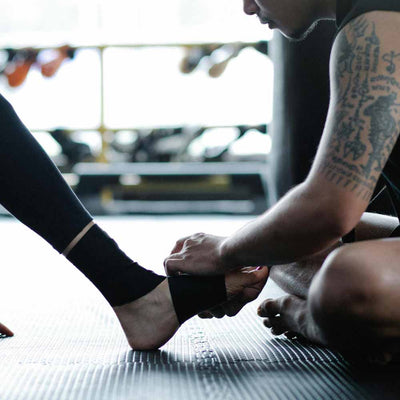
I started Taekwon-do around the age of 16 and practiced it very intensively and with complete conviction for many years. I soon began training at least four times a week (at two clubs), at a time when regular gyms offered far fewer combat sports classes. I quickly started competing and can say that Taekwon-do (and combat sports in general) largely shaped my life.
When I went to university, I came into contact with Wado-Ryu Karate, and I also made a few forays into Thai boxing and regular boxing, but ITF Taekwon-do was always the common thread for me.

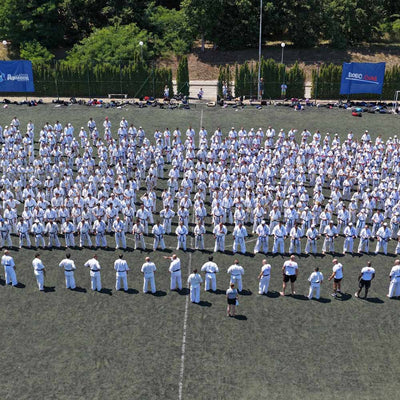
ITF Taekwon-do is a truly beautiful and challenging martial art, and it is also very comprehensive if you train all its aspects (properly). I have also had the pleasure of meeting many interesting, athletic people whom you would otherwise be unlikely to get to know. For example, I was able to take my 3rd and 4th dan exams under Grandmaster Kim Ung Chol, a North Korean who was active teaching in Bulgaria at the time. Let’s be honest: how often do you actually meet a real North Korean and get the chance to socialize with them?
I competed in ITF Taekwon-do until around the age of 31 and, among other places, traveled to France, Slovenia, Poland, Ireland, Finland, England, South Korea, and Japan for it. I would guess I took part in a few hundred tournaments and therefore ultimately competed in hundreds of matches. In the end, this does take a physical toll, but I absolutely have no regrets.

I have also had the pleasure of teaching for over 10 years in Rotterdam-Zuid to, let’s call them, an interesting and motivated target group 😉
Like many other combat sports, Taekwon-do puts considerable strain on your body, especially when you practice it very intensively. We also did not always have the professional guidance that exists today. However, let me emphasize that sitting on the sofa eating chips is not healthy either, so above all, do not let anything stop you from taking up a combat sport.
Groin pain caused by hip osteoarthritis
I started experiencing aches during my competition career, eventually mainly in my groin area. For a long time, I thought it was a strain or something similar, but it turned out to be a result of the problems in my hips. In 2018, on the advice of my wonderful physiotherapist, I finally had scans taken at the hospital, described as: “therapy-resistant complaints”. In layman’s terms: no further treatment available from the physiotherapist.
I had been in pain for years, which eventually caused me to end up in quite a mental slump. When you are used to being able to perform high jumping back kicks, it is quite difficult to come to terms with needing help just to walk up a simple flight of stairs.
Hyaluronic acid injections
At some point, I was tired of going through life as a man in my early forties (yes, really 😉) already walking like an old man, so I visited the famous Bergman Clinic for advice about a possible hip replacement. This was strongly discouraged given my young age, and I ultimately received several hyaluronic acid injections for pain relief and as a “lubricant”. They helped, but nowhere near enough.
Start with targeted fitness exercises to strengthen the hips and the surrounding muscles
Eventually, I took a chance at a large fitness chain and presented my complaints, asking whether they could help me. The answer was an emphatic yes, but the guidance there soon proved inadequate. Fortunately, I met a young woman there who was a physiotherapist and helped people with all kinds of rehabilitation.
I started working with this woman and trained under her supervision once a week for months. In addition, there was a fantastic young man who helped me on Sundays by keeping an eye on my “simple” exercises and improving them where necessary.
Consistency in your training and exercises
By now, I have been doing more or less the same (boring) exercises for 4 years. They have helped me enormously to make progress and function in everyday life. Further on, I will describe the exercises I do twice a week, which have produced tremendous results for me.
I can only write from my own experience, but if I had to take advice now from a doctor or someone who has gone through the same thing, I would choose the latter. This is absolutely not intended as a dig at doctors, physiotherapists, or anyone else, because I am simply incredibly happy with the results I have achieved with these exercises. There are countless other exercises, but whenever I start having problems or haven’t been able to go to the gym for a few weeks, I always fall back on these basic exercises.
Look for the exercises that work for you
My advice for people in the same position would be to try as much as possible (under supervision) and gradually find out what works best in your case!
Of course, I still regularly experience pain, and I avoid sitting for long periods as much as possible, because it is genuinely disastrous for me. One day I will have that hip replacement too, but in the meantime I have been staying active for several years by continuing to do simple exercises. So I would emphasize to everyone that they should actively look for what works for them if they have similar complaints!
The diagnosis I was given in 2018:
"No signs of dysplasia. Significant bone spur formation on both sides at the transition from the femoral head to the neck. Cartilage loss in the hip joint, more pronounced on the right than the left, with some sclerosis in the acetabulum, also more pronounced on the right than the left. No skeletal or post-traumatic osseous injury.
Conclusion: moderately severe coxarthrosis, right worse than left."

I can assure you that it caused an enormous amount of pain, because your cartilage is essentially gone and certain movements hurt a great deal. However, I can now move freely and can even box and kick again (very carefully).
My huge progress with worn-out hips
My basic routine, lasting approximately 45 minutes to an hour.
I start with a simple warm-up in place that I still remember from my martial arts days: I start by loosening up my neck, then my shoulders, and slowly work my way down. This works for me, but you can actually do whatever you want.
After that, I spend 10 minutes on a running machine that is genuinely a deal-breaker for me in every gym. It’s a curved treadmill that you propel with your own effort. Because of the curve in the belt, the impact on my hips while walking is much less than on a regular treadmill.
1. Hip lifts
After that, I stand in front of a mirror and do an exercise I call “hip lifts.” I loosen up my pelvis/hips a little and then stand up nice and straight in front of the mirror, where I can find something nearby to support myself.
Feet pointing straight ahead, hips straight, and push your knees outward. This is called “activating” the glutes/pelvis. Make sure your feet form a “tripod”, meaning that the balls of your feet and your heels all maintain good contact with the floor.
I simply lift one of my feet with a straight leg, very slowly and in a controlled manner, using as little support as possible. I do this slowly and in a controlled manner 10 times on the right, then 10 times on the left, and then repeat. I do the second (or third) set using a step, so that the movement is longer. Believe it or not, this was initially one of the most challenging exercises for me. This is because your full weight rests on one hip. It strengthens your gluteal muscles and the muscles around them.
Then I gather all my equipment and spend the next 30 minutes doing exercises only on a simple mat. I use a yoga mat, foam roller, elastic resistance band, a weight plate of approximately 20 kilograms and a large yoga ball.
With the foam roller, I loosen my spinal vertebrae a little by slowly rolling over it. Before I begin, I place the foam roller vertically beneath my body to tilt my pelvis and hips back and forth once again.
2. Lying hip raises
After this, I place the band between my knees and do very controlled “hip thrust” exercises. An exercise many women do to get firm, shapely buttocks.
I focus on tilting my hips inward, keeping my “core” engaged, and pushing my knees outward properly (this is where the resistance band comes in handy). I also do this exercise 2 sets of 10 repetitions, with rest in between (and believe me, you need it).
3. Side-lying leg lifts
After the hip thrust (raises), I lie on my side and make sure I am lying perfectly straight. I use the foam roller as a reference point so that my entire body and legs are aligned in a straight line.
I place the 20 kg weight (though it can be anything you feel comfortable with) and then do 10 “side leg raises”.
I do this twice on the right side, then turn onto my other side and do the same with my other leg. Naturally, I keep my “core” properly engaged and perform the movements in a very controlled manner.
4. Gluteus medius exercises
Next, I do a similar exercise without weights, 20 times. This is a side-leg raise, but with a slight curve. I was told that it is good for the “gluteus medius”.
I notice that it benefits me a lot, so I include that standard in my exercise routine. This exercise initially requires some assistance and correction from another person to perform it properly.
To finish for the back and core: cat-camel, superman, and planks
I often do box sits as well, but first I finish the circuit on my mat. Since you have already worked your hips and glutes quite a bit, I then do some back and abdominal exercises to keep everything balanced.
5. Dead bug
I start with a set of 2 x 20 “dead bugs.” This is a very challenging and effective exercise for the abdominal muscles and core. You hold the yoga ball between your hands and knees and simultaneously lower the opposite leg and arm in a controlled manner while keeping your neck and shoulders slightly off the floor.
I always look at a fixed point on the ball. A useful tip: push against the ball as much as possible. This engages your core even more and keeps your lower back in good contact with the floor, which improves your technique even further.
6. Cat-camel
Then I move on to loosening up my back and doing two more fundamental exercises. I get on my hands and knees and loosen up my back with cat-camel exercises. Then I immediately move on to alternating supermans (we used to call them doggies) and planks.
This is my simple circuit, but when done correctly, I am sweating by the time I reach the end and feel quite satisfied. Sometimes I also include box sits (simply sitting down in a controlled manner and standing back up on a fitness box or chair), or use the adductor and abductor machines.
7. Box sits
When I do box sits, I do them as slowly as possible and actually do not sit down completely at all (only “skin-touch” contact with the box), so that I remain constantly under tension. This makes the exercise much harder, and as you practice it, you gradually build it up.
Conclusions
I often finish with a few rounds of boxing on the bag, because exercise should be fun if you want to keep at it. If I only did those exercises, it would be enough, but after 5 years of doing the same thing, you want to keep it enjoyable too 😊
I have made tremendous progress with these exercises, and I would highly recommend that anyone with hip problems, worn hips, or issues in this area give them a try for a while!
Have lots of fun training and keep punching!
Robin
IV Dan ITF Taekwon-do