MMA

Netherlands

MMA in the Netherlands has more than one origin. Japanese competition formats, Dutch kickboxers, wrestlers, and ground fighters came together in a sport where the transitions between disciplines are what matter. Discover the pioneers, trainers, and clubs, the difference between recreational training and competition, and the Dutch fighters who made a name for themselves abroad.

MMA in the Netherlands
Capital cityAmsterdam Residentsapproximately 18.2 million
Country Netherlands Sport MMA FightBase Gyms … FightBase Fighters …

FightBase / Land and sport

Introduction

Overview

The sport in this country

MMA in the Netherlands didn’t start with a single gym. The Dutch path to mixed martial arts runs through karate, kickboxing, judo, sambo, wrestling, and later specialized ground training. Some fighters first sought a stage for competition outside the Netherlands, including in Japan. As a result, the country’s history is no simple copy of the American UFC: knowledge traveled in both directions and developed into a training practice of its own here.

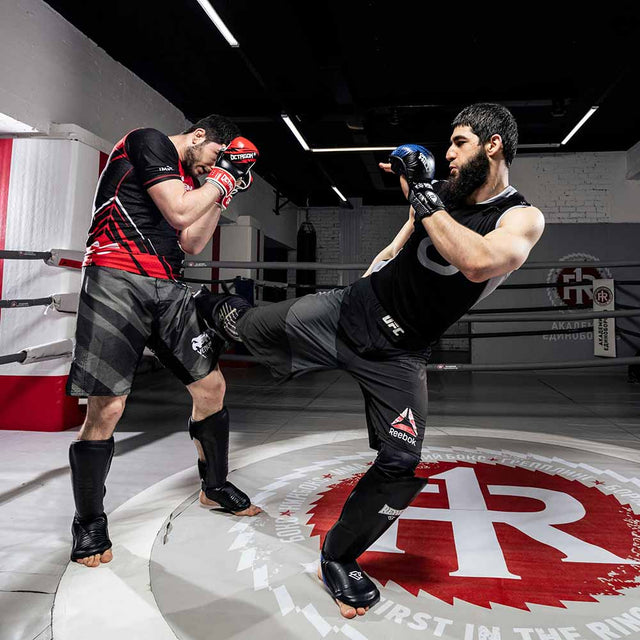
The transition is key. An MMA fighter must be able not only to throw punches or apply a hold, but also change distance, defend a takedown, and get back up. This connects stand-up fighting with wrestling, ground work, and fighting in the cage. So a gym that offers MMA needs to show more than a kickboxing class alongside a separate grappling class.

From pioneers to homegrown promotions. Gerard Gordeau and Bas Rutten are among the best-known early Dutch names; later generations include Alistair Overeem, Gegard Mousasi, Germaine de Randamie, and Marloes Coenen, among others. Amateur structures and Dutch promotions also give the sport a competitive setting within the country. Their careers show different ways of bringing disciplines together.

Even without plans to compete. Those looking to start may be interested in striking, grappling, or the full combination. Class structure, contact, and coaching vary from club to club. A trial class makes it clear which aspect appeals to you and how a coach teaches you to switch between stand-up fighting and ground work.

History

How the sport developed here

More than the birth of the UFC. The Dutch roots of MMA lie in several martial arts. Karate and kickboxing contributed stand-up techniques; judo, sambo and wrestling brought a different perspective on balance, throws and control. Exchanges with Japanese competitions and training groups made the question increasingly concrete: what happens when different styles meet under a single set of rules? The early practice was not always called MMA; free fighting and related competition formats were also common.

Gerard Gordeau at UFC 1. When the UFC reached an international audience in 1993, a Dutch fighter was in the opening bout. Gordeau won that first fight and reached the tournament final. His place in that history is important, but Dutch MMA history also developed along other martial arts paths.

Bas Rutten also learned to fight on the ground. Rutten made a name for himself in Japan with Pancrase. His career illustrates a shift that became characteristic of the sport: a strong stand-up foundation was not enough against every opponent, so ground techniques and defense had to become part of the whole. He later won a UFC heavyweight title.

Different generations, different organizations. Overeem combined his MMA career with kickboxing on the K-1 stage. Mousasi and De Randamie each took a different path to international titles; Coenen was part of the early visibility of women's MMA. As a result, Dutch history is not made up solely of heavyweights or a single promotion. The growth of coaching, rules and competition organizations changed the context without eliminating all the differences between amateur and professional fights.

Sports landscape

Recreational training and competitive sport side by side

Kickboxing is a root, not a synonym. Dutch MMA fighters often have a recognizable background in stand-up combat sports, but MMA also involves wrestling, positional control, and submissions. Anyone who looks only at well-known kickboxing names misses why a fight goes to the ground and how a fighter can defend or attack from there. The connection between these elements is what makes this a sport in its own right.

Recreational training has a different standard. A beginner can start with technical classes, grappling, or pad drills without immediately aiming for a cage fight. Other participants want to progress to competitions. The presence of a professional competition team does not automatically make a gym suitable for every newcomer; class level, approach to contact, and coaching matter just as much.

Amateur and professional competition do not follow a single path. GAMMA Nederland describes itself as the national MMA federation and a member organization of the Dutch Martial Arts Association for amateur MMA. The Dutch Combat Sports Authority has a different role in overseeing full-contact combat sports. Promotions such as Levels Fight League organize their own competitions. The federation, regulator, and organizer have different roles.

The sport is visible in different ways. International fighters, Dutch fight events, and clubs for recreationalists each show a different side of MMA. For anyone who wants to compete, the path through a coach and suitable competitions matters; for anyone who wants to try it, it starts with a class where the techniques and coaching suit their level.

Regional distribution

The sport across the country

MMA reaches beyond the Randstad. Amsterdam and Rotterdam play a role in the history of martial arts in the Netherlands, but MMA and grappling classes aren’t limited to these cities. Clubs outside the largest urban centers can offer their own mix of stand-up, ground work, and competition coaching. What you can train varies by gym, not according to some fixed “provincial style.”

Brabant as a concrete example. In Breda, Combat Brothers offers MMA and Brazilian jiu-jitsu. The combination of comprehensive MMA training and specialized ground-fighting classes shows how a regional offering can grow from different disciplines. That doesn’t mean all clubs in Brabant train the same way.

A city has more than one kind of class. If you’re looking for a gym in Utrecht, Arnhem, Groningen, or closer to home, it’s better to compare the classes than the region’s name. Are there separate classes for beginners? Are takedowns and ground work practiced? How is contact supervised? Questions like these are more useful than an unsubstantiated provincial ranking.

The trip to the gym matters too. Regular training is easier when class times, level, and travel time fit your life. A historic champion in another city can be inspiring, but the quality of your own class depends on the coach and group there.

Depth

History, clubs, and training in context

Follow the transitions between disciplines. In MMA, the opponent partly determines where the fight takes place. A kick can lead to a takedown; on the ground, the next decision revolves around position, defense, and getting back up. Watching a fight through these transitions reveals more than just individual strikes or submissions.

Compare classes by their content. If you want to train yourself, ask how a club combines striking, wrestling, and grappling. Are there classes for beginners? How is contact introduced, and who supervises the group? A trial session tells you more about the atmosphere and class level than the fame of a professional fighter who trains there.

Connect history with the present. The journey from Gordeau and Rutten to international stages shows how Dutch martial arts expertise was tested and transformed abroad. Trainers brought their experience back to their teams; new generations trained in a sport that calls for answers both standing and on the ground. This puts today’s clubs and competitions into historical context.

Martial arts facts

Gerard Gordeau at UFC 1
KO/TKO in 26 seconds
Defeated Teila Tuli on November 12, 1993, at UFC 1. UFC 1: The Beginning - official results
First Dutch UFC heavyweight champion
Bas Rutten
Won the UFC heavyweight title on May 7, 1999; defeated Kevin Randleman by split decision Bas Rutten - MMA Fight Center Bas Rutten - UFC Hall of Fame
Triple Crown world title
Alistair Overeem
Held the Strikeforce Heavyweight, DREAM Heavyweight, and K-1 World Grand Prix titles simultaneously in 2010 Alistair Overeem’s year to remember isn’t over yet Alistair Overeem
Bas Rutten in the UFC Hall of Fame
Pioneer Wing, July 2015
The UFC inducted the former Dutch heavyweight champion into the Pioneer Wing of its Hall of Fame. Bas Rutten - UFC Hall of Fame
UFC featherweight title for Germaine de Randamie
11 February 2017
Defeated Holly Holm at UFC 208 by unanimous decision and won the UFC Women's Featherweight Championship. Germaine de Randamie - UFC profile
Fightpassport managed by the NVB
Since December 2024
The Dutch Martial Arts Federation took over the management and further development of the central competition registration system from the Dutch Martial Arts Authority. Combat Sports Authority in 2025: back to basics
Help improve FightBase Is something wrong?

Send us a correction or addition.