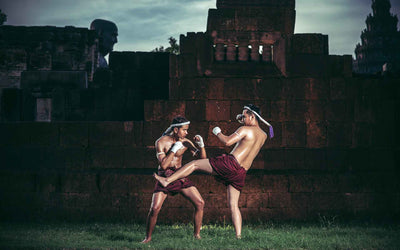
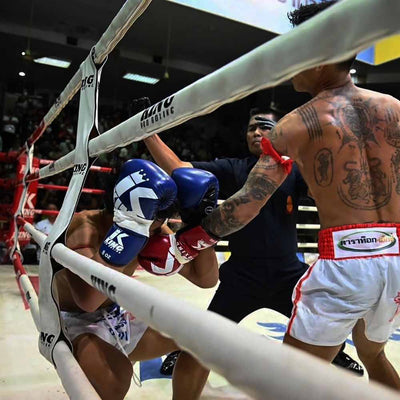
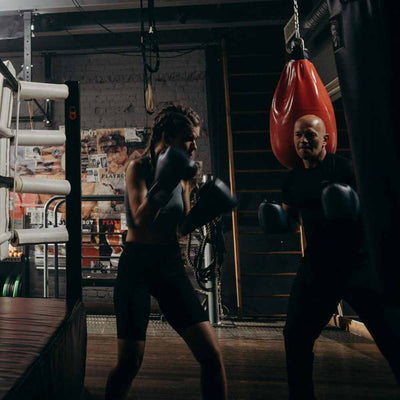
A good kickboxing combination tells almost the whole history of the sport. The punches open the attack, a kick follows, and the fighter moves into a new position. Behind that seamless coordination are encounters between karate practitioners, Thai boxers, boxing coach and organizers who wanted to discover what worked in a continuous fight.
The history of kickboxing therefore follows several paths. In Japan, a recognizable ring sport emerged in the 1960s. In the United States, full-contact karate developed along its own path. Dutch gyms added an influential training culture. Later, K-1, World MAX and GLORY brought those paths together for a large international audience.
This story follows the people, ideas and forms of competition behind that development. It includes not only the champion holding a trophy, but also the trainer with the pads, the first participants in a new competition and the athletes who make the gym their regular meeting place.
Kickboxing begins with an encounter
Kickboxing became a sport in its own right because people brought together techniques and ideas about competition from different worlds. Boxing brought experience with rounds, organizing matches in the ring, punching and professional events. Karate supplied fighters and a rich repertoire of kicks. Muay Thai offered an established competition culture that combined punches, kicks, knees and close-range fighting.
This did not happen the same way everywhere. Japanese organizers in the 1960s worked under different circumstances from those in the American karate scene. What connected both developments was the desire to test skill in a continuous match. A combination had to do more than look good: it had to keep working when an opponent fought back.
That is why it is useful to view kickboxing as a family of related sports. Some forms emphasize punches and high kicks, while others add low kicks and knees. They have much in common, but their differences show how the sport has developed.
Older martial arts, a modern sport
People were combining punches and kicks in fights long before modern kickboxing. Such similarities provide a broad cultural background. The kickboxing we recognize today, however, emerged in a specific modern setting of gyms, organizers, gloves, media and international exchange.
That distinction makes the past more vivid. A modern ring sport did not naturally grow out of a single old technique. Someone had to organize a match, bring opponents together and agree on what was allowed. Trainers then had to work out how to prepare students for that match.
The story, then, is about more than inventing a name. It is also about training methods, experiences gained through travel and the organization that turned isolated encounters into a recurring sport. Older martial arts played a major role in this, while the modern competitive sport has a history of its own.
Thailand as a major source of inspiration
When Japanese karate practitioners and organizers became interested in Thai boxing, they encountered a sport with its own established ring scene. Muay Thai had fighters, trainers, stadiums and an audience that followed the quality of a bout closely. It was far more than a collection of spectacular techniques.
For visitors, the way the techniques worked together and the rhythm of the bouts were important. A kick could not be separated from the stance that followed it. Boxing had to account for what could happen with the legs. At close range, knees and clinch work could change the fight again. These experiences offered plenty to build on.
Thai influence was therefore part of the development of Japanese kickboxing from early on. It was not simply an addition from the 1980s. Later encounters and champions from abroad made the exchange increasingly visible, but interest in Thailand was there from the start.
Japanese karate practitioners step into the Thai ring
One well-known milestone is the meeting between Japanese karate practitioners and Thai opponents at Lumpinee Stadium. The International Karate Organization’s own historical account places this meeting in February 1964 and records two Japanese wins and one loss.
Such an encounter raised very practical questions. What changed when an opponent attacked from a different distance? How did you respond to a low kick? What happened if the fight was not stopped after a punch? The answers came not only from discussing the bout afterward, but from experiencing it firsthand.
Kenji Kurosaki played an important role in the continuing exchange between karate and kickboxing. Teachers and fighters took their experiences back to the gym and adapted their training. It is a recurring pattern throughout the sport’s history: an international encounter only becomes truly influential when someone starts putting its lessons into practice every day.
Osamu Noguchi gives the new sport a stage
Boxing promoter Osamu Noguchi helped turn Japanese interest into an organized sport. His contribution went beyond a new name. A promoter brings together opponents, an audience, a venue and a fight card. That allows a sport to hold regular events and develop an identity of its own.
In 1966, the Japanese organization took further shape, and a kickboxing event was held in Osaka. The meeting between karate and Thai boxing thus gained a public stage of its own. It became possible not just to talk about different styles, but to see fighters face each other regularly.
Several people were involved in this development. Karate backgrounds, the interest of pioneers such as Tatsuo Yamada, and the practical knowledge of fighters and teachers came together with Noguchi's organizational work. The history is richer when you recognize that collaboration instead of crediting one inventor with every idea.
From one event to a recognizable world around the ring
A sport becomes familiar when people can follow it regularly. Recurring events give audiences the chance to recognize fighters, remember previous results and look forward to the next matchup. Meanwhile, participants have a reason to work systematically on their competitive skills.
The development of Japanese kickboxing was also shaped by what happened around the ring. Trainers built up their knowledge, organizers maintained ties with Thailand, and talented fighters had opportunities to show what they could do. Individual challenges between fighters from different backgrounds grew into a sporting world with its own rhythm.
You can see the same process later in major international organizations. It is not one spectacular night but a series of events that makes a fighter a familiar name. Audiences come to know a fighter's strengths and can better appreciate what makes the next opponent special.
The American path begins on the karate mat
In the United States, a different path developed out of competitive karate. In open tournaments, practitioners from different backgrounds faced each other. The speed of a punch, a well-executed kick and the timing of when a point was awarded were central to the competition.
Some of those fighters wanted to see how their skills held up over continuous rounds with full contact. That required changes. An attack had to be followed by defense, conditioning became important over longer exchanges, and punching took on an increasingly distinct boxing style.
Joe Lewis became one of the key figures in this development. His fight against Greg Baines in 1970 is a well-known milestone in the United States. In that setting, the term kickboxing became associated with the new competition format. This American story unfolded alongside the Japanese one, developing its own audience and organization.
Los Angeles 1974 puts full-contact in the spotlight
On September 14, 1974, several important developments came together at the Los Angeles Sports Arena. The full-contact championship associated with the Professional Karate Association gave the new American competition format a major stage and television exposure.
Isaias Duenas, Bill Wallace, Jeff Smith and Joe Lewis became the first four champions of the event. Their backgrounds and abilities showed how much talent could move from the karate world into a format with continuous fighting. Mike Anderson played an important role in organizing the championship.
The significance of that evening goes beyond the results. A new form of the sport gained recognizable faces, a program and a story that could be broadcast. Future events had champions to challenge and achievements to build on. American full-contact had its own high-profile starting point for further growth.
Rules change the way fighters fight
Differences between competition formats directly affected technique. When kicks are allowed mainly above the belt, distance plays a different role than when the thighs are also targets. A fighter must adopt a different stance, react differently to combinations and account for different follow-up attacks.
The low kick is a clear example. A punching combination can end with an attack on the leg. An opponent who focuses entirely on the head must still react to attacks lower down. This creates new ways to combine hands, legs, stance and timing.
In K-1-style competition formats, knee strikes also have a place. At the same time, rules on holding and breaks determine how long fighters can work at close range. The rules are therefore more than just a list for the referee. They help shape the style of a match.
Europe develops its own competitions and organizations
The sport spread internationally through people who trained together, visited instructors and organized competitions. Karate and other martial arts already had schools and networks beyond their countries of origin. Those connections helped new competition formats find a place.
In Europe, organizers did not simply adopt a single approach from abroad. Organizers and trainers had their own backgrounds and worked in different sporting cultures. Competition formats were tested, organized and developed further. This created new opportunities for participants to face opponents from outside their own schools.
Federations provided a next step. Shared rules, championships and international contacts made regular competition possible. This organizational development ran alongside the growth of professional promoters. Both paths contributed to the broad sport we now call kickboxing.
The Dutch connection with Japan
For the Netherlands, 1975 is an important year. Jan Plas, Peter van den Hemel and Jan van Looijen traveled to Japan for a training camp. There, they were introduced to kickboxing and returned with the ambition to develop the sport in the Netherlands.
The following year brought a high-profile competition. On May 31, 1976, a kickboxing gala took place at Amsterdam’s Jaap Edenhal. After that, gyms, organizers and fighters continued to build a dedicated environment for training and competition.
Mejiro Gym and Chakuriki earned strong reputations. The importance of schools like these lay in what they passed on day by day: trainers organized classes, students learned the rhythm of competition and strong fighters attracted new generations. The rich history of Dutch kickboxing deserves its own story; in the context of its international development, what is especially interesting is how experiences in Japan found a new continuation here.
Dutch kickboxing grows through daily training
The Dutch contribution is often recognizable in the way punches and kicks work together. A combination starts with the hands and flows into a kick, or a kick creates a new opening for boxing. Training places a strong emphasis on linking techniques.
You do not learn that simply by imitating a strong fighter. Repetition with a partner, pad work and practicing how to respond to an attack all help shape a style. Trainers structure drills so that a movement remains useful when the pace, distance and resistance change.
The term Dutch kickboxing describes an influential training culture, not a fixed program followed by every gym in the Netherlands. Gyms and trainers develop their own approaches. Those differences and the international exchange helped make the Dutch fight scene strong.
K-1 brings different backgrounds together
K-1 ushered in a new international era in 1993. Kazuyoshi Ishii brought fighters from different backgrounds together in a recognizable tournament format. The first Grand Prix event took place on April 30 at the Yoyogi complex in Tokyo.
Branko Cikatić won that first edition. The tournament immediately showed how exciting a shared stage could be. A well-known name or impressive background did not determine in advance how the evening would end. The winner had to prove himself against multiple opponents that day.
K-1 benefited from a clear story: different paths to the ring, one tournament bracket and ultimately one winner. For the sport, it was a powerful way to draw a broad audience into complex international matchups. Martial arts backgrounds remained interesting, but performance under the chosen rules was what mattered.
The heavyweights give fans familiar faces
Peter Aerts, Ernesto Hoost and Andy Hug became familiar figures of the great K-1 years. Their bouts showed how varied the approaches in the ring could be. A combination, a kick or the way someone managed distance took on a character of its own for fans.
Hoost built a remarkably successful Grand Prix career and in 2002 became the first four-time winner of the tournament. In later years, Remy Bonjasky and Semmy Schilt, among others, came to the fore. New generations became part of the story without the older names fading from memory.
The appeal lay in that continuity. Viewers remembered earlier matchups and anticipated a different result in a new bout. Major events turned individual performances into an ongoing sporting story. For Dutch fans, it was also special to see so many fighters trained in the Netherlands on that world stage.
World MAX puts the lighter fighters in the spotlight
The history of K-1 is not just about heavyweights. In 2002, the division up to 70 kilograms gained its own major stage with World MAX. Albert Kraus won the first edition, continuing the Dutch presence in a different way.
Masato, Buakaw and Andy Souwer then became important figures in the story. Their bouts brought speed, combinations and different technical backgrounds to a wide audience. The exchange between Thai boxing, boxing technique and other kicking traditions thus remained central to the sport’s development.
MAX broadened the picture of top-level kickboxing. A lighter weight class brought a different pace of competition and different matchups, with its own audience following the fighters. This expansion helped ensure that international history would not be remembered solely as a story of big heavyweights.
GLORY and the next international phase
In the years after K-1’s major breakthrough, the way the sport was organized continued to change. Established circuits, fighters and promoters sought new ways to bring international bouts to an audience. From 2012, GLORY became an important stage in that development.
On June 29, 2012, GLORY Sports International announced that an agreement had been reached to acquire It’s Showtime. This brought fighters and organizational expertise from a well-known European circuit together in a new international venture.
Such an event shows that the history of a sport is also the history of its organizations. Behind a well-known bout are contracts, broadcasts, venues and people who make an event possible. After K-1, the story continued through new partnerships and new matchups, while the gym remained where fighters did their daily work.
Women are part of the whole story of the sport
A history of kickboxing is more complete when women are not seen merely as a recent addition. Their training, bouts and careers are also part of the sport’s development. Lucia Rijker is a well-known Dutch figure whose career shows the connection between kickboxing and a later career in boxing.
Tiffany van Soest and Anissa Meksen earned a prominent place on the GLORY stage. Van Soest won the organization’s first women’s title in 2016. In December 2017, Meksen claimed the title at GLORY 48 in New York. Their technical bouts give women a clear place in the history of a major professional circuit.
At the same time, the scale of a sport is not determined by title bouts alone. Recreational participants, trainers and competitive athletes together keep it going. Anyone who looks only at the biggest fight cards sees just some of the people who carry kickboxing forward.
The gym as a place to learn and belong
In a gym, history is passed on again and again. A trainer teaches a student how a punch and a kick fit together. An experienced athlete helps a newcomer find the rhythm of a drill. Together, they develop a familiar way of training.
Anthropologist Jasmine Rana studied ladies-only kickboxing by joining training sessions herself and speaking with participants. Her account centers on the experiences of women in two gyms. Learning skills, enjoying movement and the significance of the training environment are expressed in their own voices.
That perspective broadens the sport’s history. People do not come to the gym solely to win a title someday. They learn about their bodies, build relationships and establish a routine. How participants shape their own training is just as much a part of kickboxing’s development as an international event.
WAKO builds an international sporting structure
Alongside professional fight cards, a federation-led pathway developed. WAKO was founded in Berlin in 1977 and held its first world championships in 1978. Shared rules and international tournaments helped participants find a path to competition beyond their own countries.
The organization distinguishes three ring disciplines: full-contact, low-kick and K-1. There are also four tatami disciplines: point fighting, light-contact, kick-light and musical forms. That wide range shows how many meanings the name kickboxing has taken on in international sport.
On July 20, 2021, WAKO received full recognition from the International Olympic Committee, following provisional recognition in 2018. It was an important step for the federation within the Olympic movement. Recognition of a federation is a separate decision from including the sport in the Olympic Games program.
Equipment evolves with training
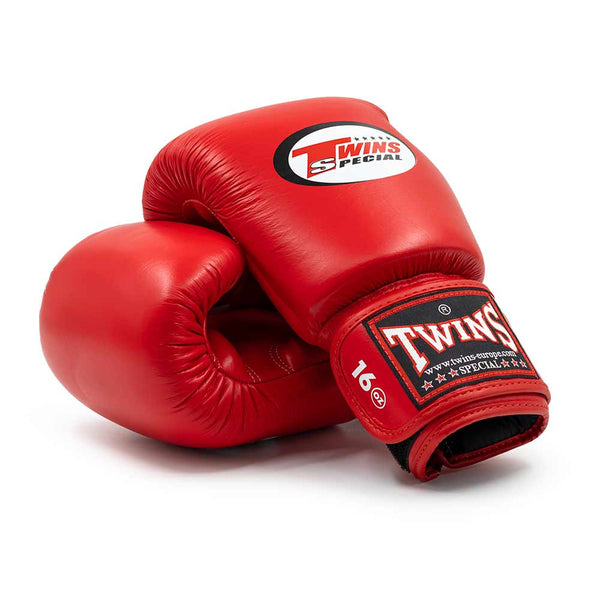
A glove is also a piece of sporting history. When punches are exchanged over successive rounds, equipment, fit and how the hands are used become a regular part of preparation. Handwraps fit into that as part of the training routine.
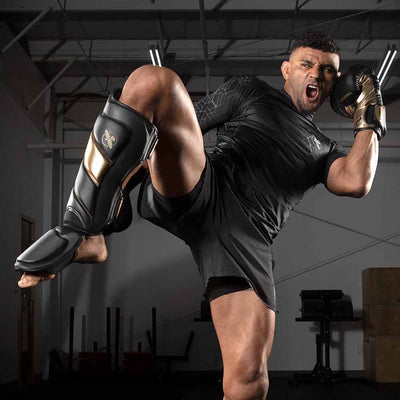
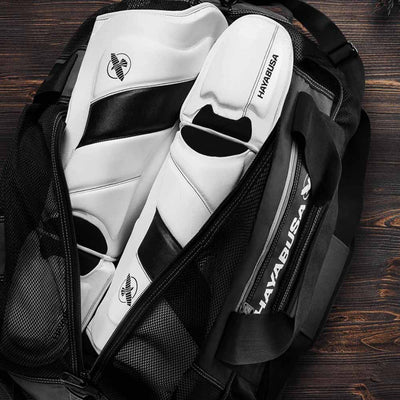
In partner drills involving kicks, shin guards come into play. They suit the way a modern gym structures repeated practice and has participants work on technique together. A mouthguard and other protective gear are part of the type of exercise and contact the training is designed for.
That equipment makes the connection between the past and your own training very tangible. What fighters wear in a historic bout does not have to be the same as what you use in technical training. The gear suits the task: working through repetitions on the bag, reacting to pads, or practicing with a partner. You can compare these modern uses in separate buying and equipment guides.
Television, stories, and how we see the ring
Media have helped turn athletes into recognizable names. The American full-contact championships drew television coverage, while K-1 brought major events and recurring tournament storylines to an international audience. Viewers did not have to live in the same city to follow a fighter.
That also changed how the sport was remembered. The final and the spectacular strike are easy to remember. The training, the earlier rounds, and the role of a training partner fade into the background more quickly. Watching older fights in full reveals more about the pace and the decisions a fighter had to make.
A good sports story can show both sides. The big night brings excitement; the daily work helps explain how someone gets there. That combination keeps the history interesting for both the fan in the stands and the athlete heading back to training the next day.
An international sport that keeps changing
Kickboxing has grown because people kept exchanging ideas and adapting. Teachers traveled, students brought their experiences home, and organizers made new encounters possible. The same pattern is still visible when a fighter changes training environments or an event reaches a new audience.
Rules continue to evolve, too. In January 2025, for example, GLORY clarified how a brief clinch is handled and how clear impact is judged. Such a change shows that a competition format is never set in stone. Organizers continue to decide how bouts in their competitions are officiated and scored.
The fundamentals remain familiar: learning to combine punches and kicks, understanding distance, and responding as circumstances change. In the ring, these skills are tested at the highest level. At the gym, a much larger group of people gets the chance to explore that same technical world step by step.
The history of kickboxing in a timeline
These milestones show how different paths of development grew side by side and later converged. The timeline therefore follows both events in the ring and the organizations that helped the sport grow.
Japan and the American path of development
- 1964: karate practitioners in the Thai ring. The Kyokushin historical timeline records a match at Lumpinee in February, with two Japanese wins and one loss.
- 1966: organized kickboxing in Japan. A Japanese organization and an event in Osaka help the new ring sport establish a place of its own.
- 1970: an American milestone. Joe Lewis fights Greg Baines as full-contact karate develops.
- 1974: Los Angeles on television. Duenas, Wallace, Smith and Lewis become champions at the major American full-contact event.
- 1975: Dutch pioneers travel to Japan. Jan Plas, Peter van den Hemel and Jan van Looijen bring new experiences back home.
Gyms, federations and major tournaments
- 1976: a Dutch fight night. On May 31, Amsterdam’s Jaap Edenhal becomes an early stage for Dutch kickboxing.
- 1977: WAKO is founded. In Berlin, a new organization gives shape to the international federation pathway.
- 1978: the first WAKO World Championships. International competition continues to grow beyond individual professional events.
- 1993: the first K-1 Grand Prix. Branko Cikatić wins the first edition of the new tournament in Tokyo.
- 2002: World MAX crowns its first champion. Albert Kraus wins the first edition of the major K-1 tournament for fighters up to 70 kilograms.
New international connections and recognition
- 2012: GLORY and It’s Showtime. The announced acquisition brings together fighters and organizational expertise from established circuits.
- 2016 and 2017: a GLORY women’s title. Tiffany van Soest becomes the organization’s first champion; Anissa Meksen then takes the title.
- 2021: full IOC recognition for WAKO. The federation reaches a new milestone within the Olympic movement.
- 2025: rules continue to change. GLORY publishes clarifications on the brief clinch and how impact is judged.
The history lives on in every training session
Kickboxing grew because people wanted to learn from one another. Japanese encounters with Thai boxing, American full-contact pioneers, Dutch gyms and international tournaments each gave the sport their own momentum. Their stories come together in a modern form of training where hands, legs, timing and teamwork all work together.
The most important development, then, is not a single technique or organization. It is the ongoing connection between experience and passing on knowledge. A champion shows what is possible at the highest level; a trainer makes that knowledge useful for the next generation.
Those who watch a match or their own class with that perspective notice more. Behind a punch followed by a low kick lie journeys, competitions, arrangements and many hours of practice. That makes the history of kickboxing not a closed chapter, but a story that every gym continues to build on.