It begins with a sound. Before the first kick lands, you hear the music, see a fighter move along the ropes and recognize the ritual with which he honors his teachers. Then the headband comes off, the gloves are raised and the space between two people becomes a contest of distance, balance and timing. Anyone who sees only the powerful kicks misses much of what makes Muay Thai special.
The history of thai boxing takes us past royal tales and village festivals, schoolyards and railways, Bangkok’s famous stadiums and gyms on the other side of the world. It is about great champions, but also about teachers who rarely appeared on television. About rules that changed, women who stepped onto new stages and techniques that are sometimes preserved better in a long lesson than in a spectacular highlight reel.
In this story, we follow that development from Siam to the international sport of today. Not as a straight line from a single inventor to a final form, but as a living history in which tradition and innovation continually meet.
A national sport with many different roots
For Thailand, Muay Thai is at once a competitive sport, a cultural symbol and a way to pass on knowledge. That combination explains why so many different histories are told about it. A stadium fan might start with the great champions. A teacher tells the story of their own teacher. Kings and heroes come to the fore in national commemorations. A boxer from a provincial gym will name different places and people.
These perspectives complement one another. Without local practice, there would have been no great flow of talent to Bangkok. Without organizers and established venues, regional reputations would have had a harder time growing into national fame. And without the cultural setting, the headband, music and ritual preparation would seem like mere decoration, when they reveal something about the world in which the sport grew.
Historian Peter Vail has written about how Muay Thai becomes a national symbol and how institutions shape the way its past is understood. It is a compelling thought: a tradition lives on not only because people continue to perform old movements, but also because each generation gives meaning to what it has inherited. The history of Muay Thai is therefore both the story of the fights and the story people have come to tell about them.
Siam: fighting knowledge shared by the court, army and community
Before the modern name Thailand became common, the country was known internationally as Siam. In that world, fighting knowledge existed in different settings. Warriors needed to handle weapons and defend themselves at close range. Royal patronage could bring prestige to a teacher or a strong fighter. At the same time, skills were taught, practiced and tested against others outside military circles.
This gives the familiar connection with the army a broader meaning. Hands, elbows, knees and legs could all be part of self-defense, but boxing was also a public encounter. At festivals and gatherings, people saw who was strong, skillful or especially brave. A local fighter could represent a community; a good teacher could attract students. Reputations developed that reached beyond any one person.
The royal court and the community were not separate worlds, either. A special match could take place during a royal occasion, while the participants had developed their skills elsewhere. In turn, recognition from above gave local knowledge new status. This interplay matters more than the idea of a single, fixed army program from which the entire modern sport directly emerged. Muay Thai grew as people sought each other out, compared skills and passed on knowledge.
Ayutthaya and the power of Nai Khanom Tom’s story
One of the best-known names in the tradition is Nai Khanom Tom. His story is linked to the fall of Ayutthaya in 1767 and a later appearance during Burmese captivity, usually dated to 1774. In the familiar account, a Siamese boxer is given the opportunity to show his skills and defeats several opponents in succession. What stays with the spectator is not just his victory, but the dignity with which a prisoner represents himself and his origins.
This makes Nai Khanom Tom more than a name on a timeline. The story gives a face to courage, self-control and the belief that knowledge can live on in the body when other certainties disappear. The recurring ritual preparation also connects this individual hero to his teachers and the community he came from.
The story has taken on different lives: in chronicles, commemorations, popular books and television. Historian Sunait Chutintharanon, for example, described how a television drama from the 1990s built on a novel and added new story elements. This makes such productions interesting as cultural history. They show how a hero is reintroduced to an audience living in a different era. The memory of Nai Khanom Tom also tells us something about the enduring need for relatable examples of skill and resilience.
Regional teachers and the world behind Muay Boran
Older Thai fighting practices are often grouped today under the name Muay Boran. The term helps draw attention to historical and traditionally taught forms alongside the modern ring sport. But that umbrella term covers different teaching traditions. A teacher had their own preferences, a local environment produced different opponents, and a student did not automatically develop exactly the same way of moving as their neighbor.
Accounts of regional traditions mention names such as Khorat, Lopburi and Chaiya. One interesting milestone is the royal recognition of three fighters from different regions around 1909 and 1910, recorded in the historical timeline compiled by Sylvie and Kevin von Duuglas-Ittu. Such moments show how local knowledge also gained national visibility. A regional name thus became more than a geographical label: it could evoke a reputation and a teaching tradition.
What makes this history compelling is its variety. Not every old technique was performed in the same way or used in the same situation. When you watch a demonstration, you see a carefully chosen presentation of that heritage. When you watch a match, you see what a particular set of rules demands of those skills. Both can reveal something essential, especially when you understand their respective contexts.
Railways, schools and the road to a wider sporting world
The history of a sport is not just about famous bouts. Sometimes the ability to travel somewhere changes at least as much as a new technique does. As the railways expanded, connections between Bangkok and various provinces became easier. People, goods and ideas could travel more regularly. For a fighter or organizer, better connections also made a match outside their local area more practical.
Physical education also gained a place in schools. Suan Kulap College in Bangkok is an important example in the sport’s early modernization. There, Thai fighting practices came into contact with international boxing and other physical disciplines. The school’s history shows that this exchange did not begin only when foreign tourists discovered Thai gyms. It was already part of the development of competitive sport much earlier.
The impact of those changes was significant. A skill passed down mainly through personal relationships and local encounters could also be organized within a school curriculum. An opponent was no longer necessarily someone from a neighboring village. And an organizer could build a regular audience. This gradually created the infrastructure in which modern Muay Thai could grow: teachers and students remained important, but their world became larger.
The ring changes the fight
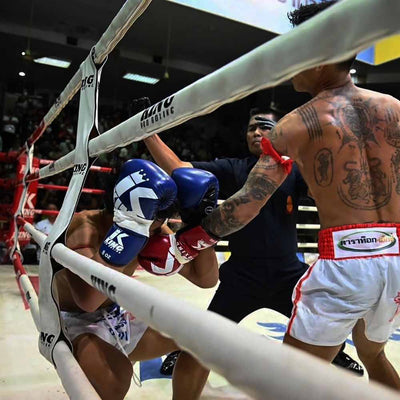
A permanent ring seems like a given today. Yet a space like that fundamentally changes the sport. Ropes limit where a fighter can go. A raised platform makes the match easier to see. Corners become places where the support team gathers. The match gains a clear focal point that draws the audience’s attention.
The ring at Suan Kulap, dating from 1921, is considered an important milestone in this development. It was used for both Muay and international boxing. Other venues followed in the 1920s. Historical accounts describe differences in floors, ropes and corner structures. These are not insignificant construction details. They show that the competition setting itself was still evolving and that organizers were trying out different designs.
A permanent venue also made consistency possible. When the same kind of space is used more often, it becomes easier to agree on how matches proceed, the referee’s role and how a result is determined. The modern sport did not emerge simply by giving old techniques a new look. The place where those techniques were performed also helped shape how people trained, fought and watched a match.
From wrapped hands to boxing gloves
Images of wrapped hands are closely tied to the historical image of Thai martial arts. The term kard chuek is used for fights or demonstrations involving such hand wraps. In the 1920s, boxing gloves became increasingly common in organized matches. That transition was part of a broader change in the sport, with established rings, clearer rules and a greater influence of international boxing on how matches were organized.
The interesting thing is that its introduction was not a single moment when the entire country changed at once. The historical timeline describes reforms in Bangkok and later changes in regional practices. That fits a sport practiced in different settings. A new rule could set the direction at a major venue while a different custom still prevailed elsewhere.
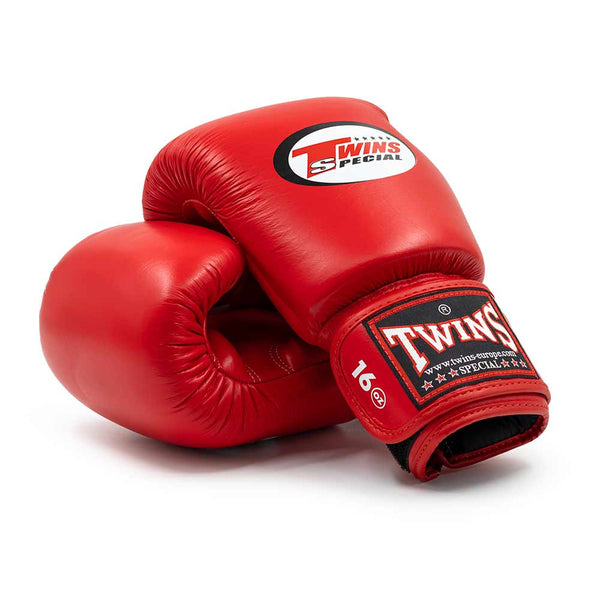
The glove also changed the material side of the sport. The closed design, the padding and the way it enclosed the wrist became part of what a fighter felt in the ring. Today’s gloves in a Thai gym are therefore very much part of the tradition. They are a tangible result of its modernization. The same goes for the handwraps underneath: preparing the hands remained important as the competition format continued to evolve.
Rajadamnern: a new center after the war
On 23 December 1945, Rajadamnern opened its doors for its first fights. Plans for the stadium had been made during the war years, but construction was interrupted by the circumstances. When fights could begin after the war, Bangkok gained a venue that would play a defining role in professional Muay Thai.
The original stadium did not yet have a roof. That came in 1951. That image alone makes the early years feel tangible: fights and spectators under the open sky, at a venue that would later become almost synonymous with established stadium culture for many fans. The stadium was not the beginning of boxing in Thailand, but it did become an important center of the sport’s continued professionalization.
A permanent venue brought bouts, rankings and reputations together. A fighter could build more there than one impressive night. By performing repeatedly against strong opponents, he could establish his name in a recognized circuit. For teachers and gyms, such a stage became a place where years of work could be seen.
Rajadamnern also continued to change. The building, the organization and the presentation evolved with a new audience. That a historic stadium would later host new competition formats fits into this longer history. The significance of the venue was preserved not by keeping it frozen in time, but by continuing to hold fights there.
Lumpinee and the significance of a stadium title
Lumpinee joined them in 1956. Its name became one of the most respected in the sport. To a fan from abroad, a stadium title may initially sound like a local prize. Within Muay Thai, however, it speaks to a fighter’s achievements in a particularly strong and well-established competitive scene.
That world involves far more than the two people in the ring. Matchmakers bring opponents together. Trainers prepare a plan and spot small details that show how a bout is unfolding. Other fighters watch, supporters compare performances, and a regular audience develops a keen eye for qualities that can easily be lost in a short highlight reel.
The significance of a title is closely tied to the quality of the competition in which it was earned. A reputation grows through bouts with other strong fighters and through the way someone holds up under pressure. That also explains why stories about great champions so often return to the stadiums: there, their ability could be measured in public.
Rajadamnern and Lumpinee need not be rivals with room for only one to matter. Together, they help us understand the history of professional Muay Thai. Their names connect different generations and show how a place can retain its significance even as its organization and building change.
The gym: where the road to Bangkok begins
Behind every major match lies a great deal of work that goes unnoticed. Rounds on the bag, instructions during pad work, a trainer giving the same correction once again and a student trying once more to distribute his weight better. The gym is where a potential champion first learns to control his body.
Provincial gyms and communities play an important role in Thai boxing. Research into fighters’ lives has examined, among other things, northeastern Thailand, known as Isan, and the connections between local networks and Bangkok. That perspective makes the history more human: moving to a larger gym is not just a step up in sport, but also a change in daily surroundings and relationships.
A fighter’s name may also become linked to his school or sponsor. To an outsider, this can sometimes seem like a complicated string of names. Within the sport, it can signal a connection: someone belongs somewhere, has learned within a particular tradition and represents more than just himself.
Seen this way, a match is also a meeting of training worlds. Behind the movements the audience sees are the preferences of teachers, the strengths of training partners and the habits of a gym. The wider history of Muay Thai is shaped every day in places much smaller than a stadium.
Wai Kru and Ram Muay: the teacher is in the ring too
Before the fight begins, the ritual preparation makes it clear that the fighter did not develop his skills alone. Wai Kru is a tribute to the teacher. Ram Muay refers to the sequence of movements associated with that preparation. In practice, the two terms often appear together.
The ritual marks a special transition. An individual athlete is about to begin a match, but first takes time to express his relationship with his teachers and the tradition. The ring becomes not just a place of competition, but also a place where knowledge passed down is acknowledged. That can easily go unnoticed by an audience waiting only for the first hard strike.
The way it is performed can vary between schools and occasions. Those differences are precisely what make the preparation interesting. A shared cultural form leaves room for each school's teaching tradition and its own way of presenting it. The movements also reveal something about the environment in which a fighter was trained.
The mongkhon, the traditional headband, and the pra jiad worn around the upper arms belong to that world of meaning. They are different from the protective gear used for partner drills. Recognizing that distinction lets you appreciate both: the ritual that connects fighters to their teachers and the practical training gear with which the next generation continues to learn.
The music gives the competition space its distinctive character
Muay Thai has a sound you recognize immediately after attending a few traditional events. The melody and rhythm give the preparation and the bout a distinctive atmosphere. Alongside the visible ritual, the music is one of the sport's most recognizable cultural features.
Traditional accompaniment brings together a melodic instrument, drums and small cymbals. The pi chawa carries the distinctive melodic line; klong khaek and ching shape the rhythmic texture. This combination belongs to a wider history of Thai music and has had a place outside boxing too. The ring has not simply been given an arbitrary piece of background music; it is connected to an existing cultural soundscape.
The term sarama is most closely associated with the music played during the ritual preparation. In everyday usage, it is also used more broadly for the familiar musical accompaniment. That broader use explains why, for enthusiasts, the name can evoke almost the entire atmosphere of a traditional bout.
When you watch a bout closely, you can listen for that layer too. The crowd's reactions, the voice from the corner, the sound of a kick and the musical accompaniment all shape the experience. A compilation edited without sound shows the same techniques, but not quite the same world.
Eight limbs, one connected body
The nickname “the art of eight limbs” refers to two fists, two elbows, two knees and two shins. It is a useful introduction, but the sport becomes truly fascinating when you see how these weapons work together. A fighter does not have to tick off eight separate boxes. They have to choose what works at a given distance and moment.
A teep can restore distance or interrupt forward movement. A kick can do more than land; it can also change an opponent's stance. A punch can create an opening for the next technique. And in the clinch, the position of the arms, head and hips directly affects what is possible.
That is why balance and timing recur in the lessons of great teachers. A fighter who loses their stance after an attack gives their opponent new opportunities. A fighter who distributes their weight well can move on, block or follow up with another technique more easily. The quality often lies in that transition, not just in the visible impact.
That connection also helps us understand the history. The sport is recognisable for its broad range of techniques, but each competition format gives them its own framework. The available repertoire, the way performances are judged and the duration of a fight together influence which choices a fighter brings to the fore.
The clinch and fighting styles: different answers to the same opponent
The clinch is one of the elements that most clearly sets Muay Thai apart. From the outside, it can sometimes look like little more than holding on. Up close, it is about position, balance, space and the ability to make another person react. A small change in foot placement or the direction of the arms can change the opportunities for a knee strike or a shift in position.
The familiar style names help identify different preferences. Muay Khao is associated with knees and the pressure needed to make them effective. Muay Femeu with technical and tactical ingenuity, with reading and adapting. Muay Mat with a strong emphasis on punches. These are not closed systems in which a fighter has no skills beyond their label.
Their main value is that they help you watch more closely. You see how one fighter wants to close the distance, while the other works to maintain it. How forward pressure can be a tactical tool, but can also create opportunities for someone who pivots or counters well. And how a seemingly calm stance can come from a very active way of observing.
Great fights are therefore also meetings of ideas. Two people are not simply trying to hit harder; they want the fight to unfold in a way that makes their own strengths decisive. That is precisely where technique becomes a personal story.
Reading a fight: rhythm, control and conviction
Anyone watching traditional Muay Thai for the first time may be surprised by the rhythm. Not every phase seems equally hurried, and not every exchange is received in the same way. An experienced spectator also looks at the effect of a technique, the fighter's stance after landing a strike, and who forces the other to adjust.
That makes watching more than counting visible movements. A series of attacks can apply pressure, while a well-placed counter can change the impression of an exchange. A fighter who stands firm and makes their opponent react can show control that no single still image can capture. The meaning emerges from the sequence.
The rules and competition format provide the concrete framework. A traditional five-round bout, a short professional format, and an international federation tournament do not necessarily call for the same tactical approach. How actions are judged must also be understood in that context. It is especially interesting to see how fighters adapt their repertoire to the demands of a bout.
For viewers, it helps to keep one question in mind: who can make the other fighter fight on terms they did not choose? That question makes even the less spectacular phases compelling. You are watching not only the attacks, but also how fighters gain and keep the initiative.
The Golden Age: greatness in different forms
Many enthusiasts refer to the 1980s and 1990s as the Golden Age of Muay Thai. That is not an official date range, but a mark of appreciation for a particularly rich era of stadium competition. In people's memories, deep fields of talent, technical variety, and major matchups come together.
Samart Payakaroon: balance and technical composure
Samart is one of the names that comes up again and again when enthusiasts talk about technical quality. In lessons recorded later, balance takes center stage. That fits the image of a fighter who does not need to apply constant pressure to control a situation. The calm is not a lack of effort, but the result of reading the situation, maintaining good positioning, and acting at the right moment.
Dieselnoi: the logic of knee strikes and pressure
Dieselnoi represents a very different, recognizable strength. His name is associated with knee strikes and with the way a fighter can keep pressing an opponent. His teaching is not just about raising a knee. Closing the distance, limiting space, and using the body well are also part of that approach.
Karuhat: hard to read, quick to switch gears
With Karuhat, the small adjustments that make a movement harder to predict stand out. His recorded lessons on tension and kicking dynamics show how much detail can lie behind a fluid action. Together, these three names show why a single ideal is too limited: great Muay Thai can be calm, forceful, playful, or unexpected, as long as the choices made in the ring are effective.
Across borders: the sport travels with people
Muay Thai did not spread because a complete system was sent abroad in a single day. Teachers traveled, foreign fighters came to Thailand, and organizers brought participants from different backgrounds together. Each encounter involved a process of translation: what did people recognize, what surprised them, and what did they want to learn themselves?
The connection with international boxing already existed during the early modernization. Later, other routes emerged, including through Japan and growing interest in different forms of kickboxing. This brought influence in several directions. People adopted training methods, adapted their organizations, and developed different tactical emphases under new rules.
A visit to a Thai gym could change something that was hard to learn from a book. Not just the techniques, but also the daily routine, watching experienced athletes, and the way a trainer gave corrections became part of the experience. In turn, Thai teachers met more and more students with different sporting backgrounds and expectations.
International growth therefore meant both continuity and change. Recognizable Thai elements spread abroad but found their own settings in new places. The history becomes richer when you follow those movements without calling every related form of competition exactly the same thing.
The Netherlands: via Japan to a martial arts scene of its own
In the Netherlands, accounts of the 1970s often mention names such as Jan Plas and Thom Harinck. One concrete milestone was the trip Jan Plas, Peter van den Hemel, and Jan van Looijen took to Japan in 1975. There they encountered Japanese kickboxing, which had already incorporated influences from Thai martial arts.
Back in the Netherlands, new training programs and events took shape. On 31 May 1976, an important early kickboxing event took place at Amsterdam's Jaap Edenhal. Gyms such as Mejiro and Chakuriki helped create an environment where fighters challenged one another and trainers continued to develop their approach. Growing international contacts made comparisons with other countries increasingly natural.
This history explains why Dutch kickboxing and Muay Thai are closely connected but are not simply the same. The Dutch story also runs through Japan, various martial arts backgrounds, and its own culture of fight events and gyms. Encounters with Thailand added firsthand experience of Thai training practices and the stadium scene.
Those differences are precisely what made the exchange interesting. A boxer or kickboxer could bring their strengths while discovering how much attention stance, the clinch, and the rhythm of a Thai bout demanded. The sport grew because people were willing to reconsider their familiar way of fighting.
Women and the opening of famous venues
The history of women in Muay Thai is bigger than the day a famous stadium opened its doors to them. Women were already training and fighting before they gained access to any prestigious stage. A change at a major institution therefore marks not the beginning of their participation, but an important shift in visibility and recognition.
At Lumpinee, 2021 was such a year. On September 18, Sanaejan and Buakaw faced each other on a Lumpinee card for a WBC title. Because of COVID-19 restrictions, the bout took place at a temporary outdoor venue beside the stadium. Later that year, women also competed in the stadium ring itself. That distinction makes the development more concrete: under difficult circumstances, an institutional opening took shape step by step.
Rajadamnern lists August 5, 2022, as the date of its first women’s bout, held as part of the Rajadamnern World Series. Aida Looksaikongdin and Zahra faced each other that day. There, too, women athletes gained access to a venue of exceptional historical significance.
These changes are an integral part of the tradition’s story. A sport can preserve old rituals while redefining who may represent it on its most important stages. Its history is therefore not just about preserving traditions, but also about making more room for people to take part.
Film and television: Muay Thai gains a global image
Many people first encounter Thai martial arts on a screen. In just a few minutes, a film can convey a sense of agility, elbows, knees and a distinctive physical style. It also reaches people who have never watched a full bout or visited a Thai martial arts gym.
Ong-Bak from 2003 is a familiar example. Prachya Pinkaew’s film, starring Tony Jaa, brought an energetic Thai style of action to an international audience. The physicality of the scenes made a strong impression. For many viewers, the film became a gateway to a broader interest in Thai martial arts.
Alongside action cinema, historical novels and television dramas have played a role of their own. Portrayals of Nai Khanom Tom show how an old hero’s tale is told anew time and again. These productions give characters emotions, backgrounds and adventures that suit the story their creators want to tell. They also offer a window into the cultural interests of their own time.
Archival footage offers something different. It shows clothing, competition venues, spectators and movements from a particular filming setting. Sometimes a widely shared early clip turns out to come from a staged feature-film scene. That does not make it uninteresting: it tells us how boxing was portrayed on film. Recognizing what kind of footage it is lets you draw even more history from it.
International organization and the significance of 2021
As a sport spreads to more and more countries, the need for common rules grows. Teams need to know the conditions for taking part, officials need a shared framework, and athletes from different backgrounds need to be able to meet in recognizable competitions. International organization makes that network visible.
IFMA plays an important role in this. Full recognition by the International Olympic Committee in 2021 was an institutional milestone. It meant recognition of the international federation within that sporting system. That is different from a decision to include Muay Thai in a particular Olympic competition program.
The value of such a development also lies in what supports it: a growing network of national organizations, athletes, coaches, and officials. This connects competitive Muay Thai at a different level than individual international galas do. The cultural side also has a place in international activities, for example through attention to Wai Kru and the passing on of traditions.
From a historical perspective, what is particularly interesting is that a sport with strong local and national roots can exist on several levels. The local gym, the Thai stadium, and an international federation tournament all belong to the same wider world, but each represents a different way of organizing it.
New formats in historic venues
An old stadium does not have to remain solely a setting for old forms of competition. Rajadamnern cites July 22, 2022, as the start of the Rajadamnern World Series. This gave a venue with a long professional history a new presentation aimed at a wider audience.
Differences in the number of rounds, presentation, and visibility of scoring change the fighters’ task and the viewer’s experience. A shorter format may leave less room to gather information about an opponent. A clearly displayed score can influence how athletes and spectators approach the next phase. Such choices are part of the sport’s development, not just the television broadcast around it.
It is therefore useful not to see every contemporary bout as exactly the same product. A traditional stadium fight, an international tournament, and a modern professional event may place different emphases. The athletes use recognizable skills, but must make them work within each setting.
That variety also has a historical parallel. In the early twentieth century, rings, gloves, and rules were also shaped to suit changing circumstances. The question of how Muay Thai remains recognizable as the competition environment changes has therefore been part of its story for longer than today’s screens and light shows might suggest.
The Muay Thai Library: history in action
Not all knowledge can be captured in a list of techniques. A teacher can show how he waits, how little he shifts his weight, or why he takes a step at a particular moment. That kind of detail becomes easier to understand when you follow someone for longer than the few seconds of a highlight.
Sylvie von Duuglas-Ittu’s Muay Thai Library documents lessons with champions and teachers from different generations. Her 2018 description of the project puts these longer encounters at its heart. The recordings preserve not just a technique, but also the way someone explains, corrects and embodies their own fighting knowledge.
A lesson with Samart on balance therefore tells a different story from a montage of his best attacks. A session with Dieselnoi can show how his approach to knees relates to position and pressure. A lesser-known teacher may reveal a detail that is barely found in the wider archive of fights.
This is a valuable addition to the usual history of the sport. Titles and results show what someone has achieved. Long-form filmed lessons give you a sense of how someone thinks and moves. The passing of knowledge from teacher to student gains a new medium, while its personal nature remains recognizable.
That history carries through to today’s training
You don’t need to know the history before you can train at a Muay Thai gym in the Netherlands today. Still, much of what you see takes on more meaning once you know the background. The teacher who keeps returning to balance, the combination on two Thai pads and the transition to a clinch drill are all part of a long history of knowledge developed through practice.
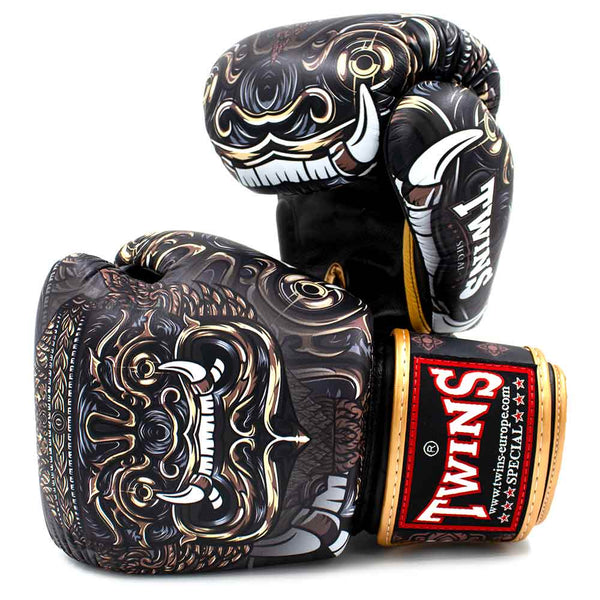
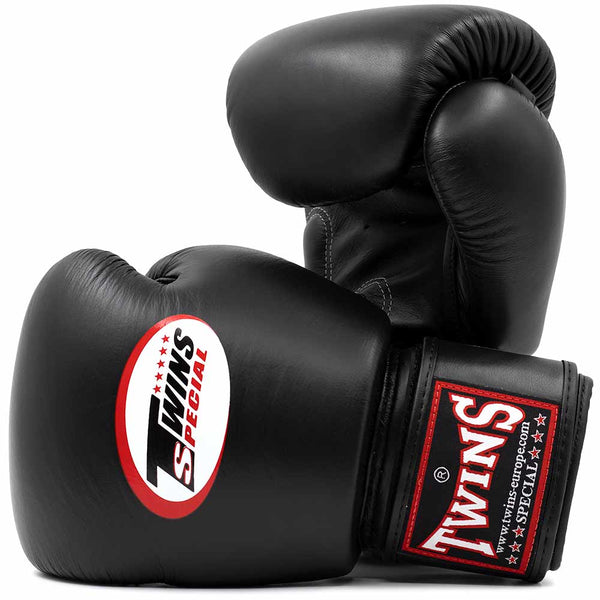
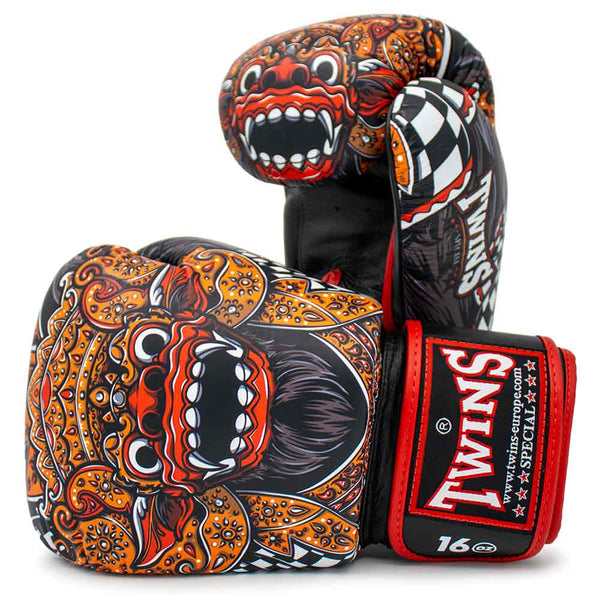
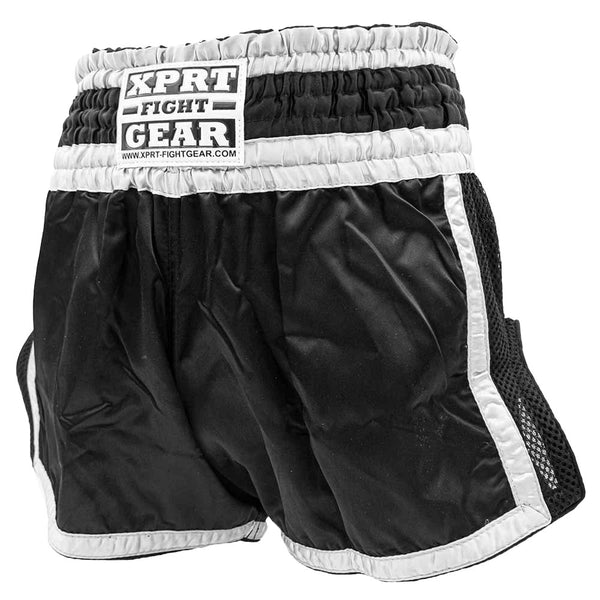
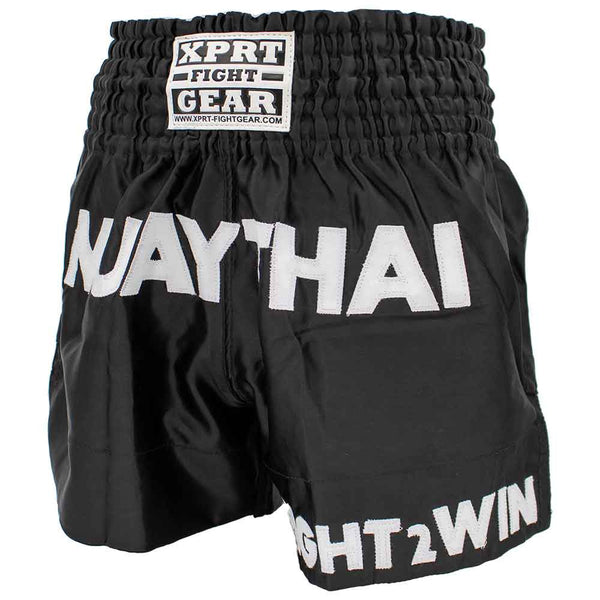
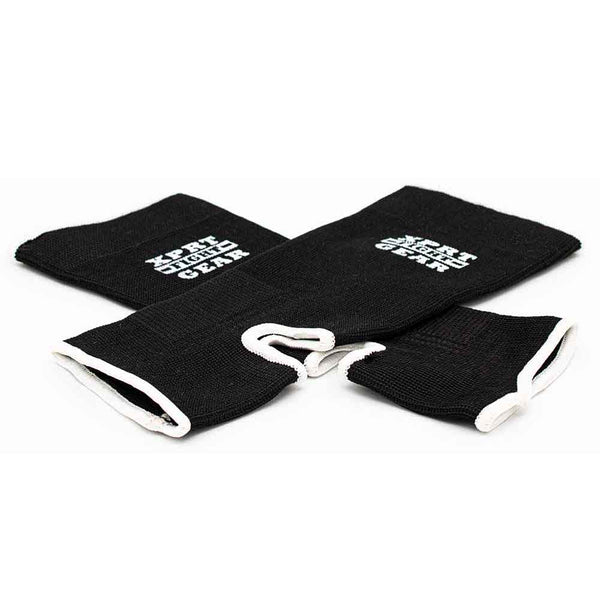
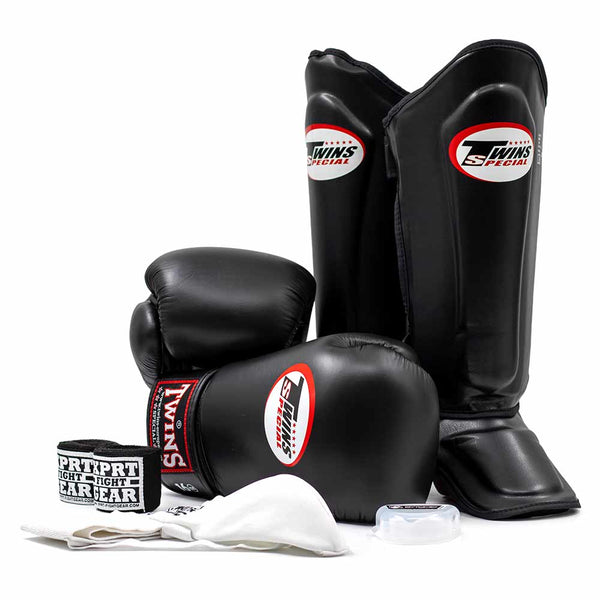
The equipment tells a story too. The closed boxing glove is linked to the modernization of competitive Muay Thai. Handwraps are part of preparing the hands. The short thai boxing short allows room for kicks and knees, while colors, text and imagery give a fighter a distinctive look. Thai makers have brought these practical and cultural aspects together in recognizable products.
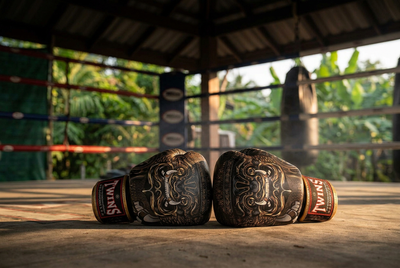
A pair of Twins Yaksha gloves, for example, shows how a contemporary design draws on Thai imagery. Simple black shorts, by contrast, can draw attention to the classic cut. Thai pads connect the athlete’s movements with the work of the pad holder. These are different ways the sport lives on in tangible objects.
For practical choices, the separate equipment guide remains the place to go for more detail. This history gives you the background: why the equipment, techniques and customs came together. With that knowledge, you see more than a logo or a color when you look at gear. You see part of a sport shaped and passed on by people.
The evolution of Muay Thai in a timeline
This timeline brings together several notable milestones. The older traditions set the stage; the moments below chiefly show the growth of the organized and international sport.
From regional traditions to established rules
- Around 1909 and 1910: royal recognition brings fighters from different regional traditions into the spotlight.
- 1913: international boxing is added to the program at Suan Kulap College, alongside the continued development of Thai martial arts.
- 1921: the ring at Suan Kulap becomes an important milestone in the development of organized competition.
- 1920s: new competition venues and the growing use of boxing gloves further shape the ring sport.
- 1937: the education department establishes rules that become part of further standardization.
Stadiums, the Netherlands and the Golden Age
- December 23, 1945: Rajadamnern opens for bouts.
- 1951: Rajadamnern gets a roof.
- 1956: Lumpinee opens and grows into an important venue for professional Muay Thai.
- 1975: the trip to Japan by Jan Plas, Peter van den Hemel and Jan van Looijen becomes a milestone in Dutch kickboxing history.
- May 31, 1976: an early Dutch kickboxing event takes place at Amsterdam’s Jaap Edenhal.
- 1980s and 1990s: the period many fans describe as the Golden Age of stadium Muay Thai.
Film, international recognition and new stages
- 2003: Ong-Bak is released, bringing Thai action cinema further into the international spotlight.
- 2021: IFMA receives full IOC recognition; Lumpinee opens its program to women.
- 2022: the Rajadamnern World Series begins; Rajadamnern hosts its first women’s bout.
A living tradition, passed from person to person
The history of Muay Thai is broad enough to encompass kings and local teachers, a wooden ring and a famous stadium, a quiet correction during pad work and a bout remembered by an entire generation. Those different scales are precisely what make the story rich.
The sport remained recognizable because people passed on its skills and meanings. At the same time, it changed through new venues, equipment, rules, media and participants. The glove did not make it any less historic, an international student did not sever its ties to Thailand, and a woman in a stadium ring once closed to women meant that its history continued to be written.
Anyone watching the next bout can therefore pay attention to more than the result. To balance after a kick. To the preparation that honors a teacher. To the way one fighter maintains distance while the other carefully closes it. There, in the connection between knowledge, character and movement, Muay Thai’s past remains present.