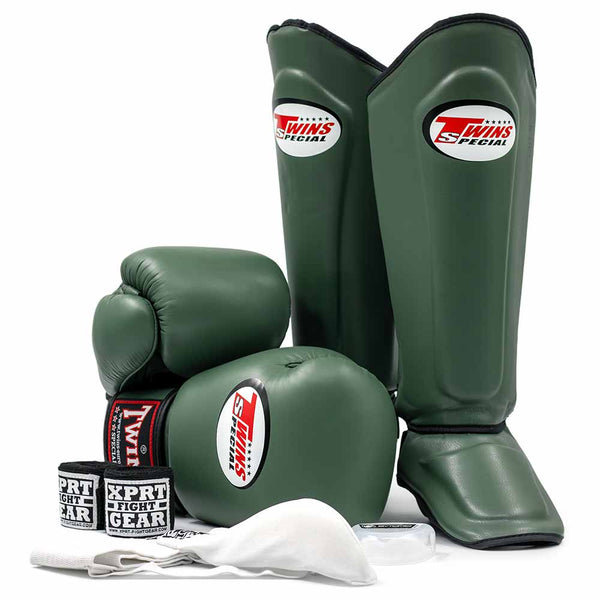
The sound of tearing off a strip of tape is part of the locker room. A cornerman wraps a boxer's hand, a trainer secures the end of a handwrap, and moments later the hands go into the gloves. From the outside, these actions look similar. Yet a piece of tape over a fastening is different from a complete competition hand wrap.
Sports tape has a specific role in combat sports: securing materials and, as part of a suitable wrap, influencing how the hand and wrist move. The result depends on the tape, how it is applied and the rest of the equipment. Choosing suitable materials and applying the wrap carefully make its purpose clear.
Sports tape is not the same as a boxing handwrap
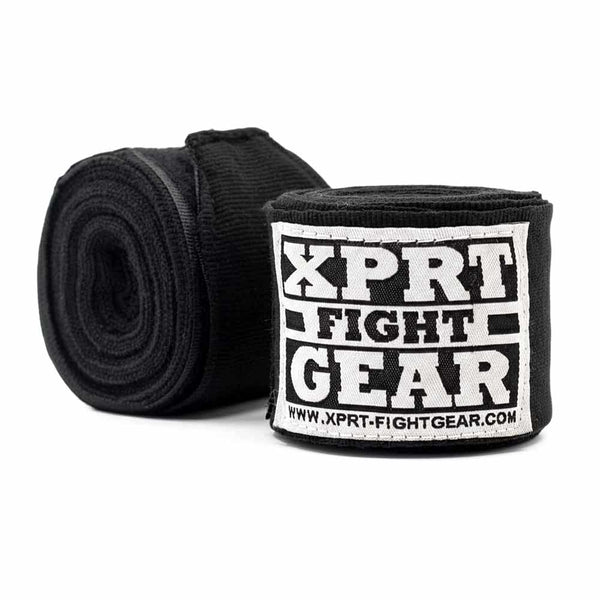
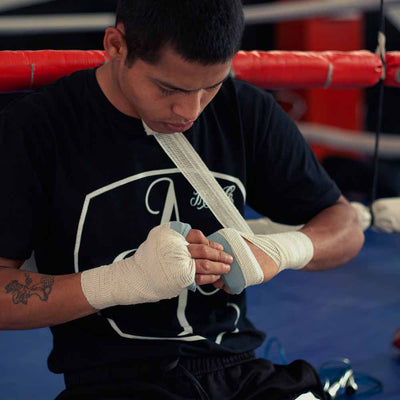
A standard boxing handwrap is a long, reusable strip that you wrap around your hand and wrist. Many training models have a thumb loop and a hook-and-loop closure. The handwrap forms layers around the hand and is unwound after training and washed according to the care instructions.
Sports tape has an adhesive layer. You tear or cut off a strip and use it for a specific purpose. For example, to secure the end of a wrap or as part of a hand wrap applied by a cornerman. The used strip is then discarded; you do not roll it up again like a training handwrap.
Gauze is a separate material. In competition preparation, you may come across a combination of gauze and tape. Each has its own function. Calling all of it a boxing handwrap overlooks the very distinction that matters when choosing materials.
What does tape do around a wrapped hand?
Tape can hold layers together and make a wrap firmer in certain places. That does not mean the hand should be completely immobilized. You should still be able to make a normal fist, and the glove should fit over the entire wrap.
The placement and direction of the strips make a difference. A strip over the loose end of a handwrap serves a different purpose from a layered wrap around the hand and wrist. The tension applied also changes the result. More tape and pulling it tighter are therefore not measures of quality in themselves.
Consider the combination as a whole: hand, handwrap or gauze, any knuckle padding, tape and glove. If you add one component, you need to check how much room is left and how everything else fits. A glove that fits perfectly without extra material can suddenly feel too tight with a thicker wrap.
Rigid sports tape and kinesiology tape are different materials
Hand wrapping often uses relatively non-stretch tape to hold the layers together and provide support. Kinesiology tape is the elastic material you might see applied in long strips to a shoulder, knee or calf. They differ in stretch and use. They are not just two colors of the same product.
First compare the stretch and purpose of each material. To hold a boxing wrap together, you need a different type of tape from an elastic strip that moves with the skin. The product specifications can help you choose the right type.
For hand wrapping, the key factors are adhesive strength, width and how the tape works with a handwrap or gauze. When buying tape, look at these specific properties and how you intend to use it.
Training and competition preparation call for different approaches
In boxing, kickboxing and Muay Thai, regular handwraps provide a familiar base under the gloves. Tape can be a practical addition, for example when an end comes loose during training. Start by asking what you want to secure, rather than immediately trying to recreate a full competition wrap.
A cornerman preparing a fighter’s hands for a competition has a different task. The wrap must suit the fighter’s hand, the competition glove and the event’s equipment requirements. A photo shows the finished result, but not necessarily the layers, tension and checks that went into it.
Rules can also differ between competitions. So do not treat the amounts, tape positions or knuckle padding shown in any video as universal rules. Before a competition, check what the relevant organization and event allow.
Research on tape and wrist movement in boxers
Gatt, Allen and Wheat studied wrist movement in eighteen elite boxers, all men, in 2023. They compared handwraps alone with handwraps supplemented with tape. The participants threw straight punches and punches with a bent arm. An electromagnetic measurement system recorded wrist movement around the moment of impact.
According to the published research summary, adding tape reduced the measured wrist movement during those punches more than handwraps alone. The time it took to reach the maximum measured wrist angle also changed. This provides useful information about how this wrapping behaves mechanically under the study conditions.
The findings describe wrist movement in this study involving eighteen male elite boxers. Injury counts over a season and differences between the retail brands discussed here were outside the scope of the study. The source consulted is the published research summary.
Tape does not automatically make a painful hand ready for training
A firm feel can be reassuring, but it does not tell you whether your hand can handle a punch. If making a fist or throwing a punch hurts, adding another strip is not a good way to mask that warning sign. Stop the exercise that causes the pain and have persistent or significant symptoms assessed.
The same applies to symptoms that develop while you wear it. Tingling, numbness, a cold hand or a change in color are not signs that you are getting used to a professional wrapping. Take off the glove and loosen the wrapping immediately. If the symptoms persist, seek medical help.
Check the fit before the first round
First check the wrapping with your hand open, then slowly make a fist. There should be no bunched-up strips getting in the way in your palm. Your fingers should be able to move normally, and the wrapping should not dig in. Tight is not the same as a good fit.
Then put on the glove you will actually train with. Check the space around your knuckles, fingers, thumb and wrist. You should be able to make a fist without the extra bulk pushing your hand into an awkward position. So do not judge the tape solely by how neat it looks while the glove is still on the bench.
Check again during your warm-up. Fix any loose end, shifting layer or rubbing edge before you continue punching. In group training, the outside matters too: a loose strip should not stick to a glove or interfere with contact with a partner.
Skin, sweat and removal are part of using it
Do not apply adhesive material carelessly to irritated or damaged skin. An adhesive layer that works well for one athlete may cause itching or skin irritation for another. A description such as skin-friendly does not guarantee that no one will react to it.
Use clean materials and follow the instructions for the tape you choose. An oily or damp surface can affect adhesion. If the tape comes loose while you move, that does not automatically mean you should keep wrapping everything more tightly; check the surface, placement and wrapping method first.
Remove used tape gently after use, without pulling it sharply off the skin. If you notice a clear skin reaction, stop using the product. Dispose of used strips right away and store unused rolls in a clean, dry place. Wash regular reusable handwraps separately according to their care instructions.
Width and packaging: choose based on your needs
A narrow roll applies differently from a wide one. That makes width a practical choice, not a measure of quality. Consider the area you want to secure, how much control you need during application, and whether the material tears easily for the way you work.
Packaging matters too. An individual roll is a straightforward choice for personal use. A pack of multiple rolls can be handy for a trainer or gym that regularly prepares supplies. So compare not just the product names, but also the number of rolls and the widths actually available.
Choose a width that is easy to apply for your intended use. A narrow strip allows more precise placement; a wider roll covers more area. Consider the material and how you wrap alongside the width.
Three sports tapes from our range
These three sports tapes offer different widths and packaging options. Compare a multipack for trainers with individual rolls for specific uses. Current options and availability are listed on the product pages.
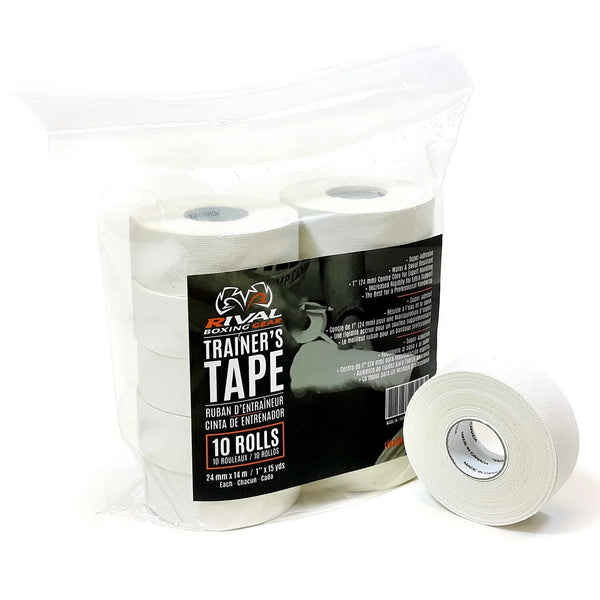
Rival Trainer Boxing Tape
A cotton-based boxing tape supplied in a pack of ten rolls. The product information describes a tearable tape for preparing hand wraps. This makes it a practical option for a trainer or coach who regularly works with multiple athletes.
McDavid EuroTape
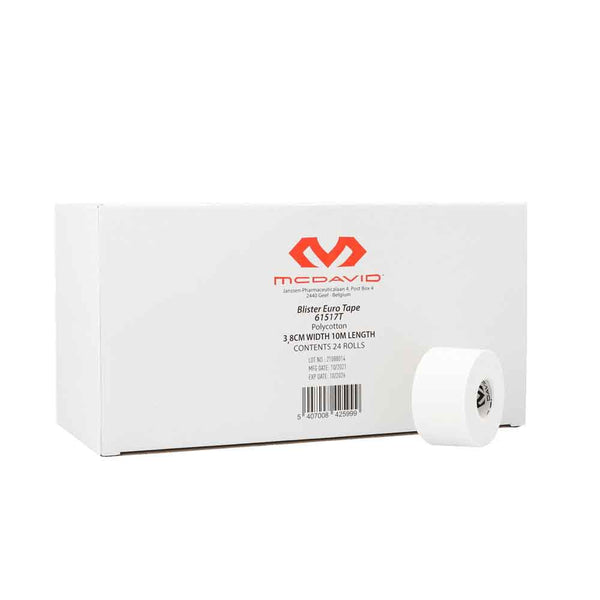
This sports tape is sold by the roll, with widths of 2.5 and 3.8 centimeters to choose from. The product information lists ten meters per roll and serrated edges. Choose the width that suits the area and how you want to apply the strip.
MSP proTape
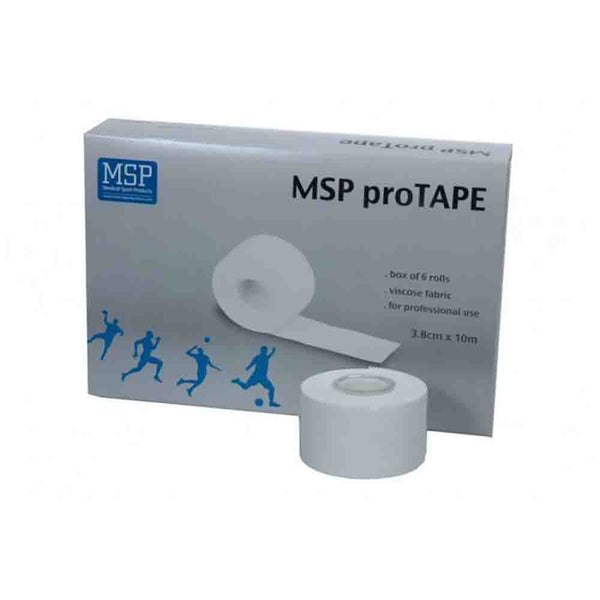
This version is available in widths of 2.5, 3.8 and 5 centimeters. The product information specifies ten meters per roll and a zinc oxide adhesive layer. The additional width option gives you more choice to tailor the coverage and layering to your approach.
Beyond tape: practical corner supplies
A trainer or cornerman prepares more than just a roll of tape. On a training day or when preparing for a match, massage oil, petroleum jelly, cooling products and a water bag each have their own place. Below are five specific additions from our range. Choose the products that suit your training or match preparations.
Namman Muay Boxing Liniment
Thai Oil is a familiar part of Muay Thai preparation. Namman Muay Boxing Liniment comes in a 120-milliliter bottle and is intended for external use during massage and sports preparation. The oil therefore serves a different purpose from the tape used to secure a wrap. Keep the skin where tape needs to stick clean and dry, and do not apply the oil there beforehand. Use the oil according to the label and avoid the eyes, mucous membranes and damaged skin. A warm-up remains a separate part of preparation.
Phyto Performance Cryos cooling spray
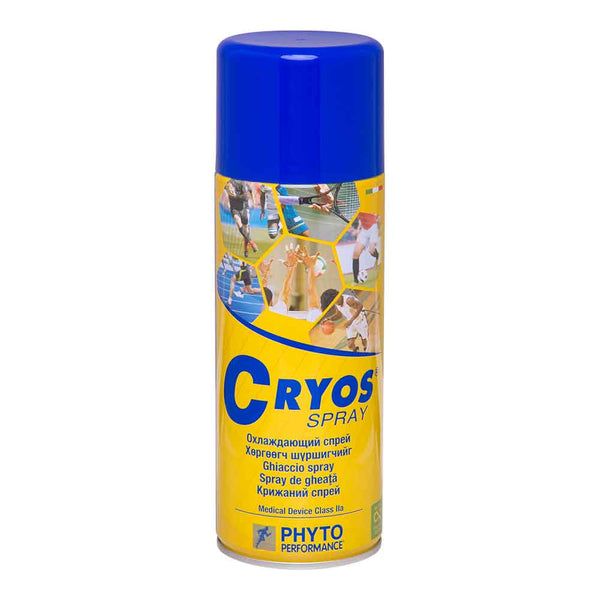
Phyto Performance Cryos cooling spray comes in a 400-milliliter aerosol can for brief, localized cooling. The can is a practical option for a trainer bringing supplies to a training session or match. Cooling spray is different from a reusable cold pack: you apply the spray according to the instructions on the packaging rather than storing a pre-chilled gel pack. Follow the specified distance and duration of use. Do not use cooling to mask pain and then allow the athlete to continue training.
Phyto Performance petroleum jelly
This petroleum jelly comes in a 250-milliliter jar. It is a greasy product for external use, so it serves a different purpose from an adhesive. In the corner, it helps to keep the jar clean and use a clean tool to take out a small amount. Keep petroleum jelly away from any surface where you want tape to stick. Check with the relevant organization whether and how you may use petroleum jelly during a match. This jar is a care product for the athlete, not a product for maintaining boxing gloves.
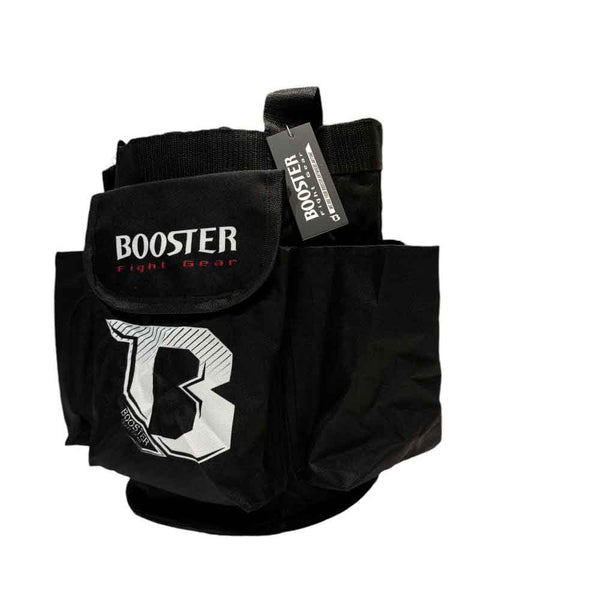
Booster BFG Cornerman water bag
The Booster BFG Cornerman is a foldable water bag with a stated capacity of eight litres. The carrying handle and outer pockets let you keep water and small corner essentials in one place. That makes it a practical addition for a cornerman who doesn’t want to keep hunting for loose items. Set the bag down securely, keep the contents clean and let it dry thoroughly after use before storing it. The bag helps keep the corner organised; it is not a heavy water-filled training bag.
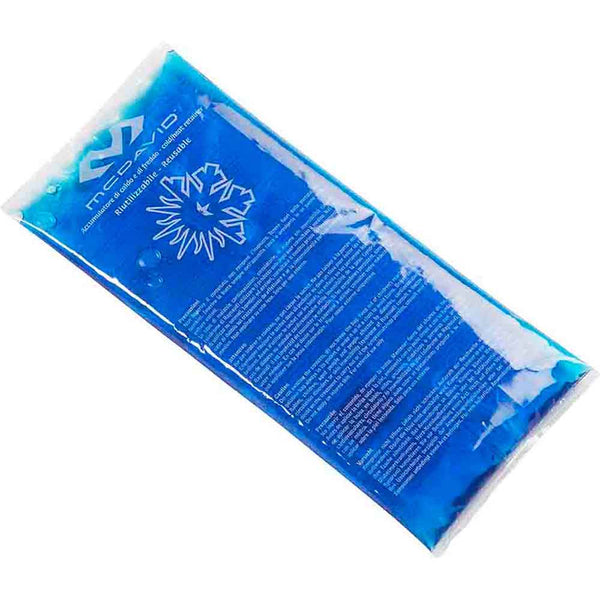
McDavid Hot/Cold cold pack
The McDavid Hot/Cold is a reusable cold and heat pack measuring 26 by 12 centimetres. Unlike the cooling spray, this pack needs to be prepared in advance according to the product instructions. That takes some planning, but you can prepare it again after use and take it with you. Protect the skin with a suitable layer between it and the pack, and follow the stated application method and duration. A cold pack in your bag is practical; it does not determine whether an athlete can resume after a painful blow or fall.
A complete set of trainers’ equipment also needs to account for the training itself and transporting the gear. Pads, kicking shields and other training equipment have their own selection criteria. Our separate guide for trainers and personal trainers helps you choose those training materials with purpose.
A little preparation with a clear purpose
A roll of tape can easily get lost among the other gear in your gym bag. Still, it helps to know before training what you’ll use it for: securing an end, applying a specific wrap or getting materials ready for a competition. Those are specific tasks, not a reason to wrap every hand the same way.
If you want to compare different rolls, you can buy sports tape and view the options in our showroom in Waddinxveen. We’re happy to explain the available widths and packaging and how the products are intended to be used. Check the current stock of the option you want to compare before visiting.
The value of sports tape lies in how you use it
Sports tape is a practical addition when its purpose is clear. Regular handwraps, gauze, relatively rigid tape and kinesiology tape are different materials. What matters is how you use them, not simply that they all end up on or around an athlete.
A carefully applied wrap fits both your hand and your glove. Choose the right width and packaging, check the complete setup before punching, and make unpacking and care a regular routine. That way, tape, handwraps and the rest of your equipment each have a clear place in your preparation.