A jump rope in your bag, some open space and no wall of mirrors staring back at you: outdoor training has its own charm. You can work on your footwork alone, do pad work with a partner or combine a few exercises into a short workout. You don't need to bring an entire gym to the park.
The appeal is in the change of pace: a different setting, a workout you can plan yourself and packing up your gear afterward. Choose an open spot with a suitable surface and agree with your partner on what you'll practice. That way, your exercises and gear will suit the space you have.
Start with a goal, not an overstuffed gym bag. Do you want to practice your combinations, work on your movement or just enjoy being active? Choose your exercises and gear accordingly. Below are ideas for an outdoor workout without a gym, plus an example you can adapt to your level and the space you have available.
Choose a spot where you can really move
An empty corner of a park can look like a great place to train. But look beyond the amount of space. The surface determines which exercises are practical: can you turn without slipping, is there anything you might trip over, and is there enough room for a jump rope or a kick?
A flat, open spot is more important than a nice backdrop. Check grass for holes and loose objects. On a paved path, watch for slippery patches, gravel and passersby. A place that's fine for walking isn't necessarily suitable for quick changes of direction.
Choose exercises that suit the surface, too. You don't need to be able to do every technique in every location. If turning or jumping doesn't feel comfortable there, choose another spot or another exercise. That's better than trying to finish your workout on the same patch of ground at all costs.
Keep walkways clear and check whether training is allowed in your chosen spot. In a garden or courtyard, space, noise and your surroundings are also worth considering. Your neighbors don't have to join your pad work to notice it.
Choose gear that fits your training plan
It's tempting to pack everything: punching mitts, a kicking shield, a medicine ball, a mat and a jump rope. But then you spend more time carrying and setting up gear than training. For a first session, bringing less is often more practical.
Training alone? You can start with shadowboxing and footwork. A jump rope is an option if the surface and space allow it. If you're training with a partner, you can bring punching mitts or a kicking shield for the exercises you want to do together.
Every piece of equipment should have a purpose. Punching mitts provide targets for punches, a kicking shield is for suitable kicking drills and a mat can be useful for exercises on the ground. Don't bring something just because it's still in the car.
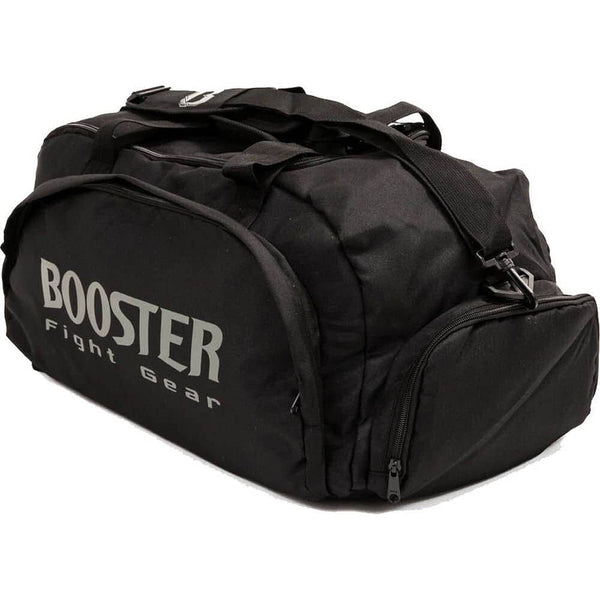
Don't forget the less exciting essentials: a drink, a towel, an extra layer of clothing and a bag that lets you keep used gear separate. A timer is handy, but a phone in a stable spot will do. You don't need to set up a training camp for half an hour outdoors.
Start slowly and see how the area feels
Use the start of your training to move around and get to know the area. Walk a little, change direction at an easy pace and make a few simple movements. If the ground feels different from what you expected, you can still adjust your plan before picking up the pace.
Then you can calmly repeat familiar movements: getting into your stance, taking a few steps, throwing a simple punch combination and re-establishing distance. Don't start with the most complicated technique you know.
The warm-up isn't a contest to see who gets out of breath first. You want to be ready for what you're going to practice next. If you've used up most of your energy before you pick up the pads, the balance isn't right for that goal.
A set sequence helps. That way, you don't have to work out how to start every session. Keep it flexible, though: a cold, wet morning isn't the same training situation as a dry afternoon when you've just walked to the location.
Shadowboxing: little equipment, plenty of focus
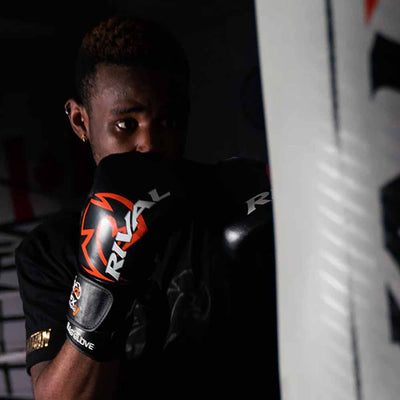
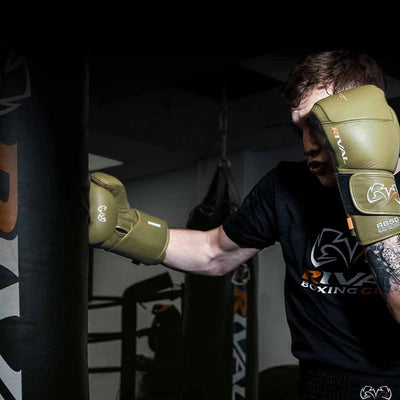
Shadowboxing is a natural foundation for outdoor training. You don't need someone to hold pads, and you can build a round around one focus. For example, regaining your stance after a combination, changing direction calmly or stepping off the line after an attack.
Make the task small enough to assess. 'Practice everything' sounds ambitious, but by the end you'll barely know what you've done. A round built around a simple combination and a deliberate step out has a clearer focus.
Don't just imagine a target that stays still. Think about the distance too: where would your opponent be, when would you need to move and how would your attack end? That makes a round more interesting than throwing the same punches in the same spot over and over.
Use the space, but be mindful of the people around you. Watch where you're moving. A training round doesn't need to turn into a slalom between walkers, dogs and someone who's just parked their bike.
Footwork without a floor full of cones
You don't need an elaborate setup for footwork. A visible spot on the floor can be a reference point for gauging distance, moving sideways or returning to your starting position. Choose something you can see without it becoming an obstacle.
Start slowly. Can you take a step and return to your stance? Do you stay balanced when you change direction? Only then should you add a combination or pick up the pace.
Footwork isn't just about moving quickly. It's also about where you end up and whether you can move on from there. A quick move that ends with your feet crossed or in an awkward position isn't a reason to go even faster right away.
With a partner, you can practice distance without hitting each other. Agree beforehand who leads, what the other person follows and how far you can move. Stick to familiar movements and don't turn it into an unexpected chase. A simple exercise makes it easier to see what's happening.
Punching mitts: give each round a clear focus
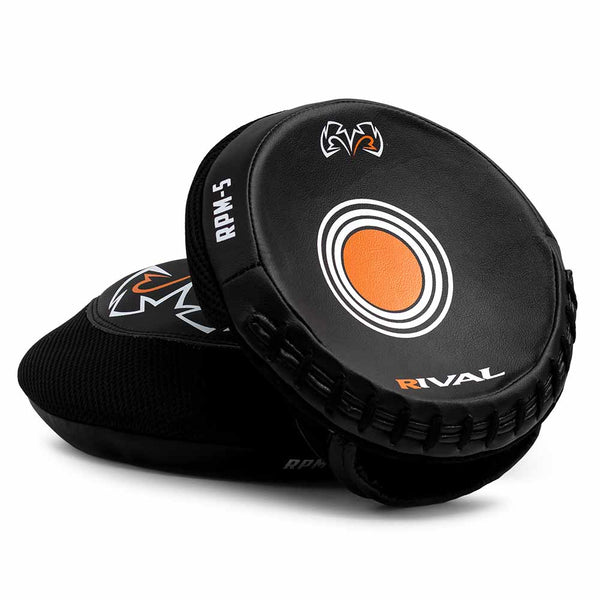
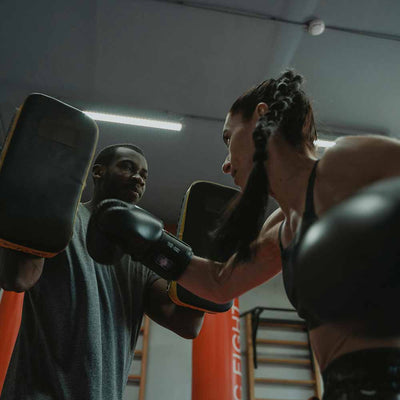
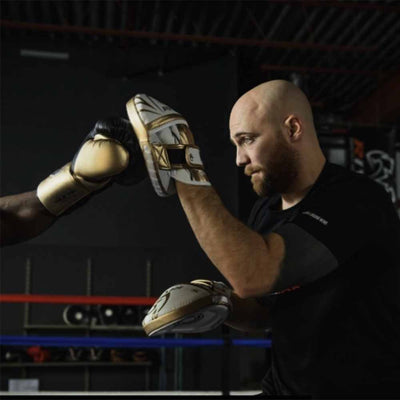
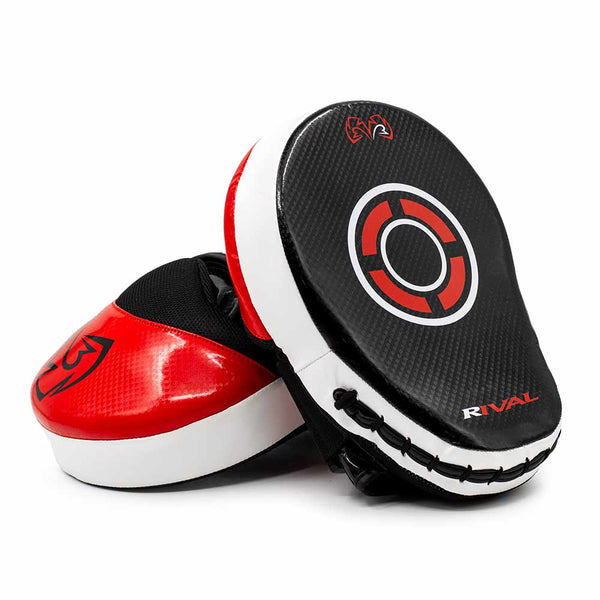
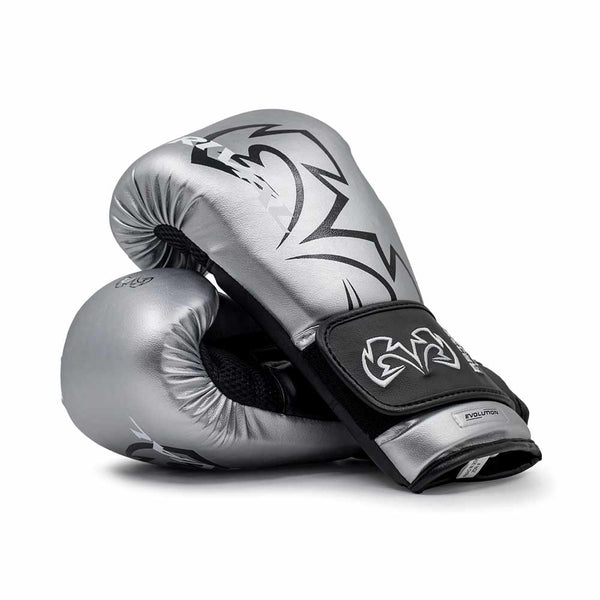
Pad training is fun to do together and gives you a clear target. It works best when both the fighter and the pad holder know what's coming. A short combination you both know is a better start than a string of constantly changing instructions.
Good pad work is about working together, not surprising someone with an impossible task. Agree on the combination, choose a manageable pace and give each other time to get back into position. Then switch roles when it suits your experience and the exercise.
The pad holder isn't a stationary rack of targets. The position of the pads, the distance and the moment a target is presented are all part of the exercise. If those basics keep changing, it's hard to tell whether a combination is being performed well.
Use punching mitts for the punching techniques they're designed for. For a combination of punches and kicks, choose equipment specifically suited to those exercises. Agree on the technique, side and intensity together so the pad holder is ready.
You don't have to hit harder every round, either. You can also vary the timing, take a step before the combination or work on returning to your guard. That gives the session a different focus without turning it into a test of strength.
Practice specific kicks on a suitable kicking shield
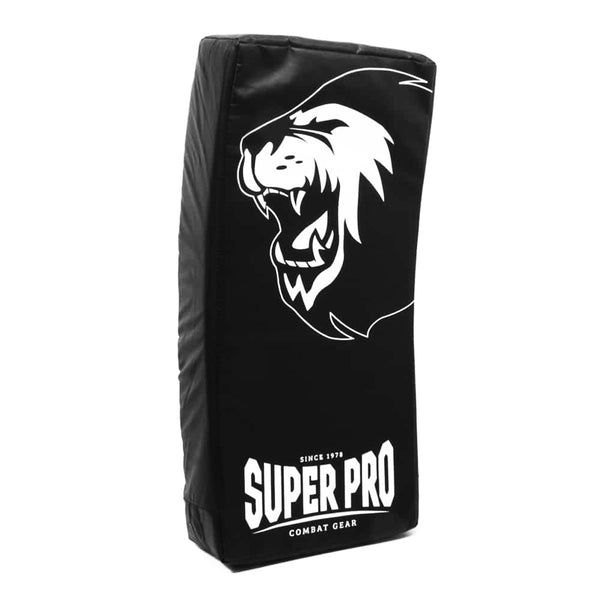
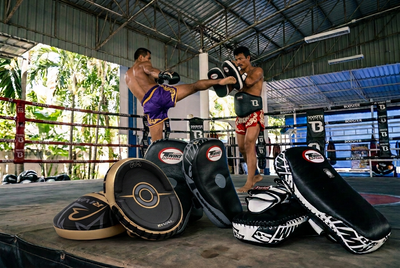
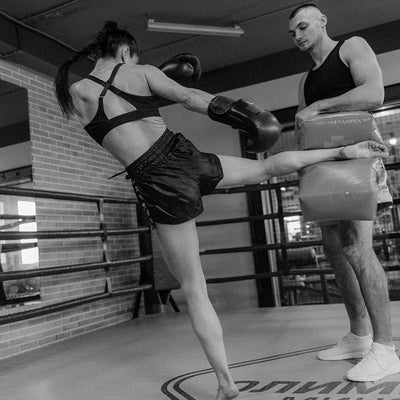
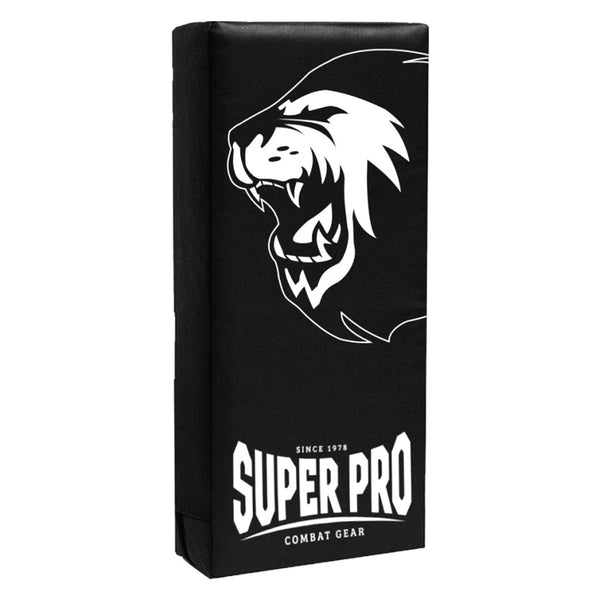
A kicking shield lets you work on specific kicks you already know. Here too, the exercise starts with teamwork. Agree on which kick you'll perform, which side you'll start on and when the pad holder is ready.
Choose a technique you can both perform and receive safely. A bigger shield doesn't automatically make a complex spinning kick a good exercise for just any partner. Outdoors, the surface and available space also play an important role.
Start with individual repetitions and a steady rhythm. You can then add a step or a simple combination. Pay attention not only to the attack but also to returning to your stance. If you have to regain your balance after every kick, that's something specific to work on.
Don't use a kicking shield as a bench, jumping obstacle, or prop for a pushing game. It's designed to absorb techniques when used as intended. For a different kind of exercise, choose a suitable setup rather than a creative idea that just happens to seem possible.
Jump rope: easy to bring along, use with purpose
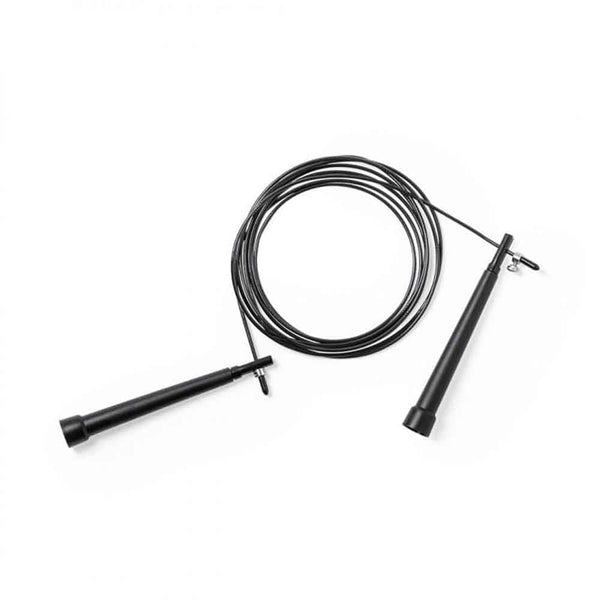
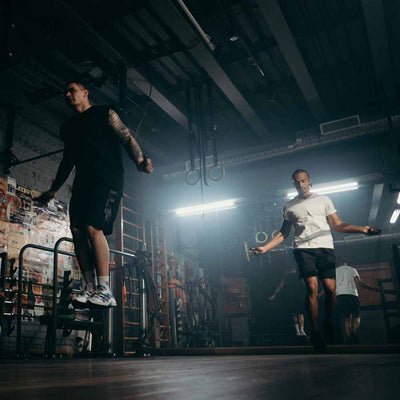
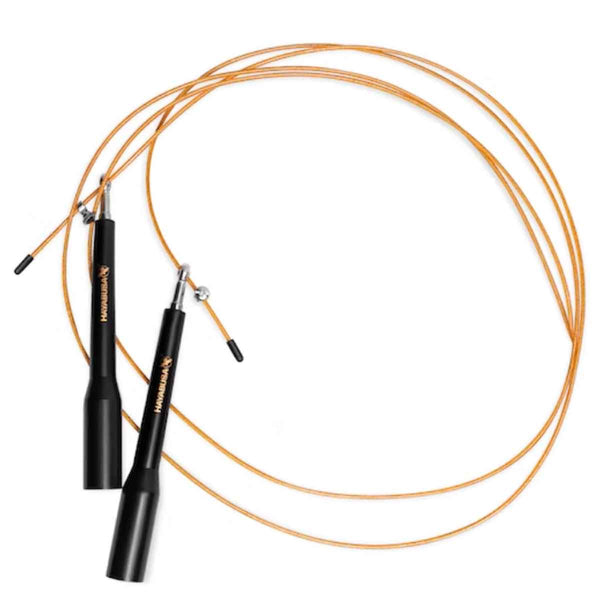
A jump rope takes up little space and can add variety to your training. First, check that you have enough room for the rope and that the surface is comfortable to jump on. Watch out for branches, people behind you, and the space above your head.
Start with a rhythm you can maintain without constantly having to start over. A complicated jump isn't essential. Sometimes the simplest version is exactly what you need for the round you've chosen.
Give the jump rope a specific role in your training. Match the time you spend on it to the goal of the session. For example, you can alternate an active jumping round with relaxed footwork or use the rope to prepare for your technique block.
A grassy area may work for some exercises but be impractical for your jump rope. That's no reason to cancel the whole workout. You can replace that round with movement or shadowboxing in a suitable spot.
Bodyweight exercises
You can alternate your technical rounds with familiar exercises that require no equipment. Think of a squat, a suitable push-up variation, or a simple exercise on a mat. Choose a version you can do well and that suits the space.
The advantage of a block like this is the variety. It shouldn't turn into a punishment round where all you do is count how many reps are left. You should still be aware of what you're doing, even when the exercise takes effort.
Choose a clear structure that gives each exercise the attention it deserves. Allow enough time for the elements you choose, and make a deliberate change to the content in your next session. This keeps your training varied and manageable.
A mat is useful for exercises on the ground, but check the spot too. Loose stones, wet grass or a busy walking path do not suddenly become suitable just because you put a mat over them.
An example session with a clear structure
Do not want to wait until you get there to decide what to do? Choose a simple structure beforehand. The example below is a suggestion, not a prescribed plan. Adjust the duration, rest periods and exercises to your experience, the conditions and the goal of your session.
Start with gentle movement and familiar techniques. Then you could do six two-minute rounds. Rest as long as you need between rounds so you can approach the next task with focus.
- Shadowboxing: a simple combination, followed by returning to your stance.
- Footwork: find your range, move sideways and return to a familiar position.
- Pad work: practise an agreed punching combination with a partner. Training alone? Repeat the combination without making contact.
- Jump rope or movement: choose what works on the surface, without turning this round into an all-or-nothing test.
- Kicking shield or shadowboxing: familiar kicks with a suitable pad holder, or a round focused on movement and positioning.
- A final technique round: revisit one focus from the session and see if you can still perform it with care.
If you want to add a bodyweight exercise, replace a round rather than automatically making the whole session longer. This keeps the structure manageable. Finish with some gentle movement and pack up your gear at your own pace.
The nice thing about this structure is that you can vary it in a focused way later. You do not have to change the whole session: try changing the combination, the footwork focus or one round. That gives your next outdoor session a fresh focus.
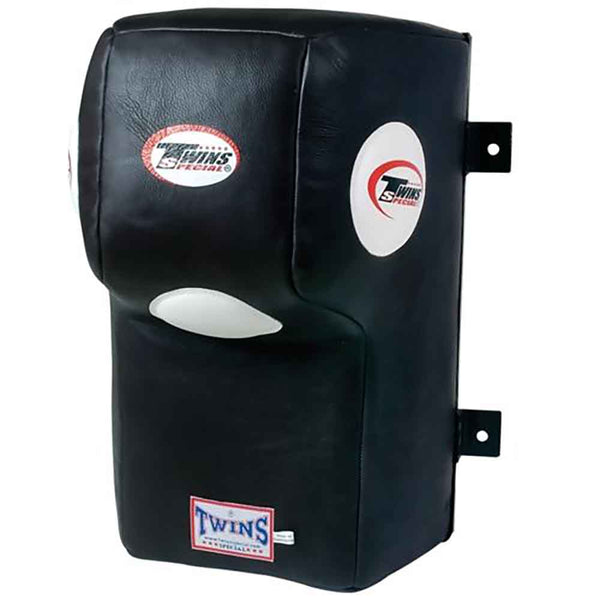
A punching bag or punching dummy in the garden
A dedicated spot at home can be convenient if you regularly want to train alone. A punching bag or punching dummy gives you a target without needing a partner. But where you put it deserves more thought than simply whether there is enough space.
Suitable for outdoor use is not the same as suitable for leaving outdoors. Check the instructions for use, placement, securing and storage for the specific model. Do not assume that every material can withstand rain or prolonged exposure to the elements.
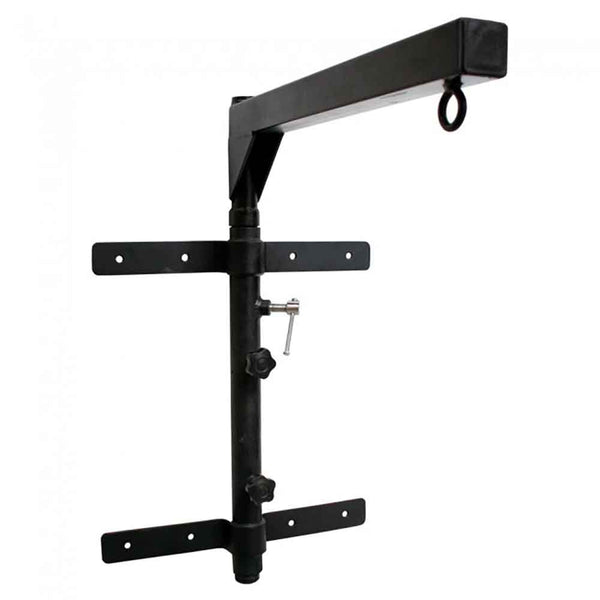
Check the space around the equipment, too. Can you move without hitting anything? Does the setup stay in place as intended? Preparing to use a hanging punching bag includes choosing a suitable mounting point and following the installation instructions.
A freestanding model isn’t automatically suitable for every location, either. Follow the instructions for the base and the surface. Avoid improvised solutions just because you want to set the equipment up outside for the day.
Use a punching bag or punching dummy for the techniques they’re designed for, and keep your movements controlled. Training alone doesn’t mean you can increase the intensity without limit. Focusing on technique can make outdoor bag work more interesting than simply hitting as hard as you can.
Keep outdoor training fun and useful
An outdoor session doesn’t have to look exactly like a class at the gym. That’s part of the appeal. You can choose a short session, bring a partner or focus on something you spend less time on during a regular workout.
Give yourself one thing to reflect on. Was your footwork smoother? Was the pad combination easy to follow? Did you bring the right gear? That way, you take something away from the session without measuring every workout against a long list of achievements.
It doesn’t have to be harder every time, either. A round that goes better, a clearer plan with your pad holder or a better-chosen spot can be just as good a reason to go home satisfied. You don’t need to attach promises about calories, muscle growth or a new version of yourself to the workout.
Take your rubbish with you, leave the area tidy and store your equipment according to the instructions. Then your next outdoor session will be something to look forward to, rather than a bag of damp gear you have to sort through first.
The shortest packing list starts with your plan
For shadowboxing and footwork, you mainly need suitable clothing, a suitable spot and enough space. A timer and something to drink are useful additions. For partner training, bring the equipment needed for the exercise you’ve agreed on; a mat can be useful for ground exercises.
A few well-chosen exercises are enough to make an outdoor session complete. Use the structure above as a starting point, adapt the plan to your location and enjoy training in a different setting.