A right hand that suddenly breaks a fight open. A high kick that brings a packed arena to its feet. The tension as an opponent reacts the moment Badr Hari steps forward. His career produced moments that kickboxing fans still recognize years later. That appeal began with a fighter who had exceptional attacking abilities, but grew through the opponents, trainers and stages he encountered along the way.
Hari’s story runs from Amsterdam gyms to Japanese K-1 tournaments, the Amsterdam ArenA and the GelreDome. He became K-1 Heavyweight champion, won the It’s Showtime heavyweight title and reached two classic K-1 World Grand Prix finals. Later, his rivalry with Rico Verhoeven brought kickboxing to an even wider audience. Behind those well-known highlights are distinct training periods, rematches and fights with very different outcomes.
The rivalries with Stefan Leko, Ruslan Karaev, Sem Schilt and Alistair Overeem show different sides of his development. Thom Harinck, Mike Passenier and, later, Saïd El Badaoui are part of the training history behind those fights. Together, they trace the arc of his career: the early lessons, the international breakthrough and the way Hari used his attacking abilities on different stages.
1. A career connecting different kickboxing worlds
Badr Hari belongs to the generation that witnessed the transition from classic K-1 to the major European kickboxing stages that came later. His Amsterdam gym gave him a foundation, Japan offered an international stage, and Dutch fight events brought him face to face with champions the public had known for years. His career also offers a window into a broader era of heavyweight history.
His most important championships deserve to be named individually. In 2007, Hari won the K-1 Heavyweight belt. In 2009, he added the It’s Showtime heavyweight title. The classic K-1 World Grand Prix was a different championship: a final tournament in which the winner had to beat several opponents in one evening. Hari reached its finals in 2008 and 2009. That distinction helps put both his successes and his place among the great tournament winners in perspective.
For Hari, a defeat often marked the beginning of a new encounter. Leko, Graham, Karaev and Overeem won their first fights against him, but Hari later went on to beat them. With Schilt, the reverse happened in 2009: after Hari’s quick title win in Amsterdam, Schilt reversed the result in the Grand Prix final.
2. The Amsterdam foundation and the early years of training
Hari was born in Amsterdam on December 8, 1984. His parents came from Morocco. According to his GLORY biography, he started kickboxing at age seven. Those first lessons were a long way from the major heavyweight fights that later made him famous: learning technique, returning to training and building experience were where it began.
His early training years were linked to Mousid Akamrane and Mohammed Aït Hassou. He later joined Thom Harinck at the Chakuriki school in Amsterdam. Under different trainers, he developed the technical foundation that took him into the international ring as a young heavyweight.
That Amsterdam background reflects how Dutch kickboxing developed. Knowledge was passed on in the gym, athletes practiced with different partners, and fights showed what already worked and what needed further development. Hari grew up within that established training culture and later made it distinctly his own.
3. Chakuriki and the period with Thom Harinck
Thom Harinck is one of the major names in Dutch kickboxing history. His Chakuriki school brought together different martial arts influences and became associated with international heavyweights. For a young fighter, training in such an environment also meant learning from the experience and expectations of an established fight school.
At Chakuriki, Hari trained in an environment with extensive international fight experience. Harinck had already worked with strong heavyweights and knew the path to major stages abroad. Hari was introduced to an older generation of Dutch kickboxing while he was still at the beginning of his international career.
The combination of an established school and a young, attack-minded fighter made that period interesting. Hari had the reach and explosiveness to threaten opponents immediately. In the years that followed, the transitions between his punches and kicks would become increasingly distinctive.
4. Mike Passenier and the work behind the breakthrough
Many of Hari’s best-known years are linked to Mike Passenier and Mike’s Gym. Their partnership became a recognizable part of his image: the attacker in the ring and the trainer guiding him from the corner. For many viewers, the two names belong to the same era of international heavyweight kickboxing.
A coach does more than encourage a fighter on fight day. Preparation involves repetition, refining techniques, choosing combinations and tailoring an approach to an opponent. For an athlete with considerable attacking power, the key question is how to use that power at the right moment and from a position where it will be effective.
Mike’s Gym remained associated with his name for years. Passenier was in his corner for much of the K-1 period and at later major bouts. In 2021, Hari chose a different training environment with Saïd El Badaoui at SB Gym, ending a long partnership that had become a fixture of his career for many fans.
5. The technical signature: reach, combinations and acceleration
Hari could threaten both the body and the head with his punches, then suddenly add a kick to an attack. His height and reach gave him options at a distance. Up close, an uppercut or a short follow-up combination could change the course of a fight. The threat therefore came from different directions, not from a single favorite technique.
His defining strength was his ability to exploit an opening quickly. An opponent who reacted to his punches also had to watch for a high kick. Someone who protected only their head could leave their body exposed. That shift between targets made his offense dangerous and gave his combinations a rhythm of their own.
Yet his approach also depended on patience and timing. In his first meeting with Rico Verhoeven in 2016, Hari started carefully and methodically. He waited for his moments and could then suddenly accelerate. It was precisely the alternation between calmly keeping his distance and launching a sharp attack that made him dangerous.
6. Stefan Leko: the rematch that became a breakthrough moment
The two bouts with Stefan Leko in 2005 made Hari a familiar name to many international viewers. He lost the first fight: Leko caught him with a spinning kick to the body. The young attacker thus faced an experienced opponent with a dangerous, distinctive weapon of his own.
In November, they faced each other again at a K-1 event in Japan. This time, Hari won in the second round with a high spinning kick. The contrast between the two results made the rivalry memorable. The technique that ended the rematch became one of the defining images of his early career.
The two fights immediately gave his early career a distinctive rivalry. First he was caught off guard by a spinning kick; later he won the rematch with a spectacular high version of the same technique. As a result, his name became associated with an attack that impressed even people outside the regular kickboxing audience.
7. Peter Graham and the significance of a rematch
Peter Graham posed a very different challenge in 2006. The Australian heavyweight won their bout in Auckland with his trademark spinning attack, often called Rolling Thunder. For Hari, it was a harsh interruption to the rise that his victory over Leko had brought into view.
Another meeting followed in Hong Kong in August 2007. This time, Hari won on points. Against an opponent who had surprised him before, he held his own throughout the fight and took the decision. Amid his many knockouts, this victory also showed his ability to go the distance.
Graham also remained a recurring opponent. In 2014, they faced each other again, this time in the final of a four-man tournament in Dubai. The rivalry began in Hari’s early K-1 years and continued into a later period when other promoters were also staging major heavyweight fights.
8. Ruslan Karaev: explosiveness versus explosiveness
The encounters with Ruslan Karaev are among the well-known K-1 stories surrounding Hari. Karaev won their fight in 2006. A rematch followed in Yokohama in March 2007, where Hari won by knockout in the second round. Once again, an earlier defeat was followed by a different outcome.
In Karaev, he faced an opponent who could attack quickly and needed little time to become dangerous. Momentum could shift suddenly in their encounters. For Hari, the victory in 2007 was another important rematch win, shortly before he won his first K-1 championship belt.
In December 2009, Karaev faced Hari again, this time in the World Grand Prix quarterfinals. Hari won the fight in the first round, taking the first step toward a second consecutive Grand Prix final. The rivalry thus links his breakthrough years to the period when he was firmly established among the international elite.
9. Hawaii 2007: the K-1 Heavyweight belt
On April 28, 2007, Hari fought Yusuke Fujimoto in Hawaii for the newly introduced K-1 Heavyweight title. He won in the first round, becoming the first champion to hold that belt. It was an official championship within the organization and an important milestone in his development as an international heavyweight.
The Heavyweight belt and the traditional World Grand Prix each had their own place within K-1. The belt was contested in a separate title fight. On Grand Prix finals day, the remaining competitors had to win multiple fights in one evening. So Hari was already a champion in 2007, while his two major tournament finals were still to come.
In 2008, Hari defended the Heavyweight title against Glaube Feitosa. That victory was part of a strong run in which he also faced other established names. The famous finals came after a period in which he had already shown on several occasions that he could win at the highest level.
10. Peter Aerts and the road to the 2008 final
Peter Aerts represented an earlier generation of K-1 success. As a three-time winner of the classic World Grand Prix, he was one of the fighters who had put heavyweight kickboxing on the international map. Facing him on finals day meant Hari was up against an exceptionally experienced tournament fighter.
In the 2008 quarterfinal, Hari won by technical knockout in the second round. He then beat Errol Zimmerman in the semifinal, reaching the World Grand Prix final for the first time. That night showed both his ability to beat an established champion and his place in a new generation of heavyweights.
With two wins on the same night, Hari reached the tournament final for the first time. His victory over Aerts in particular underscored his breakthrough among the top heavyweights. The young challenger who had still been making a name for himself a few years earlier had now beaten one of K-1's most experienced champions.
11. Remy Bonjasky and the final that ended in a disqualification
Remy Bonjasky brought his own style and extensive tournament experience. His defense, timing and explosive attacks posed a different challenge from the strengths of Aerts or Zimmerman. The 2008 final pitted two fighters against each other who could each turn a bout around quickly in their own way.
The final ended with Hari's disqualification after he struck Bonjasky while Bonjasky was on the ground. Bonjasky was declared the World Grand Prix winner. Despite winning two bouts, Hari missed out on the top prize.
For Hari, that was how an evening ended after he had beaten Aerts and Zimmerman. His path to the final had shown what he could do at the highest level. Bonjasky left Yokohama as champion, while Hari began building toward the tournament final again the following year.
12. The big arena and the pressure of tournament day
The classic K-1 finals day had a distinctive format. A fighter started with a quarterfinal and, if he won, had to fight again. Each bout affected the next: time in the ring, energy spent and recovery between bouts were all part of the tournament challenge.
For a heavyweight who reached the final, that meant facing three different opponents in one night. Aerts and Zimmerman each called for a different approach in 2008, before Bonjasky awaited. A quick victory could save energy, but even after a tough bout, a winner had to get ready again.
That format gave K-1 its distinctive tension. The crowd watched the journey from quarterfinal to final on the same night, with champions, upsets and rivalries all in one place. Hari reached the final bout in both 2008 and 2009, putting him at the heart of a strong era in international heavyweight kickboxing.
13. Sem Schilt in Amsterdam: a title in 45 seconds
In May 2009, Hari faced Sem Schilt in Amsterdam for the It’s Showtime heavyweight title. Schilt was already one of the major names of the K-1 generation. His height, reach and ability to control distance had made him particularly successful.
Hari won the bout in 45 seconds. That quick victory became one of the most significant achievements of his career. It showed how dangerous his direct attack could be even against a highly successful champion when he found openings immediately and gave his opponent little time to establish his own rhythm.
The win earned Hari the It’s Showtime heavyweight title and became one of his best-known victories. He had beaten a champion whose control of distance made him particularly hard for many opponents to reach. Later that year, Schilt awaited him again, this time in the Grand Prix final in Japan.
14. Alistair Overeem and a rivalry spanning different periods
Alistair Overeem and Hari met under K-1 rules in late 2008. Overeem won in the first round. This sparked a rivalry between two heavyweights whose different sporting backgrounds also drew considerable interest. They met again the following year.
In the semifinals of the 2009 World Grand Prix, Hari beat Overeem, also in the first round. For Hari, that meant not only a successful rematch but also a place in his second consecutive Grand Prix final. Their exchanged victories show why their names remained linked in the years that followed.
In 2022, they faced each other again at GLORY. After a later change to the result, that third bout is recorded as a no contest. Their rivalry thus spans three fight days over nearly fourteen years. The first two meetings belong to the classic K-1 years, the third to the later GLORY chapter.
15. The 2009 World Grand Prix: once again to the final bout
Hari reached the 2009 final after wins over Karaev and Overeem. His final opponent was Sem Schilt again, whom he had beaten so quickly in Amsterdam earlier that year. That gave finals day a familiar storyline: two successful heavyweights met with a different top prize at stake.
This time, Schilt won the final in the first round. The K-1 World Grand Prix title was his. For Hari, a strong run through the tournament once again ended just short of the ultimate victory. The contrast with Amsterdam makes the two meetings particularly interesting to compare.
The year thus saw two very different meetings between the same heavyweights. In Amsterdam, Hari won the It’s Showtime belt; in Japan, Schilt won the K-1 finals. For Hari, the title victory and two wins on finals day remained significant achievements, despite the loss in the final bout.
16. Hesdy Gerges and the later It’s Showtime years
In 2010, Hari first defended his It’s Showtime title against Mourad Bouzidi. Later that year, he faced Hesdy Gerges in Amsterdam, another heavyweight with ties to the Dutch gym scene. Gerges thus brought another familiar name into the title story.
The fight with Gerges ended with Hari being disqualified after striking his opponent while he was on the ground. Gerges became the new It’s Showtime champion, and Hari lost the belt he had won against Schilt a year earlier.
In 2018, Hari and Gerges faced each other again, this time in GLORY. After a later change to the result, the fight was recorded as a no contest. Their meetings were thus eight years apart, with the transition from It’s Showtime to GLORY in between.
17. New opponents and familiar names beyond the traditional K-1 era
Even after the major Grand Prix years, Hari continued to face leading heavyweights. His victory over Gökhan Saki in Leeuwarden in January 2012 stands out among his performances from that period. It was another fight in which his offense had a major impact in a short time.
The meetings with Zabit Samedov paint a different picture of those years. Hari faced him at various events, with mixed results. A career was not just about the annual K-1 finals day, but also individual fight cards and rivalries that continued across several seasons.
In 2014, Hari won a four-man tournament in Dubai. He defeated Leko in the semifinal and Graham in the final, two opponents who had played a part in his international breakthrough. Even outside the traditional K-1 tournaments, these familiar names continued to face each other.
18. GLORY and the first meeting with Rico Verhoeven
On December 10, 2016, Hari and Rico Verhoeven faced each other in Oberhausen. Interest was high, and the bout was named COLLISION. Verhoeven was the reigning GLORY heavyweight champion; Hari brought with him the reputation he had built during his K-1 and It’s Showtime years.
According to the official fight report, this was a three-round superfight with no world title on the line. Hari started cautiously and landed a shot on Verhoeven in the first round. In the second round, he suffered an arm injury and could not continue. Verhoeven won by technical knockout.
The first COLLISION brought together an established champion and one of the best-known attackers of the K-1 era. The short fight left many fans wanting to see more. Both fighters spoke afterward about a rematch, which took place in 2019 with the world title on the line.
19. GelreDome in 2019: two knockdowns and an unexpected ending
The rematch took place in Arnhem on December 21, 2019. This time, the GLORY heavyweight title was on the line. Hari knocked Verhoeven down with a right hand in the first round. Another knockdown followed in the third round, this time from a high kick.
Those moments showed his ability to find openings even against an experienced champion. GLORY’s official report also highlights his angles of attack and the power with which he exploited the openings he found. The fight therefore carried a tension that went well beyond the pre-fight expectations.
Shortly afterward, Hari was unable to continue following a spinning kick and a leg injury. Verhoeven retained his title by technical knockout. After the two knockdowns and Hari’s strong attacking moments, the title fight came to an abrupt end.
20. Different training choices and a new GLORY generation
In the years after the rematch, he faced opponents including Benjamin Adegbuyi and Arkadiusz Wrzosek. They brought different strengths and challenges to the ring. Hari’s later GLORY period thus developed its own story, with new opponents alongside the rivalry that drew the most public attention.
In 2021, it became known that Hari had moved to train with Saïd El Badaoui at SB Gym. This marked a change in training environment after his long association with Mike Passenier. Even at this later stage, Hari continued to make new choices about his training and coaching.
Hari had to accept defeat against Adegbuyi and Wrzosek. The rematch with Wrzosek in 2022 ended in a no contest. A new generation of heavyweights was making its mark, while Hari continued to look for another major win.
21. Morocco, the 2023 fights and his words in 2026
Hari’s Moroccan background became a visible part of his sporting identity. Although he was born in Amsterdam and developed within Dutch gym culture, he represented Morocco. In his GLORY biography, he speaks about his connection to the country and the importance of the support he received there.
In September 2023, he withdrew from his scheduled fight against James McSweeney at GLORY 88 out of sympathy for the victims of the earthquake in Morocco. A month later, Hari fought Uku Jürjendal at GLORY 89 in Bulgaria. Jürjendal won by technical knockout in the second round.
On February 8, 2026, Sportnieuws.nl reported on an Instagram post in which Hari described himself as no longer active, while expressing his enduring love for the sport. He had attended GLORY 105 and thanked the people around him. The post did not include a formal retirement announcement. His connection to kickboxing remained clear.
22. The appeal of a recognizable heavyweight personality
Hari’s influence cannot be measured by title wins alone. His fights created anticipation: the idea that one attack could change the bout, the familiarity of an old rivalry, and the tension of facing a champion. Together, these gave his name considerable appeal among fans.
His career also connects different groups of viewers. For K-1 fans, he belongs to the era of major Japanese tournaments. For many Dutch viewers, his fights with Verhoeven are a key point of reference. His Moroccan identity and background also show the international significance of that interest.
For many fans, those encounters are etched in memory: the high kick against Leko, the quick victory over Schilt and the knockdowns against Verhoeven. Together with his championship belts and Grand Prix finals, they explain why his name earned a lasting place among the best-known heavyweights.
23. From a career story to your own training
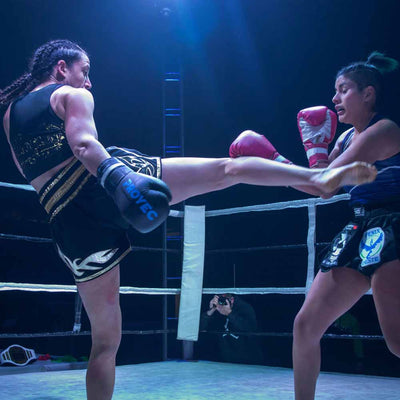
Anyone who kickboxes will recognize elements of their own training in Hari’s fights: switching from body to head, setting up a kick with punches and staying at the right distance. In class, you build up these combinations step by step, slowly at first and later with more speed and movement.
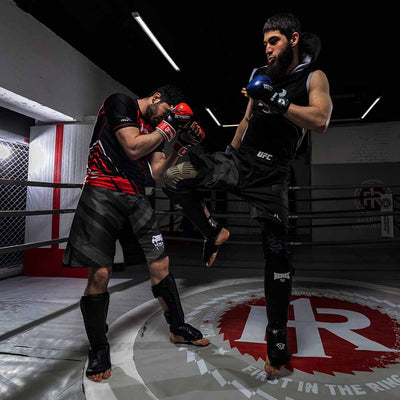
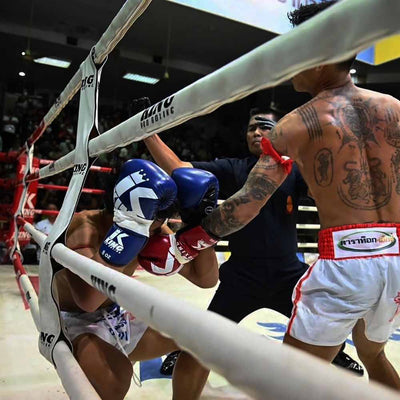
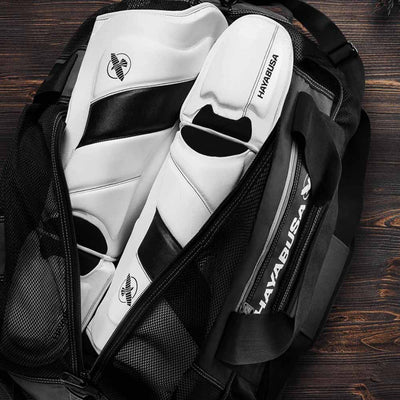
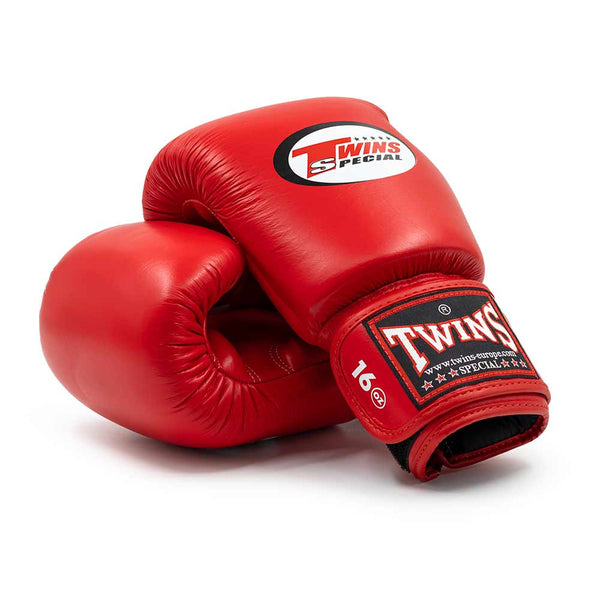
Heavy bag and pad training give you room to practice combinations and where to land your strikes. Controlled partner drills bring distance, reactions and defense more directly into play. Suitable kickboxing gloves and handwraps support your punching. Shin guards, a mouthguard and training clothes suit the different forms of partner training and movement.
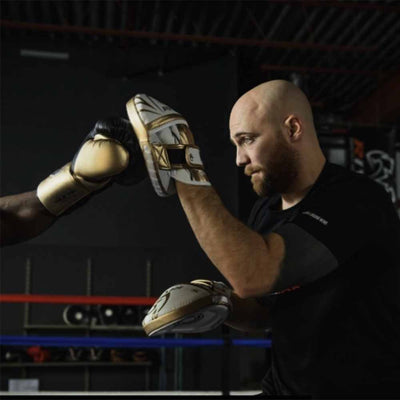
A good pad holder helps you react quickly. On punching mitts, you practice punching combinations, while Thai pads and kicking shields give you room for powerful kicks and combinations of punches and kicks. By moving the targets and varying the pace, you train not only your attack but also your footwork and your return to guard.
24. Badr Hari’s place in kickboxing history
Badr Hari brought a distinctive attacking style to international heavyweight kickboxing. The K-1 Heavyweight title, the It’s Showtime belt, two classic Grand Prix finals and victories over big names are clear sporting milestones. His attacking power, reach and ability to exploit openings made many of those fights compelling to watch.
There is more to the story than the highlights. His early trainers, his time with Harinck, his long association with Passenier and his later training choices provide the background. Rivalries with Leko, Graham, Karaev, Schilt, Overeem, Gerges and Verhoeven show different sides of the same career. The losses, injuries and disqualifications are also part of the full picture.
From his Amsterdam gym, Hari reached an international audience. He won major titles, defeated strong opponents and remained a fighter kickboxing fans looked forward to watching for years. His career connects the classic K-1 years with the later GLORY era, with an attacking style that remained recognizable in both periods.