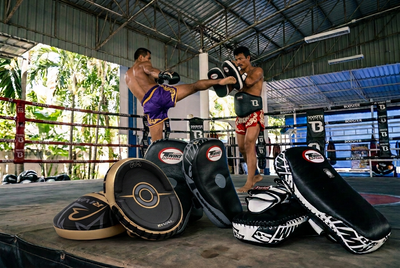
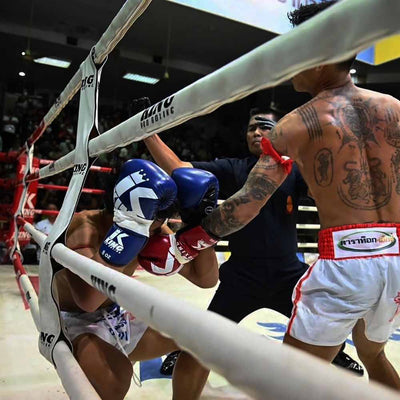
A name on gloves, on a fighter’s trousers, and above the entrance to a training camp: Fairtex has many faces in Muay Thai. Behind that familiar name is a family story that grew through textiles, entrepreneurship, and a deep love of the sport into an international combat sports brand.
Following the story does not lead to a single founding date. The brand name has roots in 1958, the clothing factory in 1971, and the training camp in 1975. The official timeline places the production of Fairtex’s own gloves in 1994. It is the connection between these steps that makes Fairtex interesting: business opportunities made room for a camp, the camp brought trainers and fighters together, and daily training gave rise to a dedicated equipment brand.
1. The textile name behind the combat sports brand
The official Fairtex history begins in 1958, when the brand name was registered in Thailand. It was the name of a family textile business. That background matters because Fairtex is now so strongly associated with combat sports that its clothing history can easily be overlooked. Yet that business laid the foundation for its later development in the sport.
The Fairtex Garments Factory followed in 1971. Philip Wong, known internationally by that name and also as Banjong Busarakamwongsee, expanded the textile business. In his interview with Siam Fight Mag, he also talks about opening his first boxing equipment store that same year. The factory and the store reflect two sides of his entrepreneurship: the established textile industry and his growing interest in Muay Thai.
This makes the different dates easier to understand. 1958 marks the original brand name, 1971 an important business step, and 1975 the training camp. The production of Fairtex’s own gloves comes later in the story. Fairtex did not emerge all at once as the broad equipment brand we know today; its identity in the sport took shape gradually.
2. Philip Wong: entrepreneur with a passion for Muay Thai
Philip Wong is the link between these different worlds. The textile business gave him opportunities to build something around a sport that appealed to him personally. In the background to his interview, Siam Fight Mag describes how Muay Thai attracted him from a young age. That interest remained an important part of his life, even as his business activities grew.
That makes his role broader than that of the founder of a glove line. He became the owner of a training camp, invested in fighters and worked as a promoter. In the interview, he identifies 1978 as the year he became a promoter at Lumpinee Stadium in Bangkok. As a result, the brand became connected both to the places where fighters trained and to the competitions where they could prove themselves.
What makes this combination special is that the sporting side takes on a meaning of its own. A camp is an everyday place to live and work, with trainers, young talent and experienced fighters. Income and connections from another industry helped create that environment. The Fairtex story is therefore as much about people and opportunities as it is about products.
3. The history in six periods
A few key moments help chart the development. The timeline traces the transition from a name in textiles to a training camp, an international presence and a recognizable equipment brand.
- 1958 · The brand name gets its startThe official Fairtex timeline records the registration of the name in Thailand. The family’s background is in textiles.
- 1971 · The business foundation growsThe Fairtex Garments Factory is founded. In his interview, Philip Wong also mentions opening his first boxing equipment store that year.
- 1975–1978 · The camp and the world of competition come togetherThe first Fairtex camp opens in 1975. From 1978, Wong works as a promoter at Lumpinee Stadium.
- 1993–1994 · Training and equipment go internationalThe official timeline lists a US training camp in 1993 and the first Fairtex gloves in 1994.
- 2005–2008 · Pattaya and YodsanklaiThe center in Pattaya opens in 2005, and Yodsanklai joins Fairtex. In 2008, he wins The Contender Asia.
- 2021–2023 · Anniversary and a sporting milestoneThe Golden Jubilee celebrates fifty years since 1971 in 2021. In September 2023, Stamp adds an MMA world title at ONE to her previous kickboxing and Muay Thai titles.
4. The camp at the heart of the story
In 1975, interest in Muay Thai found a permanent home at the first Fairtex camp. The official brand history and the ONE Championship account describe how its sporting activities grew alongside the textile business. Training became a daily activity, not just a name on a product. The camp brought together people who wanted to build their lives around the sport.
There was a social purpose behind it, too. The training center’s history emphasizes creating opportunities for young fighters. A place to train, guidance and a routine of practice and competition could give them direction. In Thai martial arts, a camp like that forms a community of its own, where athletic development and daily life are closely connected.
For Fairtex, that community became an essential part of its identity. The name took on a human face through the trainers who passed on their knowledge and the fighters who competed under the camp’s name. The familiar logo is therefore more than a mark on equipment: it also represents a place where people could develop through years of training.
5. Bangkok, Bangplee and the world of Lumpinee
The camp’s early history is tied to the Bangkok area and Bangplee. ONE describes an initial location in Suanplu, near the old Lumpinee Stadium, and later development in Bangplee. In his interview, Wong focuses mainly on Bangplee, where he wanted to give his fighters a quiet place to concentrate on training. Both accounts show how important the camp’s location was to him.
His work as a promoter also brought Fairtex close to the world of competition. Lumpinee was a place where skilled fighters met and built their reputations. A promoter organizes matches and brings different parties together. For Fairtex, that created a link between the daily work in the gym and the evenings when a fighter had to put their preparation to the test.
The two settings complement each other. The quiet repetition of techniques and combinations at the camp takes on meaning in a match with spectators, expectations and opponents. Fairtex grew through that interplay. The brand became visible not only as the business expanded, but also as its name became part of memorable sporting stories.
6. Muay Thai travels abroad
In the 1990s, Fairtex’s international presence began to take shape. The official timeline mentions a camp in the United States in 1993. The training center’s history describes activities in Arizona and California. This made Thai training expertise more accessible to athletes who could not easily spend months in Thailand.
That development was part of a broader trend: Muay Thai was reaching more and more gyms outside Thailand. Foreign fighters traveled to Thai camps, while trainers and fighters took their experience to other countries. A training center was a place where people came together. They learned not only techniques but also the rhythm and practical routines of a training day.
For a brand so closely tied to a camp, that offered a natural path to a wider audience. Gloves and pads gained meaning because people trained with them. The reputation of the equipment and interest in the training environment could reinforce each other. Fairtex’s international growth therefore involved more than sales in other countries: knowledge, experience and connections traveled too.
7. From 1994, the equipment gets a chapter of its own
The official Fairtex timeline dates its first gloves to 1994. That milestone follows the earlier textile business, the shop Wong talks about and the development of the camps. The distinction matters: selling boxing equipment and making gloves yourself are different steps. In the brand’s story, equipment production grew out of an environment already closely connected to the sport.
A glove brings together several design choices. Its shape, hand compartment, padding, outer material and closure determine how it feels and is used. With pads, the grip and the position of the trainer’s arms also play a role. These features take on a very concrete meaning when the equipment is used every day in a training camp.
Fairtex describes its own training environment as a place for product development and feedback. That gives craftsmanship a practical dimension: the finish must be right, but the equipment must also suit the movements and habits of the athlete and trainer. The well-known gloves are an important part of that development, alongside the broader range of gear needed for a full training session.
8. Daily training gives the equipment meaning
Anyone who knows a brand only through its fighters misses much of the story. Between fights lie countless hours of training: working on the pads, repeating combinations, moving, practicing with a partner and starting again. It is through that repetition that equipment finds its place. The gear is part of the trainer’s work and of how an athlete feels while practicing.
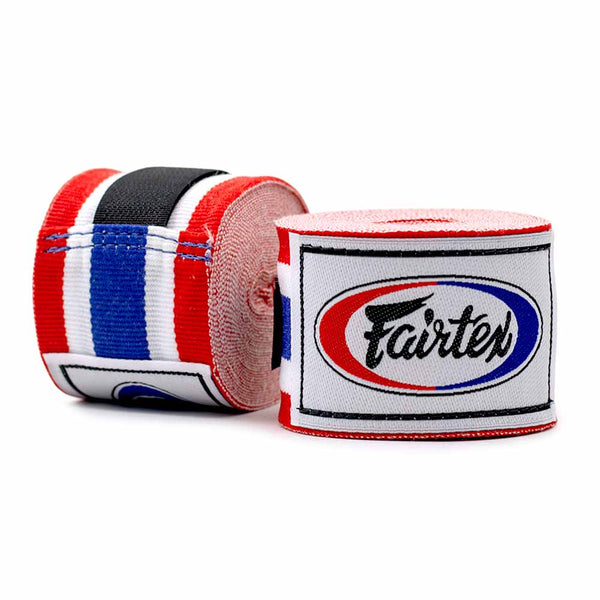
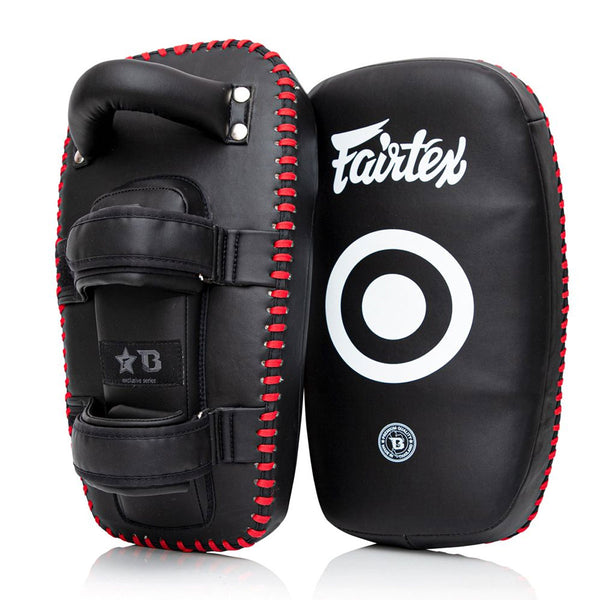
The different product groups reflect that daily practice. Thai pads give a trainer targets for punches, kicks and knees. Handwraps are part of preparing the hands. Shorts allow freedom of movement and create a distinctive look. Shin guards and MMA gloves each have their own design and purpose. Together, they tell a broader story about the brand than any one famous model can.
The Fairtex FXB-KP-Thai pads also show how the brand collaborates with others: this range was developed in partnership with Booster. The Fairtex Fight Royal shorts, meanwhile, connect apparel to the world of competition. Below are five examples from different product groups. They support the story of training, from initial preparation to working with a partner or trainer.
9. Pattaya and Yodsanklai’s international breakthrough
The year 2005 marked a clear new chapter. Philip Wong opened the Fairtex center in Pattaya. In his interview, he says he wanted to create a place where people could train in Muay Thai while also enjoying other sports and recreational activities. A larger center suited a mix of competitive fighters, athletes from abroad and recreational visitors.
Yodsanklai joined Fairtex that same year. For many international fans, his name would become a direct link to the brand. ONE describes his arrival as an important step in raising Fairtex’s profile in the sport. After all, a camp takes on a very different identity when it is associated over the long term with a fighter who has a distinctive style.
In 2008, Yodsanklai won The Contender Asia, facing John Wayne Parr in the final. The series brought Muay Thai to a wide audience and made his name known beyond traditional fight circles. For Fairtex, several threads came together: a Thai training environment, a strong fighter and international visibility. The story of the camp became one that fans in other countries could follow.
10. A camp name carried through generations
Yodsanklai is part of a long line of fighters who have been associated with Fairtex. In the interview, Wong mentions Bunkerd, Jongsanan and Neungsiam from earlier generations, as well as later names such as Attachai and Kaew. Their careers give the brand a history that extends beyond a logo or a single successful campaign.
In Thai combat sports, using a camp name as part of a fighter’s name is a familiar tradition. It lets spectators see a connection between an individual athlete and the place where they train or receive guidance. This works internationally for Fairtex too: someone seeing a well-known fighter for the first time may discover the camp through their name, and then the equipment brand.
Each generation makes that its own. The competitive scene, the audience and the ways matches are broadcast all change. The common thread remains daily training. Fairtex’s history is therefore recorded not only in company milestones, but also in memories of styles, fights and athletes who left their mark on an era.
11. Stamp connects Muay Thai, kickboxing and MMA
Stamp shows another side of that history. Her prominence in ONE Championship links the Fairtex name to different disciplines. She won world titles in kickboxing and Muay Thai and also built an MMA career. An athlete’s development across multiple combat sports fits a brand that has come to support an increasing range of training.
In September 2023, she defeated Ham Seo Hee and won the ONE atomweight MMA world title. In its year-end review, ONE described how that victory added a third combat sport to her world titles. It is a concrete historical milestone: a fighter from the Fairtex camp who expanded her stand-up background with MMA skills and demonstrated them on the organization’s biggest stage.
That story makes Fairtex’s expansion tangible. Alongside punches and kicks, MMA also involves grappling, wrestling and ground fighting. Open gloves serve a distinct purpose there, unlike the closed gloves used in boxing and Muay Thai. The name on the equipment has thus moved with a sporting world that has grown broader, while the connection to Thailand remains visible.
12. Textiles, design and the Golden Jubilee
The textile roots do not disappear as the gloves become well known. Clothing remains a recognizable part of Fairtex. A thai boxing short combines freedom of movement with color, patterns and a name on the waistband. This makes it both a practical training garment and a way for a fighter to present themselves and their community.
Gloves can tell a story too. According to Fairtex, the Golden Jubilee edition was made for the fiftieth anniversary in 2021. That anniversary is counted from 1971, not from the earlier trademark registration in 1958. The model thus gives tangible form to the business history behind today’s sports brand.
An anniversary like this brings the brand's different layers into focus. The clothing factory, the camp, equipment production and international recognition each have their own starting point. The Golden Jubilee brings that history together in a recognizable product, while the brand's original textile roots remain present in its shorts and other clothing.
13. An international brand with Thai roots
Fairtex grew into a brand used by a wide range of martial artists outside Thailand. The name is associated with Muay Thai, but also appears in kickboxing, boxing and MMA. That expansion did not happen in a single step. Camps, international training connections, well-known fighters and the development of different product lines all played a part.
Its Thai roots give the story a clear sense of coherence. In Muay Thai, trainers, fighters and equipment depend on one another every day. A brand that grows out of that environment is also judged by how its equipment feels and performs in the gym. Fairtex's widespread recognition is therefore tied to very tangible things: a pad session, a training camp, a match and the people involved.
Alongside the sporting side, entrepreneurship remains an important factor. It began as a family business in another industry and grew into an international name through investment in the sport. That combination explains why Fairtex is recognized as a camp, an equipment brand and part of fight culture.
14. Conclusion: textiles, training and fighters form one story
The history of Fairtex is clearest when its different starting points are considered together. The name from 1958, the factory from 1971, the camp from 1975 and its own gloves from 1994 together tell the story of how the brand took its current shape. Philip Wong's love of Muay Thai connected the business foundation with a sporting community.
From the early camps to Pattaya, Yodsanklai and Stamp, the same thread runs through it all: the name gains meaning through people who train, pass on knowledge and fight in matches. The equipment is part of that practice. That makes Fairtex more than a familiar logo on a glove: it is the story of a brand in which entrepreneurship and everyday martial arts meet again and again.